Comfort for your quiet digestion
When you’re not digesting well, eat slowly, sitting down, don’t lie down after the meal and have a cup of peppermint or fennel. If you have heartburn, leave the peppermint aside, and if nothing changes in 48 hours, go and see your doctor.
Reviewed by Ruosi Wu, PhD in Pharmacy, MD in Traditional Chinese Medicine
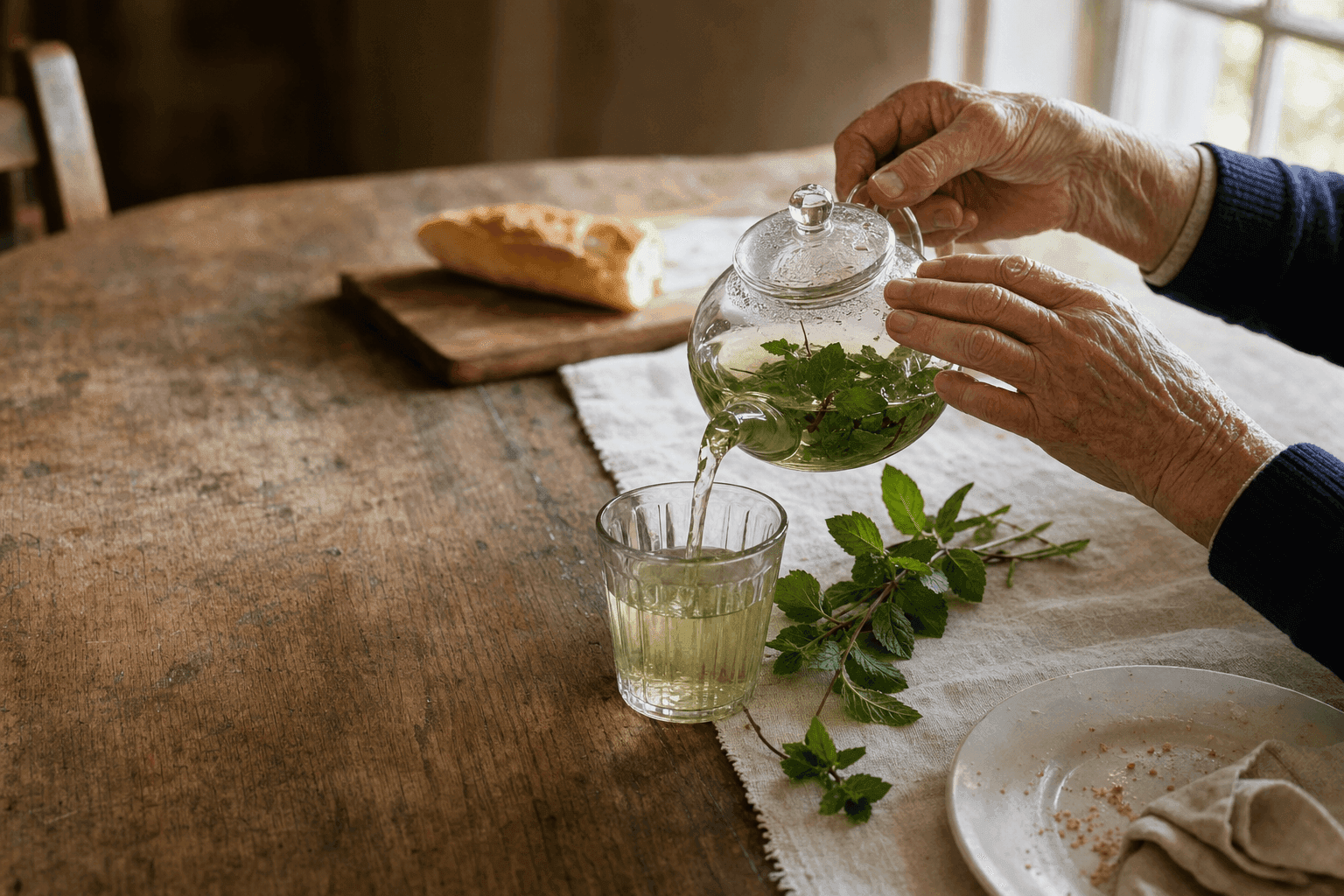
When you’re not digesting well, start with the simplest things: eat slowly, sitting down, don’t lie down after the meal, and drink a cup of peppermint or fennel. If you have heartburn, leave the peppermint aside, it can make it worse. If nothing changes in 48 hours, go and see your doctor, and if the discomfort rises into your chest, call 15.
Key takeaways
- Difficult digestion most often comes from a meal that was too big, too fatty or washed down with too much alcohol, and eaten too fast.
- The first grandma’s remedy is to eat slowly, sitting down, and not to lie down right after the meal.
- Peppermint is the cup for heavy digestion, but not if you have heartburn: it can make it worse.
- Fennel, chamomile, lemon balm and rosemary have their place too, each with its own dose and its own length of time.
- Discomfort that rises into your chest, with shortness of breath or sweats, isn’t a matter for herbal tea anymore: you call 15 or 112.
Granny’s little steps
- Eat slowly, sitting down, and chew well
Have your meals at set times, in peace, comfortably seated, and chew every mouthful. A meal gulped down standing up, your stomach remembers it.
- Don’t lie down after the meal
Stay seated or standing after eating, and have dinner at least three hours before going to bed. Me, I do the dishes: that’s one job done, anyway.
- Small meals rather than a feast
Go for light, regular meals rather than one big, heavy meal. Try going without anything too fatty, spicy or acidic for a while, and see if it gets better.
- Water rather than bubbles
Drink water, up to a liter and a half in a day. Leave fizzy drinks aside, and cut down on coffee, tea and alcohol.
- Loosen your belt, and move a little every day
Clothes that aren’t tight at the waist, regular activity, and no cigarettes. It’s nothing spectacular, but it’s what counts.
A recipe to try
The after-meal cup of peppermint
After a meal that was too big
What you’ll need
- 1.5 to 3 g of dried peppermint leaves (weigh them the first time)
- 150 ml of water
How I go about it
- Bring the water to the boil.
- Put the leaves in the bottom of your cup and pour the boiling water over them.
- Cover with a saucer and let it steep for 10 minutes.
- Strain and drink it hot, in small sips, sitting down.
- For an adult, three cups a day at most, and no more than two weeks in a row.
- If you have heartburn or acid coming back up, don’t drink it: it can make them worse.
For difficult digestion, my grandma’s remedy starts before the herbal tea: I eat slowly, sitting down, I don’t lie down right afterwards, and only then do I heat the water for a cup of peppermint or fennel. Nothing new. My mother used to say you digest with your fork first, and I’ve never found anything better. And if nothing changes after 48 hours, that’s not my department anymore: it’s your doctor’s.
Difficult digestion: the symptoms, and where it comes from
You know the feeling. A heavy belly up top, under the ribs, as if the meal didn’t want to go down. Medical books talk about discomfort or pain in the upper belly. Along with it often come bloating, burping, sometimes heartburn, nausea, and even a little headache.
Most often, the cause is on the table: a meal that’s too big, too fatty or too spicy, one glass too many, or a lunch gulped down in ten minutes, standing in the kitchen. In our house, it was Christmas dinner, every year.
And fat? People often ask me why rich dishes are so hard to digest. I won’t give you a lecture: they just advise leaving aside anything too fatty, spicy or acidic for a while, and seeing if it’s better without. After a tartiflette, no wonder it sits heavy. But if it’s strong and no big meal explains it, that’s something to show the doctor.
One more thing, and I’d rather tell you plainly: discomfort in the pit of the stomach can sometimes come from the heart, especially in women. If it’s tight, if it rises into your chest, if you’re short of breath or sweating, don’t put it down to the meal. You call 15.
Grandma’s plants for difficult digestion
For heavy digestion, I have five jars on the shelf. Each one has its dose, and I’ll give them to you, because a herbal tea is something you measure.
Peppermint is the first one I think of. The old handbooks give it, by tradition, when digestion is difficult and there’s gas. For an adult, I put 1.5 to 3 g of dried leaves in 150 ml of boiling water, ten minutes under a saucer, three cups a day at most. But careful: if you have heartburn or acid coming back up, leave it aside, it can make them worse. I tell you more about my peppermint here.
Rosemary, the books give it after a meal that was too heavy, when digestion drags or the belly cramps up a little, and the Greeks and Romans already took it after eating. I put 1 to 2 g of dried leaves in 150 to 250 ml of boiling water, ten minutes covered, two or three cups a day, no more than 6 g in a day. If you have a liver or gallbladder problem, you ask your doctor first. Everything else I do with rosemary, I’ve told you about.
German chamomile is for a tummy that bloats and knots up in little cramps after eating. 1.5 to 4 g of dried flowers in 150 ml of boiling water, ten minutes covered, three or four cups a day. It’s my evening cup. If you want to know what I do with chamomile, it’s all there.
Fennel seeds, not the bulb, are for when the belly bloats, pulls and there’s gas after eating. 1.5 g of seeds in a big bowl of boiling water (250 ml), fifteen minutes covered, up to three bowls a day, no more than two weeks in a row. I’ve told you about fennel over here, and if it’s mostly a tight belly bothering you, I have other habits for a bloated tummy.
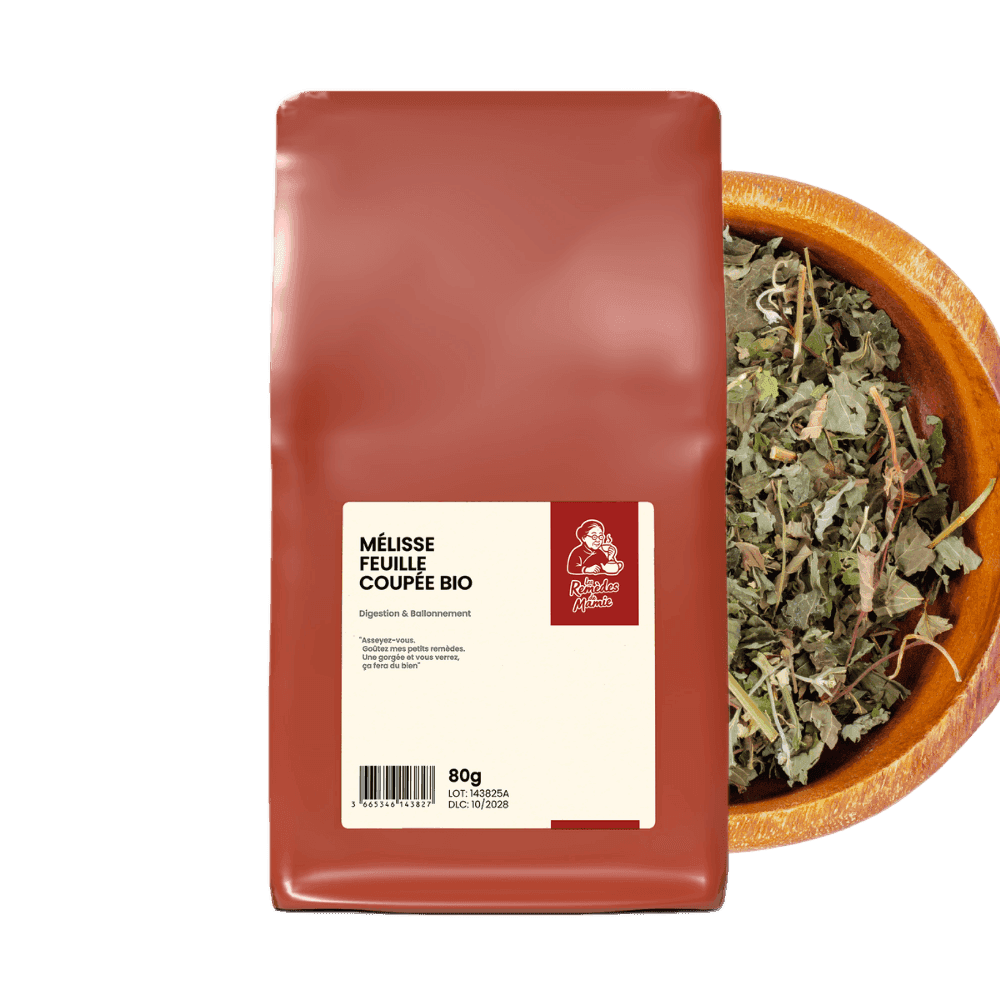
Lemon balm, last of all, for a tummy that bloats and makes gas, and for evenings when your nerves are as knotted as your stomach. 1.5 to 4.5 g of dried leaves in 150 ml of boiling water, ten minutes covered, one to three cups a day. It can make you drowsy: not before you get behind the wheel. I tell you more about my lemon balm there.
None of these cups is taken for more than two weeks for the same trouble, one week for chamomile. If it doesn’t pass, or if it gets worse along the way, you stop and go and see your doctor. And during pregnancy or breastfeeding, peppermint, rosemary, fennel and lemon balm stay in the cupboard.
“A herbal tea doesn’t make up for one meal too many. It keeps your stomach company while it does its work.”
What to do when you can’t digest: my everyday habits
People often ask me for a quick grandma’s remedy for difficult digestion. There’s no trick that makes it all go away in five minutes. There are habits, and it’s regularity that counts.
At the table first. I eat at set times, sitting down, in peace, and I chew well. I’d rather have small, light meals than a feast. In the evening, I have dinner at least three hours before going to bed, and after the meal, I don’t lie down on the sofa. I do the dishes instead, standing up, or take a little walk around the garden.
In the glass next. Water, without holding back, up to a liter and a half in a day. Less coffee and tea, no fizzy drinks, which make you burp, and alcohol in moderation.
And lemon? You see it everywhere for digestion. Me, I didn’t find it in my books for that, so I’m not going to promise it to you. When the stomach is sensitive, they even advise trying to go without acidic things for a while, and seeing if it gets better. My lemon, I keep for tarts.
The rest of your life counts too: moving a little every day, not smoking, and wearing clothes that aren’t tight at the waist. Loosening your belt after the meal is as simple as it gets, but I’ve always done it.
Difficult digestion: knowing when it’s no longer a small trouble
Heavy digestion after a big meal happens. The signs to watch for are written further down, one per line. Above all, remember three things. Discomfort that rises into your chest, or that comes with shortness of breath or sweats, means calling 15 right away. Blood when you vomit, or black stools, means a doctor right away. And if nothing improves after 48 hours of good habits, you make an appointment.
If you’re 55 or older and these digestion troubles are new for you, show them to your doctor, even without any other sign. Same if they started at the same time as a new pill.
Grandma helps with the little troubles of everyday life. The real troubles are your doctor’s job.
Which plants?
WormwoodArtemisia absinthium
Wormwood is a silvery, very bitter perennial herb, a cousin of mugwort. I drink it rarely, in a very small cup before a meal, and I respect its limits.
AnisePimpinella anisum
Green anise means the little grey-green seeds of a Mediterranean umbellifer: I steep them when my tummy bloats or when I cough with a cold, and I put some in my biscuits.
Ceylon cinnamonCinnamomum verum
Ceylon cinnamon is true cinnamon: the thin bark of a tree from Sri Lanka, in sticks of many layers, with far less coumarin than cassia. I put it in rice pudding, and in a cup when my tummy bloats.
LiquoriceGlycyrrhiza glabra
Liquorice is a Mediterranean plant with a very sweet root, the one behind chewing sticks and black sweets. I keep it for now and then, never more than 4 weeks.
Black radishRaphanus sativus var. niger
Black radish is the big winter radish with black skin and hot white flesh: raw in thin slices, cooked in soup, and as a honey syrup when the winter cough settles in.
MarshmallowAlthaea officinalis
Common marshmallow is the tall, soft plant of the water's edge whose root gave its name to the sweet: a cold glass when your throat feels scratchy, and homemade marshmallows for the afternoon snack.
Milk thistleSilybum marianum
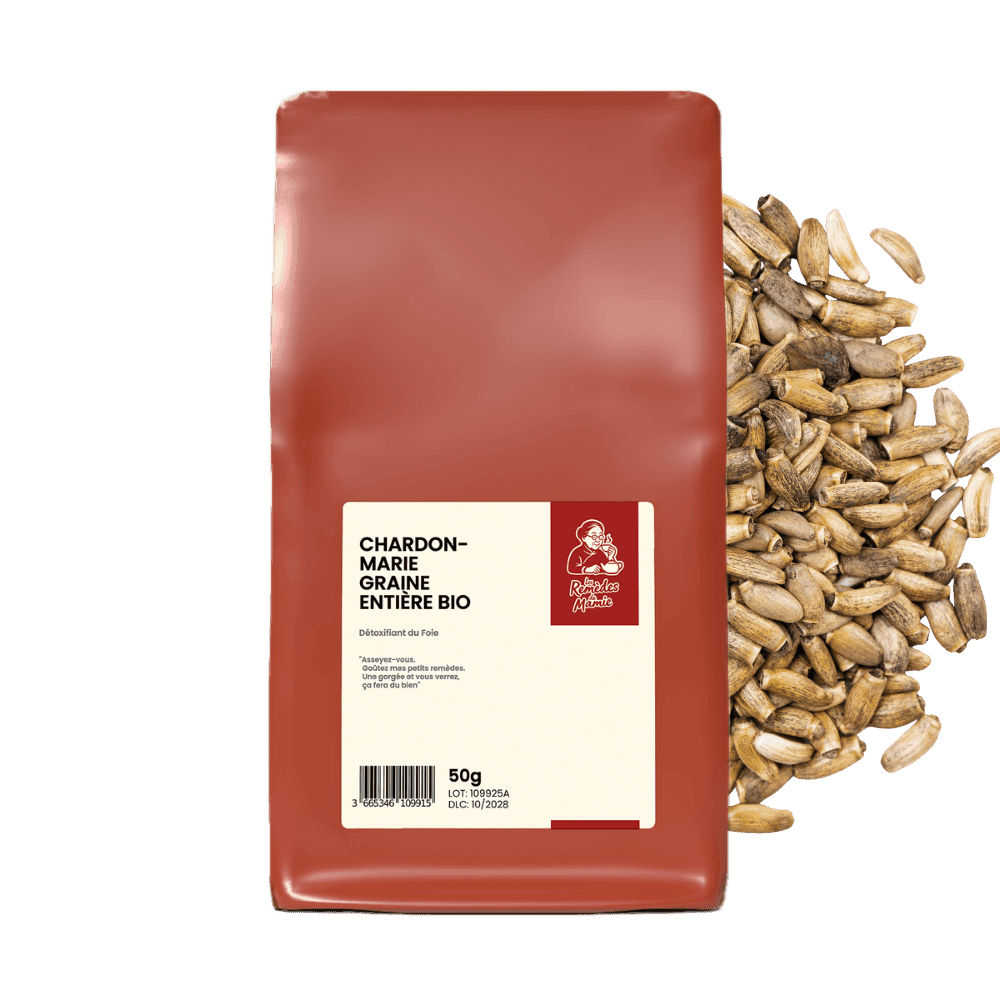
Milk thistle is the tall thistle with white-marbled leaves from around the Mediterranean. Its seeds are drunk in a cup before meals that are too rich, when you feel too full.
TurmericCurcuma longa
The yellow root in curry, a cousin of ginger from India. How I use it in cooking and in a little cup after meals, and why I'm wary of concentrated supplements.
RosemarySalvia rosmarinus
Rosemary is the evergreen Mediterranean shrub you keep close to the kitchen: for the potatoes, for a cup after a meal, for the bath.
FennelFoeniculum vulgare Mill.
Fennel is the tall plant that smells of anise: its seeds go into a tea when your tummy bloats, the Florence bulb goes into the kitchen, and wild fennel grows along the roadsides.
What to know first
The five plants on this page don’t suit everyone. I’ll tell you everything, plant by plant.
Pregnancy and breastfeeding: no peppermint, rosemary, fennel seeds or lemon balm. There isn’t enough hindsight to know whether it’s safe, so the books say to go without. For a simple cup of German chamomile tea, the books say you can drink it in the usual amounts. Since digestion is often slower during pregnancy, talk to your midwife or your doctor before taking anything at all.
Children: no peppermint before age 4; from 4 to 11 and for teenagers, a smaller cup, 1 to 2 g of leaves in 100 to 150 ml of boiling water, three times a day. No fennel before age 4; from 4 to 12, 1 g of seeds in 100 ml of boiling water, 15 minutes, three times a day, for less than a week, and only with seeds known to be suitable for children: ask your pharmacist. No rosemary or lemon balm before age 12. No chamomile before 6 months; after that, 0.5 to 1 g of flowers from 6 months to 2 years, 1 to 1.5 g from 2 to 6 years, 1.5 to 3 g from 6 to 12 years, two to four times a day.
Heartburn and acid reflux: no peppermint, it can make them worse.
Liver and gallbladder: if you have gallstones or another bile duct problem, be careful with peppermint. Rosemary: if you have a liver disease, gallstones, an inflamed gallbladder or blocked bile ducts, you don’t drink it without your doctor’s advice.
Allergies: no peppermint if you’re allergic to mint or menthol. Chamomile is in the same family as ragweed, chrysanthemums, marigolds and daisies: if you’re allergic to one of them, you go without, and if your face or throat swells or you have trouble breathing, call emergency services right away. No fennel if you’re allergic to fennel, to anethole, to a plant in its family (anise, caraway, celery, coriander, dill) or to mugwort pollen. And no rosemary or lemon balm if you’re allergic to them.
If you take a treatment: with chamomile, interactions have been reported with warfarin, an anticoagulant, with some medications processed by the liver, and in kidney transplant patients who drank a lot of it for a long time. For lemon balm, the books have no data. For peppermint, rosemary and fennel, they report no interaction. If you’re on a long-term treatment, especially for sleep, for your nerves or to thin the blood, ask your doctor or your pharmacist before drinking them regularly.
Lemon balm: it can make you drowsy; if that happens to you, don’t drive. The books also note that it might slow down a hormone that controls the thyroid: if you have a thyroid problem, ask your doctor first.
Amounts and duration, for an adult: peppermint, 1.5 to 3 g of leaves for 150 ml of boiling water, three times a day. Rosemary, 1 to 2 g for 150 to 250 ml, two or three times a day, 6 g a day at most. German chamomile, 1.5 to 4 g for 150 ml, three or four times a day. Fennel, 1.5 g for 250 ml, 15 minutes, three times a day. Lemon balm, 1.5 to 4.5 g for 150 ml, one to three times a day. No more than two weeks for the same trouble, one week for chamomile. If it doesn’t pass, or if it gets worse along the way, you stop and go and see your doctor.
When to see your doctor
- If the pain is very strong, comes on suddenly and spreads to your chest: call 15 or 112 right away.
- If the discomfort in the pit of your stomach comes with shortness of breath, sweats or a racing heart: call 15 or 112 right away, it may be coming from your heart.
- If you vomit blood: see a doctor right away.
- If your stools are black: see a doctor right away.
- If you have red blood in your stools: see a doctor right away.
- If your stomach hurts and you turn pale, feel dizzy, feel unwell or very weak: see a doctor right away.
- If you vomit often or a lot: make an appointment with your doctor quickly, in the next few days.
- If you have a fever at the same time: make an appointment with your doctor quickly, in the next few days.
- If you’re losing weight without trying: make an appointment with your doctor quickly, in the next few days.
- If you have trouble swallowing, or if swallowing hurts: make an appointment with your doctor quickly, in the next few days.
- If your skin or the whites of your eyes turn yellow: make an appointment with your doctor quickly, in the next few days.
- If tiredness or sweats settle in and won’t pass: make an appointment with your regular doctor.
- If a blood test has shown anemia: talk to your regular doctor about it.
- If the discomfort comes when you make an effort and goes away at rest: see your doctor in the next few days.
- If the discomfort is strong and no big meal explains it: see your doctor in the next few days.
- If good habits haven’t changed anything after 48 hours: see your doctor in the next few days.
- If your difficult digestion started at the same time as a new treatment, for example aspirin or anti-inflammatories: see your doctor in the next few days.
- If your stomach has been hurting for a week or more: make an appointment with your regular doctor.
- If the stomach pain goes away and then comes back: make an appointment with your regular doctor.
- If you’re 55 or older and these troubles are new for you: make an appointment with your regular doctor.
- If close relatives have had cancer of the stomach or the duodenum: make an appointment with your regular doctor.
- If you’ve already had stomach surgery: make an appointment with your regular doctor.
Your questions
What’s the grandma’s remedy for difficult digestion?
Mine comes in two steps. First the habits: eat slowly, sitting down, don’t lie down after the meal, leave aside fizzy drinks and anything too fatty. Then a cup: peppermint, 1.5 to 3 g of leaves in 150 ml of boiling water, ten minutes covered, or fennel, 1.5 g of seeds in 250 ml, fifteen minutes. If you have heartburn, forget the peppermint.
What drink helps digestion?
Water first, no more than a liter and a half in a day. Then a herbal tea after the meal: peppermint, chamomile, fennel, lemon balm or rosemary, each at its own dose. Fizzy drinks, coffee, tea and alcohol, on the other hand, I leave aside when my stomach feels heavy.
How can I digest faster after a heavy meal?
I’d rather tell you: nothing makes it all go away in five minutes. What makes the moment easier is staying seated or standing rather than lying down, loosening your belt, drinking a little still water and having a hot cup, slowly. And next time, smaller portions, eaten slowly.
Which plant for digestive troubles?
For heavy digestion with gas, the books mostly give peppermint and rosemary. For a tummy that bloats and cramps up, German chamomile, fennel seeds and lemon balm. Peppermint, rosemary, fennel and lemon balm aren’t taken during pregnancy or breastfeeding, and none of these plants is taken for more than two weeks for the same trouble, one week for chamomile.
Does lemon help digestion?
I didn’t find it in my books for digestion, so I’m not going to promise it to you. When the stomach is sensitive, they even advise trying to go without acidic things for a while, and seeing if it gets better. If you like your lemon water, keep it, but don’t count on it to help you digest.
Difficult digestion and tiredness: when should I worry?
I get heavy eyelids after Sunday lunch too. But if the tiredness settles in and won’t pass, with fever or sweats, if you’re losing weight without trying, or if your skin or eyes turn yellow, you make an appointment with your doctor without dragging your feet.
Also worth reading
- The LetterAs the seasons change, my bitter plants from the garden to the tableAt every change of season, my mother brought out her bitter plants: dandelion in spring, artichoke and milk thistle in autumn. I'll tell you how I take them, and what they don't do.
- The LetterHeavy digestion: the cup I drink after the big Sunday lunchHeavy digestion after the big Sunday lunch, at our house, always ended with a bowl of fennel seeds. I'll tell you about my mother's tin box, with the measures.
- The LetterWhat ginger is good for, and my cup for the cold daysGinger, that rhizome that tingles on your tongue, comes out as soon as the first cold days arrive. I'll tell you where it comes from, what my books say about it, my lemon cup, and what to know first.
- The LetterMaking a holiday herbarium: I'll show you how, step by stepMaking a herbarium takes a walk, a few flowers cut cleanly, some blotting paper and big books. I'll show you how it's done, from the path to the notebook, with your little ones.
- The LetterFatima's mint tea and my evening cup: come and have a tasteMy friend Fatima sent me a photo of her mint tea tray. I'll tell you her Marrakech recipe, my after-dinner peppermint, and why they aren't the same thing.
- The LetterMy holiday plant kit: let me show you what I take with mePacking your suitcase? Let me show you my natural first-aid kit: ginger for the road, peppermint and chamomile for when you get there, and what I leave at home.
- The LetterDrying your herbs in July: my little bunches up in the atticIn July, I cut my herbs in the morning, once the dew has gone, and hang them up in the attic. Come and see how I do it, plant by plant, so I have my herbal teas all winter.
- The LetterMy mother's notebook: her old grandma recipes, with measurementsI opened my mother's notebook again. Her grandma recipes had no grams and no minutes: here are the ones I've kept, measured, and her page on vinegar.
What I’ve made with
References
- Digestion difficile · Santé.fr, Service Public d’Information en Santé, 2026
- Dyspepsie ou mauvaise digestion : quand consulter et que faire ? · Assurance Maladie (ameli.fr), 2026
- Mal à l’estomac et brûlures d’estomac : que faire ? · Assurance Maladie (ameli.fr), 2024
- Infarctus du myocarde chez la femme : particularités des symptômes et prise en charge · Assurance Maladie (ameli.fr), 2026
- Indigestion · Manuel MSD, version pour le grand public, 2026
- European Union herbal monograph on Mentha x piperita L., folium (Revision 1) · European Medicines Agency (HMPC), 2020
- European Union herbal monograph on Rosmarinus officinalis L., folium (Revision 1) · European Medicines Agency (HMPC), 2024
- Assessment report on Rosmarinus officinalis L., aetheroleum and folium (Revision 1) · European Medicines Agency (HMPC), 2024
- European Union herbal monograph on Matricaria recutita L., flos · European Medicines Agency (HMPC), 2015
- European Union herbal monograph on Foeniculum vulgare Miller subsp. vulgare var. vulgare, fructus (Revision 1) · European Medicines Agency (HMPC), 2024
- Community herbal monograph on Melissa officinalis L., folium · European Medicines Agency (HMPC), 2013
- Glossary on herbal teas · European Medicines Agency (HMPC), 2010
- Chamomile · NCCIH (National Institutes of Health), 2024
Information. This information is provided for general knowledge and doesn’t replace medical advice. Check with a healthcare professional before any use.
Health Disclaimer