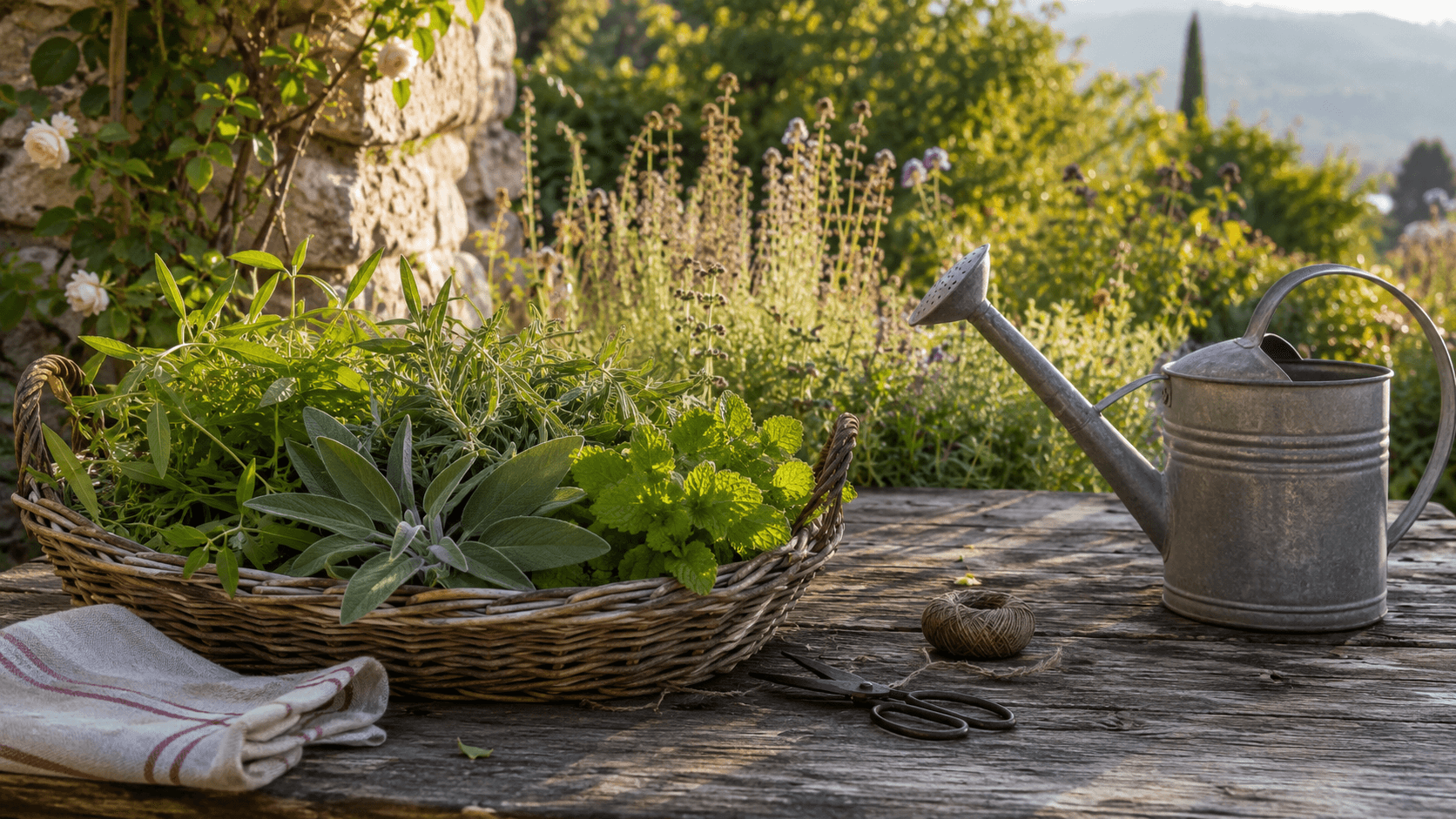
This beautiful Mediterranean shrub, with its warm and resinous scent, has always had a special place in our kitchens. We love to drink it as a warm infusion after a heavy meal, as it traditionally helps to soothe a tired stomach.
Who she really is
Family : Mint family (Lamiaceae). Native to the Mediterranean basin, rosemary thrives on dry, sunny hillsides and is now widely cultivated in temperate regions across the globe.
Parts used : Flowers, Leaves. Leaves and flowering tops harvested from May to September, on a dry, sunny morning after the dew has evaporated.
Rosemary is a wonderful, fragrant herb that we have always used to help soothe a tired stomach. After a heavy meal, you simply steep a small sprig of these sunny leaves in boiling water. It makes a warm, comforting tea with a lovely bitter taste that does you good and helps your digestion run smoothly.
Her story
Rosemary, Salvia rosmarinus, is an iconic shrub that grows wild around the Mediterranean basin. A lover of arid scrublands, limestone soils, and sunny rocky areas, it releases a powerful fragrance that immediately brings the South to mind. This generous plant, a companion to our gardens and our kitchens, has traveled through history thanks to its multiple uses and traditional benefits appreciated for generations.
A plant steeped in history and legends
Also known by its former botanical name of Rosmarinus officinalis before its reclassification in 2017, rosemary carries a poetic etymology. Its name is said to come from the Latin ros marinus, which means "dew of the sea", or from the Greek rhops myrinos, the "aromatic bush". In popular folklore, it is known by the lovely name of "coronation herb", or even "incense plant" in Provence, where its branches were burned to purify the air in homes.
Its love story with humanity is very ancient. Rosemary is notably one of the plants whose cultivation was recommended in royal estates by Charlemagne, in his famous capitulary De Villis at the end of the 8th century. Since that time, it has never left our herb gardens, precious for supporting the family's daily life.
Culinary traditions and daily benefits
Fresh or dried, this essential culinary herb is a pillar of Mediterranean cooking. It enhances dishes with its warm, camphoraceous flavor. It is also a remarkable honey plant. The bees that visit its blue flowers produce the famous rosemary honey, formerly called "Narbonne honey", renowned for its great delicacy. Perfumery appreciates it just as much for its fresh and toning notes.
Beyond the table, our grandmothers traditionally prepared rosemary as an infusion for the well-being of the body. It was gladly used after meals to help when the stomach felt heavy or tired. It is a friendly plant that helps you feel better and brings gentle comfort to sluggish digestions. In winter, a good cup of this hot infusion is a precious ally to help you feel stronger against the harshness of the season.
"A sprig of rosemary in the warm bathwater, and a tired body finds its vigor and energy for the day."
The secrets of its natural composition
Modern science has looked into what empirical knowledge already knew. Rosemary draws its strength from a great wealth of natural compounds. Its leaves contain phenolic acids, notably rosmarinic acid, as well as flavonoids and terpenes such as camphor, alpha-pinene, or 1,8-cineole. These elements give it its highly sought-after aromatic and protective properties.
To enjoy its benefits with peace of mind, it should be used with common sense. While its culinary use is safe for everyone, more concentrated infusions or the use of its extracts should be approached with caution. In case of doubt, or for regular use, it is always best to ask a doctor or a pharmacist for advice, especially for pregnant women or young children.
What makes it work
Rosemary is rich in essential oil containing 1,8-cineole, camphor, and alpha-pinene, alongside polyphenols such as rosmarinic acid and bitter diterpenes like carnosol. These natural compounds, well-documented in the European Pharmacopoeia, give the plant its characteristic warm aroma and traditional comforting properties.
What I use her for
- · 01Rosemary is a Mediterranean shrub traditionally used in cooking and as a warm herbal infusion.
- · 02Drinking rosemary tea after a heavy meal traditionally helps to support comfortable digestion.
- · 03A warm cup of rosemary tea in the morning is traditionally used to help wake up the senses.
- · 04Rosemary leaves can be brewed in a warm bath to provide a gentle, comforting sensation for the body.
How I prepare her
Granny’s little recipes
The morning-after herbal tea
In the morning, after a slightly too generous meal
What you’ll need
- A beautiful sprig of fresh rosemary from my garden (or a tablespoon of dried rosemary)
- A cup of very hot water
- A slice of yellow lemon
- A spoonful of flower honey
How I go about it
- 01Boil some water in your pretty kettle.
- 02Place the rosemary at the bottom of your favorite cup.
- 03Pour the simmering water over it and cover to keep the good scents in.
- 04Let it infuse quietly for 10 minutes.
- 05Add the lemon and honey, then drink slowly to help your stomach feel lighter.
Tired legs massage oil
In the evening, after a long day of walking or gardening
What you’ll need
- Three beautiful, dry sprigs of rosemary
- 20 cl of cooking olive oil
- A clean glass bottle
How I go about it
- 01Slip your rosemary sprigs into the glass bottle.
- 02Cover them completely with the olive oil.
- 03Let this bottle sit in the sun or near a window for two to three weeks.
- 04Filter the oil to remove the leaves.
- 05Massage your legs with this mixture from bottom to top, it feels wonderful when you feel heavy.
The fresh air steam
In the heart of winter, when your nose starts to tickle
What you’ll need
- A good handful of rosemary leaves
- A large bowl of boiling water
- A large bath towel
How I go about it
- 01Put the rosemary in your large bowl.
- 02Pour the boiling water over it to release that lovely scrubland scent.
- 03Place your face over the bowl, without getting too close to avoid burning yourself.
- 04Cover your head with the towel to keep the steam in.
- 05Breathe gently for 5 to 10 minutes, this old grandmother's recipe helps you feel clearer and breathe better.
What to know first
This information doesn’t replace advice from a healthcare professional. Health Disclaimer →
Her identity card
- Latin name
- Salvia rosmarinus
- Family
- Mint family (Lamiaceae)
- Parts used
- Flowers, Leaves
- Harvest
- Leaves and flowering tops harvested from May to September, on a dry, sunny morning after the dew has evaporated.
- Form
- Herbal tea, infusion, essential oil, mother tincture, and powder.
- Origin
- Native to the Mediterranean basin, rosemary thrives on dry, sunny hillsides and is now widely cultivated in temperate regions across the globe.
- Storage
- Keep your dried rosemary leaves in an airtight glass jar, tucked away in a dark, dry cupboard, to preserve all their wonderful resinous aroma for up to a year.
If you remember just one thing
- 01Rosemary is a Mediterranean shrub traditionally used in cooking and as a warm herbal infusion.
- 02Drinking rosemary tea after a heavy meal traditionally helps to support comfortable digestion.
- 03A warm cup of rosemary tea in the morning is traditionally used to help wake up the senses.
- 04Rosemary leaves can be brewed in a warm bath to provide a gentle, comforting sensation for the body.
Your questions
To make a comforting rosemary tea, you just need to steep a small sprig of dried rosemary leaves in a cup of boiling water for a few minutes. I always tell my grandchildren to cover the cup while it steeps so we don't lose that lovely, resinous aroma. Drink it warm, and it will do you a world of good.
Yes, we have traditionally used rosemary tea for generations to help soothe a tired stomach after a particularly generous meal. This fragrant herb has a slightly bitter taste that gently helps your digestion run smoothly. It is our favorite family remedy to help you feel light and comfortable again.
Drinking a warm cup of rosemary tea in the morning is a wonderful way to wake up your senses and feel bright for the day. My grandmother always kept a jar of it in her kitchen cupboard just for this, as its warm scent really helps you feel ready to go. Trust me, it is much gentler on the body than your usual morning coffee.
While rosemary is a wonderful companion for our daily comfort, you must always listen to your body and use it in moderation. If you are expecting a baby, or if you have any doubts at all about how it might suit you, please ask your doctor or a pharmacist first. We want to keep you safe and sound, after all.
A warm rosemary bath is a true delight when your body feels tired and needs a gentle hand. You simply brew a strong pot of rosemary tea, pour it right into your warm bathwater, and soak in it. The resinous steam will wrap around you and make you feel warm from the inside out.