Heavy digestion: the cup I drink after the big Sunday lunch
Heavy digestion after the big Sunday lunch, at our house, always ended with a bowl of fennel seeds. I'll tell you about my mother's tin box, with the measures.
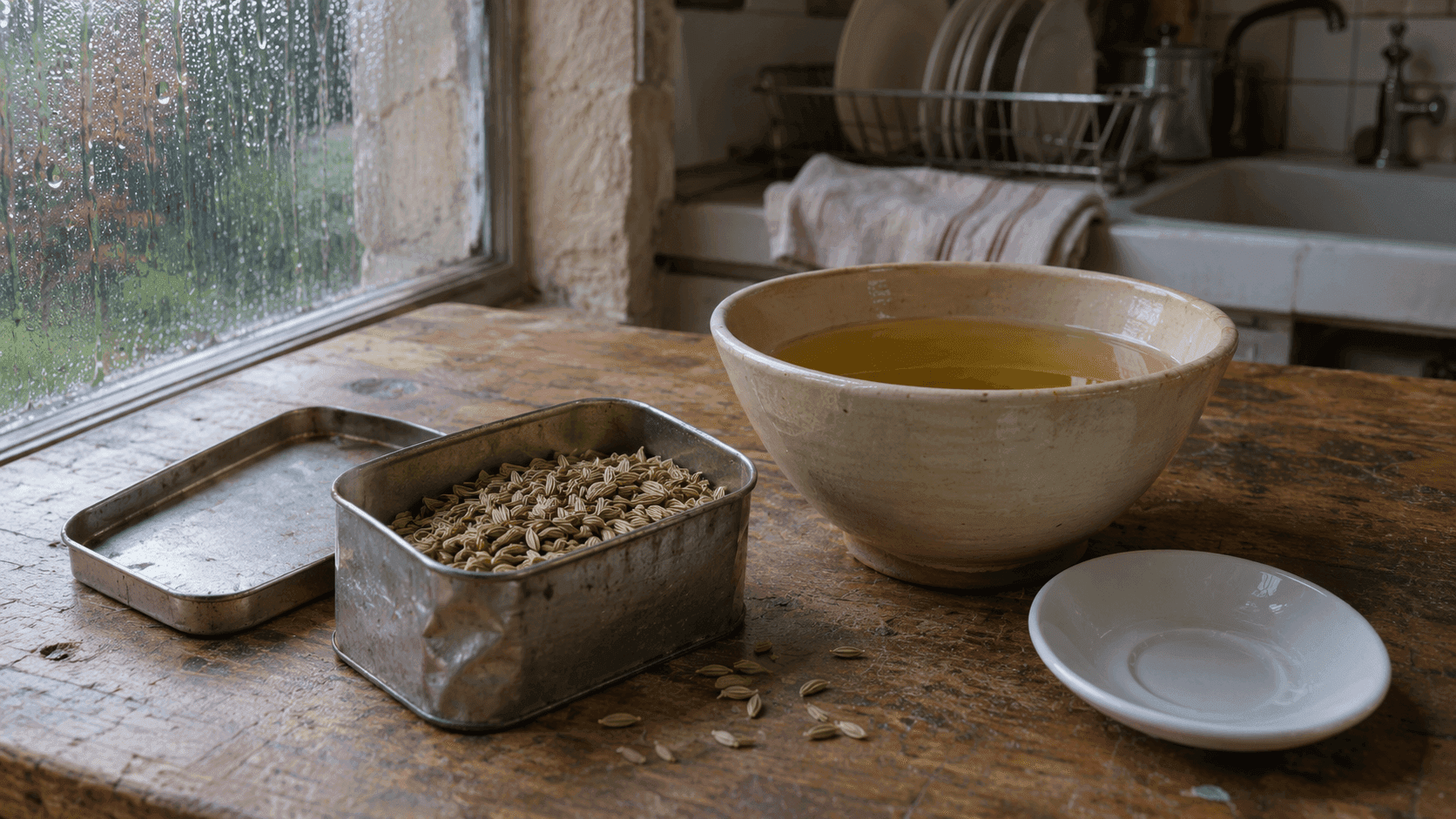
Heavy digestion after the big Sunday lunch, I know it by heart. At our house, the end of the meal always had the same taste: the fennel seeds my mother kept in a tin box, on the shelf above the stove. I'll tell you what she did, what I still do, and the measures, because a cup is something you weigh.
Sunday lunch, and my mother's tin box
In November, meals get longer. The stew simmers all morning with its bunch of thyme and bay, there's cheese, an apple tart, and everyone has seconds. Around three o'clock, belts are pulling, eyelids are drooping, and there's always someone saying their belly is as tight as a drum.
My mother never let anyone flop down on the sofa. She used to say a meal is digested with your legs too. So we got up, cleared the table, did the washing-up standing, and meanwhile the water was heating. As soon as she lifted the lid of her tin, the little grey striped seeds made the whole kitchen smell of anise. I was allowed to crunch two or three, for the taste.
She was right, deep down. Eating slowly, sitting down, chewing well, not lying down just after, loosening your belt: those are the first things to do, before any plant. I've put them all together in what I do when digestion is heavy. Here, I'm mostly telling you about the bowl.
My mother used to say a meal is digested with your legs too: you get up, you do the washing-up, and the bowl waits on the corner of the table.
My bowl of fennel for heavy digestion, step by step
It's the seeds you steep, not the bulb. The bulb is a vegetable; I eat it raw in salads. The books give fennel seeds, by tradition, when your belly swells, pulls and makes wind after eating. Here's how I do it:
- 1.5 g of dried fennel seeds (weigh them the first time, after that you'll recognise the little heap in your hand);
- 250 ml of water, a big bowl;
- I boil the water, pour it over the seeds and put a saucer on top;
- I let it steep for 15 minutes, strain it, and drink it hot, sitting down, in little sips.
Up to three bowls in the day, from age 12, and not more than two weeks in a row. If your belly doesn't calm down, or if it gets worse, it's no longer a matter for a bowl. Its Latin name means “little hay”, and I've told you the whole story of fennel separately. And if what bothers you most is a belly as tight as a balloon, I've written down my habits for a bloated belly.
Mint, the bitters of the old days, and what I leave aside
When it's more your stomach that weighs, heavy as a stone, with wind, I take peppermint. For an adult, 1.5 to 3 g of dried leaves in 150 ml of boiling water, ten minutes with a lid on, three cups a day at most. But if you have heartburn or acid coming back up, leave it in the jar: it can make them worse. My peppermint, I talk about it at more length there.
In the old days, people talked a lot about bitters. Yellow gentian, for instance, that tall plant of mountain meadows whose root is used. The books give it to adults when the appetite is missing for a few days or digestion drags a little. I'll be frank: it's so bitter I've never been able to swallow it, so I don't make it at home. If you want to try, not under 18, not during pregnancy or breastfeeding, and ask the village pharmacist how to prepare it.
And thyme, you'll say? In my kitchen, it goes into the stew, with the bay and the parsley. For the cup, my books keep it mostly for the cough that comes with a cold. So for the belly, I stick to fennel.
What to know first, and when to call
Fennel and mint in a cup, you go without during pregnancy and breastfeeding: we don't know enough about whether they're safe. No fennel if you're allergic to fennel, anise, caraway, celery, coriander, dill or mugwort pollen. No mint if you're allergic to mint or menthol, and if you have gallstones, ask your doctor first. For children, neither mint nor fennel under 4, and between 4 and 12, the cups are smaller, to be worked out with your pharmacist. The books don't report any interactions, but if you already take something on a doctor's orders, talk to your pharmacist before making it a habit.
And then there are the signs that aren't up for discussion. If the discomfort rises into your chest, or comes with breathlessness, sweating or a racing heart, you call 15 (the French emergency number) straight away: it can come from the heart, especially in women. If you vomit blood or your stools are black, it's a doctor straight away. If nothing changes after 48 hours, if you're losing weight without trying, or if these heavy digestions are new for you after 55, go and see your doctor.
There. The dishes are drying on the rack, and the bowl is cooling next to my mother's tin box, which I've kept, dented as it is. Outside, it's raining on the leeks. I'll go for my little walk anyway, with the umbrella. Until the next letter.