What ginger is good for, and my cup for the cold days
Ginger, that rhizome that tingles on your tongue, comes out as soon as the first cold days arrive. I'll tell you where it comes from, what my books say about it, my lemon cup, and what to know first.
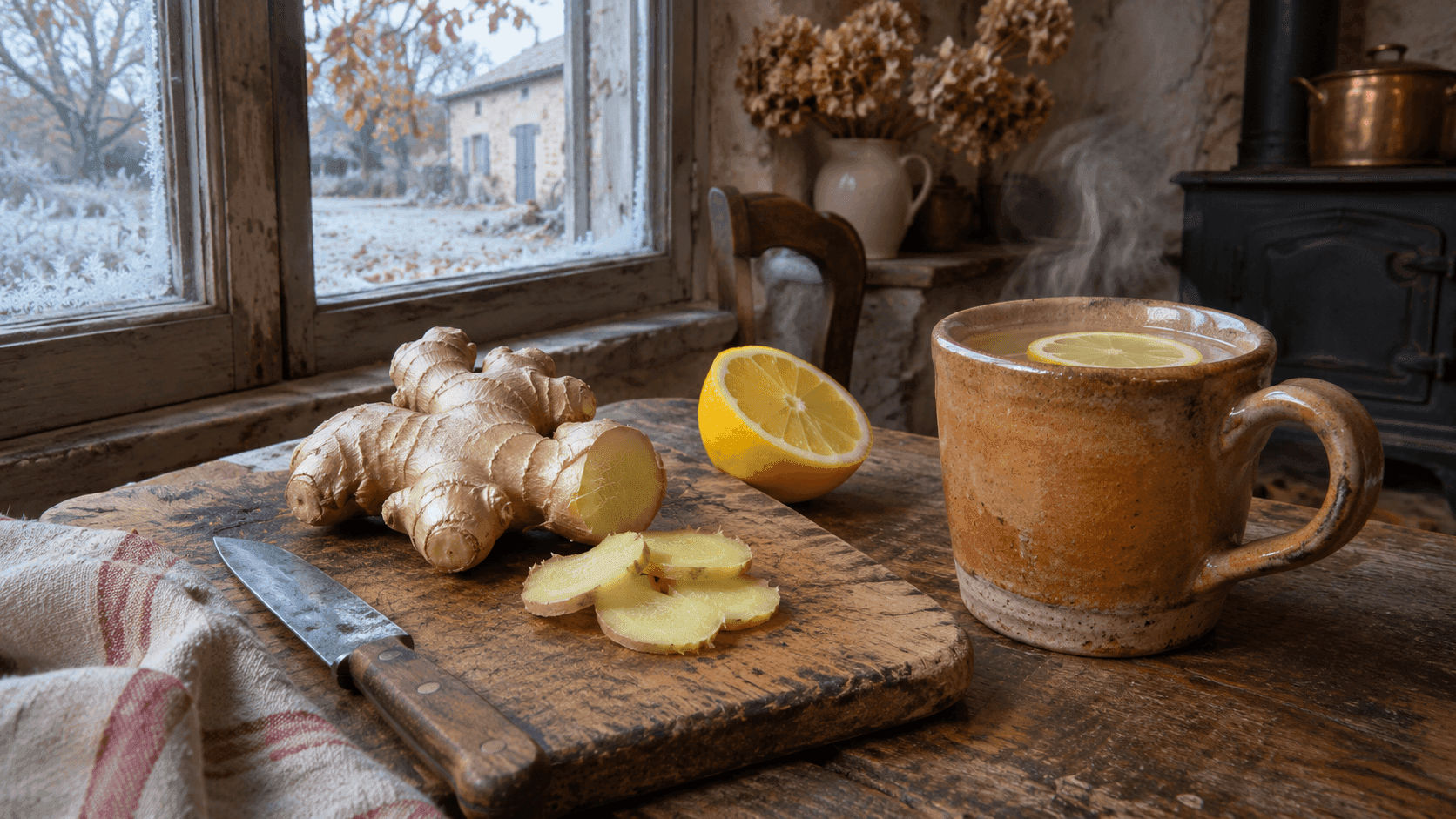
Ginger is the hot, peppery rhizome of a tall herb from Asia, that knobbly “root” you find at the market. This morning there was frost on the garden, and I put a nice big piece on the kitchen table, next to the lemon. I'll tell you what I do with it when the cold comes, what my books say about it, and what to know before you take more of it than you'd put in your cooking.
Ginger, a “root” that isn't one
We say ginger root, and I say it too. But what you grate is a rhizome: a stem that runs under the ground and branches out like a little hand. Above ground, the plant makes a clump about a metre tall, with long, spear-shaped leaves. Its learned name is Zingiber officinale, and it's in the same family as turmeric. Nowadays it's only known in cultivation: it grows again from a piece of rhizome you plant back in the ground.
It comes from far away. The botany books say it comes from the eastern Himalayas down to south-central China. The Greeks and the Romans already knew it, and in the Middle Ages it was a spice for the rich: in 14th century England, a pound of ginger cost as much as a sheep. My mother didn't always have any. When she found some, she'd slip a piece into the cooking pot on frosty evenings, and the whole kitchen smelled of pepper and lemon.
My friend Li, who grew up in Hunan province, taught me that in Chinese fresh ginger is called shēngjiāng and dried ginger gānjiāng, and that at home they don't mix them up: they aren't used for the same things.
Ginger tingles on your tongue, warms you right to your fingertips, and promises nothing. That's why I'm fond of it.
What ginger is good for, according to my old books
I'll put it simply: ginger doesn't work wonders, and I'm not promising you anything. But the books recognise a few traditional uses for it, on the strength of long use, and they're the ones I know too.
The first is the road. For travel sickness, in the car or on a boat, the books give, from 12 years old, 500 to 750 mg of powdered ginger half an hour before you set off, without going over 2.5 g in the day. Between 6 and 12 it's less: 250 to 500 mg, and no more than 1.5 g a day. Not under 6. I've written down other habits for those whose stomach turns in the car.
The second is the tummy, when it's bloated and pulls with little cramps after a meal, or when your appetite goes off for a few days. For a bloated, tight tummy and for meals that are slow to go down, it's one of my cups. The books also give it for little aches in the joints, and for the days when you've caught a chill and your nose is running.
And ginger and lemon for losing weight, the thing you see everywhere? The books say nothing about it, and neither do I. I drink my cup because it warms me up and I like the taste.
“Ginger tingles on your tongue, warms you right to your fingertips, and promises nothing. That's why I'm fond of it.”
My ginger and lemon cup, and Li's ginger water
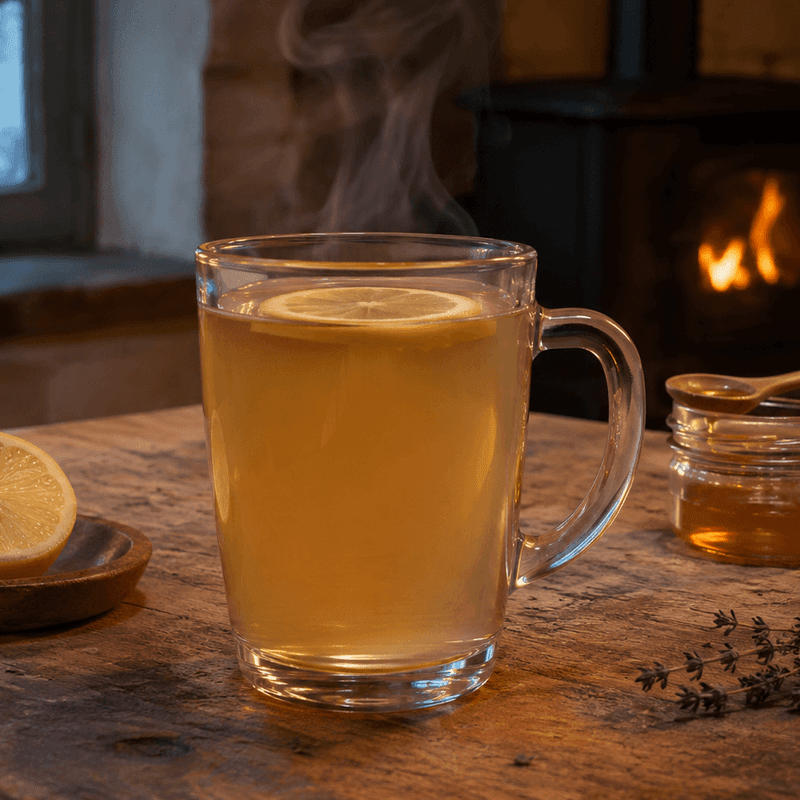
My cup couldn't be simpler. I bring 300 to 400 ml of water to the boil. Off the heat, I add a tablespoon of freshly grated ginger (or a level half-teaspoon of powder, if that's all I have) and the juice of half a lemon. I cover it, leave it to steep for ten minutes, strain it, and add a little honey. I drink it in the afternoon, when I come in from the garden with frozen fingers.
When the cold settles in for good, I make Li's ginger water, the one her mother made for the whole family. Eight slices of fresh ginger (about 12 g) in 600 ml of water: I bring it to the boil, then let it simmer for about ten minutes, until there's roughly 400 ml left. I add a tablespoon of brown sugar, cover it, turn off the heat and leave it to stand for 20 minutes without lifting the lid. That makes two good hot bowls. But my own favourite is still my lemon cup, with honey from my neighbours.
When I choose it, I want it firm, with no spots, and with pale yellow, juicy flesh when I cut into it. It keeps about two weeks in the fridge, well wrapped. The rest I peel and put in the freezer in thin slices: you grate it while it's still frozen. Everything else I know, I've put in my page about ginger.
What to know before you take it every day
People have eaten it in their cooking for centuries. Taken as a remedy, as a powder, several times a day, that's another matter. What happens most often is a grumbling tummy: an upset stomach, burping, heartburn, sometimes nausea. If it does that to you, don't keep at it. And if you're allergic to ginger, you go without.
People often ask me about it during pregnancy. To be on the safe side, the books would rather you avoided ginger taken as a remedy while you're pregnant, and they don't advise it while breastfeeding. That doesn't mean the ginger you put in your cooking. For the nausea of early pregnancy, it's your doctor or your midwife you should ask. For children: not under 6 for travelling, not under 18 for the rest.
If you already take something on a doctor's orders to thin the blood, talk to your doctor before taking it regularly. The same goes if you have gallstones or if you have an operation coming up. And if your tummy or your appetite isn't better after two weeks, if a cold lasts more than a week, if joint aches last more than four weeks, or if a joint is swollen, red or comes with a fever, go and see your doctor.
There. The kettle is singing on the stove, the lemon is cut, and outside the last leaves are falling on the path. I'm going to drink my cup by the window. Wrap up warm, and I'll write again soon.