Contents
The article
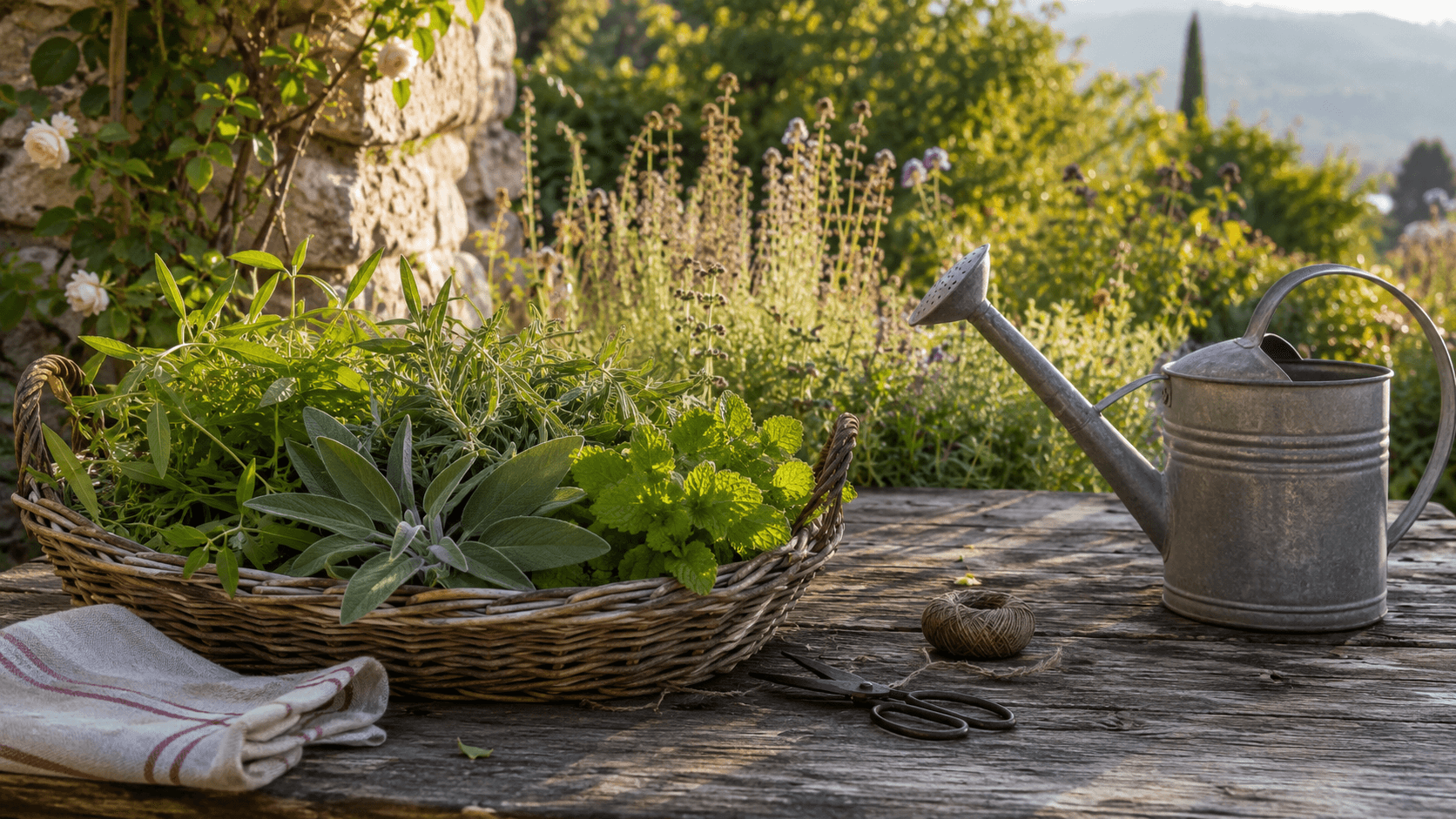
Before we get out the scissors and the old dictionary to press our treasures, we need to agree on two or three little things when it comes to gathering. When I take my grandchildren out on the paths, I first teach them to open their eyes wide and keep their hands in their pockets for the first few minutes. We do not pick up everything that shines or colors the ditch. We choose clean spots, far from roads where cars pass and cultivated fields. This is a golden rule that my own grandmother used to repeat to me when we went looking for things to prepare our evening infusions.
First the walk, and a few common sense rules
To make a beautiful herbarium that lasts a lifetime, we never gather a plant wet with morning dew or a passing shower. We must wait until the sun has done its job and the petals are perfectly dry, otherwise everything will spoil and turn black under the press. We also take only what we need, a single stem per species, always leaving the root in the ground so that the flower can return the following year. That is how we respect the nature around us. If a plant is rare or if it is all alone in its corner, we just look at it and move on.
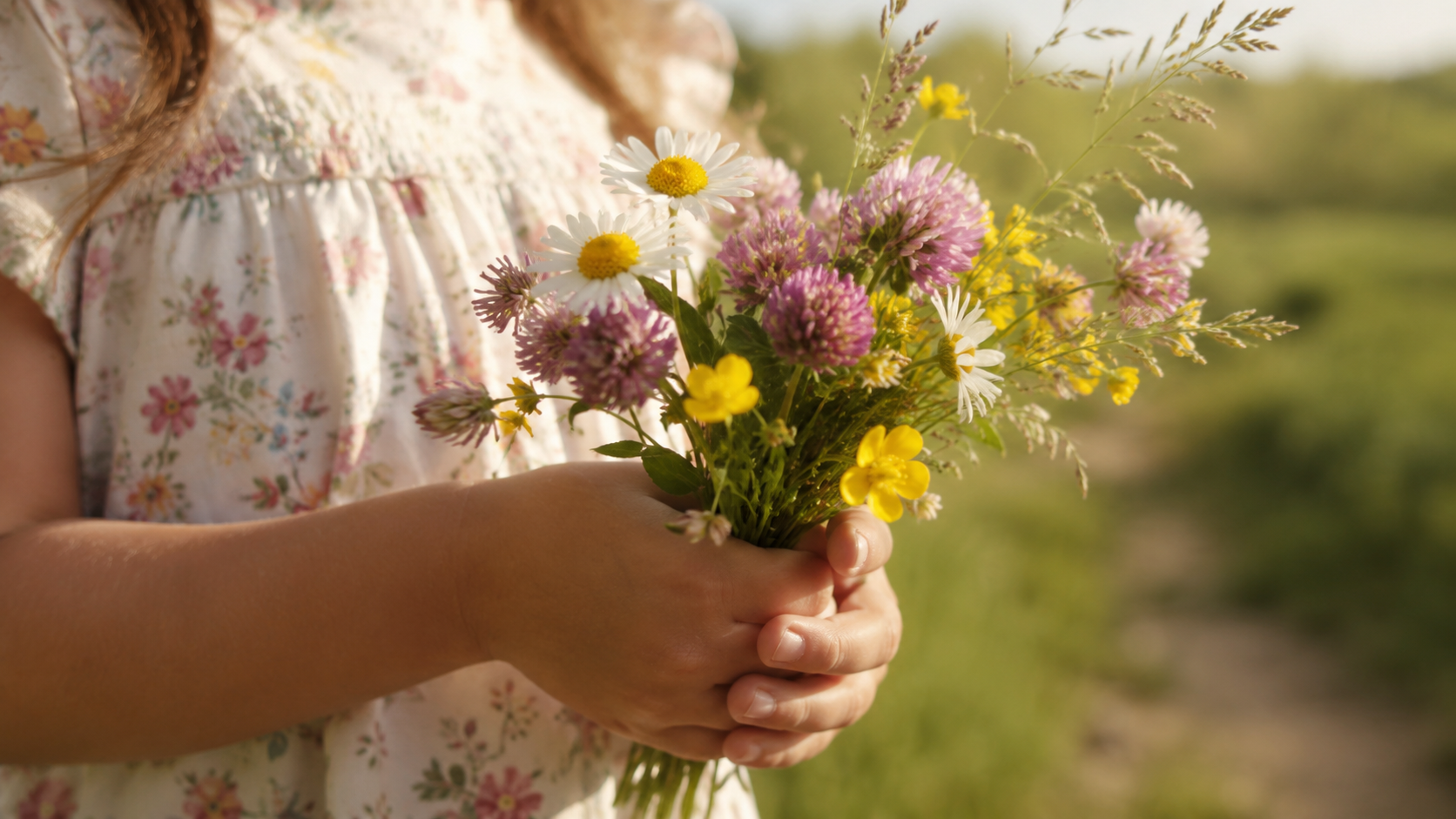
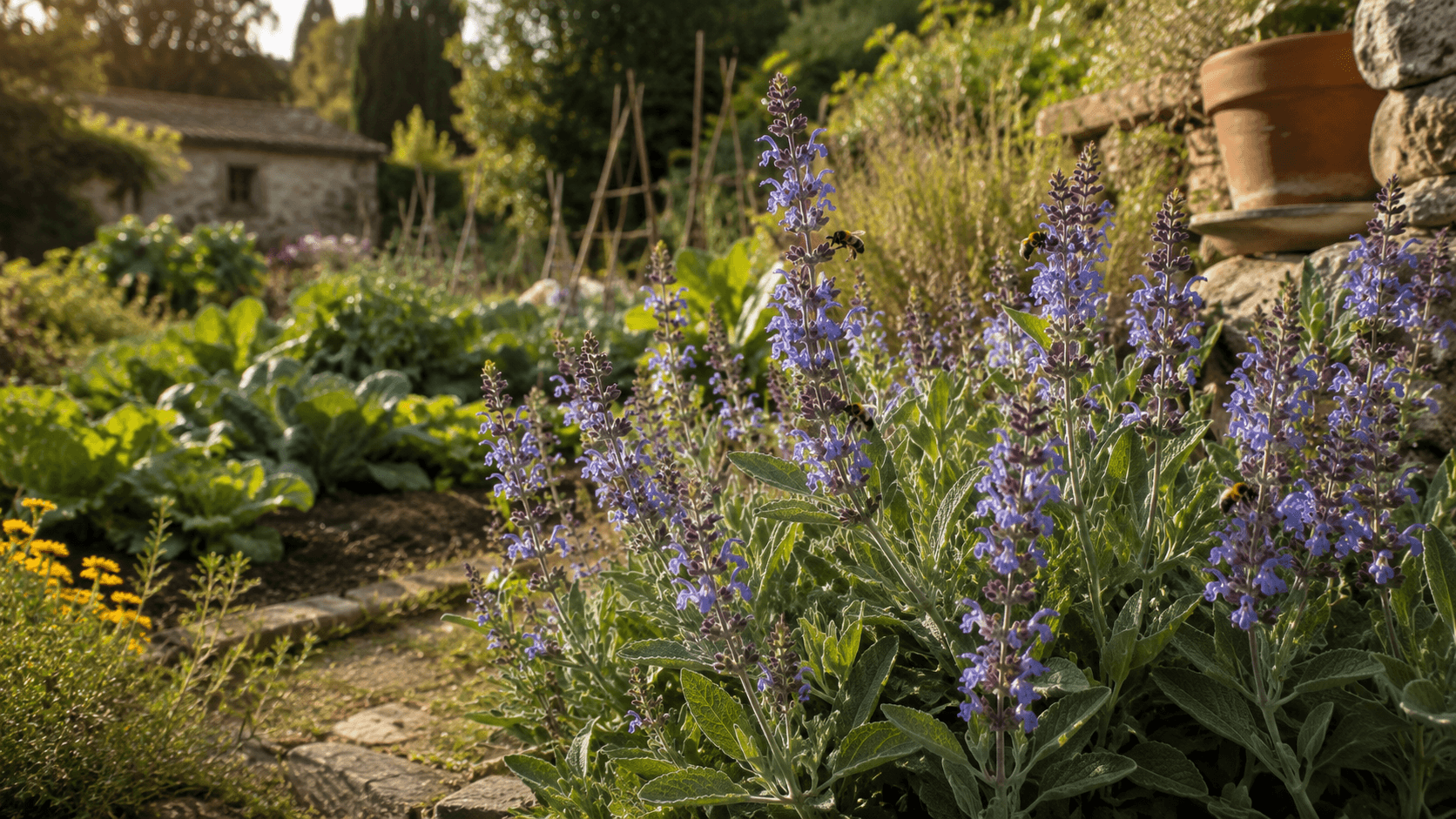
You see, I often show them the little daisy or the buttercup, simple flowers that everyone knows and that dry very well. We also like to gather a sprig of wild lavender if we are lucky enough to come across some. Just rubbing it between your fingers smells like holidays and calms little minds that are a bit too excited by the walk. In the old days, people would slip these scented flowers under the pillow to help support a peaceful sleep. When we get back home, we gently shake our finds to get rid of any little insects, and we get ready for the drying stage on the kitchen table.
Under the stack of books, a lesson in patience
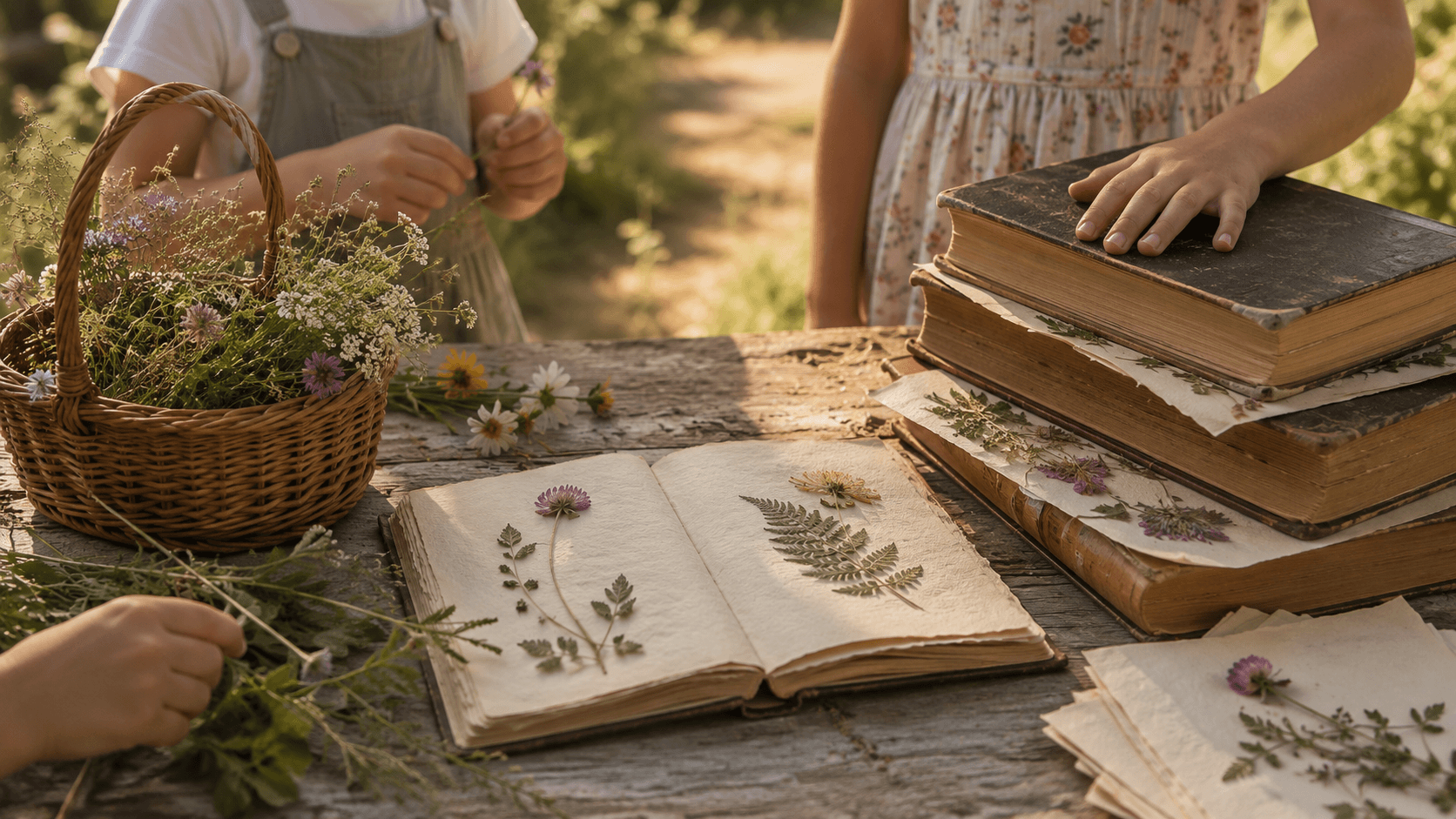
You will see, this is where everything happens, between the pages of our old dictionaries and the heavy volumes of the encyclopedia sleeping in the living room. Once we have brought our little wonders back from the walk, we must lay them out very flat between two sheets of blotting paper. My grandchildren always get a little impatient at this point, they want everything to be dry in five minutes. So I explain to them that we must let time do its work, place the heaviest stack of books possible on top and forget about it all for two or three weeks. It is a lovely lesson for them, and for us too, in this world where everything always goes too fast.
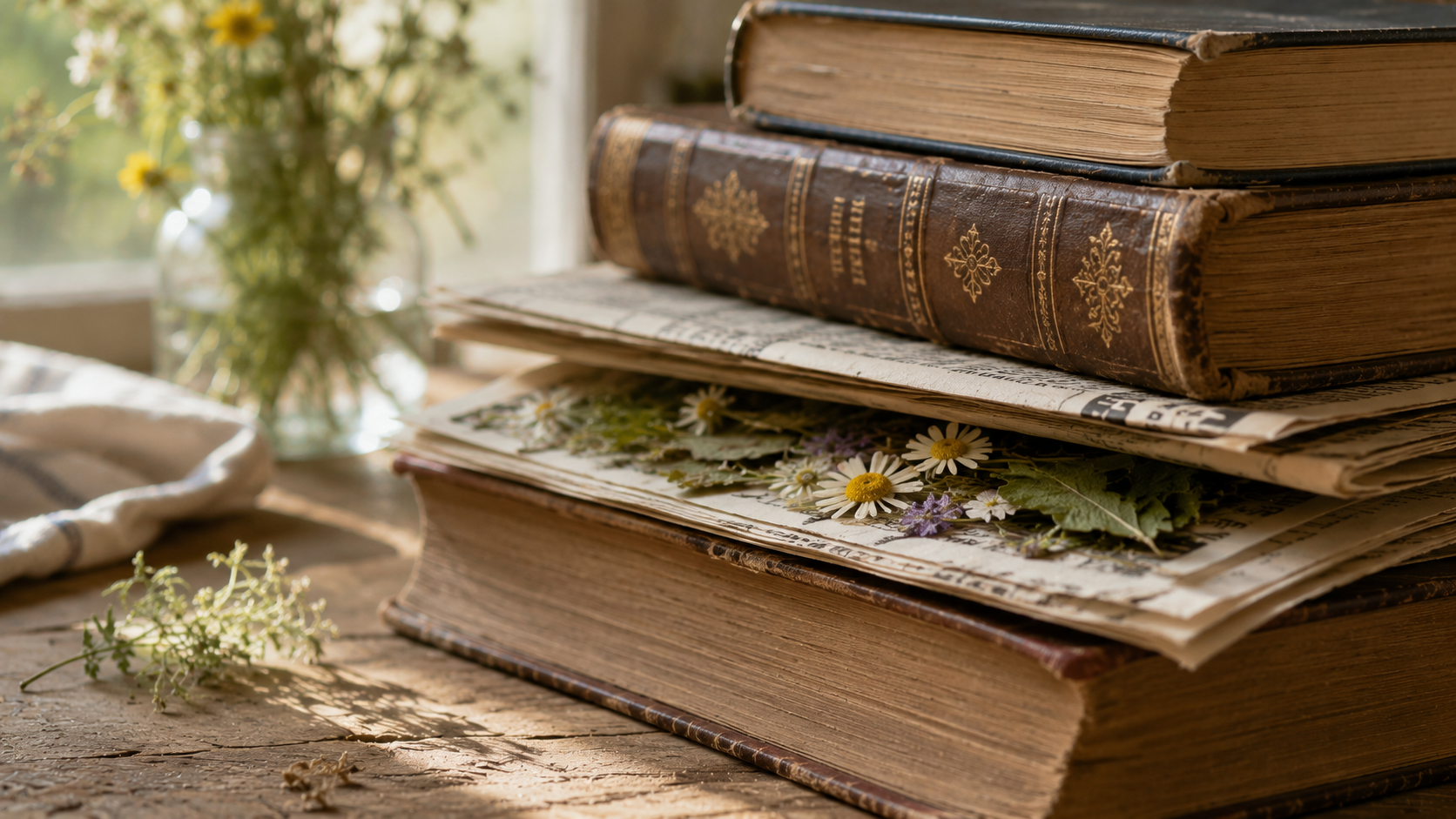
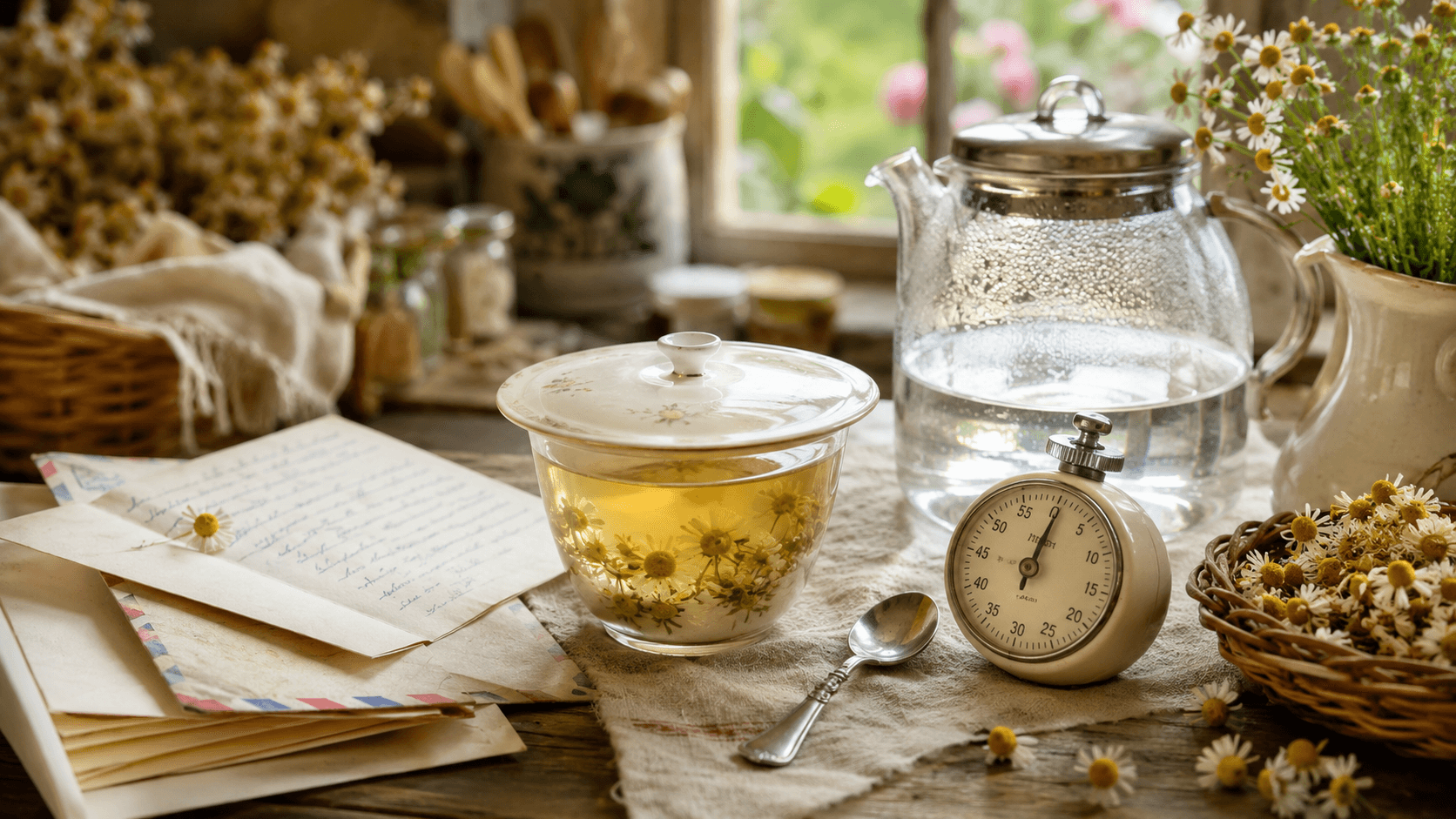
While the plants sleep under their weight of paper, we take the opportunity to prepare the labels and remember what we gathered. Why, the other day, we set some wild chamomile and linden flowers to dry. I was telling them that my own mother used to gather the exact same flowers at the beginning of summer. She would make large, fragrant infusions in the evening to help us find sleep when the nights were too warm. It is gentle, it smells sweet like honey and it calms the mind after a long day of running around the paths. The little ones listen to these stories with wide eyes, and the connection forms naturally between generations.
When we finally lift the books, it is always a magical moment. The colors have changed a little, the petals have become as thin as silk, almost transparent. We delicately glue each sprig onto a beautiful white sheet with a small piece of gummed paper, just like we used to do. We write the name of the plant, the date and the place of gathering in our finest handwriting. Here is a treasure that costs nothing, teaches respect for nature and will warm our hearts when the winter wind blows outside.
What I wish for you this August
Listen to me closely, what I wish for you this August is to finally take the time to slow down and look at what grows along the paths. I wish you to find that simple joy of walking with your nose in the wind, gathering a pretty bramble leaf or a sprig of wild mallow, and sharing this treasure with the little ones. It is the perfect time to show them nature in a different way, far from screens, by touching the softness of a great mullein leaf or breathing in the scent of a sprig of dried lavender. We too often forget these little pleasures that do wonders for the spirits.
By gluing it into your herbarium with the children, you pass on this old knowledge of ours. It is a lovely way to teach them that the earth gives us everything we need to soothe the little troubles of daily life, simply, as we have always done in our countryside.
I also wish you to fill your biscuit tins with these little summer flowers that come in so handy the rest of the year. For instance, Roman chamomile dried in the shade, my mother always kept a jar of it for evenings when the stomach felt a bit tight after a heavy meal. If you have any doubts or specific questions about the use of plants, never hesitate to ask your doctor or pharmacist for advice.
So there you go, for this month of August, I wish you glue all over your fingers, shared laughter around the kitchen table and stacks of heavy dictionaries sleeping on elderflowers left to dry. When the winter wind blows and the children have gone back home, you will open this large cardboard notebook. You will find in it a little of the warmth of this summer, the smell of cut hay and the memory of those precious moments spent together learning the secrets of the plants along our paths.
FAQ
To make a holiday herbarium with your children or grandchildren, you simply need to gently gather a few wild flowers without damaging the roots. You then slip them flat between two sheets of newspaper, under a big stack of heavy books, for two to three weeks. Once they are completely dry, you can tape them together in a lovely notebook to keep a sweet memory of your summer.
To start your holiday herbarium, I advise you to choose plants that are easy to dry and do not contain too much water, such as daisies, clovers, or small ferns. Avoid plants that are too fleshy or very thick flowers like roses, as they might mold before drying. It is a wonderful activity to do with the younger ones to teach them the names of the flowers along our paths.
No, you cannot gather just any flower for your holiday herbarium, as we must respect our beautiful nature. Some plants are protected or rare, so we leave them alone and simply admire them or take a photo. If you have any doubt about a species during your walk, ask a local guide or a pharmacist who knows them well for advice.
To preserve your holiday herbarium well over the years, store your notebook in a very dry place, away from moisture and direct sunlight which fades the colors. You can add a small label under each flower with its name, the date, and the place of your walk. It is a true joy to leaf through this paper treasure by the fireside during the winter, believe me.
Making a holiday herbarium with your grandchildren is a wonderful way to share a quiet moment and pass on the love of nature to them. This hands-on activity teaches them to observe the details of leaves, to be patient during the drying process, and to respect living things. It is a precious bond between generations that creates unforgettable memories for the whole family.