My mother's notebook: her old grandma recipes, with measurements
I opened my mother's notebook again. Her grandma recipes had no grams and no minutes: here are the ones I've kept, measured, and her page on vinegar.
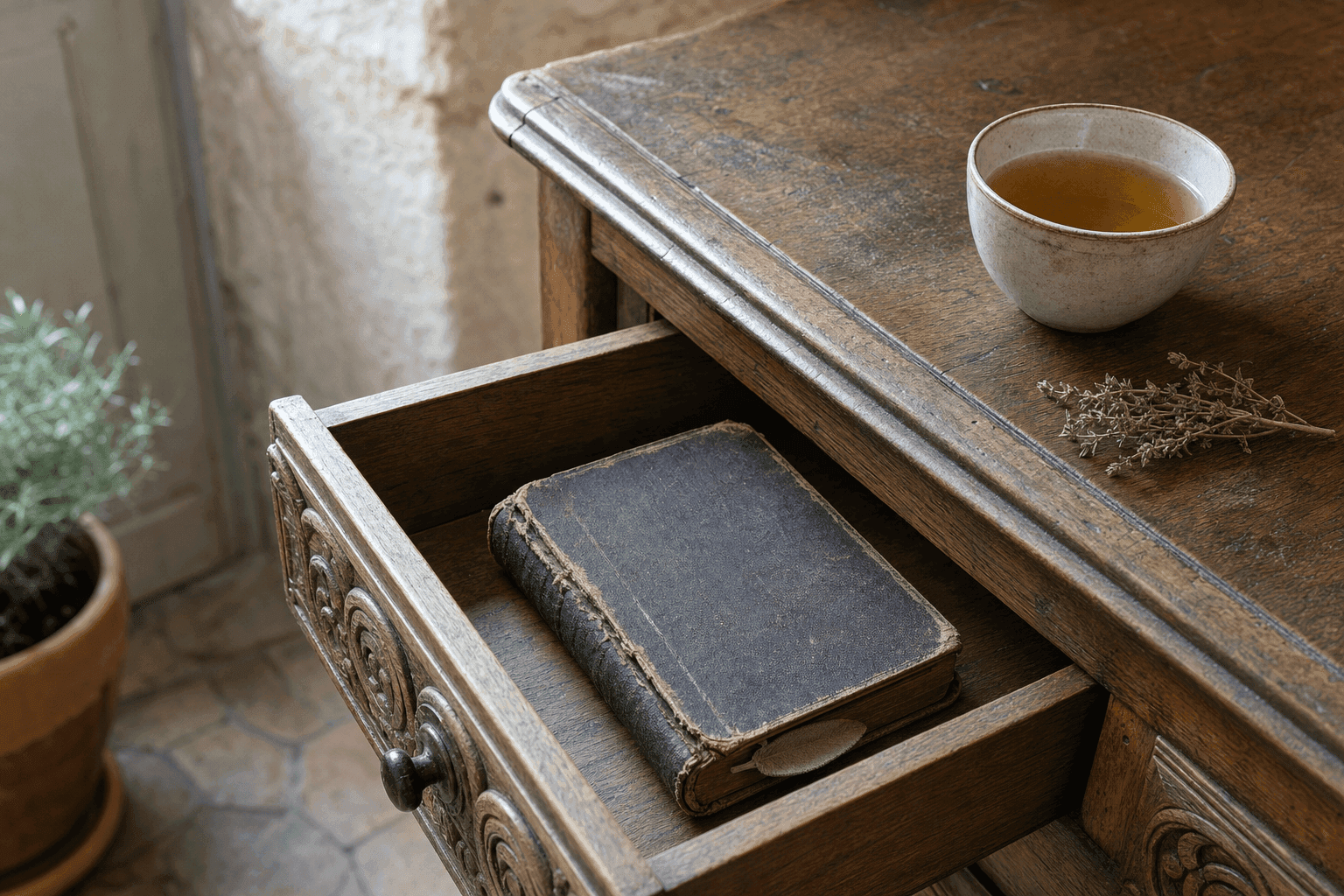
Clearing out the bottom drawer of the old oak sideboard, I came across my mother's recipe notebook. The cover is worn down to the weave, the spine creaks, and a dried sage leaf still pokes out from between two pages. Inside is her slanting handwriting, done with a Sergent-Major nib, in that violet ink that has faded. Her grandma recipes, the ones she had from her own mother, are all there.
The grandma recipe notebook that was sleeping in the sideboard
I sat down at the kitchen table and leafed through it gently. My mother didn't write like the books. No grams, no minutes: "a good handful", "a good while", "until it coats the spoon". Jams, a pot-au-feu, shopping lists scribbled in the margin, and her herbal teas. In one corner, she had even drawn a little bottle, with the words written underneath: four thieves vinegar.
That one, she loved to tell. During a plague epidemic, thieves are said to have looted houses without ever catching it, and their secret was supposedly a vinegar with herbs soaking in it, rosemary, sage, lavender. Nobody really knows where or when; everyone has their own version. It's a story, not a recipe, and I'm leaving it in the notebook.
These old forgotten recipes, I read them again with my books beside me, and I keep what stands up. That's the only thing I've changed: I weigh. A recipe without quantities is a lovely memory, not yet a recipe.
My mother never wrote grams or minutes, just "a good handful". I weigh. That's the only thing I've changed.
The old grandma recipes I still make
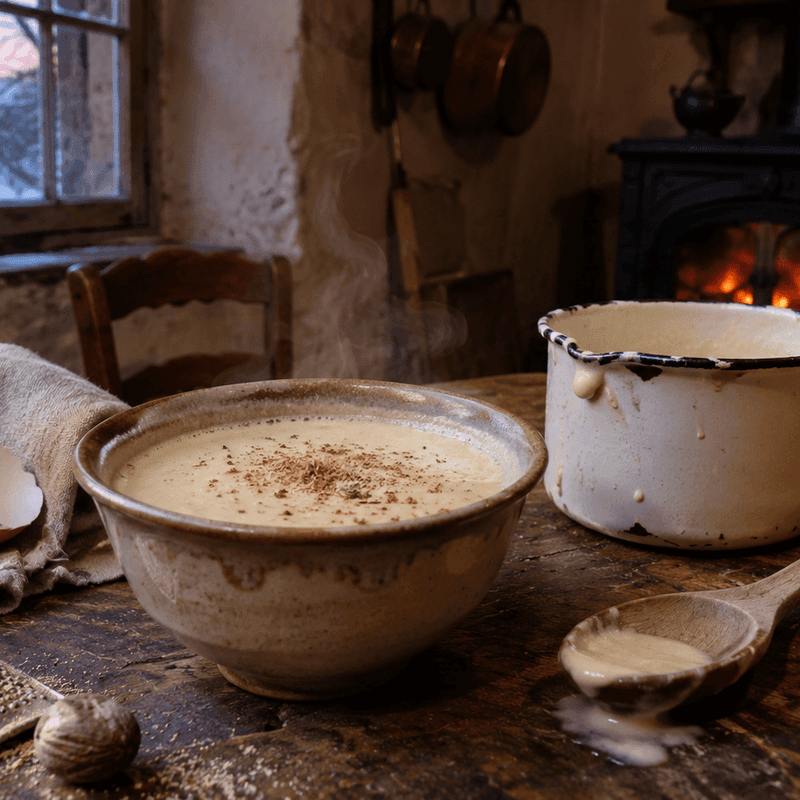
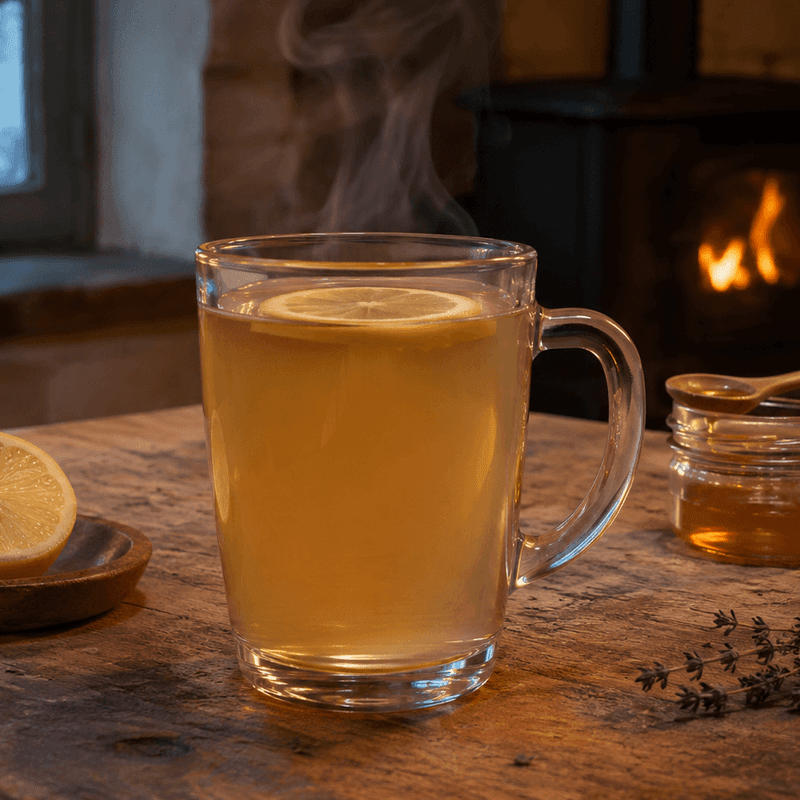
The most stained page is the one for thyme syrup. When throats started to get scratchy in autumn, my mother would hurry out to the garden to cut thyme and cook it with sugar, never noting how much. So for that syrup, I'm not going to make up numbers for you. What I make today is the cup of thyme with honey: 1 to 2 g of dried thyme in 150 ml of boiling water, a saucer on top, 10 minutes, then I strain it and add a teaspoon of honey once the cup has cooled a little. Three or four cups in the day, when a cold brings a chesty cough and your throat is scratchy, and for a week at most. When the garden thyme is finished, my whole-leaf thyme makes the same cup. I've told you all about thyme, and for days when your throat stings, I have other tricks.
Two pages further on is sage, the one whose leaf left its grey print on the paper. My mother steeped it after big family meals, when everyone had eaten too much. I do the same, with the measurements from my books: 1 to 2 g of dried leaves in 150 ml of boiling water, 10 minutes with a lid on, and no more than three cups a day. I've told you about my sage over here.
And then there's her evening cup, "wild chamomile and verbena", written across the page. Wild chamomile is German chamomile. She mixed the two for evenings when your tummy was in a knot after dinner or sleep was slow to come. Today I keep them apart, because my books don't give them the same job. German chamomile, I keep for a tummy that bloats or knots up after eating: 1.5 to 4 g of flowers for 150 ml of boiling water, 10 minutes with a lid on. Lemon verbena is for the evening, half an hour before bed: 1 to 2 g of leaves for 200 ml of boiling water, 10 minutes with a lid on. For evenings when sleep keeps you waiting, I've written you other things.
A grandma trick for the house: vinegar and baking soda
At the end of the notebook, my mother had her cleaning page. White vinegar for the limescale in the kettle, and baking soda next to it. People often ask me whether to mix them, because they foam. Well, no. One is acid, the other quite the opposite: together, they cancel each other out. It makes bubbles, and once it has finished foaming, what's left is mainly water with a salt in it, which doesn't clean much. Vinegar on its own does take off limescale. At most, the bubbles from the mix might help loosen a blocked pipe.
And one thing my mother had underlined twice, and she was right: never vinegar with bleach. Together, they give off chlorine, a gas that makes you cough and makes it hard to breathe. Not in the bucket, and not in a homemade weedkiller.
What the notebook doesn't say, and I'm telling you
My mother used to say plants deserve respect. My books say what kind:
- Thyme in a cup: not while you're pregnant or breastfeeding, not before age 12, and never honey for a baby under one year old. If you're allergic to thyme or its family (sage, rosemary), you go without. If the cough lasts more than a week, gets worse, or comes with a fever, pus in what you cough up or trouble breathing, go and see your doctor.
- Sage: not when you're pregnant, not when you're breastfeeding, and not before age 18. If your tummy isn't better after two weeks, go and see your doctor. Its essential oil is never swallowed.
- Lemon verbena: not while you're pregnant or breastfeeding, and not before age 12. It can make you drowsy: if that's you, you don't get behind the wheel.
- German chamomile: if you're allergic to ragweed, chrysanthemums, marigolds or daisies, you go without. If your throat or face swells after a cup, call 15 (the French emergency number) right away. No herbal tea before 6 months old, and for children, the amounts are smaller. If you take something to thin your blood, or if you've had a transplant, ask your doctor before drinking it regularly.
- For all of them: if you already take something on a doctor's orders, talk to your doctor or your pharmacist before drinking them every day. A cup when you need it, not three litres a day.
I put the sage leaf back between its two pages, and the notebook at the back of the drawer, under the tablecloths. Next time, I'll open the jam page for you, the one with the most stains.