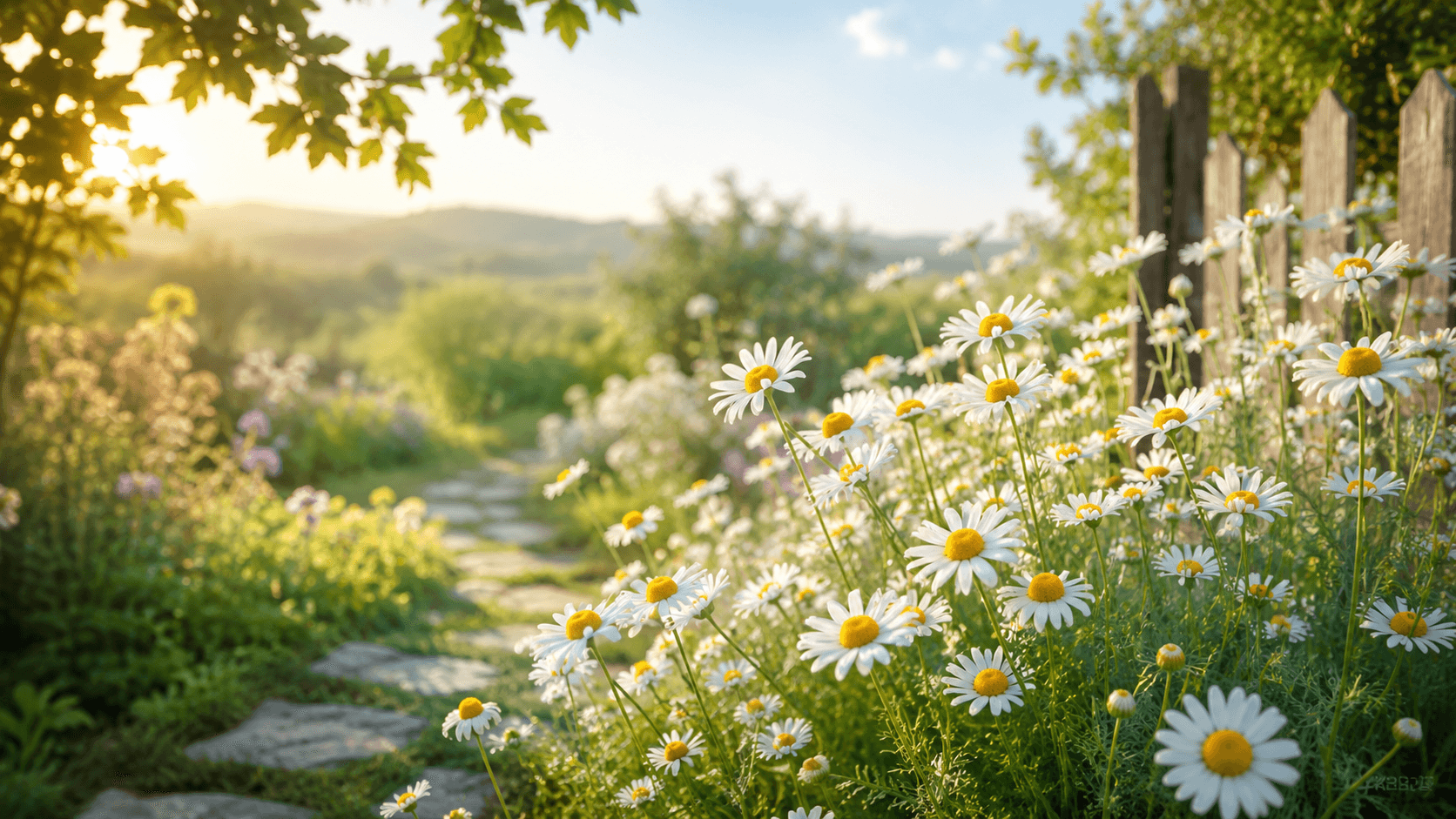
With its sweet apple scent, this lovely little wild daisy is a true treasure for your evenings. For generations, we have brewed its pretty yellow hearts to help you unwind and prepare for a peaceful night of sleep.
Who she really is
Family : Daisy family (Asteraceae). Native to Europe, North Africa, and temperate regions of Asia, and widely naturalised in North America and Australia.
Parts used : Flowers, Flowering tops. Flowers are harvested from June to August, on sunny summer days once the morning dew has dried, by gently picking the ripe flower heads.
Chamomile is a lovely little flower that we have brewed for generations to help you unwind before bed. This sweet, apple-scented herb gently calms your mind after a busy day and soothes your tummy when it feels a bit knotted. It is a true friend for your quiet evenings, just as my mother always taught me.
Her story
She is called the sweet queen of our grandmothers' gardens. Chamomile, with her silhouette of a small wild daisy and her scent of ripe apple, is undoubtedly one of the most familiar and beloved plants of our countryside. For generations, we have been gathering her golden and snowy flowers to prepare the famous evening herbal tea, the one that helps you feel better and invites calm after a long day.
A large family of small daisies
Under the common name of chamomile actually hide several plants of the Asteraceae family. The French word, pronounced /kamɔmij/, is a direct borrowing from medieval Latin "camomilla", and we even find the spelling "kamomille" in certain 18th-century botanical works.
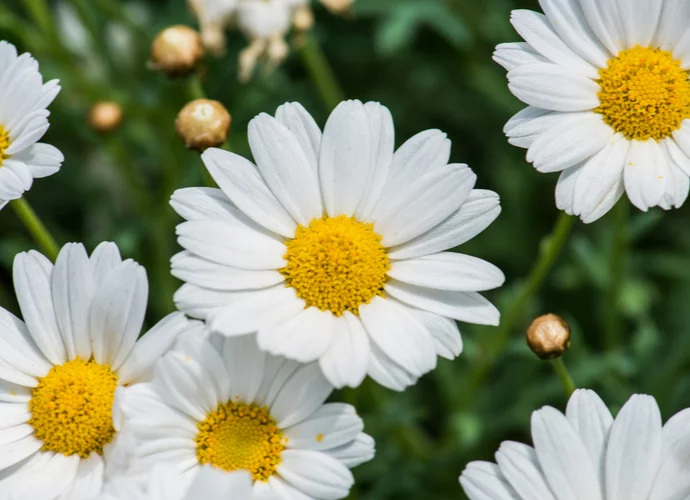
In our traditional herbalist shops, two species share the spotlight for preparing infusions of dried flowers: Roman chamomile (Chamaemelum nobile) and German chamomile (Matricaria chamomilla L.). While contemporary scientific research reminds us that there is insufficient clinical evidence to declare a direct therapeutic effect on health, popular wisdom remains faithful to its centuries-old use.
It is important to distinguish these varieties from other plants that bear the same name in everyday language without sharing the same use in infusions. This is the case, for example, with feverfew (Tanacetum parthenium). While our small German chamomile is an annual plant, feverfew is a perennial that is easily distinguished by its significantly taller height (reaching up to 70 to 80 cm) and its deeply lobed leaves.
German chamomile: botanical and sensory focus
German chamomile (Matricaria chamomilla L.) can be recognized by her characteristic aromatic scent that escapes as soon as you touch her flower heads. Her flowers have a hollow receptacle, a precious detail of observation for foragers who want to differentiate her from other scentless false chamomiles.
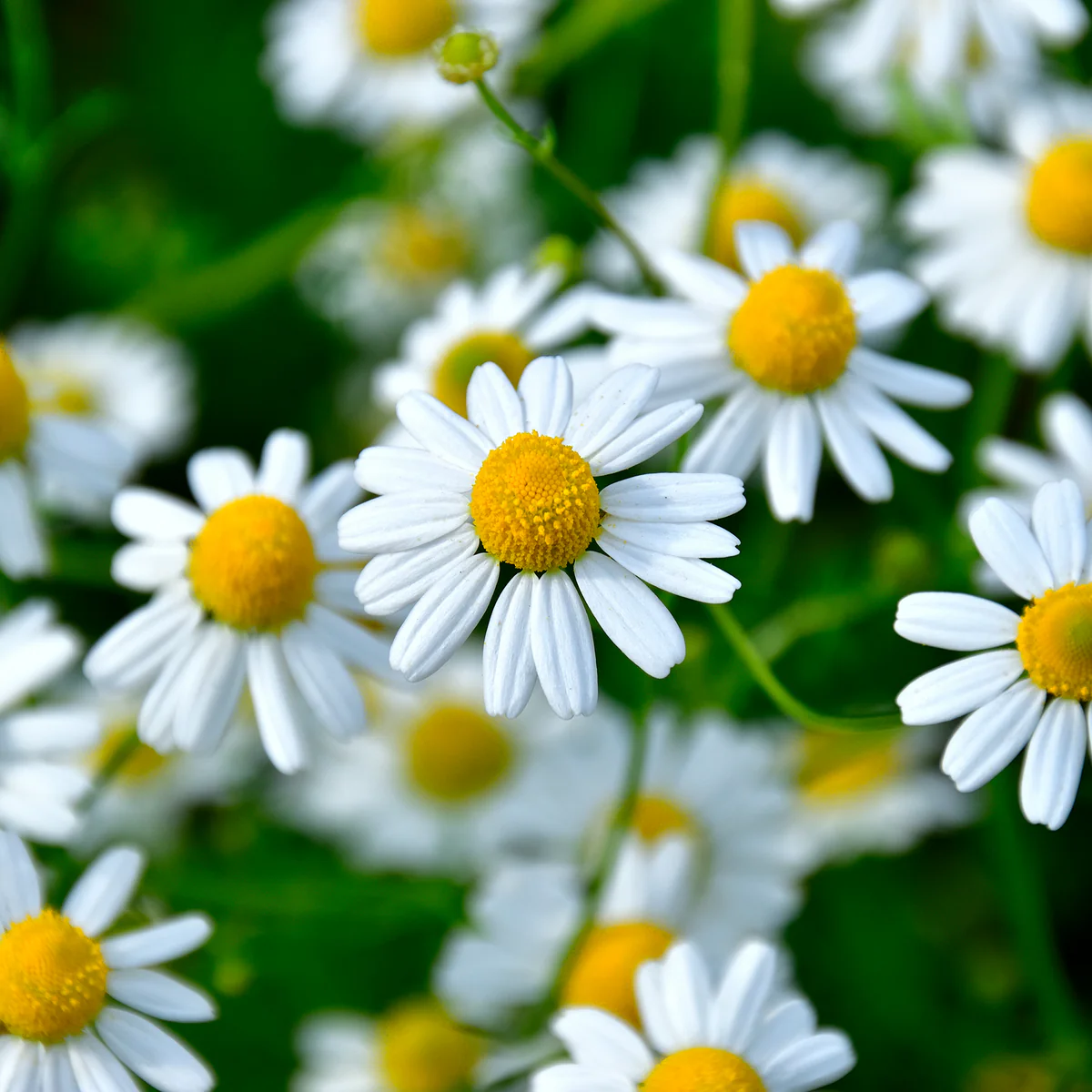
In terms of her natural composition, herbalist analyses reveal a beautiful complexity of active ingredients that make up the richness of the plant. These include essential oils rich in sesquiterpenes (such as alpha-bisabolol and chamazulene, which gives a unique blue color to the distilled extract), various flavonoids (apigenin, luteolin, quercetin, and rutin), as well as coumarins (herniarin and umbelliferone).
It is these natural components, blended in the totum of the flower, that give the infusion its sweet, slightly bitter, and honeyed flavor, so comforting in the heart of winter.
Gestures of yesteryear and preparation advice
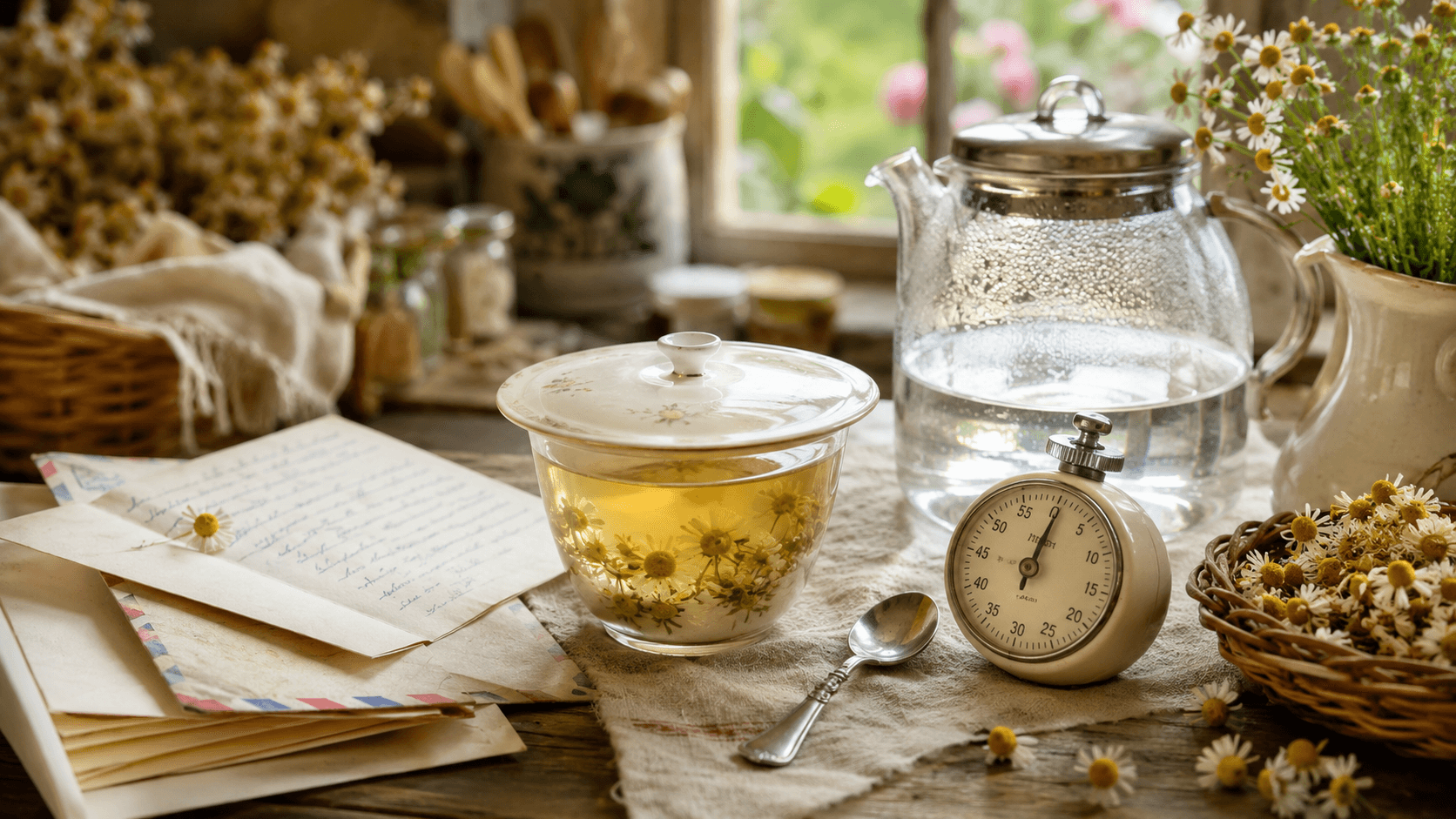
Our grandmothers used to prepare chamomile in a very simple way. For a cup of sweetness, throw a small handful of dried flowers (about a tablespoon) into simmering water. Cover the cup immediately to keep the precious volatile essences from escaping, then let it infuse for ten minutes.
"A warm cup of chamomile, a drizzle of flower honey, and the bustle of the day gently fades away to make room for a peaceful night."
She is also traditionally used externally. As a lukewarm compress, chamomile infusion feels soothing where the skin is uncomfortable, and helps soothe tired areas of the face. It is a simple beauty gesture, passed down from generation to generation.
Common sense note: Although chamomile is a wonderful daily ally, every body is unique. In case of doubt, persistent discomfort, or if you are pregnant, always ask your doctor or pharmacist for advice.
What makes it work
The dried flower heads of Matricaria chamomilla are rich in essential oil containing chamazulene and alpha-bisabolol, alongside active flavonoids such as apigenin and luteolin, and coumarins. These natural constituents, well-documented in European pharmacopoeias, give the little flower its soothing properties that have comforted families for generations.
What I use her for
- · 01Chamomile is a traditional wild flower with a sweet apple scent that families have used for generations.
- · 02Chamomile flowers are harvested during summer and dried carefully to preserve their natural qualities.
- · 03Drinking warm chamomile herbal tea in the evening helps to unwind and prepares the body for sleep.
- · 04Chamomile infusion is traditionally used after meals to soothe the stomach and ease digestion.
How I prepare her
Granny’s little recipes
The sweet evening herbal tea
In the evening, after dinner or just before slipping under the covers
What you’ll need
- 1 tablespoon of dried German chamomile flowers
- 1 cup of simmering water
- 1 spoonful of mild honey (optional)
How I go about it
- 01Put the pretty little chamomile flowers at the bottom of your favorite cup.
- 02Pour the hot water over them to awaken their aromas.
- 03Cover everything to keep the good steam in and let it infuse for 10 minutes.
- 04Strain the preparation gently.
- 05Add a touch of honey if you like sweetness, and drink it quietly to wind down before the night.
The soothing compress for tired eyes
At the end of the day, when your eyes sting after long hours of work or being outdoors
What you’ll need
- 2 tablespoons of German chamomile flowers
- 1 large bowl of boiling water
- 2 clean cotton pads or cloth compresses
How I go about it
- 01Prepare a highly concentrated infusion by throwing the flowers into the boiling water.
- 02Let it infuse and cool down completely until it is lukewarm or cool.
- 03Strain carefully so that no small flower debris remains.
- 04Soak your two cotton pads in this fragrant infusion.
- 05Lie down comfortably, place the cotton pads on your closed eyelids, and rest like this for 15 minutes.
The massage oil for tight little bellies
When the stress of the day settles in your stomach or after a slightly heavy meal
What you’ll need
- A handful of well-dried chamomile flowers
- 100 ml of sweet almond oil (or olive oil from the pantry)
- 1 small clean glass jar
How I go about it
- 01Place your well-dried flowers at the bottom of your glass jar.
- 02Pour the oil over them to cover the flowers completely.
- 03Let this mixture rest on a sunny windowsill for 3 weeks, shaking the jar from time to time.
- 04Strain the oil using a clean cloth, squeezing well.
- 05Store this oil in a bottle away from light and use it for a gentle massage on the stomach, in a clockwise direction.
Elsewhere: how others know her
You know, my childhood friend who moved to England a long time ago told me that over there, they swear by their "chamomile tea" as soon as the wind blows a bit too hard. She explained to me that even in the fanciest tea rooms in London, they serve you this little infusion of yellow and white flowers with a splash of milk or a spoonful of heather honey to warm your heart after a long, grey day.
And then, one summer, I was visited by a young German traveler who was staying in the village. She smiled when she saw my bouquets hanging in the kitchen and told me that back home, they call it "Echte Kamille". She shared that her own grandmother always prepared a large bowl of steaming infusion for her so she could breathe in the good steam under a towel when her nose was a bit stuffed up by the winter cold. It just goes to show, good habits really do cross borders!
As for me, you know me, what I do with it is much simpler. I prefer to gather my little local German chamomile flowers at the beginning of summer, let them dry quietly in the shade on wooden trays, and prepare a nice warm cup for you in the evening, just before you go to sleep so you can have sweet dreams.
What to know first
This information doesn’t replace advice from a healthcare professional. Health Disclaimer →
Her identity card
- Latin name
- Matricaria chamomilla L.
- Family
- Daisy family (Asteraceae)
- Parts used
- Flowers, Flowering tops
- Harvest
- Flowers are harvested from June to August, on sunny summer days once the morning dew has dried, by gently picking the ripe flower heads.
- Form
- Herbal tea, infusion, essential oil, mother tincture, capsules.
- Origin
- Native to Europe, North Africa, and temperate regions of Asia, and widely naturalised in North America and Australia.
- Storage
- To keep all their sweet aroma and goodness, store your dried chamomile flowers in an airtight glass jar, tucked away in a dark, dry cupboard for up to a year.
If you remember just one thing
- 01Chamomile is a traditional wild flower with a sweet apple scent that families have used for generations.
- 02Chamomile flowers are harvested during summer and dried carefully to preserve their natural qualities.
- 03Drinking warm chamomile herbal tea in the evening helps to unwind and prepares the body for sleep.
- 04Chamomile infusion is traditionally used after meals to soothe the stomach and ease digestion.
Your questions
Chamomile tea is a wonderful companion to help you unwind and prepare for a peaceful night of sleep. For generations, we have brewed its pretty yellow hearts in the evening because it gently calms the mind and helps sleep come naturally. It is our favorite family ritual to end a busy day, trust me.
Yes, chamomile is traditionally used when your stomach feels a bit knotted or heavy after a meal. My mother always prepared a warm cup of this herbal tea for us because it soothes the tummy and helps you feel lighter. It is a simple, time-tested way to bring back some everyday comfort to your belly.
To make a comforting chamomile tea, just put a small handful of dried chamomile flowers into a cup of hot water. Let them brew gently for a few minutes so the sweet apple scent can fully release, then drink it warm. It is as simple as that, and it does you so much good before bedtime.
While chamomile is a very gentle flower, you must always listen to your body and use it wisely. If you are pregnant, have specific allergies to daisy-like plants, or if you feel really unwell, it is always best to ask your doctor or pharmacist for advice. We want to keep you safe and cozy, after all.
The chamomile plant looks just like a lovely little wild daisy with delicate, feathery green leaves and a hollow yellow heart. When you squeeze the flowers gently, they give off a beautiful, sweet scent of ripe apples. We harvest these sunny little heads in the summer and dry them carefully to keep in our kitchen cupboards.