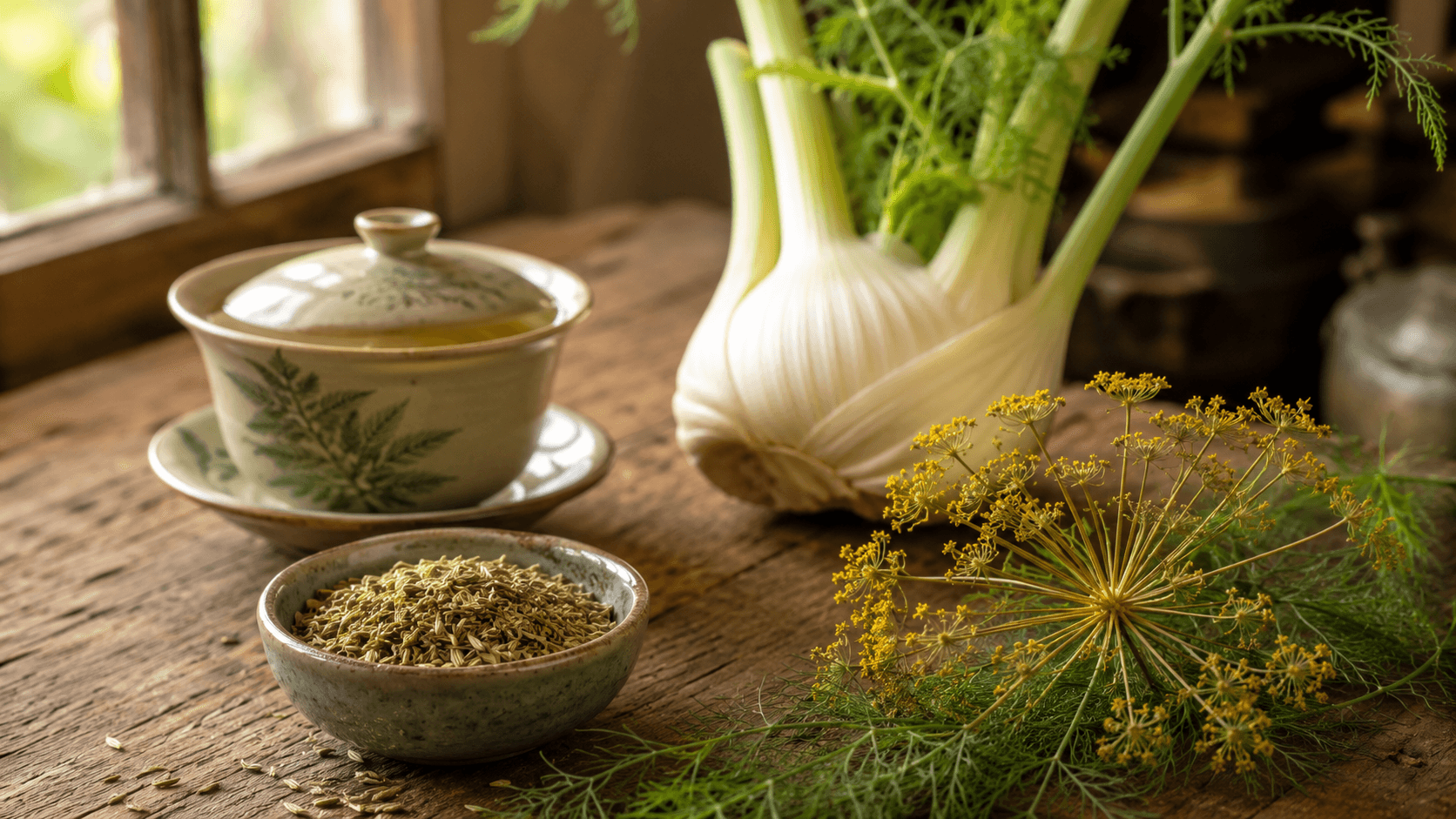
With its sweet scent of anise, this lovely sun-loving plant is a true friend to your tummy. We have always brewed its seeds after a heavy meal, as it gently helps with bloating and makes you feel lighter.
Who she really is
Family : Carrot family (Apiaceae). Native to the Mediterranean basin, fennel has naturalised across temperate regions of the world, thriving in sunny, well-drained soils and along coastal areas.
Parts used : Leaves, Root, Fruit, Seed, Stem. Seeds harvested from August to October, when they turn a nice golden brown, by cutting the umbrella-like heads on a dry, sunny morning.
Fennel, this beautiful aromatic plant with an aniseed flavour, is a treasure that we have always used in our countryside. As an infusion after a good meal, its seeds do a world of good to help you find a light stomach again. It is one of my favourite secrets to soothe those slightly heavy ends of meals.
Her story
Fennel, with its highly characteristic aniseed scent and its pretty golden umbels, is a treasure of our gardens and countryside. Known for generations, it accompanies our cooking recipes as well as our daily well-being rituals.
An aromatic herb through history
The word fennel comes from the Latin Foeniculum, which means small hay, a charming name given to it because of the great fineness of its foliage. Botanically linked to the Apiaceae family, Foeniculum vulgare Mill. is a perennial herbaceous plant that loves the sun and well-drained soils.
Over the centuries, this plant has left its mark on minds and cultures. Under the French Republican Calendar, fennel was celebrated every year on the 12th day of the month of Fructidor, which generally corresponds to August 29th of our current calendar. Even more surprising, the poet François Le Lionnais, co-founder of the Oulipo, paid tribute to this plant in a most minimalist way by composing a unique poem consisting of the single word "fennel".
The secrets of its natural composition
What makes fennel so powerful is, above all, its aromatic richness. Its seeds and leaves contain a precious essential oil, naturally rich in compounds such as anethole, estragole, and fenchone. These elements give it that sweet smell and warm, slightly sugary taste, reminiscent of anise.
The plant also contains flavonoids and phenolic compounds, elements that nature harmoniously assembles for the pleasure of our senses. In traditional herbalism, we appreciate this natural synergy which has made fennel a classic of family herbalism since antiquity.
Traditional uses and preparation tips
Since time immemorial, our grandmothers have prepared a good cup of fennel after meals. It is a well-established tradition to help when the stomach feels heavy or when you feel a little bloated. This warm drink brings immediate comfort and helps you feel lighter.
"An infusion of fennel seeds after the evening meal is the secret to a peaceful night and a gentle awakening."
To prepare this traditional drink, here is the simple recipe from our countryside:
- Take one teaspoon of fennel seeds per cup.
- Crush them lightly between your fingers to release the aromas and essential oils.
- Pour simmering water over the seeds.
- Leave to infuse, covered, for 8 to 10 minutes to preserve all the volatile benefits.
In the kitchen, the bulb is eaten raw in salads to bring crunch, or braised to accompany fish. The seeds, for their part, wonderfully flavor homemade breads, biscuits, and marinades.
Safety note: Although fennel is a common and safe food, the use of its essential oils or concentrated doses is not recommended without the advice of a doctor or pharmacist, especially for pregnant women and young children.
What makes it work
The seeds of fennel are rich in an essential oil containing trans-anethole, fenchone, and estragole, alongside flavonoids like quercetin and kaempferol. It also contains fatty acids and phenolic acids, notably rosmarinic and chlorogenic acids, which are well-documented in the European Pharmacopoeia.
What I use her for
- · 01Fennel is a sun-loving plant with a sweet anise-like scent that belongs to the carrot family.
- · 02Fennel seeds have been traditionally brewed into warm infusions for generations to help with bloating after meals.
- · 03Fennel was historically grown by ancient Greeks and Romans and planted in the royal domains of Charlemagne.
- · 04Every part of the fennel plant, from the bulbous base to the seeds, is useful and fragrant.
How I prepare her
Granny’s little recipes
The end-of-meal herbal tea
After a good meal shared with family
What you’ll need
- 1 teaspoon of lightly crushed fennel seeds
- 1 cup of simmering water
How I go about it
- 01Put the fennel seeds in the bottom of your cup.
- 02Pour the simmering water over them.
- 03Leave to infuse for 10 minutes under a small lid to keep all the aromas.
- 04Filter and drink slowly, it is perfect when the stomach feels a bit heavy.
The sweet potion for quiet evenings
In the evening, an hour before slipping under the sheets
What you’ll need
- 1 half-teaspoon of fennel seeds
- 1 half-teaspoon of German chamomile flowers
- 1 large cup of hot water
How I go about it
- 01Mix the plants in your teapot.
- 02Pour the hot water and let it rest for 8 to 10 minutes.
- 03Filter everything with love.
- 04Drink this warm infusion to help you relax and prepare for a peaceful night.
The comforting compress for tired eyes
At the end of the day, when your eyes sting after work
What you’ll need
- 1 tablespoon of fennel seeds
- 150 ml of water
- 2 clean gauze compresses
How I go about it
- 01Boil the fennel seeds in the water for 5 minutes.
- 02Let the infusion cool down completely, it should be lukewarm or cool.
- 03Soak your two compresses in this filtered liquid.
- 04Lie down and place them on your closed eyelids for 10 minutes for a moment of sweet rest.
What to know first
This information doesn’t replace advice from a healthcare professional. Health Disclaimer →
Her identity card
- Latin name
- Foeniculum vulgare Mill.
- Family
- Carrot family (Apiaceae)
- Parts used
- Leaves, Root, Fruit, Seed, Stem
- Harvest
- Seeds harvested from August to October, when they turn a nice golden brown, by cutting the umbrella-like heads on a dry, sunny morning.
- Form
- Herbal tea, infusion of the seeds, mother tincture, powder, and essential oil.
- Origin
- Native to the Mediterranean basin, fennel has naturalised across temperate regions of the world, thriving in sunny, well-drained soils and along coastal areas.
- Storage
- Keep your dried fennel seeds in a tightly sealed glass jar, tucked away in a dark, dry cupboard, to preserve their sweet anise aroma for up to a year.
If you remember just one thing
- 01Fennel is a sun-loving plant with a sweet anise-like scent that belongs to the carrot family.
- 02Fennel seeds have been traditionally brewed into warm infusions for generations to help with bloating after meals.
- 03Fennel was historically grown by ancient Greeks and Romans and planted in the royal domains of Charlemagne.
- 04Every part of the fennel plant, from the bulbous base to the seeds, is useful and fragrant.
Your questions
To ease bloating after a heavy meal, you can drink a warm cup of fennel seed infusion. Just crush a small spoonful of the seeds to release their sweet anise oil, pour boiling water over them, and let it steep for ten minutes. This simple drink has been used for generations to help your tummy feel lighter and more comfortable.
Drinking fennel tea every day is a wonderful, time-tested habit for most people, but moderation is always key. A cup or two after your main meals will do you a lot of good. However, if you are pregnant, nursing, or want to give it to a very young child, it is always best to ask your doctor or pharmacist first.
We mainly use the small, fragrant fennel seeds to help support your digestion. These little seeds hold the warm, sweet essential oils that soothe a tight stomach. You can also eat the crunchy bulb in your salads, but the dried seeds are what we always keep in the herbal pantry for brewing a comforting after-dinner drink.
Yes, fennel seeds are wonderful for gently calming a tight or upset stomach when you have eaten too quickly. The seeds contain natural warmth that relaxes your tummy and helps disperse trapped air. It is a traditional remedy that my own mother always kept handy, and it really does you good.
To get the most out of your fennel seeds, you should gently crush them with the back of a spoon before brewing. Crushing the seeds releases their sweet, aromatic oils directly into the hot water. Pour boiling water over them, cover your cup so the good vapours do not escape, and let it sit for ten minutes before sipping.