A little peace of mind
When stress squeezes you tight, I breathe out slowly, walk a little and make myself an anti-stress herbal tea of linden, lemon balm or passion flower. It helps you settle. Anxiety that lasts, or an attack that scares you, is for your doctor.
Reviewed by Ruosi Wu, PhD in Pharmacy, MD in Traditional Chinese Medicine
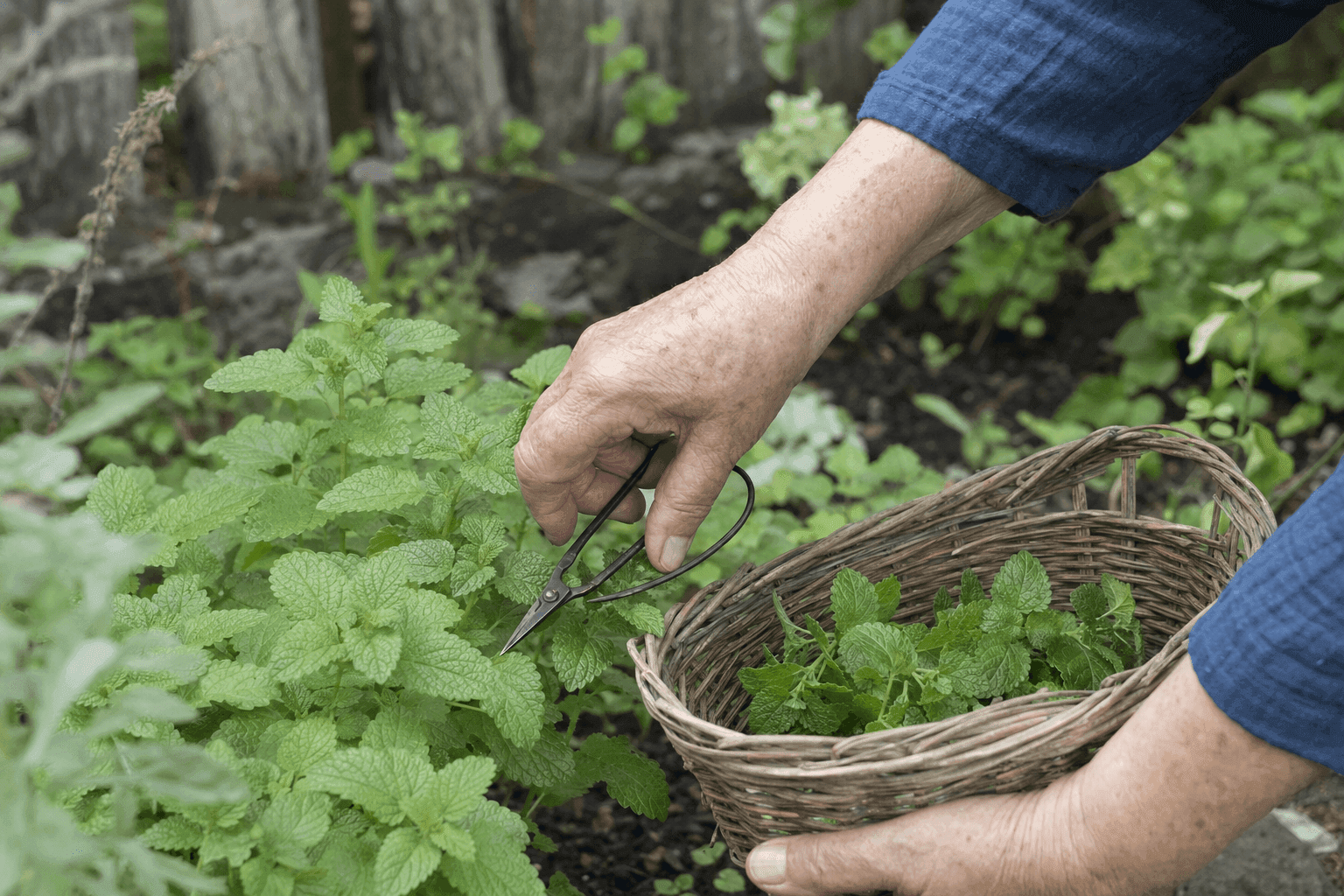
When stress rises, start by breathing out slowly, mouth closed, and move a little every day. In the evening, an anti-stress tea of linden, lemon balm or passion flower helps you settle. If the anxiety lasts, spoils your life or comes as an attack that scares you, go and see your doctor, and if dark thoughts come to you, call 3114 (the French suicide crisis line).
Key takeaways
- Stress passes along with whatever caused it. Anxiety that lasts, comes back with no real danger and spoils your everyday life is something to show a doctor.
- My evening anti-stress tea is 1.5 g of linden flowers in 150 ml of boiling water, ten minutes covered, from age 12.
- Linden, lemon balm, passion flower and valerian: the books keep them for small signs of stress, nothing more, and never during pregnancy or breastfeeding.
- When it rises, breathe slowly, mouth closed, from your belly, and move for half an hour three to five times a week.
- No herbal tea replaces what your doctor gave you, and if dark thoughts come to you, you call 3114 (the French suicide crisis line), day or night.
Granny’s little steps
- Breathe out slowly, mouth closed
When it rises, you want to breathe hard and fast, and that’s what makes things worse. Breathe slowly, calmly, mouth closed, letting your belly swell rather than your chest. No big gulps of air.
- Half an hour outdoors
Walking, cycling, gardening: at least half an hour, three to five times a week, and outdoors if you can. It sounds too simple, but your head feels less full afterwards.
- Less coffee, no alcohol or tobacco
Go easy on coffee when you’re on edge. Alcohol and tobacco, leave them aside: in the moment you think they help, but they can make anxiety worse.
- Regular days, and not on your own
Get up, eat and go to bed at roughly the same times. And don’t stay alone with your worries: a phone call, a visit to the neighbor, it all counts.
- The evening cup of linden
1.5 g of linden flowers in 150 ml of boiling water, ten minutes covered. It’s my way of telling the day it’s over. From age 12, and not during pregnancy or breastfeeding.
A recipe to try
The evening cup of linden, when the day has weighed on you
In the evening, when your nerves are still raw (from age 12)
What you’ll need
- 1.5 g of dried linden flowers, with their bract
- 150 ml of water
- A spoonful of honey, if you like it sweeter
How I go about it
- Bring the water to the boil.
- Pour it over the flowers, in the bottom of your cup.
- Cover and let it steep for 10 minutes.
- Strain, add the honey if you like, and drink it slowly, sitting down, with no screen in front of you.
- No more than four cups in a day. If your nervousness doesn’t pass, talk to your doctor about it.
When stress grips your throat, my first move is to sit down, breathe out slowly and make myself an anti-stress herbal tea: linden, lemon balm or passion flower. Nothing new. My mother did the same, the kettle at the corner of the stove. It doesn’t make your worries disappear, but it helps you settle. And when the anxiety lasts or scares you, it’s no longer a matter for herbal tea: it’s your doctor you need to see.
Stress and anxiety: why your head races
You know, being afraid or tense is normal. An exam, an argument, a file that never ends: the body goes on alert, and once it’s over, it calms down. My grandmother called it having your nerves in a tangle.
Anxiety is something else when it won’t let go. Medical books say it becomes a real concern when it keeps coming back, when it settles in, when it arrives with no real danger and spoils everyday life. The worries are then too big for what’s really happening, and you can’t stop them anymore.
And the body joins in: a knotted stomach, tense muscles, a pounding heart, pins and needles, headaches, dizziness, sleepless nights. In your head, you get irritable, you find it hard to concentrate, you see the future all in black. It varies a lot from one person to another.
There’s also the anxiety attack, the one that comes all of a sudden: an intense fear, the feeling of losing control, of dying even, with a racing heart, short breath, sweats or trembling. It peaks in about twenty minutes, then it comes back down. The first time, you can’t work it out on your own: only a doctor can tell whether it’s anxiety or something else. I come back to it further down.
My anti-stress herbal tea: the plants I use
In my cupboard, for the nerves, there are four jars. The books recognize the same traditional use for all of them: easing small signs of stress. Small ones, I insist.
Linden is my evening cup when the day has weighed on me. I take 1.5 g of flowers with their bract for 150 ml of boiling water, cover it and let it steep for ten minutes. Two to four cups a day, no more than 6 g of flowers in all, and for the nerves, not before age 12. It’s the one I bring out most often. I’ve told you the whole story of my linden.
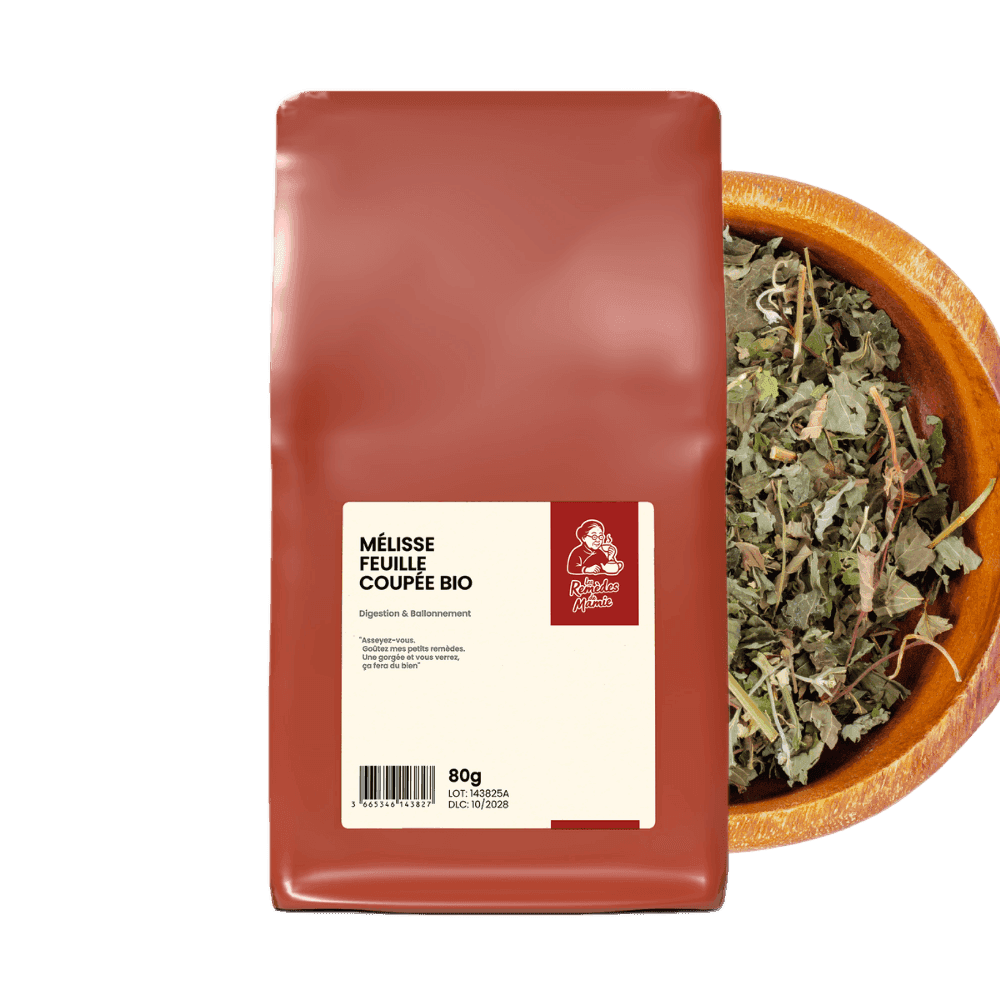
Lemon balm, with its lemony smell, is for the afternoon when your head is too full, or the evening before sleep arrives. Count 1.5 to 4.5 g of dried leaves for 150 ml of boiling water, ten minutes covered, one to three cups a day, from age 12. It can make you drowsy, so no driving if that happens to you. If you want to know everything I do with lemon balm, it’s this way.
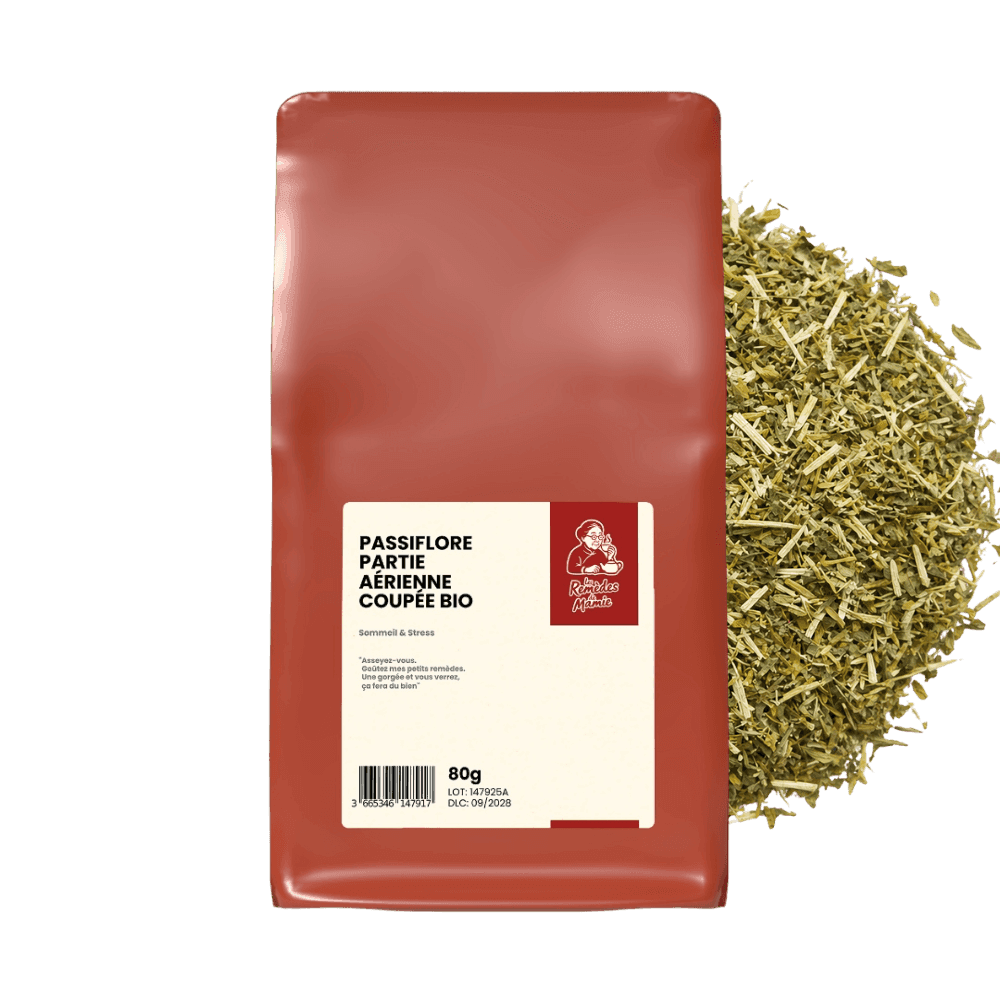
Passion flower is a climbing vine that came from North America. You drink its dried stems and leaves: 1 to 2 g for 150 ml of boiling water, ten minutes covered, one to four cups a day, from age 12. It can make you sleepy too: no alcohol alongside, and no driving. Let me introduce you to my passion flower here.
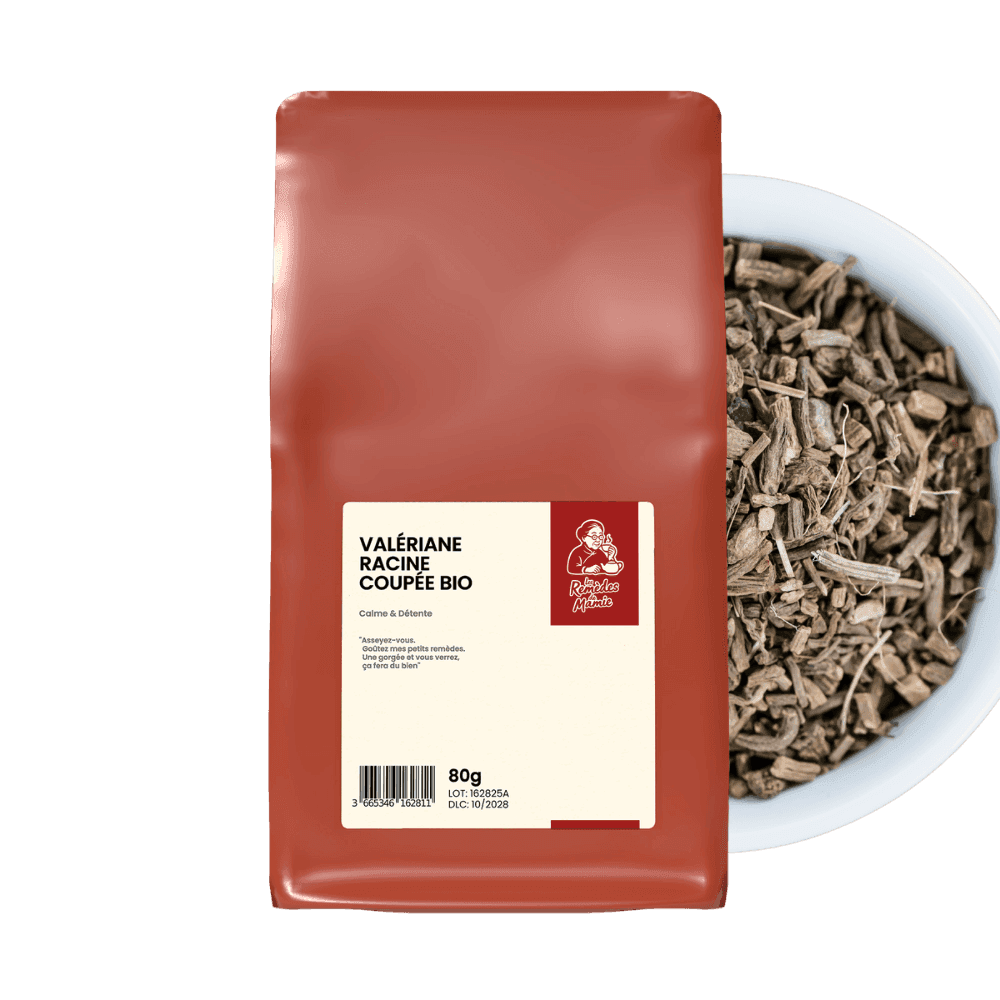
Valerian, the cat’s herb, is a root that smells strong (my neighbors say old socks, and they’re not wrong). A cup is 0.3 to 3 g of cut root for 150 ml of boiling water, ten to fifteen minutes covered, up to three cups on a tense day. It works little by little; it often takes two to four weeks of regular cups: it’s not the plant for one evening of panic. For valerian, I’ve explained it all.
People also tell me about rhodiola, a small succulent from cold mountains. The books keep it for adults, for stressful times when you feel tired and at the end of your rope, but as an extract made with alcohol. For the root in a cup, they give no measure, so neither do I. What I know about rhodiola, I’ve written down for you.
“A hot cup doesn’t sort out your worries. But it makes you sit down for ten minutes, and that’s something already.”
Calming stress naturally, at home
People often ask me how to stop stress fast. I’ll tell you how things are: there’s no switch. What there is, is simple habits that help a little every day.
The first is your breath. When it rises, you want to breathe hard and fast, and that’s exactly what makes things worse. Breathe slowly, mouth closed, from your belly rather than your chest. You can learn it, like a recipe.
Next, move: half an hour of walking, cycling or gardening, three to five times a week, outdoors if you can. Me, it’s a walk around the vegetable patch after lunch.
Coffee, I cut back on when I’m on edge. Alcohol and tobacco, leave them aside: in the moment you think they help, but the books say they can make anxiety worse. And then regular days, and not alone with your worries: a phone call to a friend, a cup of herbal tea at the neighbor’s, it all counts.
If an anxiety attack comes, and you already know that’s what it is because your doctor told you so: go somewhere quiet, with someone close to you if you can. If you’re driving, pull over and stay parked. Remind yourself that it’s very unpleasant but your life isn’t in danger, and turn your attention to what you see and hear around you, while it comes back down.
And when it’s your sleep that suffers, I’ve written down everything I do for difficult nights.
A powerful anti-stress plant, is there such a thing?
People ask me what the most powerful anti-stress plant is, or a powerful natural anti-stress to replace what the doctor gave them. I’ll answer you frankly: my plants are made for small signs of stress, and the books don’t give them for anything more. No herbal tea replaces what you were given on a doctor’s orders. And what your doctor gave you, you don’t stop it or change it on your own, even if you feel better. Passion flower and valerian, by the way, don’t get added to something that helps you sleep or calms you without their OK.
Grandma helps with the little troubles of everyday life. The real troubles are your doctor’s job. If your anxiety lasts, if it spoils your life, or if an attack scares you, go and see them: they’re the first person to talk to. And if dark thoughts come to you, call 3114 (the French suicide crisis line), day or night. The signs to watch for are written further down, one per line.
Which plants?
RhodiolaRhodiola rosea
A little succulent from cold mountains, with a root that smells of roses. What the books say, who it's not for, and why it has been pulled up too much.
ValerianValeriana officinalis
The cat's herb of damp ditches, whose dried root you drink in the evening. What it does, how much to take a day, its side effects, and why your cat adores it.
Passion flowerPassiflora incarnata
Passion flower, Passiflora incarnata, is a vine from North America. Its dried stems and leaves are drunk as a tea in the evening, when your nerves are wound tight.
Lemon verbenaAloysia citrodora
Lemon verbena is the little shrub from the Andes with leaves that smell of lemon: a cup in the evening before bed, a cup when your belly bloats, and a syrup over summer melon.
True lavenderLavandula angustifolia
True lavender, or fine lavender, is the lavender of the Provence mountains: a cup of the flowers in the evening, a sachet under the pillow, and a row in the sun in the garden.
LindenTilia cordata / Tilia platyphyllos
Linden is the big tree on village squares. Its dried flowers, with their bract, make the evening cup and the one for days when you've caught a chill.
Lemon balmMelissa officinalis
Lemon balm is the perennial garden herb that smells of lemon when you crush it: a cup in the evening, a cup when your tummy bloats, and a few leaves over summer fruit.
What to know first
The plants on this page aren’t for everyone. I’ll tell you everything, plant by plant.
Pregnancy and breastfeeding: no lemon balm, no linden, no passion flower, no valerian, no rhodiola. We don’t know enough about whether it’s safe, so the books say to go without. Passion flower, in animals, has even caused contractions of the uterus.
Children: for the nerves, no lemon balm, linden, passion flower or valerian before age 12. Rhodiola, not before age 18. The books lack data for younger ones.
Amounts: linden, 1.5 g of flowers for 150 ml of boiling water, two to four times a day, no more than 6 g in a day. Lemon balm, 1.5 to 4.5 g of leaves for 150 ml, one to three times a day. Passion flower, 1 to 2 g for 150 ml, one to four times a day. Valerian, 0.3 to 3 g of root for 150 ml, up to three times a day; at around 20 g in one go, people have had tiredness, stomach cramps, a tight chest, dizziness and shaking hands. For rhodiola, the books give no measure for tea.
Drowsiness and driving: lemon balm, passion flower and valerian can make you drowsy. If that happens to you, don’t drive and don’t use machines. No alcohol alongside passion flower, and on the evening of your cup of valerian, avoid alcohol too.
If you take a treatment: don’t stop it or change it without your doctor. Passion flower isn’t taken with a treatment that makes you sleep or calms you (sleeping pills, tranquilizers, antidepressants) without their OK, nor with an anticoagulant, whose effect it could strengthen. Valerian neither, with sleeping pills or tranquilizers: the drowsiness could add up. Lemon balm might slow down a hormone that controls the thyroid: if you have a thyroid problem, ask your doctor before drinking it regularly. Rhodiola, with antidepressants, could make your heart beat very fast; it could also lower your blood sugar too much (with insulin or a diabetes treatment) and your blood pressure too, raise the levels of warfarin and some anti-inflammatories in the blood, and work against immunosuppressants. It’s also not advised if you have an autoimmune disease, such as multiple sclerosis or rheumatoid arthritis.
The liver: if your liver is ill, or if you take a medication that’s hard on it, ask your doctor before passion flower or valerian. With rhodiola, if your skin or the whites of your eyes turn yellow, see your doctor without waiting.
What can happen: with valerian, sometimes nausea or stomach cramps. With passion flower, rare allergic reactions, sometimes severe, nausea or a racing heart. With rhodiola, headaches, nausea, stomach ache, diarrhea, spots or itching, and sometimes nervousness or sleepless nights. If that happens to you, you stop and ask your doctor for advice.
Allergies: if you’re allergic to one of these plants, you go without. Linden pollen sometimes causes allergies.
How long: if things are no better after two weeks, or if they get worse while you’re taking them, go and see your doctor or your pharmacist. For linden, if your nervousness doesn’t pass, talk to your doctor about it too.
When to see your doctor
- If you have thoughts of suicide that keep coming back, if you’ve planned how, or if you have the means within reach: call 15 or 112 right away.
- If you have dark thoughts or thoughts of death, even without a plan, or if you’re worried about someone close to you: call 3114 (the French suicide prevention line), free and confidential, day and night.
- If you have a tight pain in your chest that lasts more than five minutes and doesn’t go away at rest, or that spreads to your jaw, arm, back or neck: call 15 or 112, even if you think it’s anxiety.
- If you’re pale, your lips turn blue, or you have sweats, nausea, dizziness or unusual weakness along with discomfort in your chest: call 15 or 112.
- If it’s your first sudden attack of fear, with a racing heart, trouble breathing, dizziness or the feeling you’re going to die: see a doctor quickly; only a doctor can tell whether it’s an anxiety attack and not something else.
- If the attacks come back without warning and, for a month or more, you’ve been constantly afraid of having another one: make an appointment with your regular doctor.
- If your anxiety comes back with no real danger, settles in and gets in the way of your everyday life (work, sleep, going out): make an appointment with your regular doctor.
- If you worry every day, about several things at once, without being able to stop your thoughts: talk to your regular doctor about it.
- If the herbal teas change nothing after two weeks, or if things get worse while you’re taking them: go and see your doctor or your pharmacist.
- If you feel you need alcohol, tobacco or something else to keep going: talk to your doctor about it, nobody gets out of that alone.
- If you already take a treatment for your nerves, your mood or your sleep: don’t stop it or change it without your doctor, and ask them before adding a plant.
Your questions
What’s the best anti-stress herbal tea?
There isn’t one better than the others, there’s the one you like to drink. The books keep four plants for small signs of stress: linden, lemon balm, passion flower and valerian. Me, in the evening, it’s 1.5 g of linden flowers in 150 ml of boiling water, ten minutes covered. All four are from age 12, and not during pregnancy or breastfeeding.
What’s the most powerful anti-stress plant?
I’m wary of the word powerful. My plants are made for small signs of stress, and the books don’t ask any more of them. Rhodiola, which people talk about a lot, is only given to adults, as an extract, and not as a tea. If your stress is too strong for a cup, it’s time to talk to your doctor about it.
How can I calm stress naturally?
With simple habits, repeated: breathing slowly, mouth closed, from your belly; moving for half an hour three to five times a week, outdoors if you can; less coffee, no alcohol or tobacco; regular times for eating and sleeping; and not staying on your own. A cup of linden or lemon balm in the evening also helps you settle.
How do I stop an anxiety attack?
Go somewhere quiet, with someone close to you if you can, and if you’re driving, pull over. Breathe slowly, mouth closed, and turn your attention to what you see and hear around you: the attack peaks in about twenty minutes, then it comes back down. But the first time, go and see a doctor, and if you have chest pain, call 15.
What plant can replace Xanax?
None, and I’d rather tell you plainly. My teas are for small signs of stress, not to replace what your doctor has put you on. Whatever they gave you, you don’t stop it or change it without them. And passion flower or valerian, you don’t add them to something that calms you or helps you sleep without their OK.
Can I drink an anti-stress tea every day?
Yes, sticking to the amounts: up to four cups of linden or passion flower, three of lemon balm or valerian in a day, from age 12. But if things are no better after two weeks, or if they get worse, go and see your doctor or your pharmacist. Anxiety that lasts isn’t a matter for a cup anymore.
Also worth reading
- The LetterEssential oil for sleep: my lavender and my bedtime rulesYou ask me which essential oil to use for sleep. In my house, it's true lavender, with my rules: you don't swallow it, you air the room, and you keep it away from little ones and pregnant women.
- The LetterRhodiola, stress and tiredness: what I'll tell you about golden rootPeople ask me about rhodiola for stress and tiredness as soon as the cold comes back. I'll tell you what my books really say, why I don't give a recipe for it, and the cups I drink instead.
- The LetterAdaptogenic plants: I'll tell you plainly what I think of themPeople talk to me about adaptogenic plants all autumn: rhodiola, ashwagandha, maca, cordyceps. I'll tell you where the word comes from, why they stay out of my cups, and what I drink instead.
- The LetterLavender and sleep: my bedtime sachet and the oil I handle with careIn July, I cut my lavender and hang it upside down to dry. Then it ends up in a sachet under the pillow or in the evening cup. And its essential oil? I'll tell you how I keep it.
- The LetterPlants for sleep: the old-fashioned herbal tea I drink at nightA cast-iron kettle, bunches of lemon verbena and lemon balm hanging from the beams: I'll tell you about my mother's plants for sleep, and how I make my evening cup.
- The LetterMy evening herbal tea: lemon balm, linden and chamomile in my cupMy evening herbal tea is three plants in one cup: lemon balm for the night, linden for the nerves, chamomile for the tummy. I'll give you my measurements.
- The LetterLinden flowers in June: come and pick them with me in the gardenIn June, my linden tree blooms above the terrace. I’ll show you when to pick linden flowers, how to dry them, and the cup I make with them in the evening.
What I’ve made with
References
- Symptômes et diagnostic des troubles anxieux (anxiété grave) · Assurance Maladie (ameli.fr), 2025
- Angoisse, anxiété et troubles anxieux graves de l'adulte · Assurance Maladie (ameli.fr), 2026
- Vivre avec des troubles anxieux (anxiété grave) · Assurance Maladie (ameli.fr), 2026
- Trouble panique : symptômes, diagnostic et évolution · Assurance Maladie (ameli.fr), 2024
- Suivi médical et vie quotidienne en cas de trouble panique · Assurance Maladie (ameli.fr), 2026
- Traitement de la crise d'angoisse aiguë et du trouble panique · Assurance Maladie (ameli.fr), 2025
- Reconnaître une douleur thoracique qui nécessite des soins urgents · Assurance Maladie (ameli.fr), 2026
- Crise suicidaire : agir avant la tentative de suicide · Assurance Maladie (ameli.fr), 2026
- Santé mentale de l'adulte : comment être aidé et à qui s'adresser ? · Assurance Maladie (ameli.fr), 2026
- Anxiété · Santé.fr, Service Public d'Information en Santé, 2026
- 3114, le numéro de prévention au suicide · Santé.fr, Service Public d'Information en Santé, 2025
- Community herbal monograph on Tilia cordata Miller, Tilia platyphyllos Scop., Tilia x vulgaris Heyne or their mixtures, flos (EMA/HMPC/337066/2011) · European Medicines Agency (HMPC), 2012
- Community herbal monograph on Melissa officinalis L., folium (EMA/HMPC/196745/2012) · European Medicines Agency (HMPC), 2013
- Community herbal monograph on Passiflora incarnata L., herba (EMA/HMPC/669740/2013) · European Medicines Agency (HMPC), 2014
- European Union herbal monograph on Valeriana officinalis L., radix (EMA/HMPC/150848/2015) · European Medicines Agency (HMPC), 2016
- European Union herbal monograph on Rhodiola rosea L., rhizoma et radix, Revision 1 (EMA/HMPC/24177/2023) · European Medicines Agency (HMPC), 2024
- Glossary on herbal teas (EMA/HMPC/5829/2010 Rev.1) · European Medicines Agency (HMPC), 2010
- Passiflore (Passiflora incarnata) · Vidal, 2026
- Valériane (Valeriana officinalis) · Vidal, 2026
- Rhodiole · Manuel MSD, version pour le grand public, 2025
Information. This information is provided for general knowledge and doesn’t replace medical advice. Check with a healthcare professional before any use.
Health Disclaimer