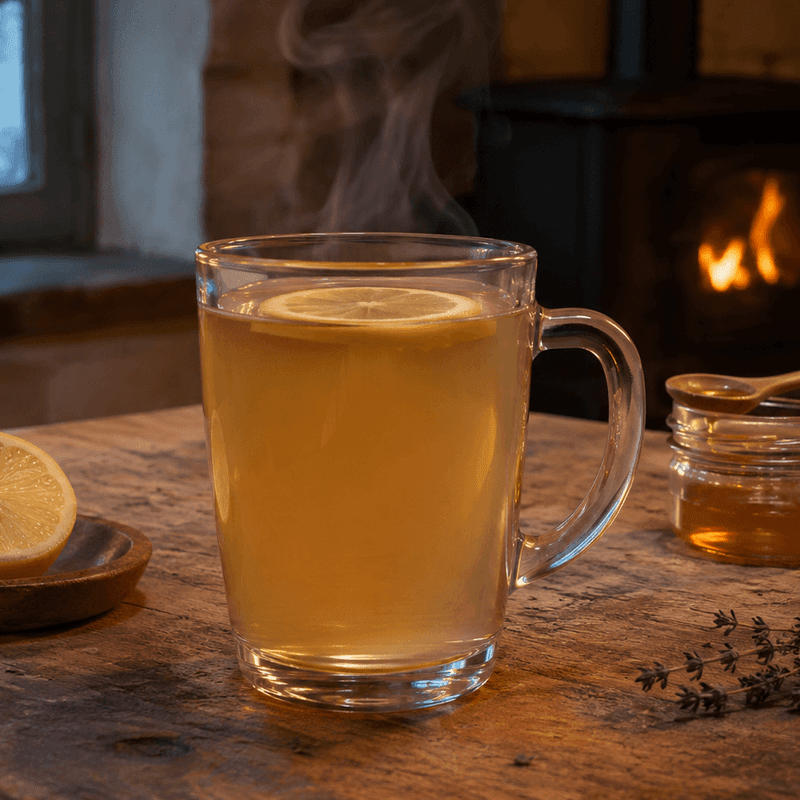
My evening herbal tea: lemon balm, linden and chamomile in my cup
My evening herbal tea is three plants in one cup: lemon balm for the night, linden for the nerves, chamomile for the tummy. I'll give you my measurements.
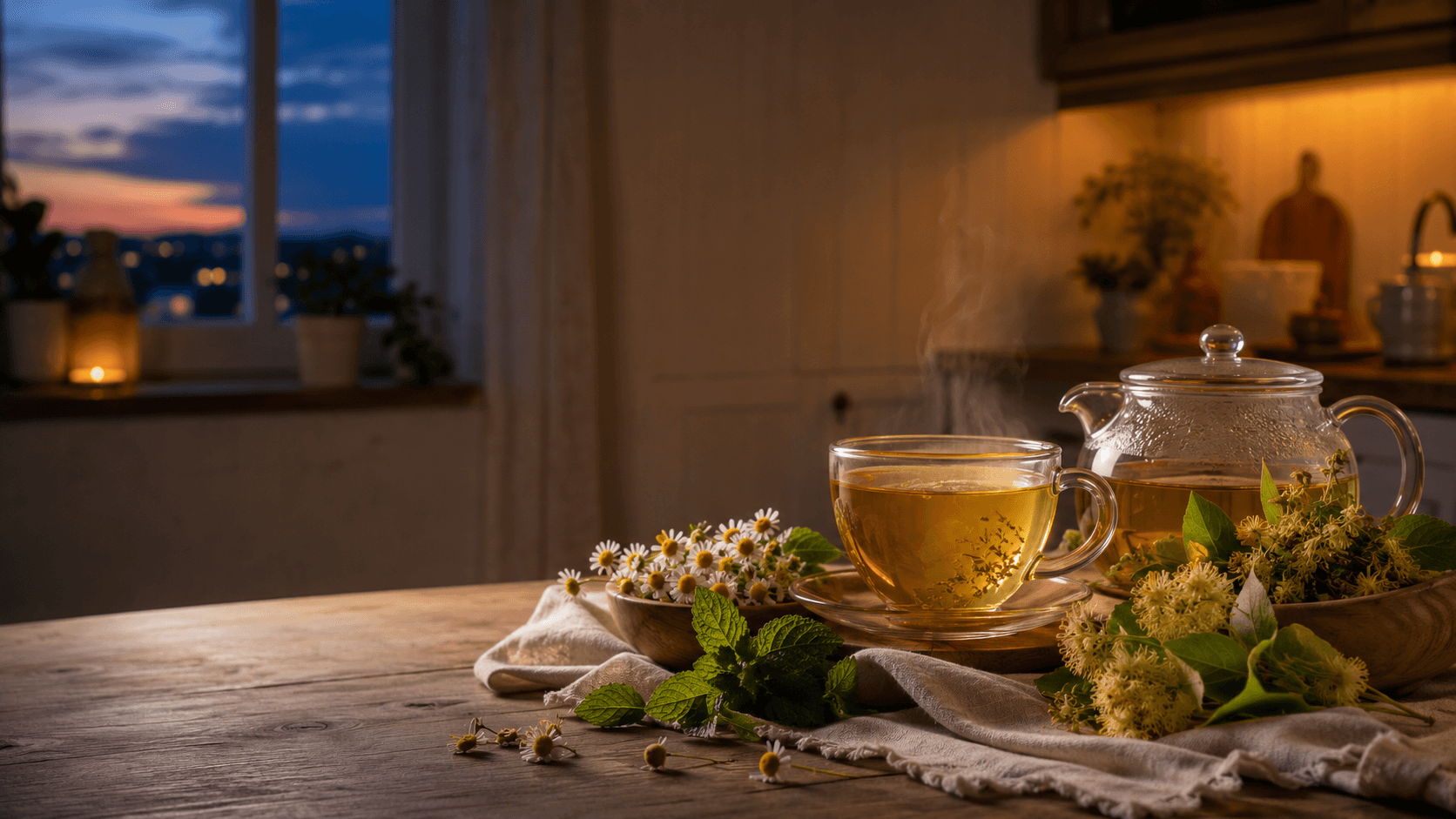
My evening herbal tea is a cup of lemon balm, linden and German chamomile, steeped for ten minutes under a saucer, that I drink half an hour before going to bed. My mother used to toss a pinch of each into the water singing on the stove. One day I weighed her pinches, so I'm giving you the grams: a herbal tea is something you measure.
Why these three plants go in my evening tea
Each one has its job, and I'd rather tell you which than promise you'll sleep like a baby.
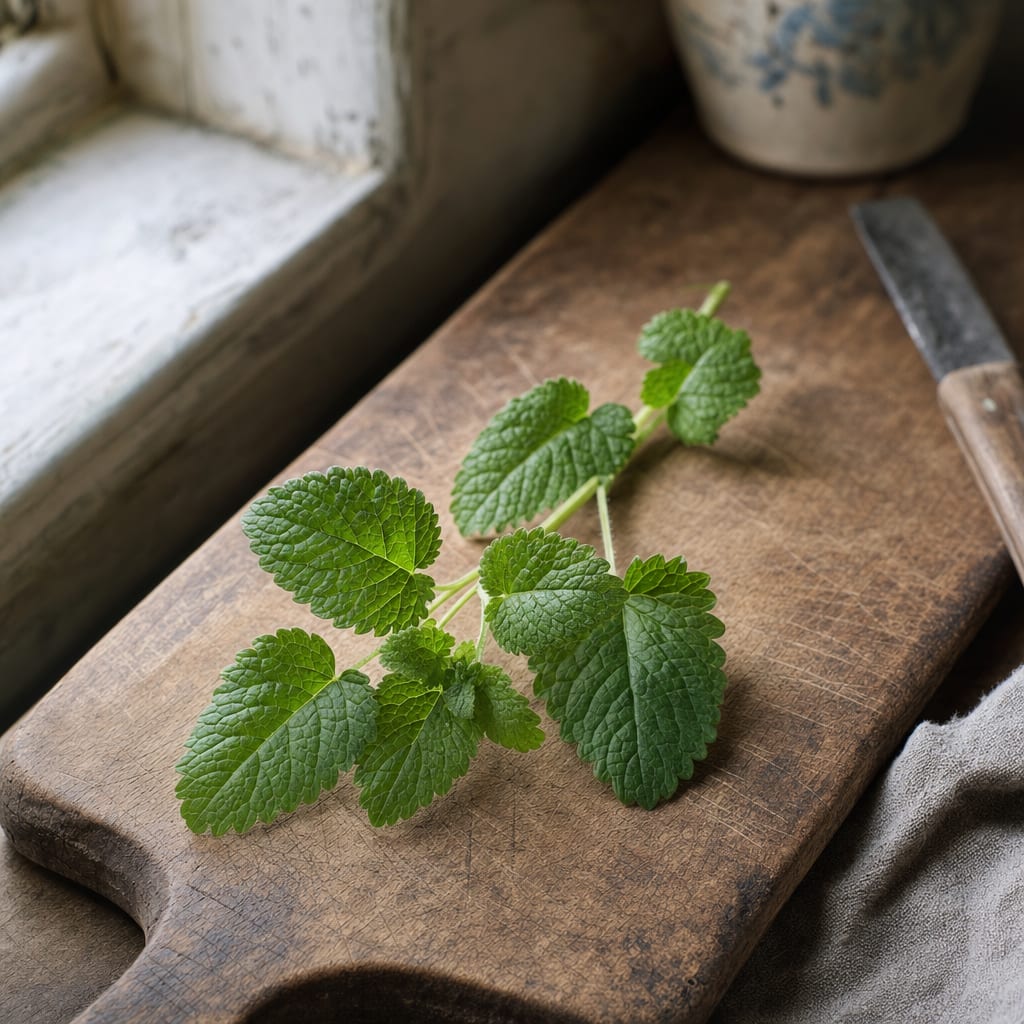
Lemon balm is the garden herb that smells of lemon as soon as you crush it, from the mint family. It's the only one of the three that the books give to help you find sleep, and for the small signs of evening stress. Lemon balm isn't a sleeping pill: it's what settles you before sleep arrives. Everything I do with lemon balm, I've already told you.
Linden is the flower of the big tree on village squares, picked in June with its bract. The books keep it for small bouts of nervousness, not for sleep itself. It gives the cup its soft, slightly sweet, almost velvety taste. My linden and its story are right this way.
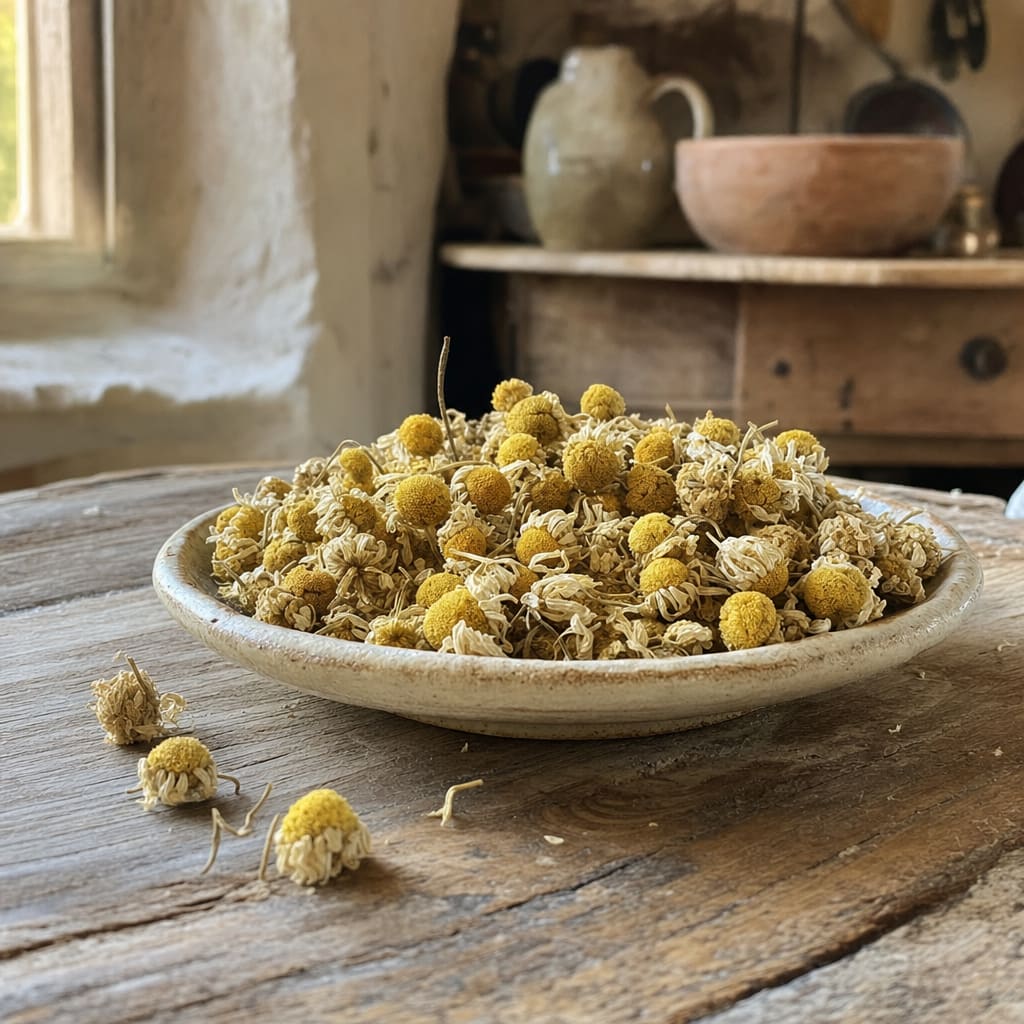
And last, German chamomile, with its little white heads that smell of apple. I'll be honest with you: in my books, chamomile doesn't help you sleep. It's there for the tummy that bloats after a dinner that was a bit heavy. My mother put it in for that, and she was right not to ask any more of it.
Lemon balm isn't a sleeping pill: it's what settles you before sleep arrives. The rest is a low lamp and the same time every night.
What's the best herbal tea for sleep? What my books say
People ask me that a lot, and I answer the way I answer my neighbors. For sleep, the books keep four plants: lemon balm, valerian, passion flower and lemon verbena. None of them puts you to sleep on command. Valerian, for example, takes two to four weeks of regular cups.
So what about verbena or chamomile? They're not the same cups. Lemon verbena, that little shrub that smells strongly of lemon, is the one the books give for sleep: 1 to 2 g of leaves in 200 ml of boiling water, half an hour before bedtime. Chamomile is for the tummy. If it's mostly sleep that won't come, I've written down everything I do for difficult nights.
A powerful natural sleeping pill? I don't keep one in my kitchen. What counts most is regularity: the same cup, at the same time, night after night, and getting up at the same time too, even on Sundays.
“You can't order sleep about. You make room for it, a cup, a low lamp, and you let it come.”
My evening herbal tea recipe, step by step
For one cup, you'll need:
- 1.5 g of dried lemon balm leaves
- 1.5 g of dried linden flowers, with their bract
- 1.5 g of dried German chamomile flowers
- 150 ml of water
- 1 teaspoon of honey, if you like it sweeter
- Bring the water to a boil.
- Put the three plants in the bottom of your cup and pour the boiling water over them.
- Cover with a saucer and let it steep for 10 minutes.
- Strain, add the honey if you like, and sip it slowly, half an hour before going to bed.
The first time, weigh your plants: linden is light and takes up room, lemon balm packs down. After that, you'll know the little heap in your hand. 1.5 g is the smallest cup the books give for each of the three plants, so one cup in the evening is enough for me, and I don't double the amount.
While it steeps, I switch off the ceiling light and keep the little lamp on. I put the screens away an hour before, and I don't drink tea after two in the afternoon: tea keeps your eyes open, my plants don't. In winter, when the garden has no more lemon balm, I use my cut lemon balm leaves.
Precautions to know
This evening tea is for age 12 and up: for younger children, the books don't have enough data on lemon balm or on linden for nervous evenings. During pregnancy and breastfeeding, it stays in the cupboard, because of the lemon balm and the linden. If you're allergic to ragweed, chrysanthemums, marigolds or daisies, leave out the chamomile, it's the same family. And if your face swells or you have trouble breathing after a cup, call emergency services right away.
Lemon balm can make you drowsy: if that happens to you, no driving and no machines. If you have a thyroid problem, ask your doctor before drinking it regularly. And if you already take something on a doctor's orders, for sleep, for your nerves, to thin your blood, or after a transplant, talk to your doctor or pharmacist before making this cup a habit.
If sleep hasn't come back after two weeks, or if it gets worse, go and see your doctor. Same thing if someone hears you snoring very loudly and stopping breathing at night, or if you fall asleep during the day without meaning to. Grandma helps with the small evening troubles; the real troubles are your doctor's job.
Tonight the window is already blue and the kettle is cooling on the stove. The cup is steaming on the corner of the table, the saucer beside it. I'm going to drink it slowly, without doing anything else, and then off to bed. I'll write to you soon.