Plants for sleep: the old-fashioned herbal tea I drink at night
A cast-iron kettle, bunches of lemon verbena and lemon balm hanging from the beams: I'll tell you about my mother's plants for sleep, and how I make my evening cup.
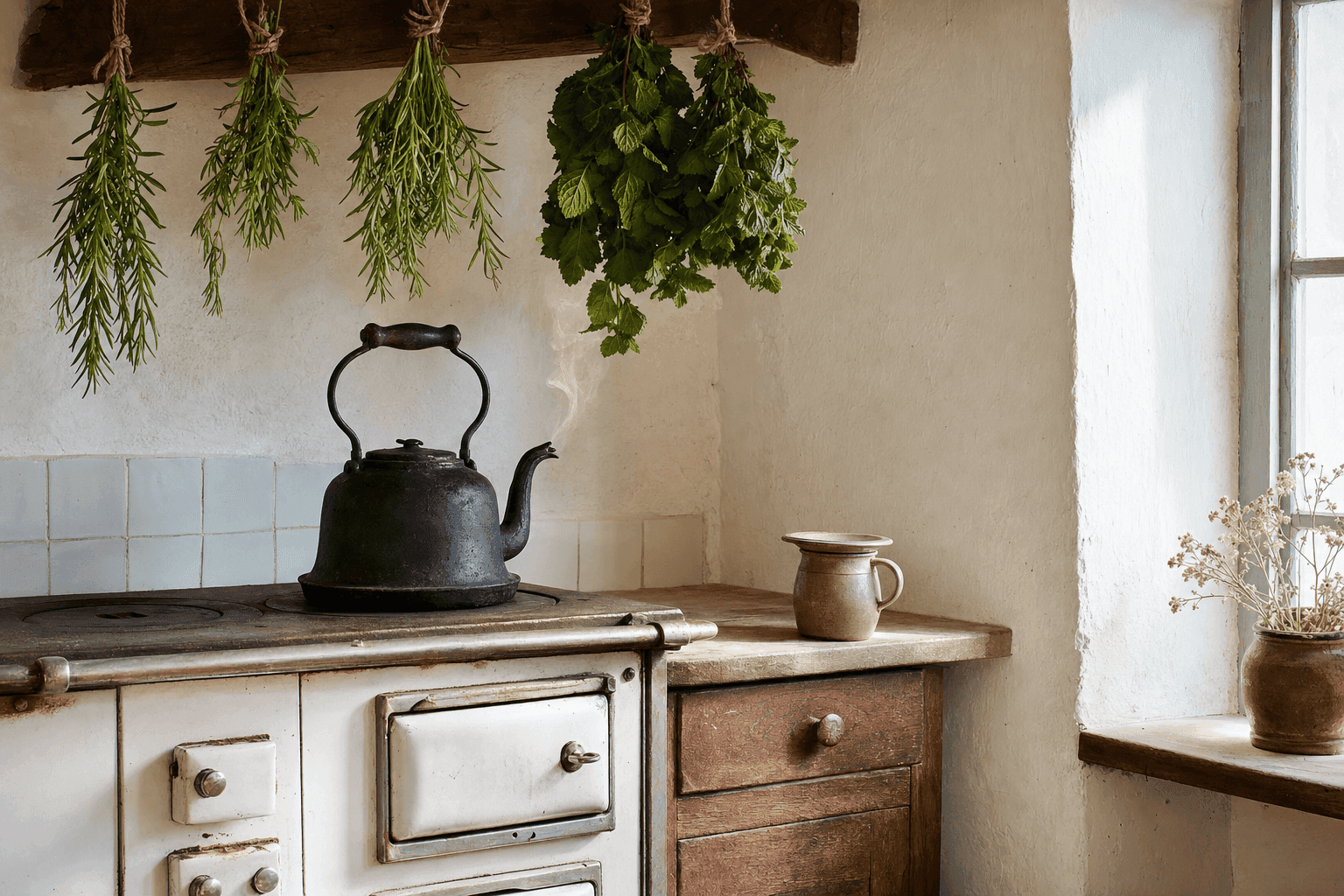
In our house, the plants for sleep didn't come from the pharmacy: they hung from the kitchen beams. Bunches of lemon verbena and lemon balm, upside down, near the old stove where the cast-iron kettle was heating. My mother used to say that making your tea was already the start of sleeping. I've never found a better way to put it.
My mother's plants for sleep
She cut the lemon balm in the vegetable garden in the morning, as young shoots, before the plant flowered. The lemon verbena lived in a big pot by the door: it can't take frost, so we brought it in before the first frosts, and we picked its leaves from June to September. Everything ended up in little bunches tied with string, hanging in the kitchen, and in winter the room smelled of lemon.
In the evening, after the dishes, she put the kettle back on the fire. A cup on the corner of the table, a saucer on top, and at last she sat down. I used to watch the steam slip out from under the saucer. I kept the kettle, and the habit along with it.
People often ask me which plant is best for sleep, the most effective, the one that works every time. I'll tell you how things are: there isn't one that puts you to sleep. The books keep four to help sleep come: lemon balm, lemon verbena, valerian and passion flower. I've stayed faithful to my mother's two. And if you want all my plants and habits for the nights when sleep keeps you waiting, I've written it all down for you.
And chamomile, you'll ask? In my books, chamomile is for a bloated tummy, not for sleep. I keep it for after lunch. Lavender, the one that smells of clean laundry, gets a letter all to itself.
My mother used to say that making your tea was already the start of sleeping. A cup doesn't make you sleep: it tells the house the day is over.
Which herbal tea for sleep? My evening cup, step by step
My grandma-style herbal tea for sleep is one plant at a time. I don't mix them: that way, I know which one suits me.
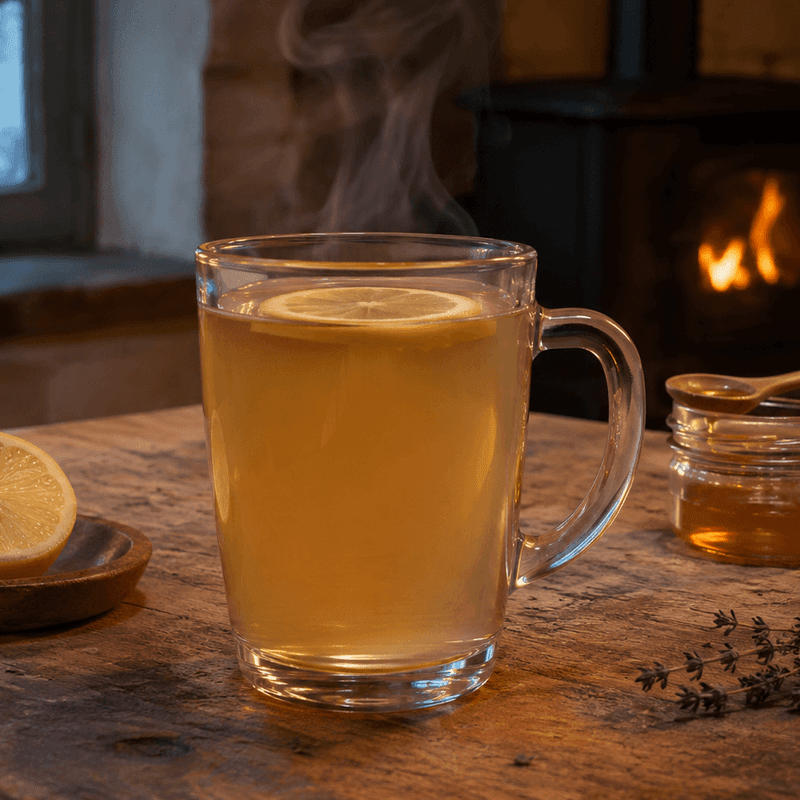
On ordinary evenings, it's my verbena, the one that smells of lemon. I put 1 to 2 g of dried leaves in the bottom of the cup and pour 200 ml of boiling water over them. Saucer on the cup, ten minutes, and I strain it. I drink it half an hour before going to bed, in the living room, under the little lamp, not in bed.
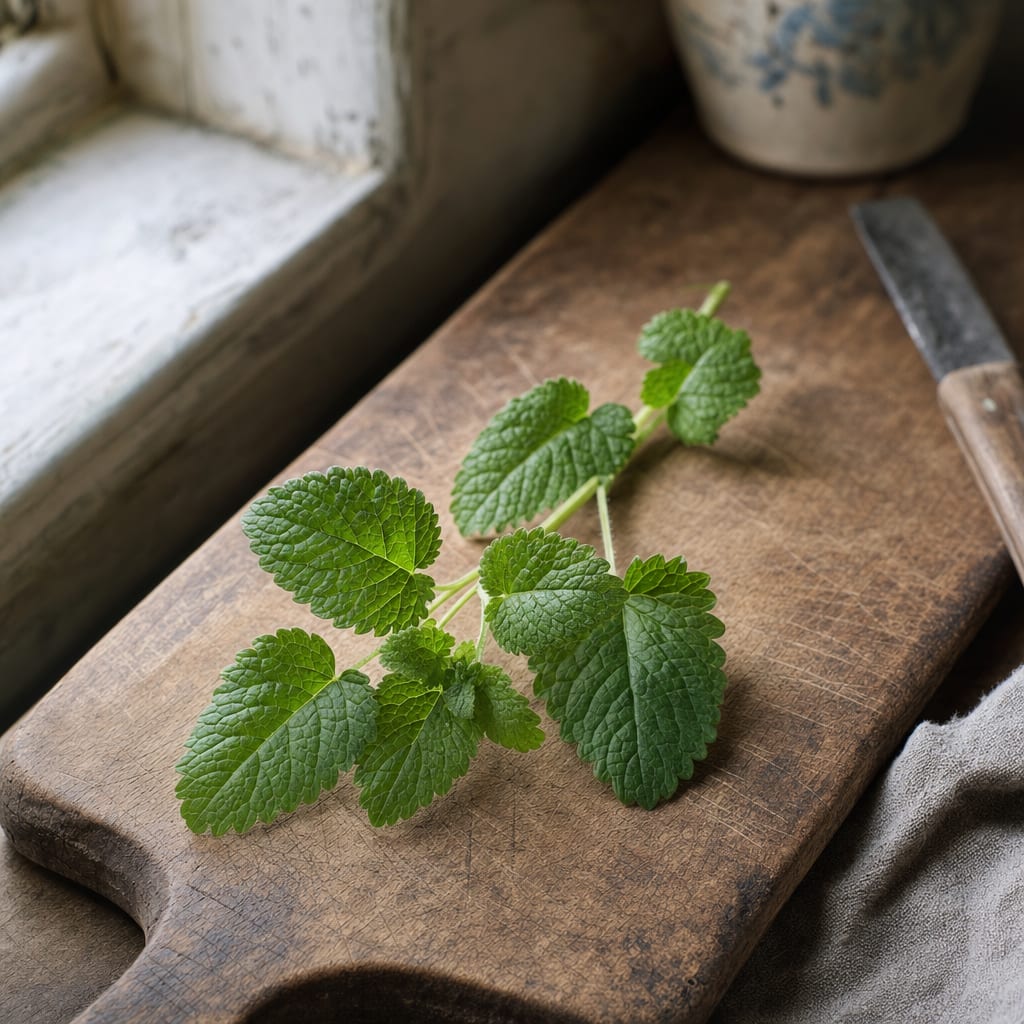
On evenings when I've eaten a bit too much, I reach for lemon balm from the vegetable garden, because the books also give it for a tummy that bloats after a meal. I count 1.5 to 4.5 g of dried leaves for 150 ml of boiling water, ten minutes covered. One to three cups a day, no more.
And on evenings when the day has weighed on me, when my nerves are raw, I bring out the flowers from my linden. The books give it for small bouts of stress, not for sleep itself, and that's how I drink it: 1.5 g of flowers with their bract in 150 ml of boiling water, ten minutes covered, and no more than 6 g of flowers a day.
The rest isn't in the cup. I go to bed at the same time every night, even on Sundays. Tea and coffee, I don't drink after two in the afternoon. And an hour before bed, I switch off the television and the big light, and keep just one lamp with a warm glow.
A cup doesn't make you sleep. It only tells the house that the day is over.
What to know before your evening cup
These cups are gentle, but they have their rules, and I'm giving you every one of them.
- No lemon verbena, lemon balm or linden as a tea during pregnancy or breastfeeding: the books don't have enough experience with them yet. And not before age 12.
- Lemon verbena and lemon balm can make you drowsy. If that happens to you, don't drive and don't use machines.
- If you're allergic to one of these plants, go without it. For lemon verbena, that also goes for plants in its family, like common vervain.
- If you have a thyroid problem, ask your doctor before drinking lemon balm regularly.
- If you already take something on a doctor's orders, especially for sleep or for your nerves, talk to your doctor or pharmacist before drinking these every evening.
- If sleep hasn't come back after two weeks of cups, or if it gets worse, go and see your doctor.
And some nights aren't a matter for herbal tea anymore. If you've been sleeping badly more than three nights a week for more than three months, go and see your doctor. If someone hears you snoring very loudly and stopping breathing in your sleep, go and see your doctor too. If you fall asleep during the day without meaning to, in front of the television or in the car, don't drive, and go and see your doctor. And if you're having dark thoughts, call 3114 (the French suicide crisis line): it's free, day and night.
Before I let you go
Tonight it's raining on the vegetable garden and the kitchen smells of verbena. My mother's kettle still whistles a little off-key, it's black and dented, and I wouldn't trade it for anything in the world. I've put the saucer on my cup, I'm waiting out my ten minutes, and I'm switching off the big light. Sleep well, and until the next letter.