Linden flowers in June: come and pick them with me in the garden
In June, my linden tree blooms above the terrace. I’ll show you when to pick linden flowers, how to dry them, and the cup I make with them in the evening.
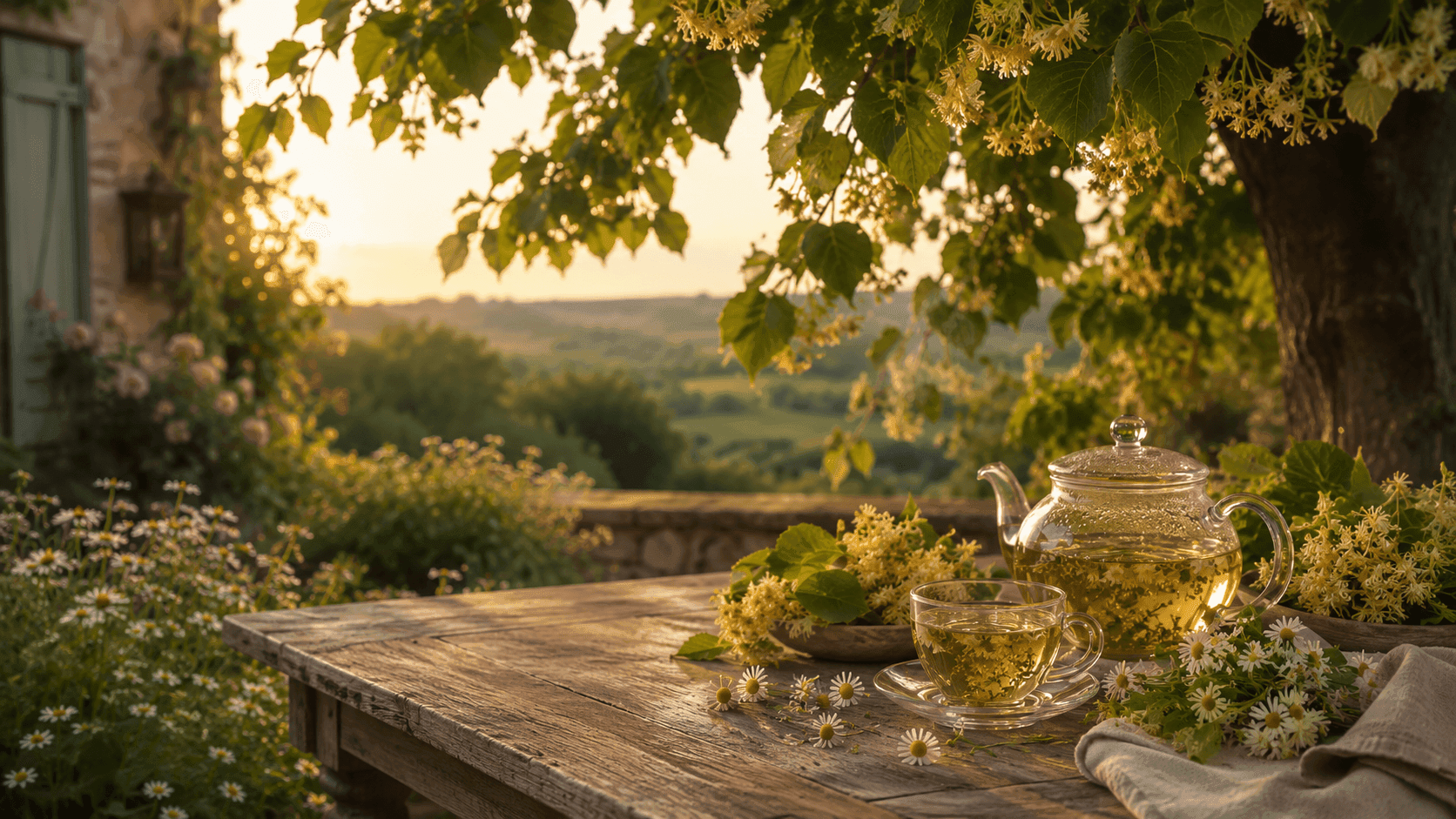
In June, the linden flowers open above my terrace: it’s time to pick them with their bract, dry them in the shade and fill a jar for the evenings of the year. In the evening, the air smells of honey right into the kitchen, and the bees hum up there: my mother used to say it was the only tree you listen to before you look at it.
Linden, the June tree in the garden
You know linden without even thinking about it. It’s the big tree on village squares, the one people used to plant in front of the church. Its leaves are heart-shaped, a bit lopsided, with a point at the end, and they look so much like elm leaves that its Latin name, tilia, is said to come from an old Greek word that meant elm. Mine has always been there, at the edge of the terrace, with the wooden table underneath.
When do lindens flower? In June or July, depending on the tree. Mine opens its flowers in the second half of June; small-leaved linden, the woodland one, tends to wait for July. The flowers hang in little yellowish-white clusters, two to seven together, attached to a long pale green wing: the bract.
At the foot of the low wall, German chamomile has taken over the whole border: little white heads with yellow hearts, that smell of apple when you crush them. It flowers from May right through to November, so for that one, I don’t rush. Lemon balm, I cut its young shoots now, before it flowers: it’s a pruning at the same time.

Linden doesn’t hurry, and neither do I. You pick when three flowers in the cluster are open, and you leave them to dry in the shade.
When to pick linden for tea, and which part to gather
The flower or the leaf? For tea, it’s the flower, and not on its own: the pharmacopoeia takes the whole cluster, bract included. The young leaves, I keep for salad, in spring: those of small-leaved linden are the most tender.
The right moment is when three flowers in the cluster are in bloom. I pick in the morning, once the dew has gone, with the stepladder and a flat basket, and I leave the top branches to the bees.
Next, you dry. I spread the clusters out in the shade, in the attic where the air moves, and I turn them now and then. Four kilos of fresh flowers give one kilo of dried. When everything is good and dry, it goes in a tightly closed jar, somewhere dry. Damp is the enemy: linden quickly loses its scent in it.
And don’t pick the wrong tree. Along the avenue, those are silver lindens, with leaves that are white and downy underneath. They flower at the end of July, and the pharmacopoeia doesn’t count them among the lindens for tea: it keeps small-leaved linden, large-leaved linden and their cross. Under their flowering branches, you sometimes find dead bumblebees, and no one quite knows why. I leave them on the tree.
For chamomile, it’s simpler. I pinch off the heads that have barely opened, all summer long, and dry them in a single layer on a tray, somewhere warm and dry, out of the sun, for one to two weeks. Before picking by the side of a path, split a little head in two with your fingernail: German chamomile has a hollow heart, its scentless cousin a solid one.
My cup of linden flowers, in the evening on the terrace
On the table, today’s clusters are waiting to go up to the attic. But tonight’s cup, I make with last year’s linden, the one from the jar.
I bring 150 ml of water to the boil. I take 1.5 g of dried flowers with their bract (weigh them the first time, linden is light). I pour the boiling water over them, cover and let it steep for ten minutes. I strain it, and a spoonful of honey if you like it sweeter. The taste is mild, a little sweet, almost velvety. You can drink two to four cups a day, no more than 6 g of flowers in all.
I drink it on evenings when the day has weighed on me and my head is still spinning. That’s what the books keep it for: little bouts of nerves, no more. For those evenings, I’ve written down my other ways to settle your nerves. And if you want to know all about this tree, I’ve told you about my linden at great length.
“Linden doesn’t work wonders. It makes a hot cup that smells of June, and in the evening, that’s already a lot.”
Chamomile, I keep for after dinner, when the meal has been heavy and my tummy bloats: 1.5 to 4 g of German chamomile flowers per 150 ml of boiling water, ten minutes covered, three or four cups a day at most. It’s not a cup for sleeping, it’s a cup for the tummy. What else I do with chamomile is this way. And if your garden has none, my whole-flower German chamomile makes the same cup.
Before you fill your cup, what to know
Linden, you don’t drink it during pregnancy or while breastfeeding: the books don’t have enough experience with it. Not before age 4, and for nerves, not before age 12. If you’re allergic to linden (its pollen bothers some people), go without. And if your nerves don’t settle, it’s your doctor you need to see, not one more cup.
Chamomile belongs to the same family as ragweed, chrysanthemums, marigolds and daisies: if you’re allergic to any of them, go without. If you have trouble breathing, or if your face or throat swells, call emergency services right away. No chamomile tea before 6 months, and for children, you use fewer flowers. If you already take something on a doctor’s orders, especially to thin your blood, or if you’ve had a transplant, ask your doctor before drinking it often. And if your tummy is no better after a week, go and see them too.
This evening, the table is still warm from the sun and the clusters smell strong in the basket. I’ll take it all up to the attic before nightfall, and tomorrow, we start again. I’ll write to you next month, when the linden is in its jars.