FlowersLeavesBudHerbal tea, infusion, mother tincture, bud macerate, and capsules.
Tilia cordata / Tilia platyphyllos
With its sweet, honey-like scent, this beautiful tree is an old friend of the family. We have always gathered its pretty blossoms to make a warm evening herbal tea that gently soothes you and helps you unwind before bedtime.
§ 01
Who she really is
Family : Other. Native to Europe and western Asia, the linden tree thrives in temperate regions across the Northern Hemisphere, where it has been cherished in our countryside for centuries.
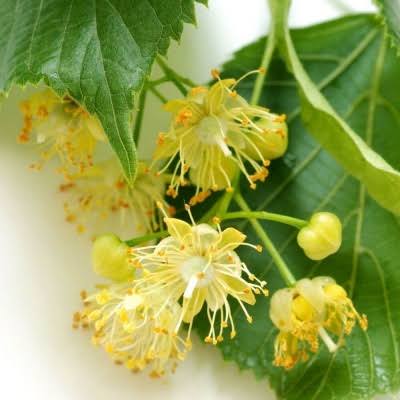
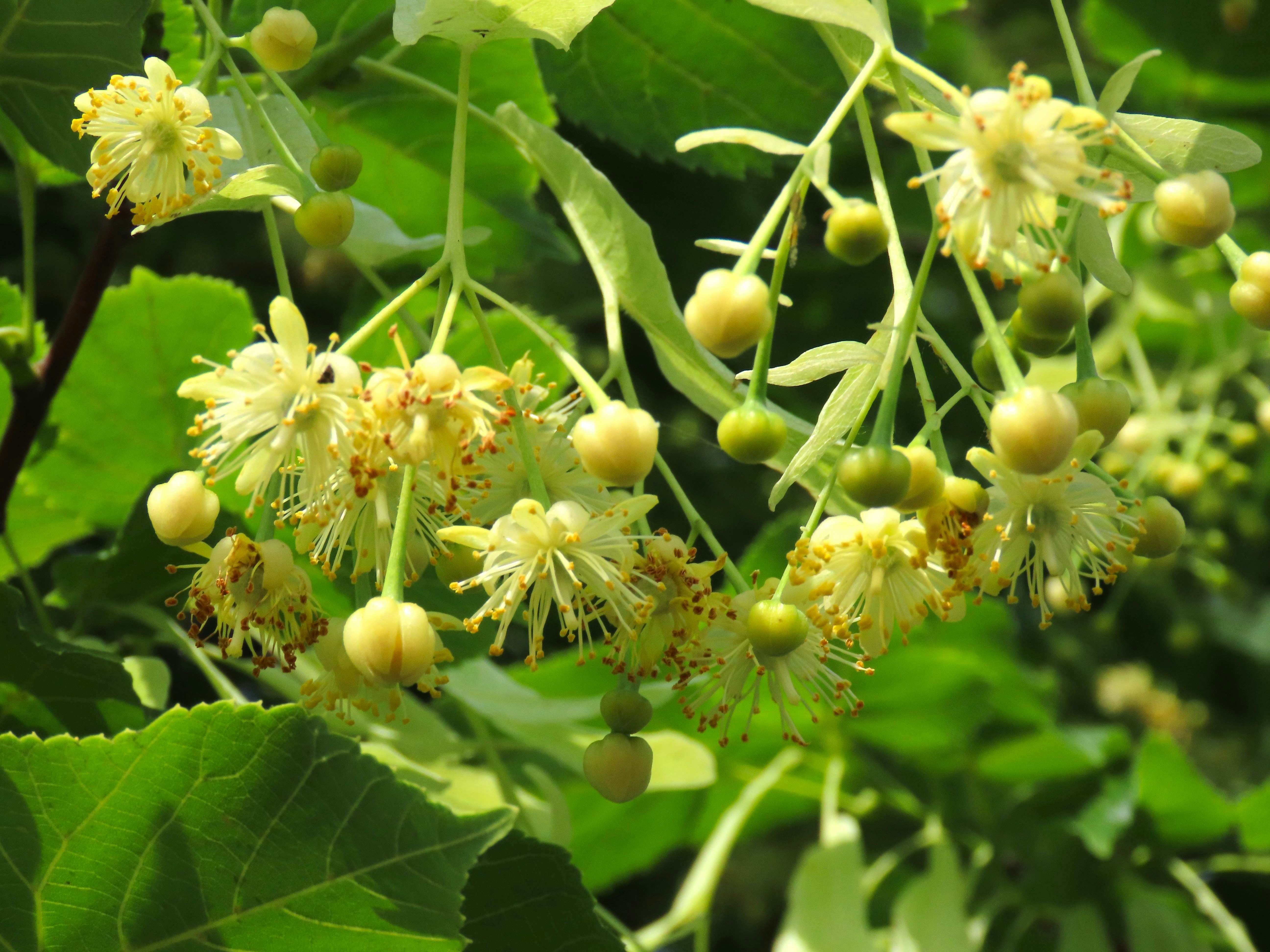
Parts used : Flowers, Leaves, Bud. We harvest the fragrant blossoms along with their leafy bracts in June, choosing a dry, sunny morning just as the first flowers begin to open.
Linden blossoms have always been our family's favorite for brewing a warm evening tea. This sweet, honey-scented plant gently soothes your mind and helps you unwind before bedtime. We have always trusted its delicate yellow flowers to bring a simple moment of peace and comfort when you feel a bit tense.
§ 02
Her story
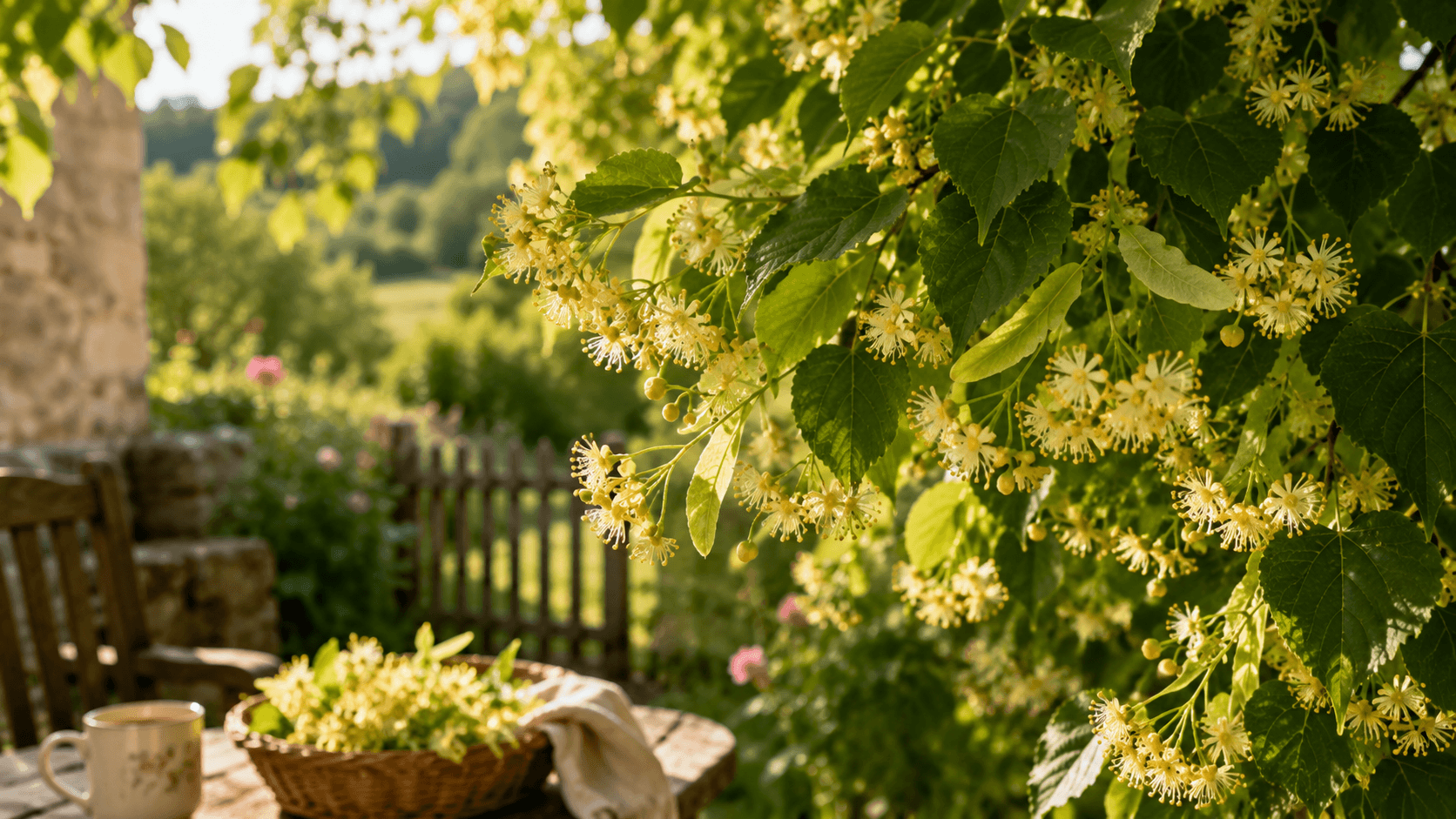
A majestic tree of our village squares and limestone forests, the Linden tree has accompanied us for generations. Beyond its welcoming shade and childhood scent, it offers precious flowers that we lovingly harvest at the beginning of summer to prepare gentle and comforting infusions.
A tree of memory and traditions
The genus Tilia, belonging to the Tiliaceae family (or Malvaceae according to modern classifications), includes forest species that thrive particularly well in limestone soils. This fast-growing tree, which can reach 15 to 18 meters in height at maturity, is recognized by its highly branched, egg-shaped crown and its widely spreading branches.
Its trunk, initially covered with smooth grey bark, delicately cracks over time, forming fine longitudinal fissures. Its botanical name derives from the Low Latin tilius, itself inspired by the ancient Greek word evoking width, in reference to its beautiful, generous heart-shaped leaves.
The Linden tree, a faithful companion along our country paths.
Granny's harvesting secrets
In our countryside, harvesting linden is an unchanging ritual that marks the arrival of sunny days. We wait until the flowers are barely open, often towards the end of June, to gently pick them with their bract, that small light green wing that accompanies them. We then spread them out in the shade, in a very dry and well-ventilated place, so that they keep their sweet honey scent.
An ancient linden tree watching over the village square.
Traditional uses and the sweet life
For centuries, we have prepared the famous linden herbal tea at the end of the day. It is the evening drink par excellence, the one we share with family to soothe ourselves after a long day or to help sleep come all on its own, very gently. Our grandmothers traditionally used it to bring comfort and well-being when the stomach was knotted by daily worries.
"A nice hot cup of linden infusion, with a spoonful of honey, and you immediately feel more ready to face the winter chill."
The flowers are not the only parts to be appreciated. The young spring leaves of the small-leaved linden (Tilia cordata), tender and sweet, are traditionally enjoyed in salads. Moreover, bees are very fond of its highly nectar-bearing flowers, producing a light and delicately scented honey.
A natural and balanced composition
Nature does things well: linden flowers naturally contain gentle and beneficial compounds. We find flavonoids (such as quercetin, kaempferol, and rutin), subtle volatile oils (citral, citronellal, eugenol, limonene, farnesol) which give it its characteristic scent, as well as mucilages, plant substances that swell on contact with water and provide that velvety texture so pleasant on the palate.
Safety note: Although linden is a very gentle traditional plant, everyone's sensitivity is unique. If you notice any unusual reactions or if you have any doubts, do not hesitate to ask your doctor or pharmacist for advice.
The linden tree is so deeply rooted in our heritage that it has given its name to many villages.
§ 03
What makes it work
Flavonoids (mainly rutin, hyperoside, and quercitrin), mucilages, essential oil containing farnesol, and phenolic acids. These traditional active constituents are well-documented in the European Pharmacopoeia.
§ 04
What I use her for
· 01Linden blossoms are traditionally harvested in June and dried in the shade for herbal teas.
· 02Linden flower infusions have been used for generations to help people unwind and relax before bedtime.
· 03Linden tea with honey is a traditional family remedy to soothe a sensitive throat during cold weather.
§ 05
How I prepare her
What you’ll need
My advice
Form
Herbal tea, infusion, mother tincture, bud macerate, and capsules.
Harvest
We harvest the fragrant blossoms along with their leafy bracts in June, choosing a dry, sunny morning just as the first flowers begin to open.
Storage
Keep your dried linden blossoms in a tightly closed jar, tucked away in a dark, dry cupboard, so they keep all their sweet aroma for up to a year.
Part used
Flowers, Leaves, Bud
§ 06
Granny’s little recipes
The gentle end-of-day herbal tea
In the evening, after dinner or just before slipping under the covers
What you’ll need
A generous pinch of dried linden flowers (about 3 to 4 inflorescences)
A cup of simmering water
A small spoonful of wildflower honey for sweetness
How I go about it
01Gently place your linden flowers at the bottom of your favorite cup.
02Pour the simmering water over them to awaken all their sweet aromas.
03Let it infuse quietly for 5 to 10 minutes under a small lid.
04Strain, add your honey if you like, and drink this nice hot infusion to prepare for a peaceful night.
The comforting bath for young and old
In the late afternoon, when the fatigue of the day sets in and you need to release tension
What you’ll need
Two generous handfuls of linden flowers and leaves
One liter of water
The warm water of your bath
How I go about it
01Boil the liter of water in a large pot.
02Remove from heat, throw in the handfuls of linden, and let infuse for a good fifteen minutes.
03Strain this large, fragrant infusion directly into the warm water of your bath.
04Slip inside and enjoy this traditional moment of calm that helps soothe the mind.
The soothing compress for summer evenings
In the evening, when your face or eyelids crave a little gentleness after a long day in the great outdoors
What you’ll need
One tablespoon of linden flowers
Half a cup of boiling water
Two clean gauze compresses
How I go about it
01Prepare a highly concentrated infusion by pouring the boiling water over the linden.
02Let it cool completely, then place the strained infusion in the refrigerator for one hour.
03Soak your compresses in this cool liquid.
04Lie down comfortably, place them over your closed eyes or cheeks, and enjoy this traditional moment of freshness for 10 minutes.
§ 07
What to know first
This information doesn’t replace advice from a healthcare professional. Health Disclaimer →
§ 08
Her identity card
Latin name
Tilia cordata / Tilia platyphyllos
Family
Other
Parts used
Flowers, Leaves, Bud
Harvest
We harvest the fragrant blossoms along with their leafy bracts in June, choosing a dry, sunny morning just as the first flowers begin to open.
Form
Herbal tea, infusion, mother tincture, bud macerate, and capsules.
Origin
Native to Europe and western Asia, the linden tree thrives in temperate regions across the Northern Hemisphere, where it has been cherished in our countryside for centuries.
Storage
Keep your dried linden blossoms in a tightly closed jar, tucked away in a dark, dry cupboard, so they keep all their sweet aroma for up to a year.
§ 09
If you remember just one thing
The essentials, in short
01Linden blossoms are traditionally harvested in June and dried in the shade for herbal teas.
02Linden flower infusions have been used for generations to help people unwind and relax before bedtime.
03Linden tea with honey is a traditional family remedy to soothe a sensitive throat during cold weather.
§ 10
Your questions
Linden tea is a wonderful, time-tested drink we have always brewed in the evening to help the whole family unwind and prepare for a peaceful night's sleep. Its sweet, honey-scented blossoms gently soothe your mind and calm your spirit after a long, busy day. Trust me, a warm cup of this traditional infusion is a true blessing when you need to find your quiet moment.
To make a proper linden flower tea, you simply steep a small handful of dried linden blossoms and their leafy bracts in hot water for about ten minutes. I always cover the cup while it brews to keep all that sweet, soothing aroma inside. Drink it warm, perhaps with a little spoonful of honey, to bring comfort to your throat when the cold weather sets in.
Yes, linden tea has been used for generations as a gentle, comforting drink for restless children who need help settling down before bedtime. It is a mild and safe family favorite, but if you ever feel unsure about giving it to your little ones, it is always best to ask your doctor or pharmacist first.
While linden tea is very gentle and has been loved by families for centuries, you should always listen to your body and enjoy it in moderation. If you are taking any specific medications, are pregnant, or have any doubts at all, please have a quick chat with your doctor or pharmacist to be completely safe.
The absolute best time to enjoy a warm cup of linden tea is in the evening, about an hour before you head to bed. This traditional ritual helps your body and mind slow down, letting sleep come naturally and peacefully. We have always kept a jar of dried linden in the pantry for this very moment at the end of the day.