The cat's herb of damp ditches, whose dried root you drink in the evening. What it does, how much to take a day, its side effects, and why your cat adores it.
Who she really is
Parts used: The root, with its little rootstock, dried and cut.
Valerian (Valeriana officinalis) is the cat's herb, a tall perennial of the Caprifoliaceae family that grows in ditches and damp meadows. You dig up its root in autumn, dry it, and drink it as a tea in the evening. It smells very strong, and cats adore it.
Her story
Valerian (Valeriana officinalis) is the cat's herb: a tall plant of damp ditches whose root you dry to drink as a tea in the evening. The root smells strong, I may as well tell you straight away. But it's the one people have taken since ancient times when the head spins too much at night and sleep keeps you waiting.
Valerian, the cat's herb of damp ditches

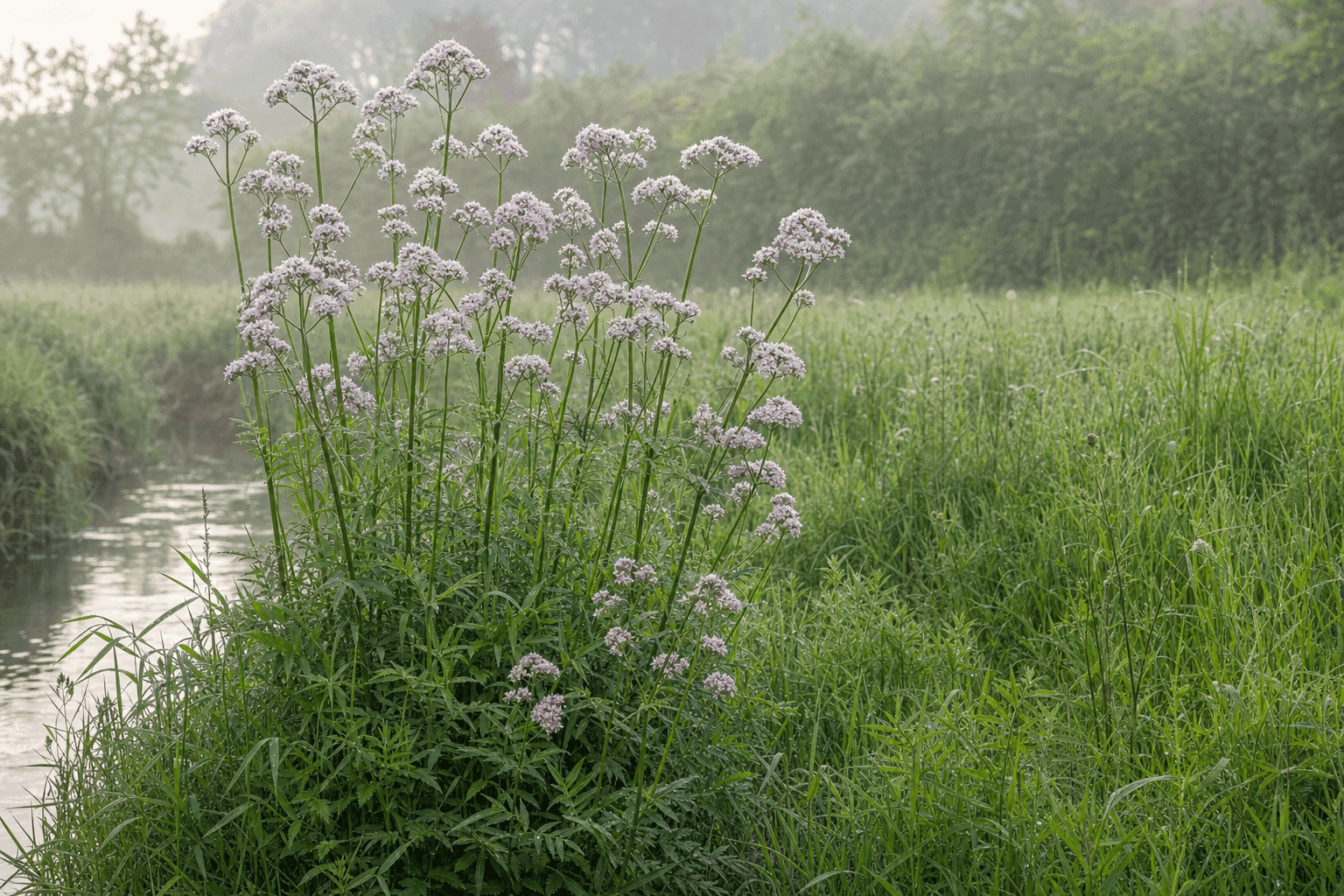
You've surely walked past it without knowing. It's a tall perennial that grows from forty centimetres to two metres, with a hollow, grooved stem. Its leaves grow in pairs, one opposite the other, cut into toothed leaflets. At the start of summer, it carries clusters of tiny pinkish-white flowers at the tips of its stems, and they smell nice. Yes, the flowers smell nice. It's the root that has the bad temper.
It likes to keep its feet cool: damp meadows and woods, ditches, the edges of streams. You find it across almost all of Europe and on into Asia, but it turns its nose up at the Mediterranean coast. Botanists now put it in the Caprifoliaceae family. It used to have a family all its own, the Valerianaceae.
If you want to know where to plant a valerian, give it a cool, almost damp corner, with deep soil, in sun or part shade. You sow it in spring, or you divide a clump in autumn. And keep an eye on your cat: it can damage the plants by rubbing against them. I'll explain why just below.
Why valerian root smells so strong, and why cats love it
What we keep from it is the underneath: the root, with the little rootstock it grows from. You dig it up in the autumn of its second year, after the first frosts. You wash it well, cut up the big pieces, and dry it in the shade, in a draught, with gentle heat (under 40 °C).
And that's where things go wrong. As it dries, its smell gets stronger and stronger. Plenty of people say it smells of old socks, and I won't tell you otherwise. The taste is bitter too. I got used to it long ago, but the first time my mother opened the bag in front of me, I pulled a face.
We wrinkle our noses. Cats, though, go wild for it, and that's where its nickname, the cat's herb, comes from. A cat that sniffs it rolls in it, rubs against it, purrs, even drools a little. They say it works on cats that couldn't care less about catnip, the cat herb you find at the garden centre.
My grandmother's cat used to stand guard in front of the chest of drawers where she kept her root. In the end she put it in a jar with a tightly screwed lid, and I do the same. If you're looking for valerian for your cat, ask your vet first. Mine, I keep for my cup.
Valerian in history, and its names from here and elsewhere
It's been known for a very long time. The books say the old Greek doctors, Hippocrates, Dioscorides, then Galen, already wrote about it for sleep. Dioscorides gave a root he called “phu”, or wild nard: a plant that looked a lot like ours, though nobody knows if it was quite the same.
After that, it had a thousand lives. An old English herbal from 1597 says that in the north of England, ordinary folk thought a broth was worth nothing without a bit of valerian in it. It was used for its scent, and to liven up soups. In Sweden, in the Middle Ages, people slipped some into the bridegroom's clothes to keep away the jealousy of the elves. It was even taken for a love potion. Today you mostly find it in the evening cup, and that's just fine.
Its name may come from the Latin valere, “to be strong”, or from Valeria, an old Roman province where it grew in abundance. Around here, it's been called the cat's herb, but also Saint George's herb and the herb for bruises. And in an old German dictionary from the end of the 18th century, it's already called “Katzenbaldrian”, the cats' valerian.
Fatima, my friend from Marrakech, taught me its name in Arabic: nârdîn, or hachîchat al-hirr, “the cat's herb”. Even in Arabic, it's the cat that gives it its name! So if someone ever talks to you about nârdîn, now you know it's our valerian. Me, I'm sticking with my cat's herb.
The benefits of valerian, what the old books say
I'll tell you how it is. European tradition uses valerian for two things: easing the small tensions of the day, when you're a bit on edge, and helping you fall asleep. That's all, and that's already something. It's not a sleeping pill, and it doesn't replace a proper talk with your doctor when things aren't right.
The simplest way is an infusion. For one cup, the books count 0.3 to 3 grams of cut root in 150 ml of boiling water. I put in about 2 grams, cover it, and let it steep about ten minutes. For sleep, you drink it half an hour to an hour before bed. On restless evenings, you can have a first cup earlier in the evening. And for tense days, it's up to three cups in the day.
So what's the maximum dose of valerian per day? As a tea, I stop at three cups, with 3 grams of root at most in each. No need to do more. With twenty-odd grams at once, people have ended up tired, with tummy cramps, a tight chest, a spinning head and shaking hands. It passes within a day, but honestly, there's no point.
People often ask me how long valerian takes to work. Not from one night to the next, you need patience. The books say it works little by little, and it often takes two to four weeks of regular cups. If things aren't better after two weeks, or if they get worse, go and see your doctor or your pharmacist.
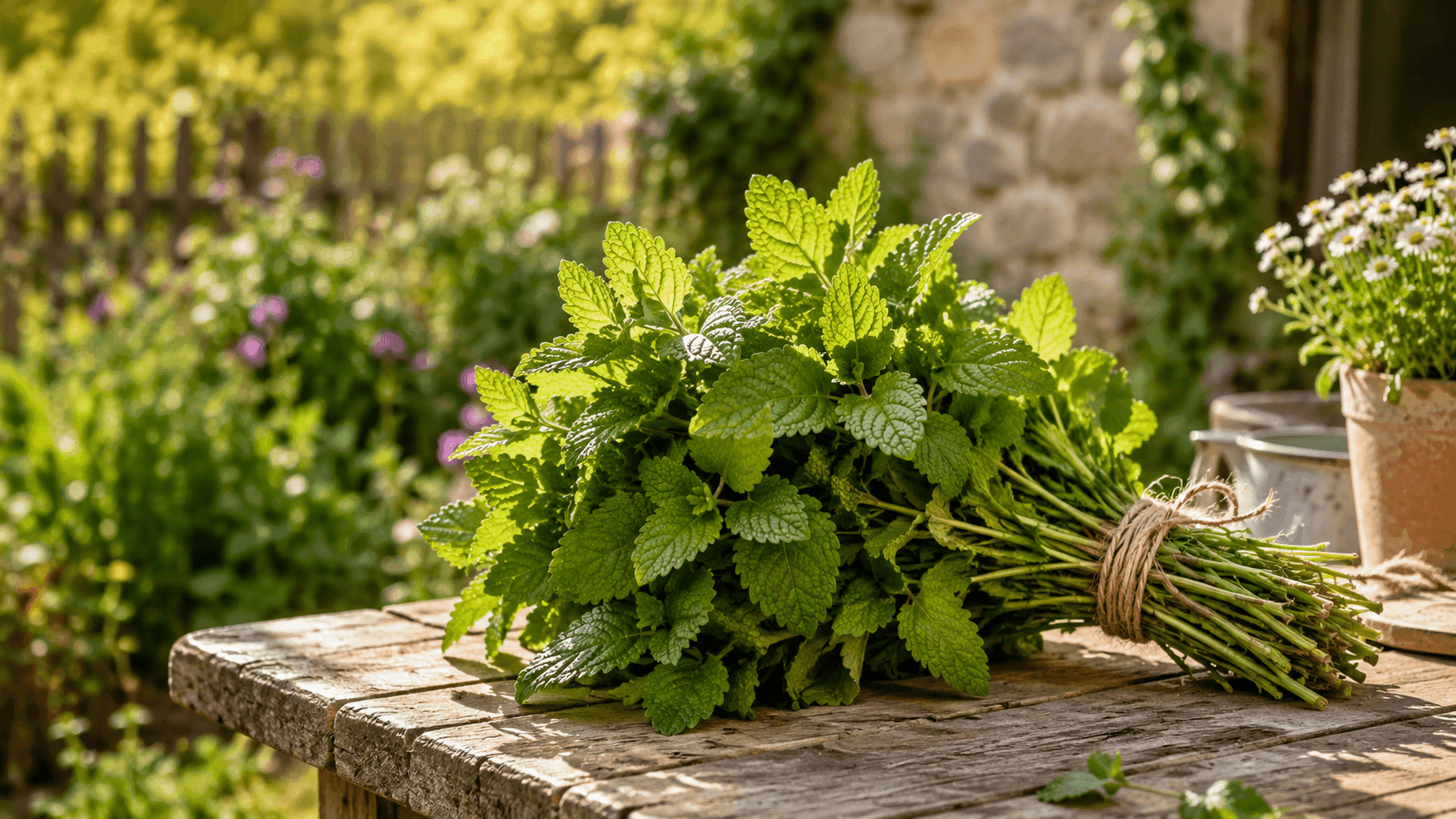
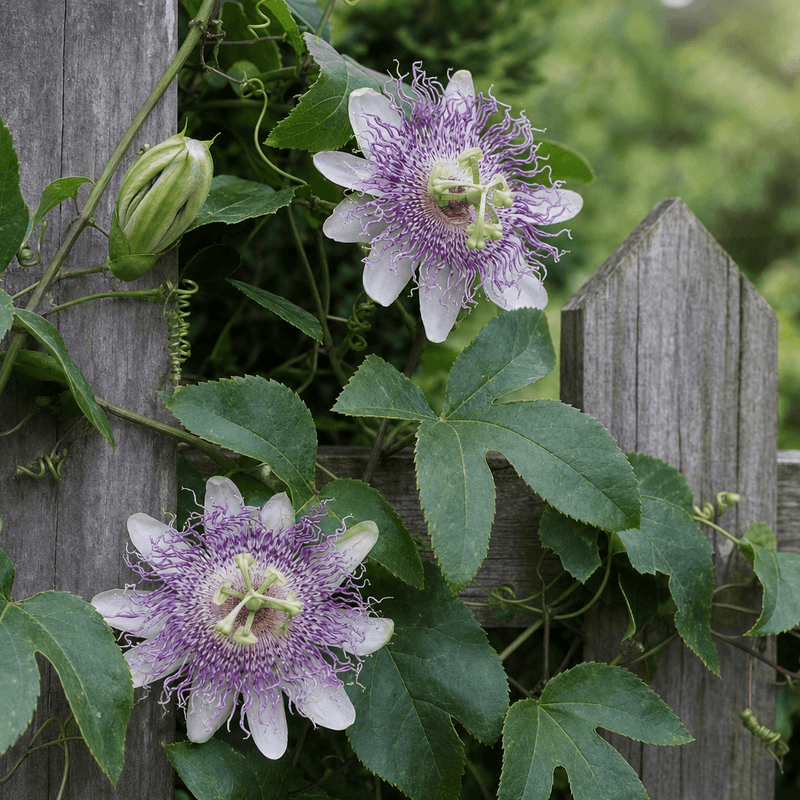
On its own, it has a rustic taste, I won't lie to you. So I often pair it with a little of the lemon balm from my garden, which softens everything. It's also been paired for a long time with passion flower in evening teas. A drizzle of honey, and the cup goes down easily.
Valerian, side effects and precautions: what I tell everyone
It's usually well tolerated, but sometimes the stomach complains: nausea, tummy cramps. If that happens to you, you stop. It can also make you drowsy: in that case, no driving or machines after your cup. Not under 12, not during pregnancy or breastfeeding. On the evening of your cup, leave the alcohol aside. And if you already take something on a doctor's orders for sleep or for your nerves, talk to your doctor first. All the details are a little further down, in what to know first.
And I'll say it again, the way I always do: I'm not promising you anything. A cup helps settle the evening, it doesn't work wonders. If your nights stay bad week after week, it's not a jar of roots you need, it's someone who'll listen to you. For the nights when sleep won't come, I've put my other little habits in when sleep is hard to find. And for the days when everything gets on your nerves, go and see how I calm a busy, jittery mind.
What I use her for
- · 01A cup in the evening, half an hour to an hour before bed, when sleep keeps you waiting.
- · 02On really restless evenings, a first cup earlier in the evening, then the bedtime cup.
- · 03On days when I'm on edge, up to three cups in the day, but never before getting in the car.
- · 04Mixed with a little lemon balm and a drizzle of honey, to soften its rustic taste.
- · 05In the garden, I leave it a cool, damp corner, and I keep an eye on the cat, who loves rolling in it.
Granny’s little recipes
The bedtime valerian cup
In the evening, half an hour to an hour before bed
What you’ll need
- 2 g dried cut valerian root (0.3 to 3 g at most)
- 150 ml boiling water
- 1 teaspoon honey, if you like
How I go about it
- 01Put the root in your cup and pour the boiling water over it.
- 02Cover straight away and let it steep 10 to 15 minutes.
- 03Strain, add the honey if you like, and drink it slowly, half an hour to an hour before you go to bed.
Two cups for restless evenings
Early in the evening, then at bedtime
What you’ll need
- 2 times 2 g dried cut valerian root
- 2 times 150 ml boiling water
How I go about it
- 01After dinner, make a first cup: the root, the boiling water, a lid, 10 to 15 minutes, then strain.
- 02Half an hour to an hour before bed, make the second cup the same way.
- 03No more than three cups in the day, and no driving afterwards.
Evening tea of valerian and lemon balm
In the evening, when the taste of the root on its own won't go down
What you’ll need
- 2 g dried cut valerian root
- 2 g dried lemon balm leaves
- 150 ml boiling water
- 1 teaspoon honey
How I go about it
- 01Put the valerian and the lemon balm in your cup.
- 02Pour on the boiling water, cover and let it steep 10 minutes.
- 03Strain, sweeten with the honey and drink half an hour to an hour before bed.
What to know first
This information doesn’t replace advice from a healthcare professional. Health Disclaimer →
Her identity card
- Name
- Valerian, common valerian, cat's herb
- Latin name
- Valeriana officinalis L.
- Family
- Caprifoliaceae (formerly Valerianaceae)
- Part used
- Root and little rootstock, dried
- Harvest
- In the autumn of the second year, after the first frosts
- Form
- Dried cut root, as a tea
- Origin
- Europe and temperate Asia; in France, damp meadows and ditches
- Storage
- Root well dried, in a closed jar, somewhere dry and away from light
If you remember just one thing
- 01Valerian is the cat's herb: you drink its dried root as a tea, in the evening, to settle the day and help sleep come.
- 02A cup is 0.3 to 3 grams of cut root in 150 ml of boiling water, half an hour to an hour before bed.
- 03No more than three cups in a day, and be patient: it works little by little, over two to four weeks.
- 04Not under 12, not when pregnant or breastfeeding, and no driving if it makes you drowsy.
- 05Its root smells like old socks and cats go wild for it: keep it in a tightly closed jar.
Your questions
Tradition uses it for two things: easing the small tensions of the day and helping you fall asleep. You drink its dried root as a tea, mostly in the evening. It's not a sleeping pill, and if your nights stay bad, it's your doctor you need to see.
As a tea, a cup is 0.3 to 3 grams of cut root in 150 ml of boiling water. You can drink up to three in a day. For sleep, it's one cup half an hour to an hour before bed, and another earlier in the evening if needed. Beyond that, there's no point: with twenty-odd grams at once, people have had tiredness, cramps and a spinning head.
Not from one night to the next. The books say it works little by little, and it often takes two to four weeks of regular cups. If things aren't better after two weeks, or if they get worse, go and see your doctor or your pharmacist.
Sometimes nausea or tummy cramps: if that happens, you stop. It can also make you drowsy, so no driving or machines if that's the case for you. Not under 12, and not during pregnancy or breastfeeding. And if you already take something on a doctor's orders for sleep or for your nerves, ask your doctor first.
No. The books give it for the small tensions of everyday life and to help sleep, not for a mood that's hit rock bottom. If you've felt sad or flat for weeks, that's not a job for a herbal tea: talk to your doctor. And if you already take something on a doctor's orders, don't start valerian without asking.
Yes, they've been put together for a long time in evening teas, each with its own small dose. Both can make you drowsy: no driving afterwards, and not under 12. If you already take something to help you sleep, ask your doctor first.
References
- European Union herbal monograph on Valeriana officinalis L., radix (EMA/HMPC/150848/2015, Corr.1) · European Medicines Agency, HMPC, 2016
- Assessment report on Valeriana officinalis L., radix and Valeriana officinalis L., aetheroleum (EMA/HMPC/150846/2015) · European Medicines Agency, HMPC, 2016
- Valerian root: Assessment Report Summary for the Public (EMA/HMPC/387742/2025) · European Medicines Agency, HMPC, 2025
- Racine de valériane : résumé public du rapport d'évaluation du HMPC (EMA/HMPC/575871/2007) · European Medicines Agency, HMPC, 2010
- Community herbal monograph on Valeriana officinalis L., radix (EMEA/HMPC/340719/2005, remplacée) · European Medicines Agency, HMPC, 2006
- Glossary on herbal teas (EMA/HMPC/5829/2010 Rev.1) · European Medicines Agency, HMPC, 2010
- Community herbal monograph on Melissa officinalis L., folium (EMA/HMPC/196745/2012) · European Medicines Agency, HMPC, 2013
- Community herbal monograph on Passiflora incarnata L., herba (EMA/HMPC/669740/2013) · European Medicines Agency, HMPC, 2014
- Valériane (Valeriana officinalis) · Vidal, 2023
- Valerian · Manitoba Agriculture, 2026
- Valeriana officinalis L. · Plants of the World Online, Royal Botanic Gardens, Kew, 2026
- Centranthus ruber (L.) DC., 1805 : Centranthe rouge, Valériane rouge · INPN, Muséum national d'Histoire naturelle, 2026
- La valériane ou le baiser de Morphée · Le Quotidien du Pharmacien, 2022
- La valériane et le chat · zooplus magazine, 2026
- Valériane officinale · Wikipédia, 2026
- Valerian (herb) · Wikipedia, 2026
- ناردين مخزني (Valeriana officinalis) · Wikipédia en arabe, 2026