A peaceful night's sleep
For a bedtime herbal tea, a cup of lemon balm, lemon verbena or passion flower in the evening, half an hour before bed. With regular hours, no more coffee after 2 pm and screens off an hour before.
Reviewed by Ruosi Wu, PhD in Pharmacy, MD in Traditional Chinese Medicine
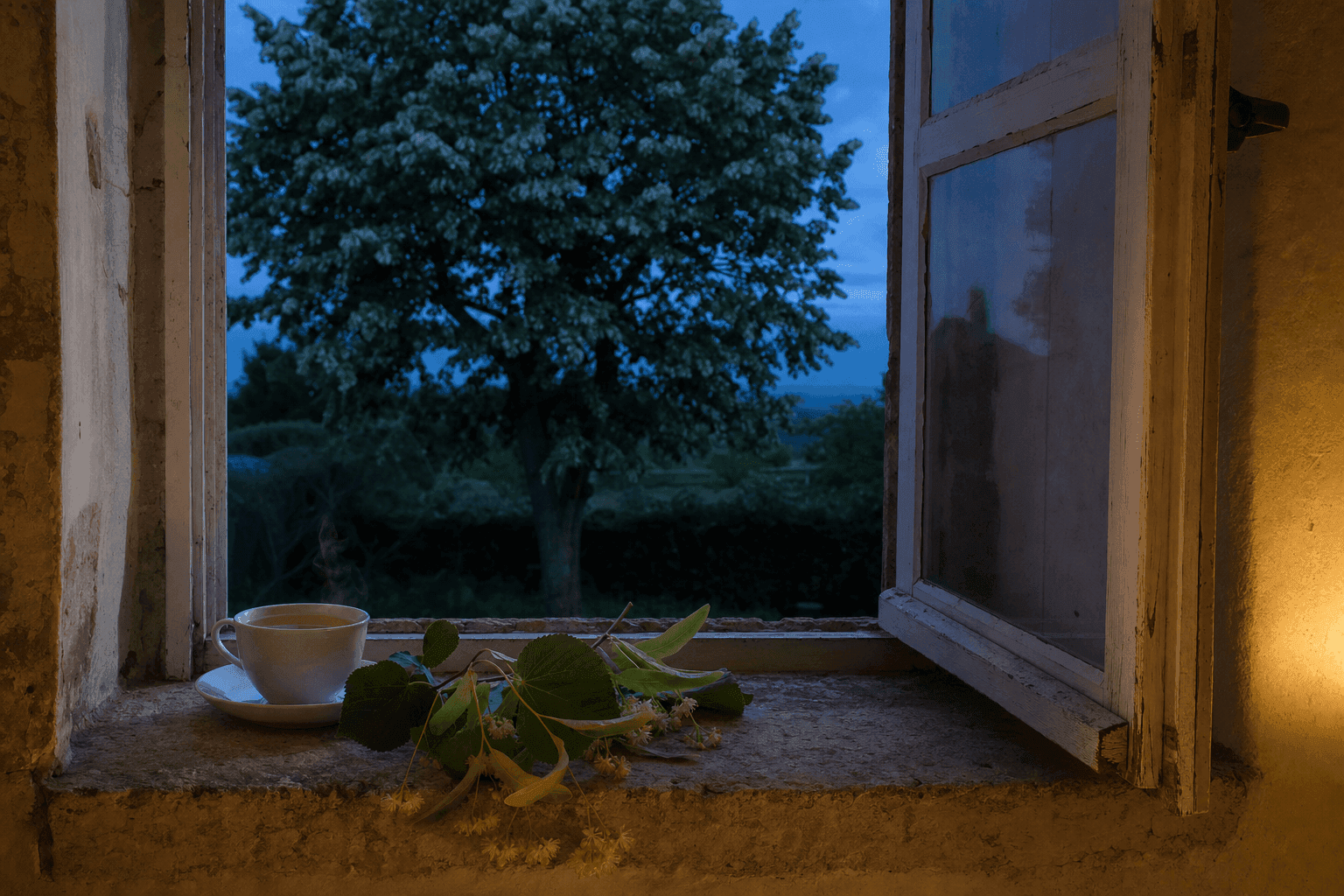
For a bedtime herbal tea, I have a cup of lemon balm, lemon verbena or passion flower in the evening, half an hour before I go to bed. Along with that: regular hours, no more tea or coffee after 2 pm, a light dinner and screens off an hour before. If you’ve been sleeping badly for several weeks in spite of all that, go and see your doctor.
Key takeaways
- Lemon balm isn’t a sleeping pill: it’s what helps you rest before sleep arrives.
- For a bedtime herbal tea, the books keep four plants: lemon balm, valerian, passion flower and lemon verbena.
- You drink your cup in the evening, half an hour before bed, and valerian asks for two to four weeks of patience.
- None of these teas during pregnancy, breastfeeding or before age 12, and no driving if they make you drowsy.
- If you’ve been sleeping badly for several weeks despite good habits, or if someone hears you stop breathing at night, go and see your doctor.
Granny’s little steps
- The same hours, even on Sundays
Go to bed and get up at the same time, weekends included, and forget about lie-ins. Sleep loves regularity, and it’s the simplest habit of all.
- No more tea or coffee after 2 pm
Tea, coffee, caffeinated drinks and cigarettes are over from early afternoon. Alcohol too, keep it away from the evening: it doesn’t make you sleep, it makes you wake up in the night.
- A light dinner, but not an empty stomach
In the evening, a light meal rather than a big, fatty dish. But don’t go to bed hungry either.
- Screens put away an hour before
An hour before bed, the phone and the television go off, and I leave them in another room. In the evening, a lamp with warm, dimmed light rather than a white light.
- An aired bedroom, no warmer than 18 to 20 °C
Open the window for a while and don’t heat the bedroom above 18 to 20 °C. A quiet, dark, cool bedroom helps sleep come.
A recipe to try
The evening cup of lemon balm
In the evening, after dinner, when your head is still spinning
What you’ll need
- 2 g of dried lemon balm leaves (from 1.5 to 4.5 g at most)
- 150 ml of water
- 1 teaspoon of honey, if you like it sweeter
How I go about it
- Bring the water to the boil.
- Put the leaves in the bottom of your cup and pour the boiling water over them.
- Cover with a saucer and let it steep for 10 minutes.
- Strain, add the honey if you like, and drink it slowly, away from screens.
- No more than three cups a day, and if sleep hasn’t come back after two weeks, go and see your doctor.
For a bedtime herbal tea, I take an evening plant, lemon balm, lemon verbena or passion flower, and I drink it slowly half an hour before going to bed. Nothing new: it’s my grandma’s tea for sleep, and my mother did the same, the cup set on the corner of the table with the saucer on top. But I’ll tell you how things are: a cup doesn’t do everything. Sleep gets ready from the morning on.
Why sleep keeps you waiting
Sleeping badly isn’t just sleeping too little. It’s taking a long time to fall asleep, waking up in the middle of the night, or opening your eyes far too early, with the feeling you slept badly. And the next day, you drag your tiredness around like an old coat.
Most of the time, it comes from the day. Stress, worry, a hard time: a loss, a change of job. In my house, short nights have always come along with worries, never on their own.
There’s also what goes into the cup and onto the plate. Too much tea or coffee keeps your eyes open, a big meal in the evening sits heavy, and alcohol, whatever people think, makes you wake up in the night. Add noise, a bedroom that’s too warm or too cold, working hours that keep changing, and sleep stays at the door.
You can sleep badly for a while without it being serious. When it comes back more than three times a week for more than three months, doctors call it chronic insomnia, and then it’s no longer a job for herbal tea.
My 5 plants for better sleep
In my evening cupboard, there are five jars. Four are in the books to help sleep: lemon balm, valerian, passion flower and lemon verbena. The fifth, linden, is the cup for evenings when my nerves are raw.
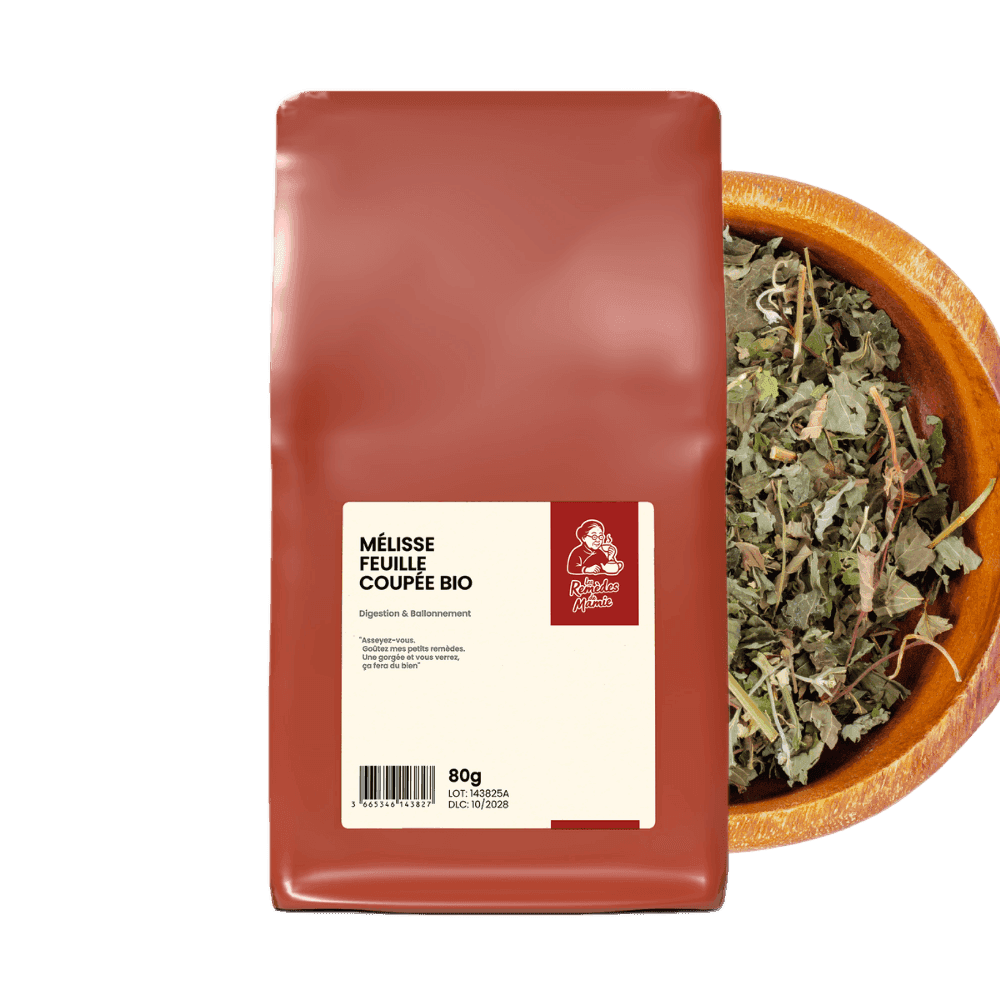
Lemon balm is the garden herb that smells of lemon when you crush it. Lemon balm isn’t a sleeping pill: it’s what helps you rest before sleep arrives. A cup is 1.5 to 4.5 g of dried leaves in 150 ml of boiling water, ten minutes covered, one to three times a day. The books also give it for a tummy that bloats after a meal, so I’m happy to drink it after dinner. If you want to know everything I do with lemon balm, I’ve told you all about it.
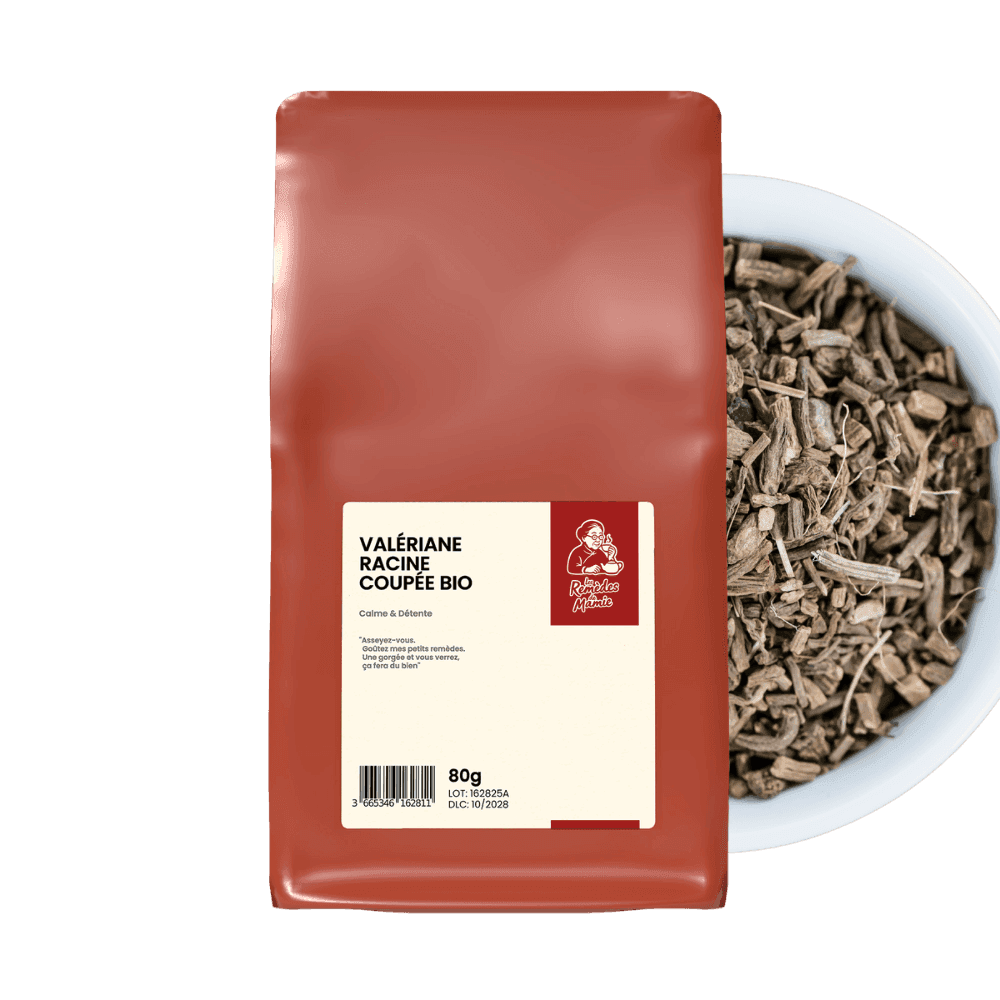
Valerian is the cat’s herb of damp ditches. You drink its dried root, and I’m warning you, it smells like old socks. People have used it for sleep since ancient times. From 0.3 to 3 g of cut root in 150 ml of boiling water, ten to fifteen minutes covered, half an hour to an hour before bed, with a cup earlier in the evening if needed. Above all, patience: it works little by little, over two to four weeks. My valerian and its cat stories are over here.
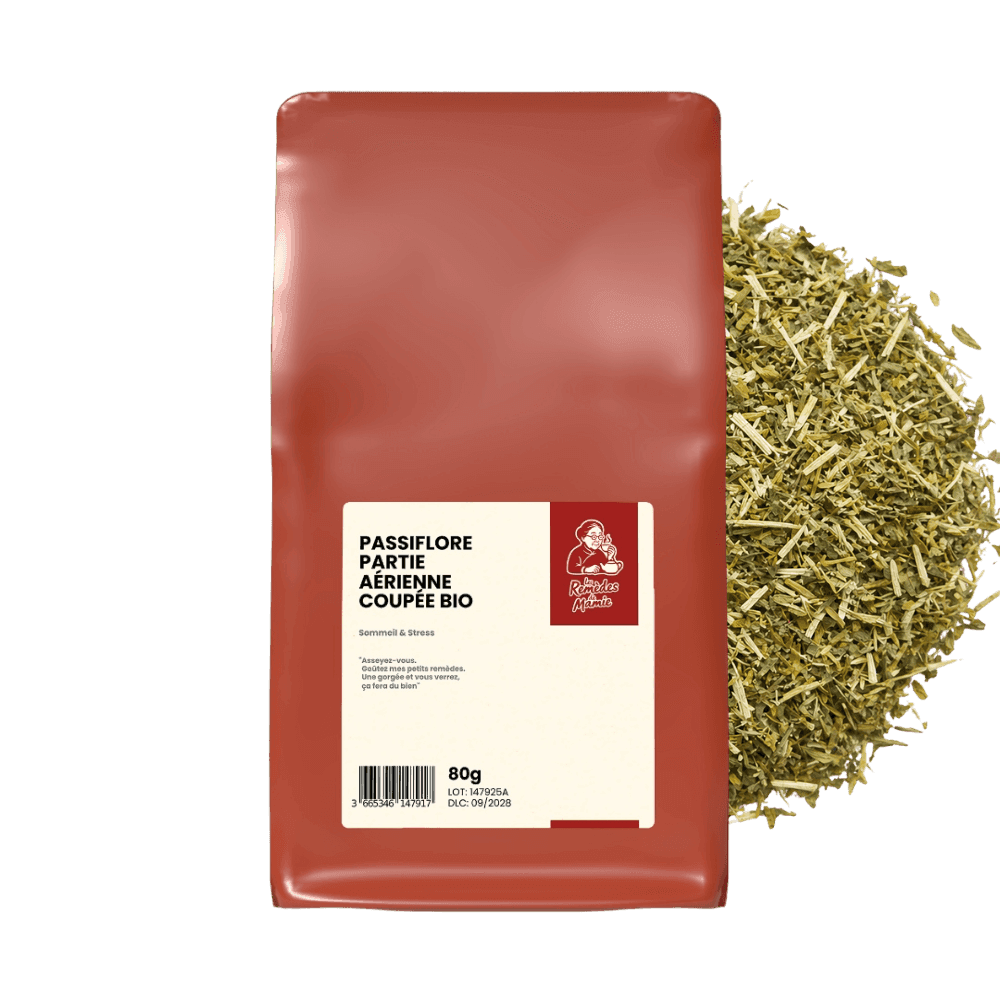
Passion flower is a climbing vine from North America; you drink its dried stems and leaves. The handbooks have talked about it since the 1930s, often mixed with other evening plants. I put 1 to 2 g in 150 ml of boiling water, ten minutes covered, and I drink it half an hour before bed, no more than four cups in a day. Make sure it’s the right passion flower in your cup: the blue one that climbs up walls is another plant. For the evenings when your thoughts go round and round, I’ve written its page.
Lemon verbena is the one people mean when they ask for “a verbena tea”. A small shrub from the Andes, with leaves that smell clearly of lemon; a French naturalist, Joseph Dombey, brought it back from Peru in the 18th century. For sleep, the books say 1 to 2 g of leaves in 200 ml of boiling water, half an hour before bedtime. Don’t mix it up with vervain, the one with bitter leaves: that’s another plant. My lemon verbena, the one that smells of lemon, has a page all its own.
Linden is the big tree on village squares. You drink its dried flowers with their bract. The books give it for small bouts of stress, not for sleep itself, and that’s how I drink it: in the evening, when the day has weighed on me. 1.5 g of flowers in 150 ml of boiling water, ten minutes covered, two to four times a day, no more than 6 g in a day. I’ve told you all about my linden.
And chamomile? People often ask me about it. In my books, chamomile is for a tummy that bloats, not for sleep. I keep it for after lunch.
“You can’t order sleep around. You make room for it, a cup, a low lamp, and you let it come.”
What time to drink your tea for sleep, and how to make it
What time should you have a herbal tea for sleep? Half an hour before bed, the books say, for passion flower and lemon verbena; half an hour to an hour for valerian. Me, I drink it in the living room, under the little lamp, not in bed.
Herbal tea or infusion, is it the same thing? Almost. A herbal tea is water and plants, made just before you drink it. An infusion is one way of making it: you pour boiling water over the leaves or flowers and let it steep, usually five to fifteen minutes. Tough parts are better boiled: that’s a decoction.
Can an infusion keep you awake? If it’s tea, yes. Tea, black or green, is a stimulant, like coffee: after two in the afternoon, I don’t drink any. My evening cups aren’t tea, they’re plants.
And something to fall asleep fast? I’d rather tell you: I don’t know of one. Lemon balm and lemon verbena are gentle, valerian takes weeks. What helps most is regularity: the same cup, at the same time, night after night.
What I do at home, besides the cup
The evening habits, I’ve put further down, one by one. The daytime ones count just as much. In the morning, I go outside to get daylight, at least an hour, even if it’s only in the garden. During the day, I move, but no hard exercise after 5 pm. And no hot bath right before bedtime.
If I wake up in the night and sleep won’t come back, I don’t lie there brooding in the dark. I get up, read a little under a soft light, and go back to bed when my eyes start to close. If it’s early morning, I get up for good. Naps, I keep short: twenty minutes after lunch, never after 4 pm.
If you’re tired, don’t get behind the wheel. Grandma helps with the little troubles of everyday life; the real troubles are your doctor’s job. If it’s your nerves keeping you awake, I’ve written for you about jittery evenings. The signs to watch for are further down, one per line.
Which plants?
ValerianValeriana officinalis
The cat's herb of damp ditches, whose dried root you drink in the evening. What it does, how much to take a day, its side effects, and why your cat adores it.
Passion flowerPassiflora incarnata
Passion flower, Passiflora incarnata, is a vine from North America. Its dried stems and leaves are drunk as a tea in the evening, when your nerves are wound tight.
Lemon verbenaAloysia citrodora
Lemon verbena is the little shrub from the Andes with leaves that smell of lemon: a cup in the evening before bed, a cup when your belly bloats, and a syrup over summer melon.
True lavenderLavandula angustifolia
True lavender, or fine lavender, is the lavender of the Provence mountains: a cup of the flowers in the evening, a sachet under the pillow, and a row in the sun in the garden.
Lemon balmMelissa officinalis
Lemon balm is the perennial garden herb that smells of lemon when you crush it: a cup in the evening, a cup when your tummy bloats, and a few leaves over summer fruit.
What to know first
These evening plants are gentle, but they’re not for everyone. I’ll tell you everything, plant by plant.
Pregnancy and breastfeeding: no lemon balm, no valerian, no passion flower, no lemon verbena, no linden. There isn’t enough hindsight to know whether it’s safe, so the books say to go without. For passion flower, on top of that, contractions of the uterus have been seen in animals.
Children: not before age 12 for lemon balm, valerian, passion flower and lemon verbena, and no linden for the nerves before age 12 either. The books lack data for younger ones. If your child sleeps badly, talk to your doctor about it.
Amounts: lemon balm, 1.5 to 4.5 g of leaves for 150 ml of boiling water, one to three times a day. Valerian, 0.3 to 3 g of root for 150 ml, up to three cups a day. Passion flower, 1 to 2 g for 150 ml, one to four times a day. Lemon verbena, for sleep, 1 to 2 g of leaves for 200 ml, half an hour before bedtime. Linden, 1.5 g of flowers for 150 ml, two to four times a day, 6 g at most in a day. Don’t push the dose.
How long: if sleep doesn’t come back after two weeks of regular cups, or if things get worse along the way, go and see your doctor or your pharmacist. For linden, if the nervousness doesn’t pass, same thing.
Driving: lemon balm, valerian, passion flower and lemon verbena can make you drowsy. If that happens to you, don’t drive and don’t use machines.
Alcohol: on the evening of your cup of passion flower or valerian, no alcohol alongside.
If you take a treatment: if you already take something to sleep or to calm down (sleeping pills, tranquilizers, antidepressants), no passion flower or valerian without your doctor’s OK, the drowsiness could add up. If you take an anticoagulant, a medication to thin the blood, ask before drinking passion flower: it could strengthen its effect. For lemon balm, the books have no data on combinations: if you take something on a doctor’s orders for sleep or for your nerves, talk to your doctor or your pharmacist first. For lemon verbena and linden, the books don’t report any interaction; if you’re on a long-term treatment, ask anyway before drinking them every day.
The thyroid: the books note that lemon balm might slow down a hormone that controls the thyroid, without knowing whether it really matters in people. If you have a thyroid problem or a treatment for it, ask your doctor before drinking it regularly.
The liver: if your liver is ill, or if you take a medication that’s hard on it, ask your doctor’s advice before passion flower or valerian.
Allergies: if you’re allergic to one of these plants, you go without. For lemon verbena, that also goes for the other plants of its family, the verbena family. Linden pollen sometimes causes allergies. Rare allergic reactions, sometimes severe, have been reported with passion flower: if you have trouble breathing or your face swells, call 15 or 112 right away.
What can happen: valerian can cause nausea or stomach cramps; passion flower, rarely, nausea or a racing heart. If that happens to you, you stop and ask your doctor for advice.
The right plant: all of this applies to lemon balm, valerian root, passion flower (Passiflora incarnata), lemon verbena leaf and linden flowers. The blue passion flower on walls and vervain are other plants: don’t put them in your cup thinking it’s the same thing.
When to see your doctor
- If you have dark thoughts or thoughts of death: call 3114, the national suicide prevention line in France, free, day and night.
- If these thoughts become overwhelming, if you’ve planned to act on them or you have the means within reach: call 15 or 112 right away.
- If you wake up at night with dark thoughts or thoughts going round in circles: see your regular doctor.
- If you’ve been sleeping badly for several weeks, despite good evening habits: make an appointment with your regular doctor.
- If you sleep badly more than three nights a week for more than three months: make an appointment with your regular doctor, that’s chronic insomnia.
- If the people close to you hear you snore very loudly and notice that you stop breathing in your sleep: see your regular doctor.
- If you wake up with a start, feeling like you’re choking or short of air: see your regular doctor.
- If you fall asleep without meaning to during the day, in front of the TV, in a meeting or in the car: don’t drive, and make an appointment with your regular doctor.
- If your tiredness makes you so distracted that you risk an accident at work or on the road: don’t get behind the wheel, and see your regular doctor.
- If you have restless legs that come back more and more often and disturb your sleep, your concentration or your mood: see your regular doctor.
- If pain keeps you from sleeping or wakes you up at night: see your regular doctor.
- If you’ve been sleeping badly since you started a new medication (corticosteroids, for example): talk to your doctor about it, without stopping your treatment on your own.
- If your child snores loudly at night: have your doctor take a look.
- If your insomnia gets worse or doesn’t improve after a first round of care: your regular doctor can refer you to a sleep center.
Your questions
What’s the best herbal tea for sleep?
There’s no sleeping pill in my cupboard, I’d rather tell you straight. To help sleep, the books keep four plants: lemon balm, lemon verbena, passion flower and valerian. Lemon balm and lemon verbena are the gentlest to drink. Valerian smells strong and asks for two to four weeks of regular cups before you feel anything.
What time should I drink a herbal tea for sleep?
In the evening, half an hour before you go to bed: that’s what the books say for passion flower and for lemon verbena. For valerian, it’s half an hour to an hour before bedtime, with a cup earlier in the evening if needed. Lemon balm, I drink after dinner.
Chamomile or verbena: which one for sleep?
Lemon verbena. The books give it to help sleep: 1 to 2 g of leaves in 200 ml of boiling water, half an hour before bedtime. Chamomile, in my books, is for a tummy that bloats after a meal, not for sleep. I keep it for after lunch.
What’s the difference between linden and verbena?
They’re not the same plants at all. Linden is a big tree from around here; you drink its flowers with their bract, and it tastes mild, a little sweet. Lemon verbena is a small shrub that came from the Andes, and its leaves smell clearly of lemon. Linden is my cup for evenings when my nerves are raw; lemon verbena is the one for bedtime.
Who shouldn’t drink lemon verbena?
No lemon verbena during pregnancy or breastfeeding, and not before age 12: the books don’t have enough hindsight. If you’re allergic to a plant in the verbena family, you go without. It can make you drowsy, so no driving after your cup if that happens to you. And if you’re still sleeping badly after two weeks, go and see your doctor.
Which herbal tea for good digestion and good sleep?
Lemon balm, or lemon verbena. The books give these two plants both to help sleep and for a tummy that bloats after a meal. A cup of lemon balm is 1.5 to 4.5 g of dried leaves in 150 ml of boiling water, ten minutes covered. And to sleep well, keep your dinner light too.
Also worth reading
- The LetterDry January: what I pour you in the evening, without a drop of alcoholDry January is a month of January without alcohol. At my house, we keep the evening glass: a red teapot of hibiscus, a cup of lemon verbena or lemon balm, and a little bissap aperitif.
- The LetterMy grandma's eggnog, lait de poule, the warm bowl before bedtimeMy grandma's lait de poule recipe for one bowl, alcohol-free: an egg yolk, sugar, hot milk and a pinch of nutmeg. With where this old eggnog comes from, and what to know about the egg.
- The LetterLemon balm and sleep: my evening cup, from garden to jarLemon balm and sleep go back a long way in our family: my mother's patch by the well, the leaves that smell of lemon, and a cup in the evening. I'll give you the measures and the rules.
- The LetterEssential oil for sleep: my lavender and my bedtime rulesYou ask me which essential oil to use for sleep. In my house, it's true lavender, with my rules: you don't swallow it, you air the room, and you keep it away from little ones and pregnant women.
- The LetterWhat to plant in August? Come and see my garden this monthIn August, I sow lamb's lettuce and pansies, I pick lemon verbena, sage and lemon balm in the morning, I water in the evening and I let the fennel go to seed. Come and see.
- The LetterMy holiday plant kit: let me show you what I take with mePacking your suitcase? Let me show you my natural first-aid kit: ginger for the road, peppermint and chamomile for when you get there, and what I leave at home.
- The LetterDrying your herbs in July: my little bunches up in the atticIn July, I cut my herbs in the morning, once the dew has gone, and hang them up in the attic. Come and see how I do it, plant by plant, so I have my herbal teas all winter.
- The LetterMy mother's notebook: her old grandma recipes, with measurementsI opened my mother's notebook again. Her grandma recipes had no grams and no minutes: here are the ones I've kept, measured, and her page on vinegar.
What I’ve made with
References
- Comment mieux dormir à l’âge adulte ? · ameli.fr, 2026
- Insomnie de l’adulte : définition et facteurs favorisants · ameli.fr, 2025
- Somnolence et endormissements dans la journée : que faire ? · ameli.fr, 2026
- Impatiences : que faire et quand consulter ? · ameli.fr, 2026
- Crise suicidaire : agir avant la tentative de suicide · ameli.fr, 2026
- Community herbal monograph on Melissa officinalis L., folium (EMA/HMPC/196745/2012) · European Medicines Agency, HMPC, 2013
- European Union herbal monograph on Valeriana officinalis L., radix (EMA/HMPC/150848/2015, Corr.1) · European Medicines Agency, HMPC, 2016
- Community herbal monograph on Passiflora incarnata L., herba (EMA/HMPC/669740/2013) · European Medicines Agency, HMPC, 2014
- European Union herbal monograph on Aloysia citrodora Paláu, folium (EMA/HMPC/376770/2019) · European Medicines Agency, HMPC, 2021
- Community herbal monograph on Tilia cordata Miller, Tilia platyphyllos Scop., Tilia x vulgaris Heyne or their mixtures, flos (EMA/HMPC/337066/2011) · European Medicines Agency, HMPC, 2012
- Glossary on herbal teas (EMA/HMPC/5829/2010 Rev.1) · European Medicines Agency, HMPC, 2010
- Passiflore (Passiflora incarnata) · Vidal, 2026
- Valériane (Valeriana officinalis) · Vidal, 2023
- Aloysia citrodora · Wikipédia, 2026
Information. This information is provided for general knowledge and doesn’t replace medical advice. Check with a healthcare professional before any use.
Health Disclaimer