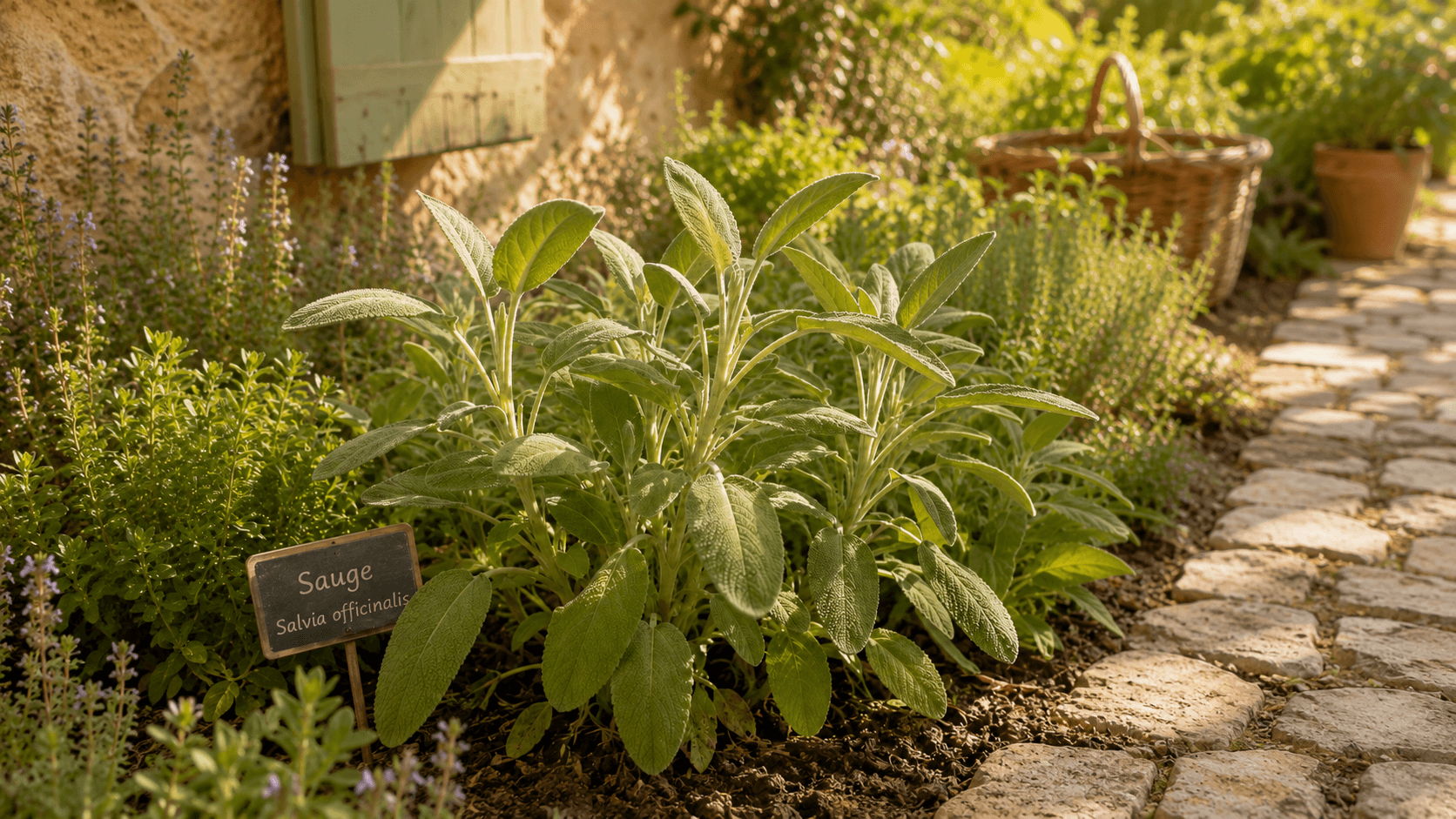
With its soft, velvet leaves, this ancient garden friend is what we always reach for to soothe a scratchy throat. It is traditionally used to bring you comfort when the cold season arrives, doing you a world of good.
Who she really is
Family : Mint family (Lamiaceae). Native to the Mediterranean region, sage is now widely naturalised throughout Europe and temperate areas of North America.
Parts used : Leaves, Flowering tops. Leaves harvested from late spring to end of summer, in dry weather, just before the plant flowers in the morning sun.
Sage is an ancient garden friend with soft, velvet leaves that we always reach for to soothe a scratchy throat. We have always trusted this warm, aromatic plant to bring you comfort when the cold season arrives, and a simple cup after meals does your stomach a world of good.
Her story
Sage, from the Latin Salvia, is one of the essential queens of our grandmothers' gardens. Famous for its velvety foliage and powerful aromatic scent, this plant has traveled through the centuries, accompanying both our well-being rituals and our traditional cooking recipes.
A companion plant throughout history
The genus of sages belongs to the Lamiaceae family and includes more than 900 species worldwide. Whether annual, perennial, or shrubby, they thrive happily in temperate zones, seeking the gentle warmth of the sun and well-drained soils. In Europe, about ten species grow wild, such as the graceful meadow clary.
In the Middle Ages, sage was regarded with immense respect. It held a prominent place in the capitulary De Villis, the famous cultivation guide decreed under Charlemagne. The ancients considered it a precious ally for daily life. Two varieties stood out particularly in the practices of yesteryear: clary sage (Salvia sclarea) and common sage (Salvia officinalis). Their flowering tops and leaves were then carefully harvested to prepare comforting infusions and traditional decoctions.
Beyond our European borders, other varieties have a fascinating cultural history. This is the case with diviner's sage, known by traditional names like yerba de María, traditionally used during shamanic rituals by certain Native American tribes.
The secrets of its aromatic foliage
The richness of sage lies in the complexity of its natural components. Its leaves contain essential oils rich in monoterpenes, such as camphor and cineole. It also contains phenolic compounds, notably rosmarinic acid, as well as protective flavonoids like luteolin and quercetin. This unique composition gives it its highly characteristic flavor, which is powerful, slightly bitter, and camphoraceous.
In traditional herbalism, these active ingredients are appreciated for their gentle action. Sage is often recommended to support women through their natural cycle. It is traditionally reputed to help soothe discomforts associated with premenstrual syndrome. Mothers wishing to gently end breastfeeding also use it as an infusion to naturally help calm milk production.
"In the kitchen garden, a sage plant always watches over the comfort of the household. It is the plant of common sense and feminine comfort."
From herbalism to the family table
Sage is also an exceptional aromatic herb that elevates everyday cooking. It is notably the star ingredient of aiga bolhida, a traditional garlic soup from Provence reputed to be soothing after festive meals.
In the kitchen, its strong character requires careful dosing, but it works wonders in many preparations:
- White meats: it pairs perfectly with roast pork or veal, as in the famous Italian recipe saltimbocca.
- Poultry: slipped under the skin of a chicken or turkey before cooking, it delicately perfumes the meat.
- Starches: a few sage leaves gently sautéed in brown butter transform simple potatoes or gnocchi into a festive dish.
To make the most of its benefits daily, the simplest method remains the infusion. Let three or four dried sage leaves steep in a cup of simmering water for about ten minutes. If you are pregnant or breastfeeding, always ask your doctor or pharmacist for advice before consuming sage regularly, as its natural active ingredients are powerful.
What makes it work
Essential oil rich in thujone, camphor, and 1,8-cineole, alongside phenolic acids (rosmarinic acid) and flavonoids (luteolin, apigenin). These active constituents are well-documented in the European Pharmacopoeia for their traditional soothing properties.
What I use her for
- · 01Sage is traditionally used to soothe a scratchy throat and bring comfort during the cold season.
- · 02Sage infusion helps the stomach feel lighter and more settled after a heavy meal.
- · 03Sage is traditionally trusted to bring comfort and balance during the monthly cycle and menopause.
- · 04Sage should not be used by nursing mothers due to its strong natural essences.
How I prepare her
Granny’s little recipes
Granny's herbal tea after a good meal
Right after lunch or dinner, when your stomach feels a bit heavy
What you’ll need
- 3 or 4 dried common sage leaves
- A cup of simmering water
- A spoonful of forest honey (if you like it sweet)
How I go about it
- 01Place your pretty sage leaves at the bottom of your favorite cup.
- 02Pour the hot water over them to awaken the aromas.
- 03Cover and let it steep quietly for 10 minutes.
- 04Strain the preparation, add your honey, and drink slowly, in small sips.
The mouthwash for crisp mornings
Upon waking, to freshen your mouth and soothe sensitive gums
What you’ll need
- One tablespoon of dried sage leaves
- A large cup of water
- A pinch of coarse sea salt
How I go about it
- 01Boil the water in a small saucepan with the sage.
- 02Let it simmer gently for 5 minutes.
- 03Remove from the heat, cover, and let it cool down completely.
- 04Strain the liquid, add the salt, and use this lukewarm decoction as a rinse after brushing your teeth.
The comforting rub for cold days
In the morning before going out, to give you a gentle lift and make you feel more resilient for the winter
What you’ll need
- A handful of fresh or dried sage leaves
- 200 ml of olive oil or sweet almond oil
- A nice, clean glass jar
How I go about it
- 01Slip your thoroughly dry sage leaves into the jar.
- 02Cover them completely with your oil.
- 03Let the jar sit on the windowsill in the sun for three weeks, shaking it from time to time.
- 04Strain the oil and use it for a gentle massage on your arms and legs in the morning.
What to know first
This information doesn’t replace advice from a healthcare professional. Health Disclaimer →
Her identity card
- Latin name
- Salvia officinalis
- Family
- Mint family (Lamiaceae)
- Parts used
- Leaves, Flowering tops
- Harvest
- Leaves harvested from late spring to end of summer, in dry weather, just before the plant flowers in the morning sun.
- Form
- Herbal tea, infusion, essential oil, mother tincture, capsules.
- Origin
- Native to the Mediterranean region, sage is now widely naturalised throughout Europe and temperate areas of North America.
- Storage
- Keep your dried sage leaves in an airtight glass jar, tucked away in a dark, dry cupboard, to preserve their wonderful aroma for up to a year.
If you remember just one thing
- 01Sage is traditionally used to soothe a scratchy throat and bring comfort during the cold season.
- 02Sage infusion helps the stomach feel lighter and more settled after a heavy meal.
- 03Sage is traditionally trusted to bring comfort and balance during the monthly cycle and menopause.
- 04Sage should not be used by nursing mothers due to its strong natural essences.
Your questions
To soothe a scratchy throat, you can make a simple sage tea by steeping a few fresh or dried leaves in boiling water for about ten minutes. I always tell my grandchildren to use this warm infusion as a comforting gargle, or to drink it slowly with a good spoonful of honey. It is an old remedy that warms you up right away and makes your throat feel much softer, trust me.
Yes, drinking a warm cup of sage tea is a wonderful way to help your stomach feel lighter and more settled after a heavy family meal. This beautiful garden plant has been used for generations to bring comfort to the tummy when you have eaten a bit too much. Just sip it slowly after your feast, and let the aromatic leaves do their quiet work.
Sage has always been a precious companion for women, especially when the body feels like a furnace during those difficult nights. Our grandmothers always trusted this velvet-leaved plant to bring back a bit of balance and cool you down when you need it most. It is a traditional way to find some comfort during the natural changes of life.
You should avoid sage tea if you are nursing a baby, as this powerful plant can dry up your milk. Because it is so rich in strong natural essences, it is also not meant for pregnant women or young children. If you are taking any regular medication or feel unsure, please play it safe and ask your doctor or pharmacist for advice.
You can easily grow your own sage at home because it is a hardy, friendly plant that loves the sun and dry soil. Having a bush of sage near your doorstep means you always have its soft, velvet leaves ready whenever you need a quick, comforting brew. It is a beautiful, ancient garden friend that asks for very little but gives so much goodness in return.