My evening grog, with lemon and honey, for when you come in frozen
My grog recipe for the evenings you come home frozen: a glass of hot water, lemon, honey, one measure of rum, my thyme version, an alcohol-free version, and what to know before you drink.
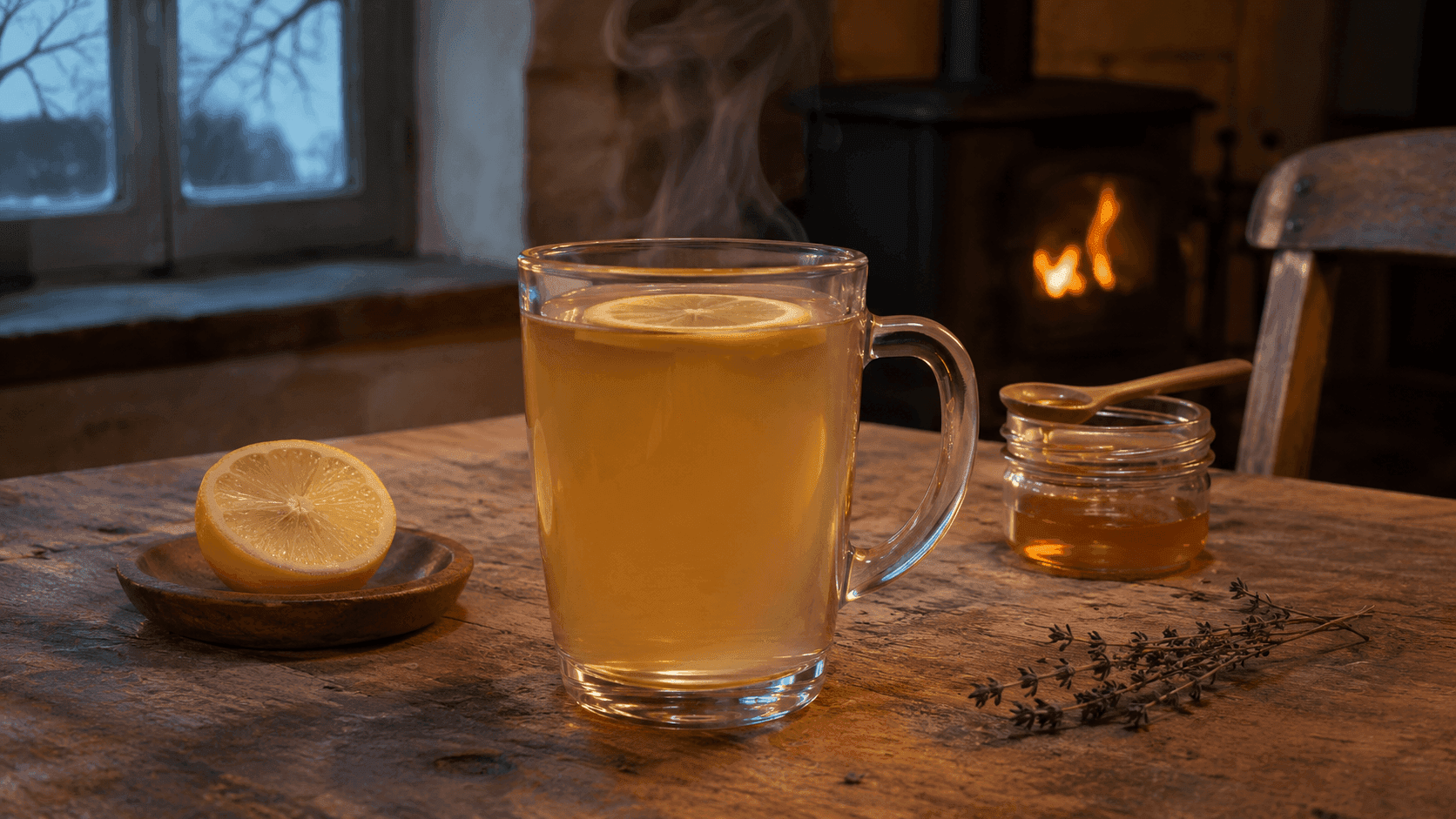
My grog recipe fits in a single glass: very hot water, half a lemon, a spoonful of honey and a small measure of amber rum. I'll give you my measures, my thyme version, the alcohol-free one for the whole household, and what you need to know before you raise your glass.
Why I make myself a grog on bitterly cold evenings
In December, when the wind turns north, there are evenings when the cold gets right into your bones. You've brought in the wood, shut the hens in, walked to the village in the drizzle, and when you get home you can't feel your fingers any more. On those evenings, I don't get the big pan out. I put some water on to heat, cut a lemon and take a big glass with a handle.
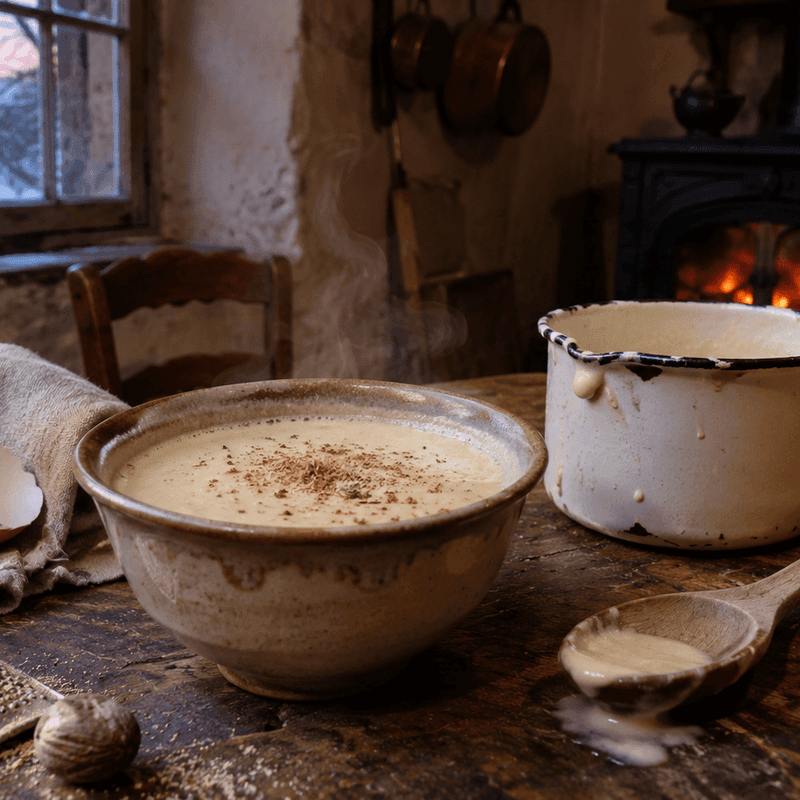
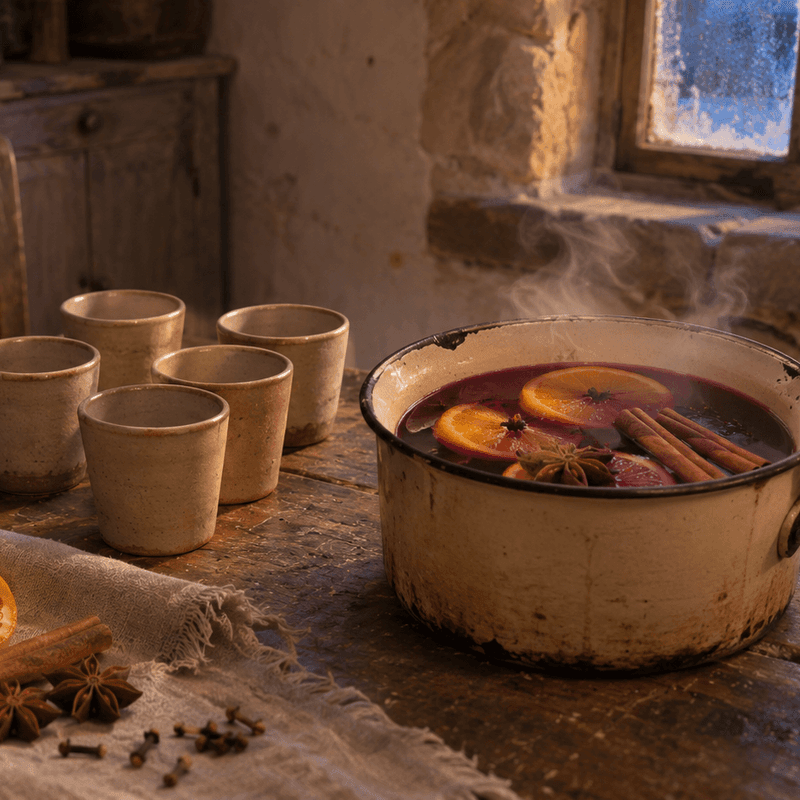
Grog is the hurried cousin of the mulled wine I make for the neighbours. Mulled wine is a pan that simmers gently and that you share around the table. Grog is one glass, made in five minutes, that you drink by the stove while you peel off your wet socks. No spices to steep, no whole bottle: water, lemon, honey, and the rum last.
Lots of people call it a grandma's remedy for a cold. I'll be frank with you: to me, grog is a pleasure for cold evenings, not a remedy, and I never serve it for that. When my throat feels scratchy, I have other habits, and I've told you about them separately: what I do when my throat stings.
Mulled wine is a pan you share. Grog is one glass, made in five minutes, that you drink by the stove while you peel off your wet socks.
Where grog comes from: an admiral, rum and hot water
The story of grog begins at sea. The books say that in 1740 an English admiral, Edward Vernon, had hot water added to the rum handed out to his sailors, so they would drink less of it. His men called him "Old Grog", because of the coat of coarse cloth he wore all the time, a cloth called grogram in English. The admiral's nickname passed to the drink.
Later, lemon juice was added, then sugar or honey, and it became the grog we know. Then everyone made it their own way: in Normandy they make it with calvados, elsewhere with whisky or cognac. My grandmother kept a bottle of amber rum right at the top of the dresser, for winter grogs and for the pancakes at Candlemas.
My grog recipe, its thyme version and its alcohol-free version
For one large glass:
- 20 cl of water;
- the juice of half a lemon, plus a slice for the glass;
- 1 tablespoon of honey, a little less if you like it less sweet;
- 3 cl of amber rum, no more: that's already one drink on its own.
- Heat the water until it just starts to simmer.
- Squeeze the half lemon into the glass and pour the hot water over it.
- Wait a minute until it's a little less scalding, then add the honey and stir until it melts.
- Pour in the rum last, off the heat, and float the lemon slice on top.
- Drink it hot, in small sips, with your hands around the glass.
My own version is thyme grog. Instead of pouring the water on its own, I pour it, just simmering, over 1 to 2 g of dried thyme, the whole-leaf thyme I keep in a jar. I cover it with a saucer, let it steep for 10 minutes and strain it. After that, it's the same: the lemon, the honey, the rum. Thyme, I've told you its story separately.
For the alcohol-free version, I keep the water, the lemon and the honey, and I swap the rum for three thin slices of fresh ginger. I put them in the cold water, bring it gently to the first simmer, then turn off the heat, cover and let it steep for 5 minutes. I strain it, squeeze in the lemon, and the honey goes in once it's a little less scalding. It tingles gently and it warms your hands. The whole household can drink it: the mum-to-be, the woman who is breastfeeding, whoever is driving home, the children. For the little ones, I put in just one slice of ginger, or none if they find it too hot, and I check the glass isn't too hot any more before I hand it to them. Babies under one year old don't touch it: never any honey at that age, not even a drop on a dummy.
Before you raise your glass: the rum doesn't fly away
People often think hot water makes the alcohol go away. It isn't true, and even less so in grog than in mulled wine. The rum goes in last, without cooking: those who have measured it say that alcohol stirred into a hot liquid and then taken off the heat keeps about 85% of it. Your 3 cl of amber rum is the measure of a small glass of rum served in a café. Count your grog as one drink.
So there are people for whom it's the glass without rum, and nothing else: a pregnant woman, because no amount is risk-free for the baby, and a woman who is breastfeeding; children and teenagers; whoever has to drive; and anyone who already takes something on a doctor's orders, or a tablet from the pharmacy for their cold, as long as their pharmacist hasn't said the two go together.
For everyone else, it's the rule for any alcohol: two drinks a day at most, and not every day. A grog doesn't get doubled because it's even colder outside. If you're allergic to citrus, leave out the lemon. Thyme isn't for anyone allergic to thyme or its cousins, sage and rosemary. And if a cough lasts more than a week, if you have a fever or trouble breathing, it isn't a grog you need: go and see your doctor.
There. The glass is empty, there's a slice of lemon left at the bottom, and my fingers have got their colour back. Outside, the wind is rattling the shutter on the shed, and tomorrow I'll have to bring in more wood. I'm going to switch off the kitchen lamp. Until the next letter.