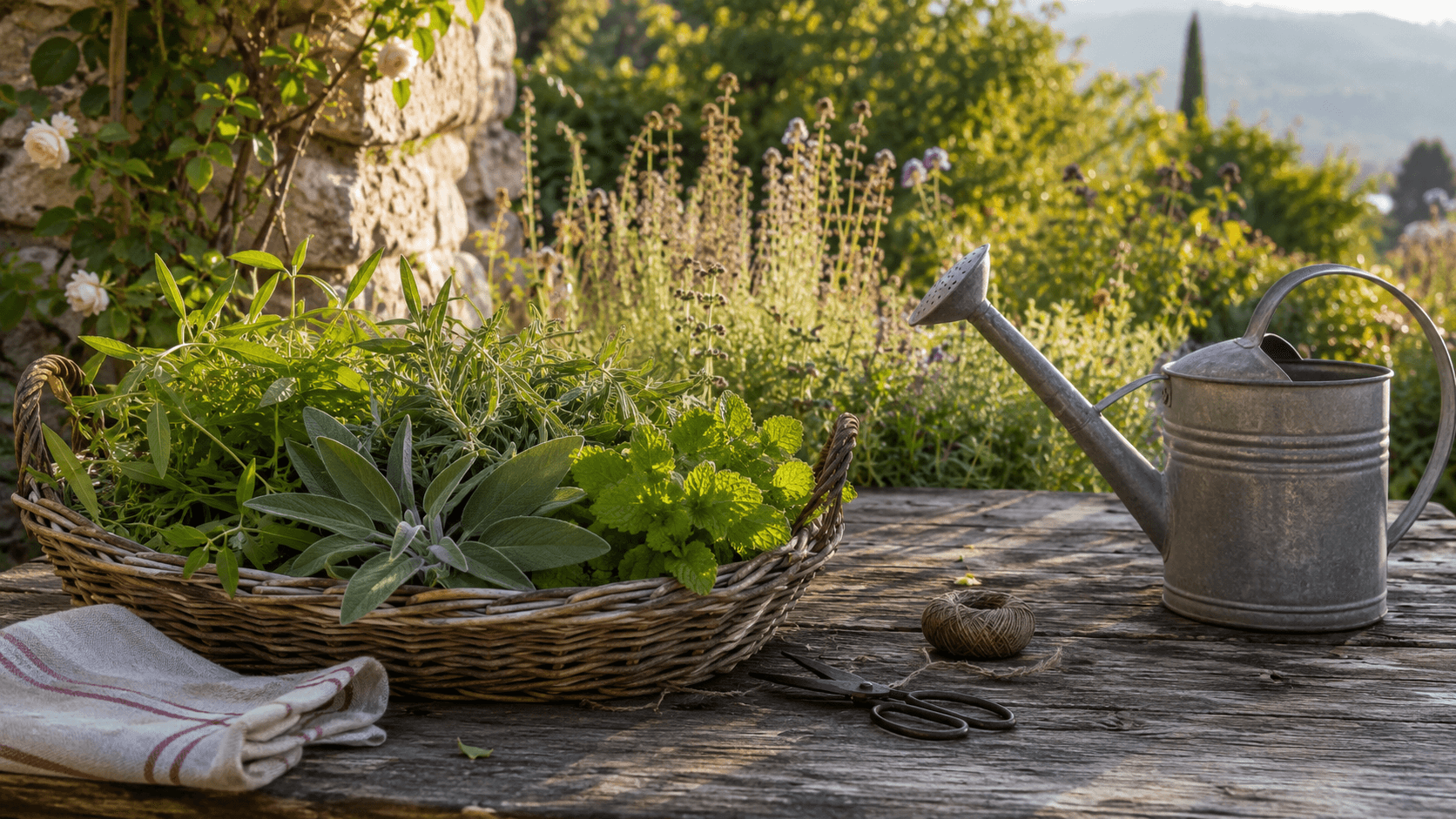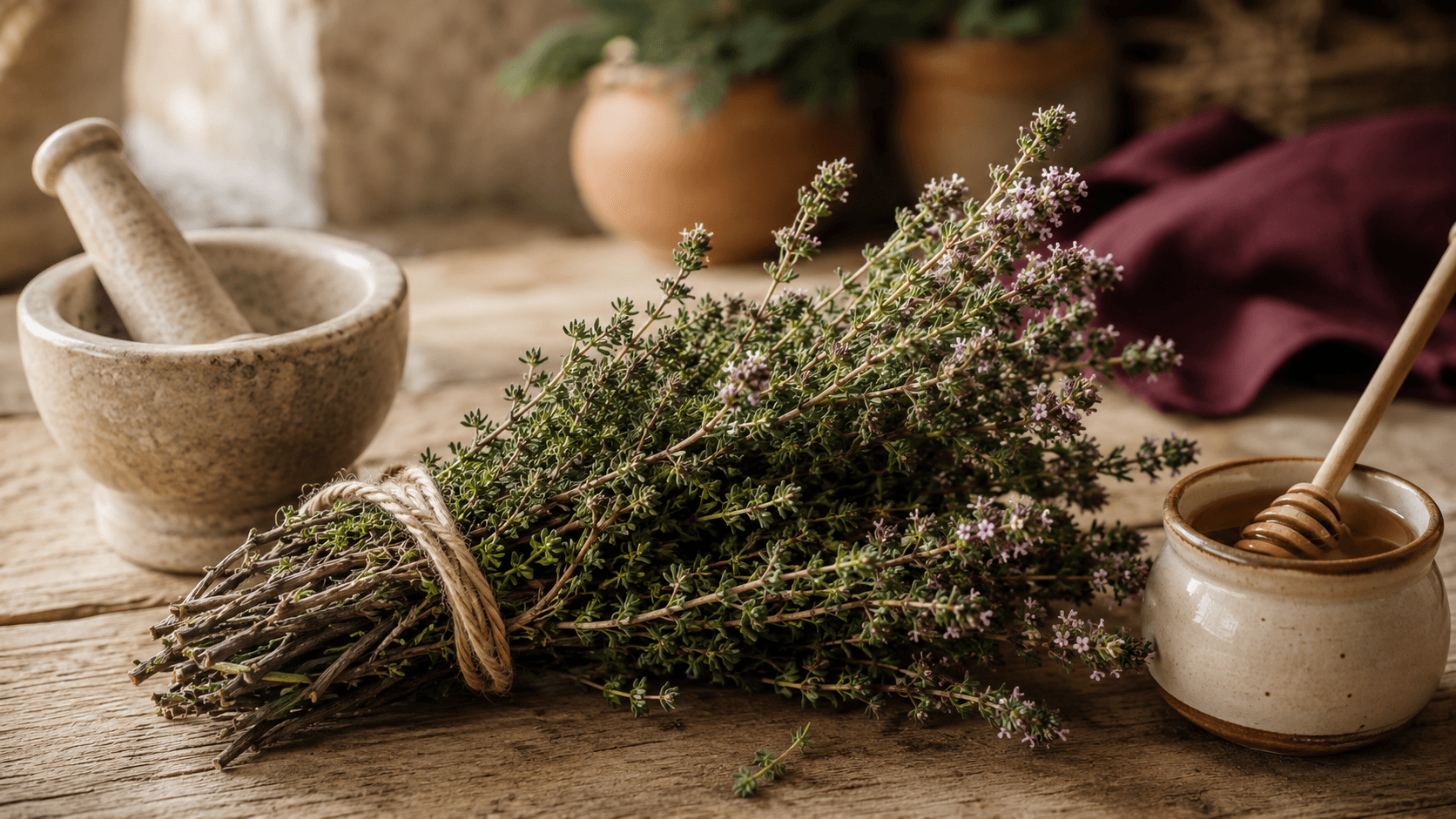
This sturdy little Mediterranean herb is a true treasure for your kitchen and your well-being. We have always brewed its sunny leaves in winter to soothe the throat and bring you comfort when the cold sets in.
Who she really is
Family : Mint family (Lamiaceae). Native to the rocky, sun-drenched soils of the Mediterranean basin, this hardy little herb has naturalised across temperate regions of Europe and North America.
Parts used : Leaves, Flowering tops. Leaves and flowering tops are harvested from May to August, on a dry, sunny morning after the dew has evaporated, just as the first flowers begin to open.
Thyme is a sturdy little Mediterranean herb we have always brewed in winter to soothe your tickly throat and bring you comfort. A hot cup of this sunny plant, sweetened with honey, warms you from the inside out and helps digestion after a heavy meal. It simply does you good, my child.
Her story
Thyme is one of the most iconic herbs of our scrublands. With its warm and sunny fragrance, it immediately brings to mind the hills of the South, our grandmothers' kitchens, and the simple remedies of yesteryear. This small, hardy plant holds many secrets through its history and traditional uses.
A small plant of arid lands
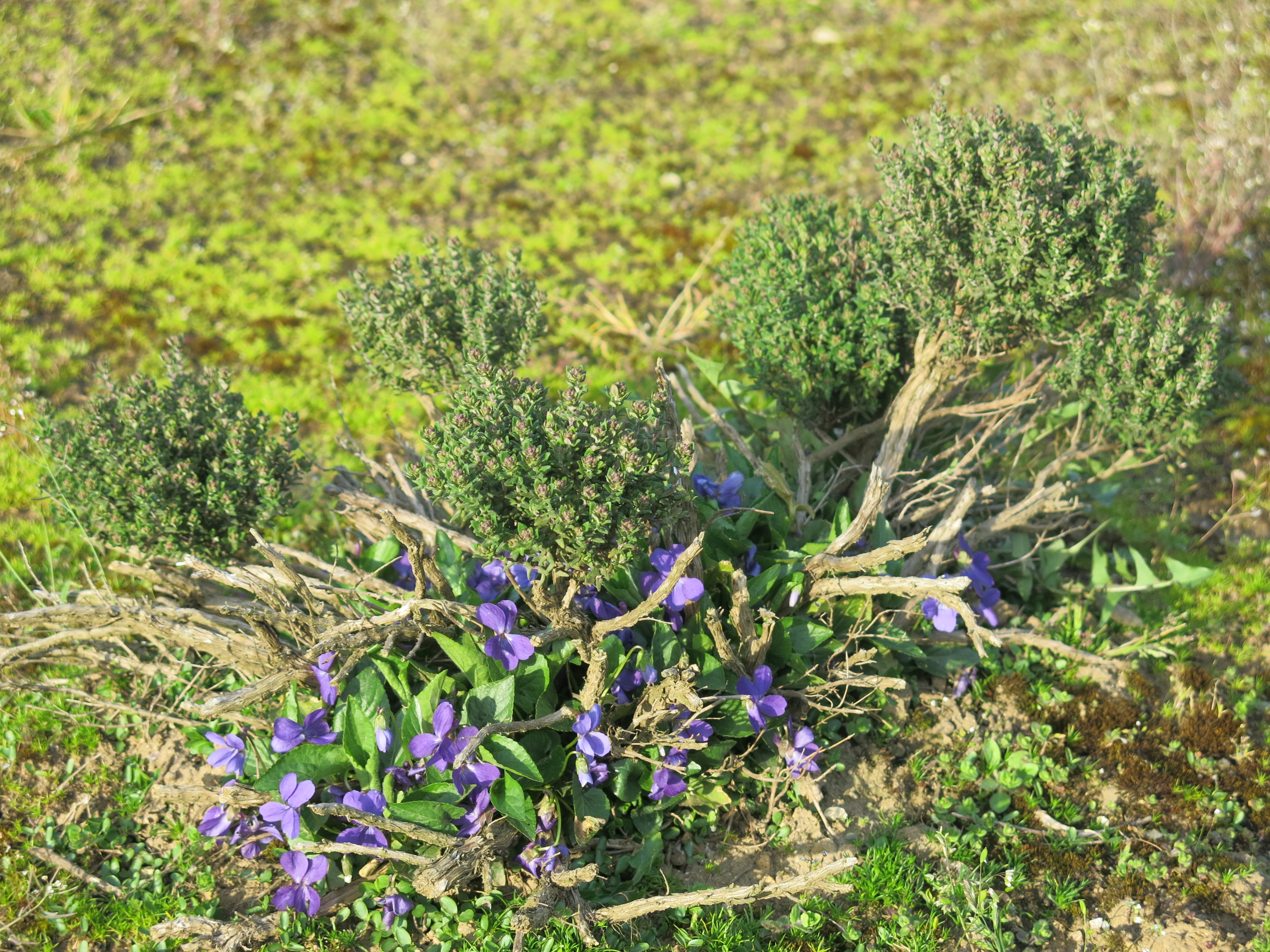
The genus Thymus includes more than 300 species of flowering plants in the Lamiaceae family. Native to Europe, Africa, Asia, and even Greenland, these plants grow as small creeping shrubs or cushions. Their small flowers, of a delicate pale pink or pure white, attract many pollinating insects during the summer.
In the south of France, wild thyme is affectionately called farigoule, a lovely name derived from its Provençal name farigoulo. It thrives on dry, rocky, and particularly sunny soils. It is this harsh and hot climate that allows the plant to concentrate its precious fragrant active principles, making it a queen among the aromatic plants of our regions.
Origins and secrets of an ancient name
The word « Thyme » is the English form of the Latin Thymus, which already designated several small aromatic plants among the Romans. This term itself goes back to the ancient Greek thúmon. Historians sometimes link its origin to the Egyptian word tham, which referred to a plant used during embalming rituals for its preservative properties.
Another etymological path leads us to the Greek root thy, which means « to exhale an odor ». This etymology honors the olfactory power of thyme, whose simple brush during a walk in the hills is enough to scent the air with a resinous and comforting fragrance.
The natural composition of thyme
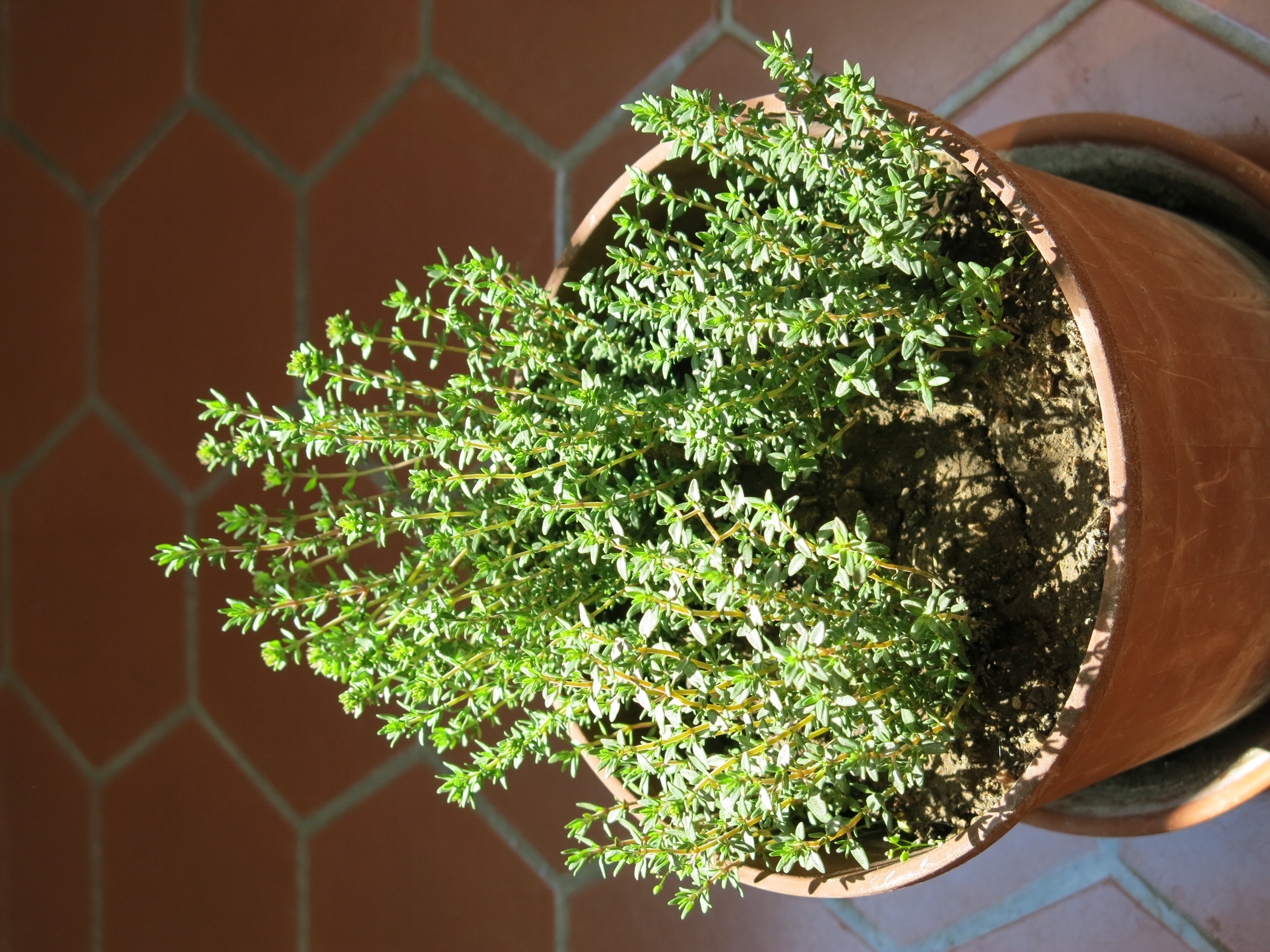
Thyme owes its reputation and fragrance to its great richness in essential oils. Among its most studied natural components are thymol and carvacrol. These are aromatic molecules naturally present in the leaves, traditionally appreciated for their purifying action.
The plant also contains other interesting elements:
- Flavonoids, which are natural antioxidants protecting the plant.
- Tannins, which bring a slight astringency in the mouth.
- Other volatile compounds like para-cymene and gamma-terpinene.
The traditional uses of our grandmothers
For generations, thyme has been the indispensable companion of winter. It is traditionally used in a hot infusion, sweetened with a spoonful of honey, to soothe and warm oneself as soon as the first cold weather is felt. It is the comforting drink par excellence to help support comfort when the throat is sensitive or the nose begins to run.
« A good cup of thyme infusion with honey is the simple secret we used to pass down at home to feel stronger against the harshness of winter. »
In cooking, it is the base of the bouquet garni alongside bay leaf and rosemary. It helps flavor stews, summer vegetables, and grilled meats, while bringing a very appreciated digestive note after hearty meals. For any use with a therapeutic purpose or in case of doubt about your health, it is best to consult a doctor or a pharmacist.
What makes it work
Thyme is rich in essential oil containing thymol and carvacrol, alongside flavonoids such as luteolin and apigenin, and rosmarinic acid. These natural compounds are well-documented in the European Pharmacopoeia for their traditional role in supporting respiratory comfort.
What I use her for
- · 01Thyme is a Mediterranean herb traditionally brewed in winter to soothe and comfort a tickly throat.
- · 02Thyme leaves contain aromatic oils that release a sharp, comforting scent when rubbed between the fingers.
- · 03Thyme tea is traditionally enjoyed after heavy meals to help bring back a sense of lightness.
- · 04Thyme has been used since ancient times, when people burned it to purify the air.
How I prepare her
Granny’s little recipes
The good herbal tea for cold snaps
From the very first chills of winter
What you’ll need
- A beautiful sprig of garden thyme (fresh or dried)
- A cup of hot water
- A spoonful of honey from our hives
- A squeeze of lemon juice
How I go about it
- 01Gently place your sprig of thyme at the bottom of your favorite cup.
- 02Pour the simmering water over it to awaken all its good aromas.
- 03Cover well to keep the precious vapors in for 8 to 10 minutes.
- 04Remove the thyme, add your honey and lemon, then drink slowly while it is nice and hot.
Granny's comforting inhalation
When the nose begins to feel stuffed up
What you’ll need
- Three tablespoons of dried thyme
- A large bowl of boiling water
- A large clean towel
How I go about it
- 01Put your thyme at the bottom of a large heat-resistant bowl.
- 02Pour the boiling water over it, you will see, it already smells wonderful.
- 03Place your face over the bowl, covering your head with the towel.
- 04Close your eyes and gently breathe in this good steam for 5 to 10 minutes.
The soothing syrup for the throat
When the throat tickles and becomes sensitive
What you’ll need
- A good handful of dried thyme
- 250 ml of water
- 200 g of cane sugar or good honey
How I go about it
- 01Infuse your thyme in boiling water for a good fifteen minutes.
- 02Carefully strain the liquid to remove all the small leaves.
- 03Put the resulting juice back into a saucepan with the sugar or honey over very low heat.
- 04Let it simmer gently until you get a syrup consistency, then pour into a small clean bottle.
What to know first
This information doesn’t replace advice from a healthcare professional. Health Disclaimer →
Her identity card
- Latin name
- Thymus vulgaris
- Family
- Mint family (Lamiaceae)
- Parts used
- Leaves, Flowering tops
- Harvest
- Leaves and flowering tops are harvested from May to August, on a dry, sunny morning after the dew has evaporated, just as the first flowers begin to open.
- Form
- Herbal tea, infusion, essential oil, syrup, and powder.
- Origin
- Native to the rocky, sun-drenched soils of the Mediterranean basin, this hardy little herb has naturalised across temperate regions of Europe and North America.
- Storage
- Keep your dried thyme leaves in a tightly sealed jar, tucked away in a dark, dry cupboard, to preserve all their wonderful sunny aroma for up to a year.
If you remember just one thing
- 01Thyme is a Mediterranean herb traditionally brewed in winter to soothe and comfort a tickly throat.
- 02Thyme leaves contain aromatic oils that release a sharp, comforting scent when rubbed between the fingers.
- 03Thyme tea is traditionally enjoyed after heavy meals to help bring back a sense of lightness.
- 04Thyme has been used since ancient times, when people burned it to purify the air.
Your questions
To brew a comforting thyme tea, you simply steep a small sprig of dried thyme in boiling water for about ten minutes. I always tell my grandchildren to cover the cup while it steeps so the goodness doesn't escape with the steam, then sweeten it with a spoonful of honey. It has a lovely, rustic taste that warms you up from the inside out.
Yes, we have always brewed thyme tea in my family to soothe a tickly throat when the cold weather sets in. This sturdy little Mediterranean herb brings wonderful comfort to your throat and chest when you drink it hot. It is our faithful winter companion, and a warm cup of it just does you so much good.
Drinking a warm cup of thyme tea after a heavy meal is an old family habit that helps bring back a sense of lightness to your tummy. Thyme has been used for generations to help with digestion when you feel a bit stuffed. Just sip it slowly after your dinner, and let the sunny herb do its quiet work.
While thyme is a gentle kitchen herb, you must always listen to your body and avoid drinking too much of it if you are pregnant or nursing. If you are taking any specific medications or feel unsure about how it suits you, please ask your doctor or pharmacist for advice. We want to keep you safe and well, after all.
In the old days, people burned thyme like incense to purify the air in their homes, and Roman soldiers even bathed in it to find their courage. My own mother always kept a pot of thyme by the stove, ready to toss into a steaming bowl for inhalation when we needed some comfort. It is a plant full of history and simple, traditional wisdom.