Dry January: what I pour you in the evening, without a drop of alcohol
Dry January is a month of January without alcohol. At my house, we keep the evening glass: a red teapot of hibiscus, a cup of lemon verbena or lemon balm, and a little bissap aperitif.
Dry January is a month of January without alcohol, and at my house the only real question is what goes in the glass in the evening. Here are my three hot cups, my little alcohol-free "aperitif", and what to know about each plant.
Dry January: where it comes from, and why in January
The books say that an Englishwoman, Emily Robinson, stopped drinking for a month to get ready for a half-marathon, and that an English association turned it into a campaign in January 2013. In France, it has been around since January 2020, under the name "Défi de janvier". The idea fits in one line: after New Year's Eve, the whole month of January without drinking alcohol.
Why January? In December there was the neighbours' mulled wine, the New Year's Eve champagne, the bottles at family meals. Then January comes, the house empties, and you want quiet evenings.
I'm not here to tell you to do it or not: your reasons are your business. What interests me is that little moment in the evening, the cup you hold in both hands, the glass you raise when a friend drops by. You don't have to give up that moment. You just change what's in it.
You don't have to give up that little moment in the evening. You just change what's in the glass.
My alcohol-free evening drinks: three hot cups
The first is my red teapot. It's the dried calyces of hibiscus, the kind you drink, also called bissap, not the big ornamental flower in gardens. In summer I drink it iced, and I've already told you about my iced hibiscus tea. In January, I make it hot. For four cups:
- 30 g of dried hibiscus calyces;
- 1 litre of water;
- 80 g of cane sugar, to your taste;
- a slice of orange per cup, if you have one.
- Bring the water to the boil.
- Pour it over the calyces in the teapot, put the lid on and let it steep for 15 to 20 minutes.
- Strain, and add the sugar while it's hot.
- Serve it hot with the slice of orange, or let it cool down a little.
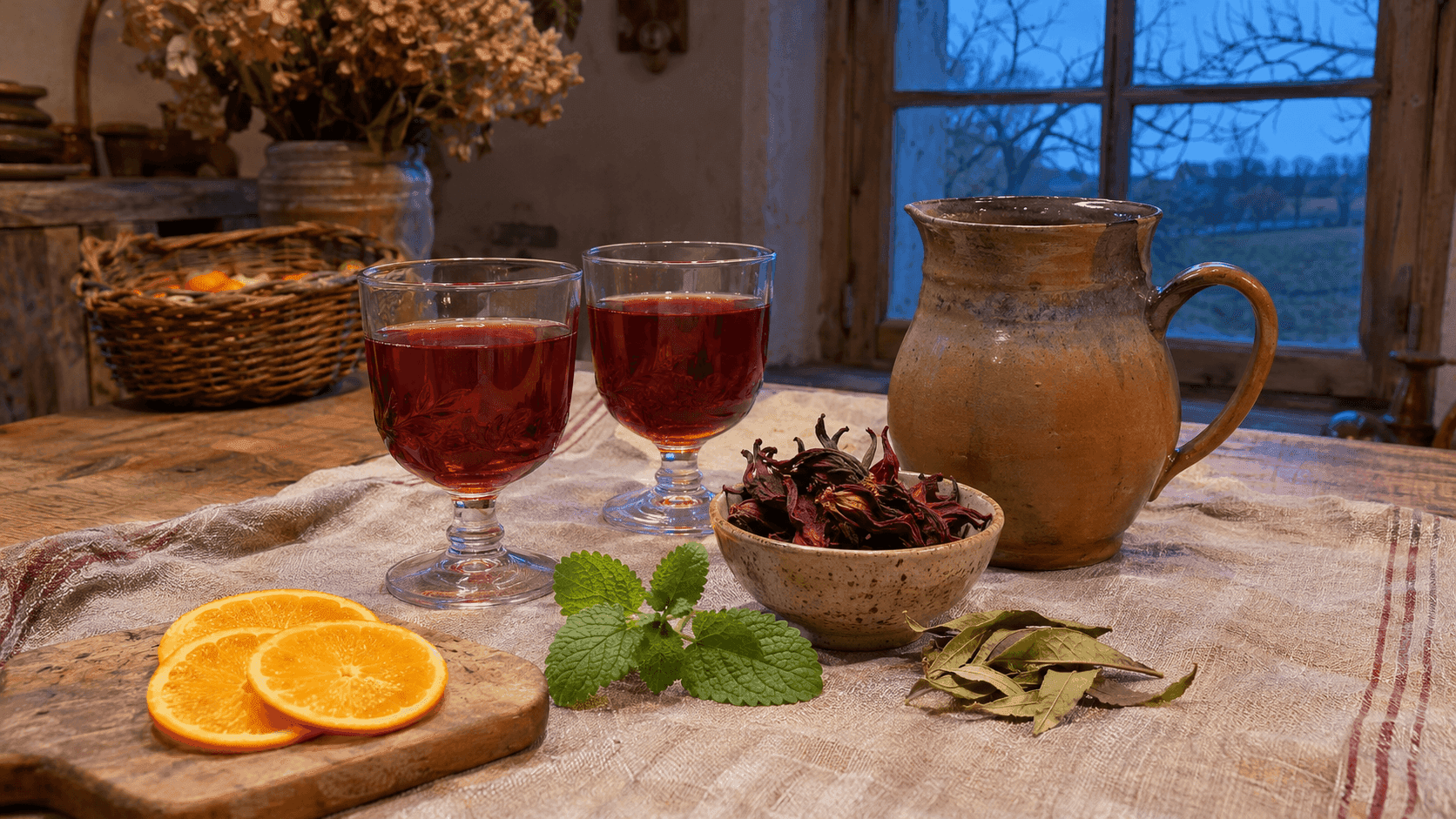
It's a deep red, tart like a redcurrant, and in a stemmed glass it almost looks like wine, without a drop of alcohol.
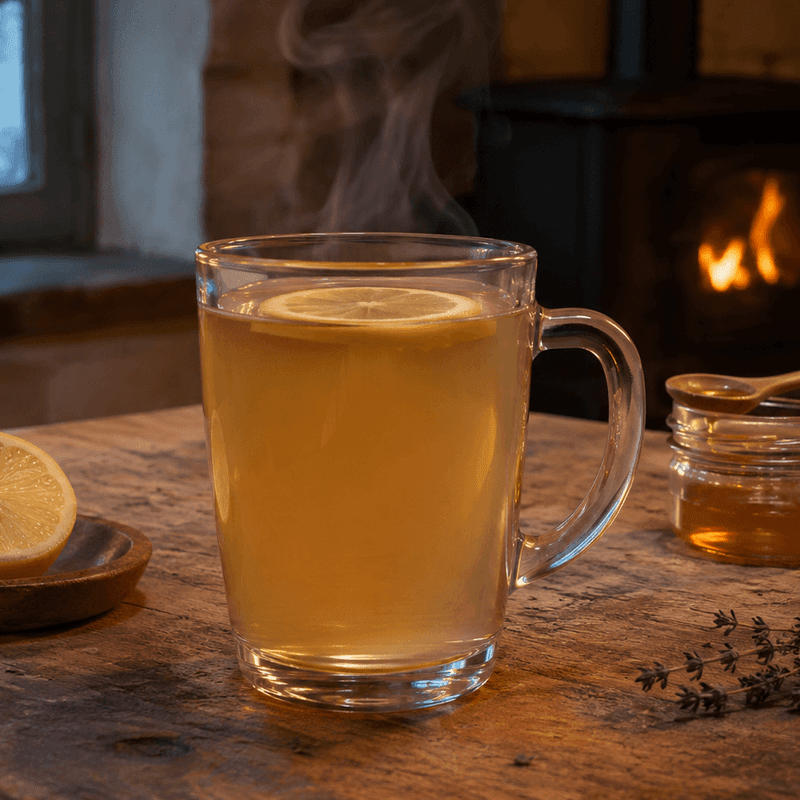
The second is lemon verbena, the one that smells of lemon when you crush a leaf. For one cup, I pour 200 ml of boiling water over 1 to 2 g of dried leaves, put a lid on and let it steep for 10 minutes. I drink it half an hour before going to bed.
The third is lemon balm, for the evenings when I want something rounder. 1.5 to 4.5 g of dried leaves for 150 ml of boiling water, 10 minutes with a lid on, and a spoonful of honey if you like it sweeter. No more than three cups a day.
If it's your nights that are the trouble, I've written about that separately: when sleep won't come. And grog has its version without rum, with ginger, in my letter about the evening grog.
My alcohol-free "aperitif", in the little glasses
The hardest part of January is when someone drops by at six and you're used to getting the bottle out. So I have a syrup ready in the fridge, and I take out my mother's little stemmed glasses. Young people call it an alcohol-free mocktail. I call it the aperitif.
Bissap syrup, for 50 cl:
- 25 g of dried hibiscus calyces;
- 350 g of brown sugar;
- 35 cl of water.
- Put the water, the calyces and the sugar in a pan.
- Heat until it boils, stirring until the sugar has melted.
- Turn the heat down and let it simmer for 15 minutes.
- Take it off the heat and let it cool completely.
- Strain, pour into a glass bottle and keep it in the fridge: it keeps for a month.
For one small glass: 3 cl of syrup at the bottom, about two tablespoons, then 10 cl of well-chilled sparkling water on top, a thin slice of lemon, and a mint leaf if you have one. It fizzes, it's red, it's tart, and you still clink glasses. The syrup is very sweet: it's the glass for when someone drops by, not for the whole evening.
Before you fill the glasses, what to know
Hibiscus during pregnancy and breastfeeding: you go without, because we don't know enough about whether it's safe, in a cup or as syrup. For children, the books say nothing precise: ask your doctor or pharmacist before giving it to them regularly. If you already take something on a doctor's orders for blood pressure, for blood sugar, simvastatin for cholesterol or chloroquine, talk to your doctor before drinking it regularly: the manuals say hibiscus can interfere. Stop it at least two weeks before a planned operation. And if you're allergic to hibiscus or its family, the Malvaceae, you go without.
Lemon verbena and lemon balm, same thing for pregnancy and breastfeeding: not in a cup during those months. Not before 12 years old either. Both can make you drowsy: if that happens to you, don't get behind the wheel after your cup. If you take something on a doctor's orders, especially for sleep or for your nerves, ask your doctor or pharmacist before drinking them regularly; for lemon balm, the same if you have a thyroid problem. If you're allergic to one or the other, you go without, and if anything unusual happens after a cup, stop.
One last word, and it matters. If you've been drinking every day for a long time, don't launch into a month without alcohol on your own: when you depend on it, stopping all at once can be hard on you, and it's better to talk to your doctor first. In France there's also Alcool Info Service, on 0 980 980 930, every day, without having to give your name.
Tonight the red teapot stayed on the corner of the stove, and my neighbour went home with the bottle of syrup, half full. Outside, the frost is on the cabbages. I rinse my mother's little glasses and put them away in the dresser. Until the next letter.