Lemon balm and sleep: my evening cup, from garden to jar
Lemon balm and sleep go back a long way in our family: my mother's patch by the well, the leaves that smell of lemon, and a cup in the evening. I'll give you the measures and the rules.
Lemon balm and sleep go back a long way in our house. My mother had a big patch of lemon balm by the well, and on evenings when the day wouldn't end, she'd go and cut a few stems. Just crushing them between her fingers made the kitchen smell of lemon, with a hint of mint. I'll tell you about the plant, the cup, and what to know first.
My lemon balm for sleep: my mother's plant, by the well
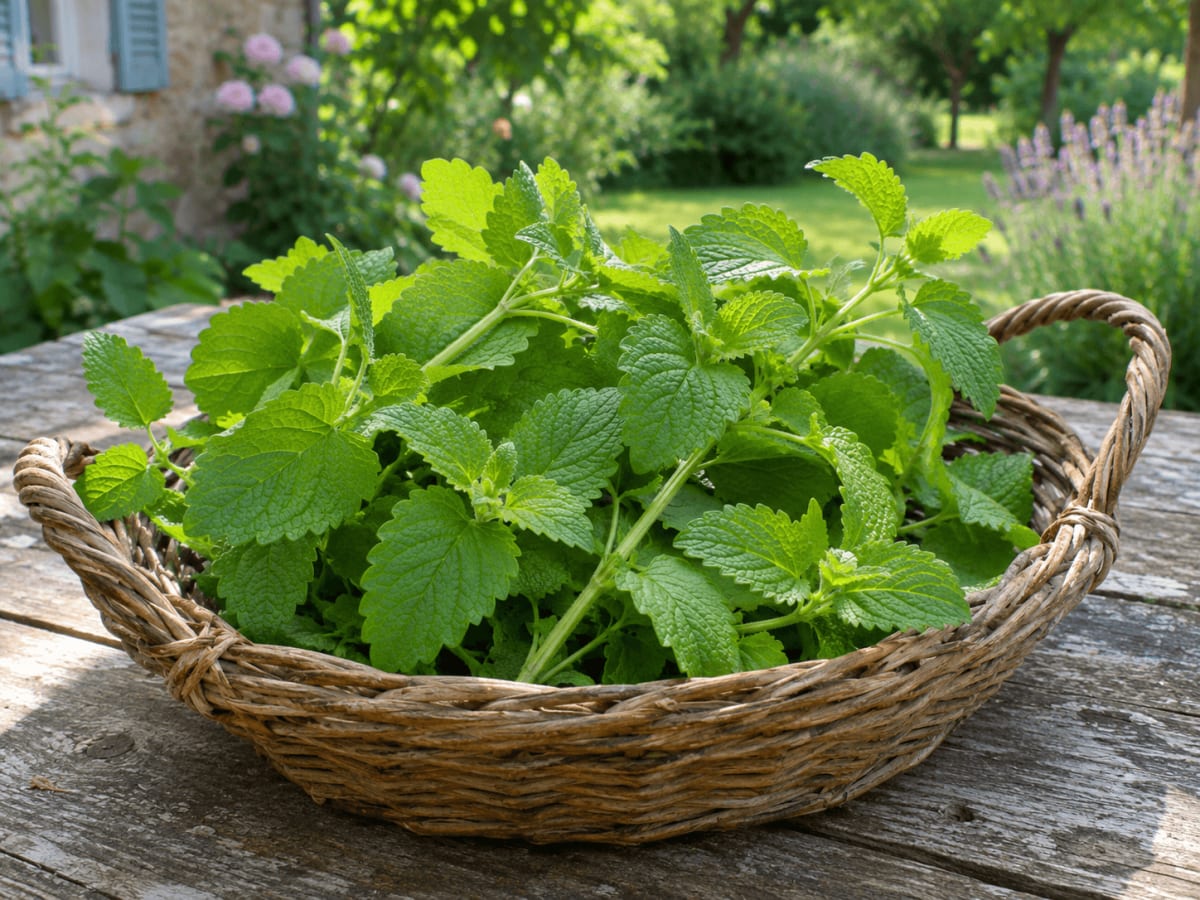
Lemon balm is a perennial herb from the same family as mint and sage. It grows 30 to 80 cm tall, with square stems and small crinkled leaves, toothed at the edges. In summer, it has little white to mauve flowers, and it hums with bees all day long: its name comes from the Greek for “bee leaf”. It has been grown for so long that it had its place in priests' gardens. The whole story of lemon balm, I've told you separately.
At the start of the 17th century, in Paris, the Carmelite friars of rue de Vaugirard made a lemon balm water with alcohol from it, and it's still produced. They say the ladies at the court of the Sun King took it for their fainting spells. My mother didn't have any Carmelite water. She had her kettle and her patch by the well, and that was enough for her.
Lemon balm doesn't put you to sleep. It settles you, tidies the day away a little, and sleep finds its own place.
What my books say about lemon balm and sleep
The old manuals give it two uses, on the strength of long use and nothing more. A cup when your nerves are on edge and sleep is slow to come. And a cup after eating, when your belly bloats and makes wind. That's all, and that's already something.
Lemon balm doesn't make you sleep on command. It settles you, tidies the day away a little, and sleep finds its own place, or not, some evenings. What counts as much as the cup is regularity: going to bed at the same time, even on Sundays, leaving tea and coffee alone after two in the afternoon, switching off screens an hour before bed. If your nights have been hard for a while, I've written down all my habits for nights when sleep keeps you waiting.
My evening cup of lemon balm, step by step
- 1.5 to 4.5 g of dried lemon balm leaves (weigh them the first time, after that you'll know by eye);
- 150 ml of water;
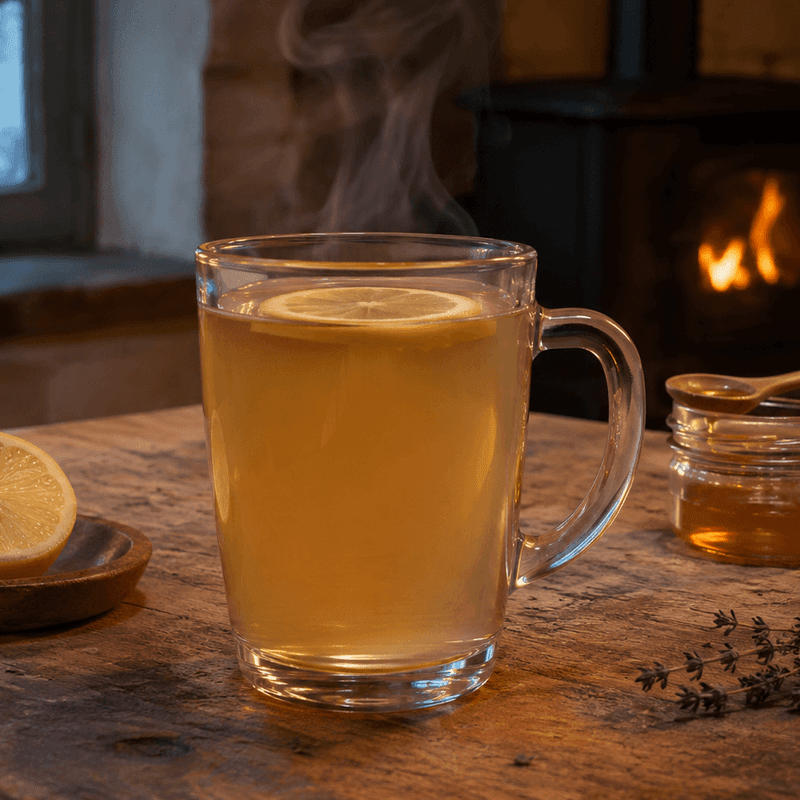
- I boil the water and pour it over the leaves, at the bottom of the cup;
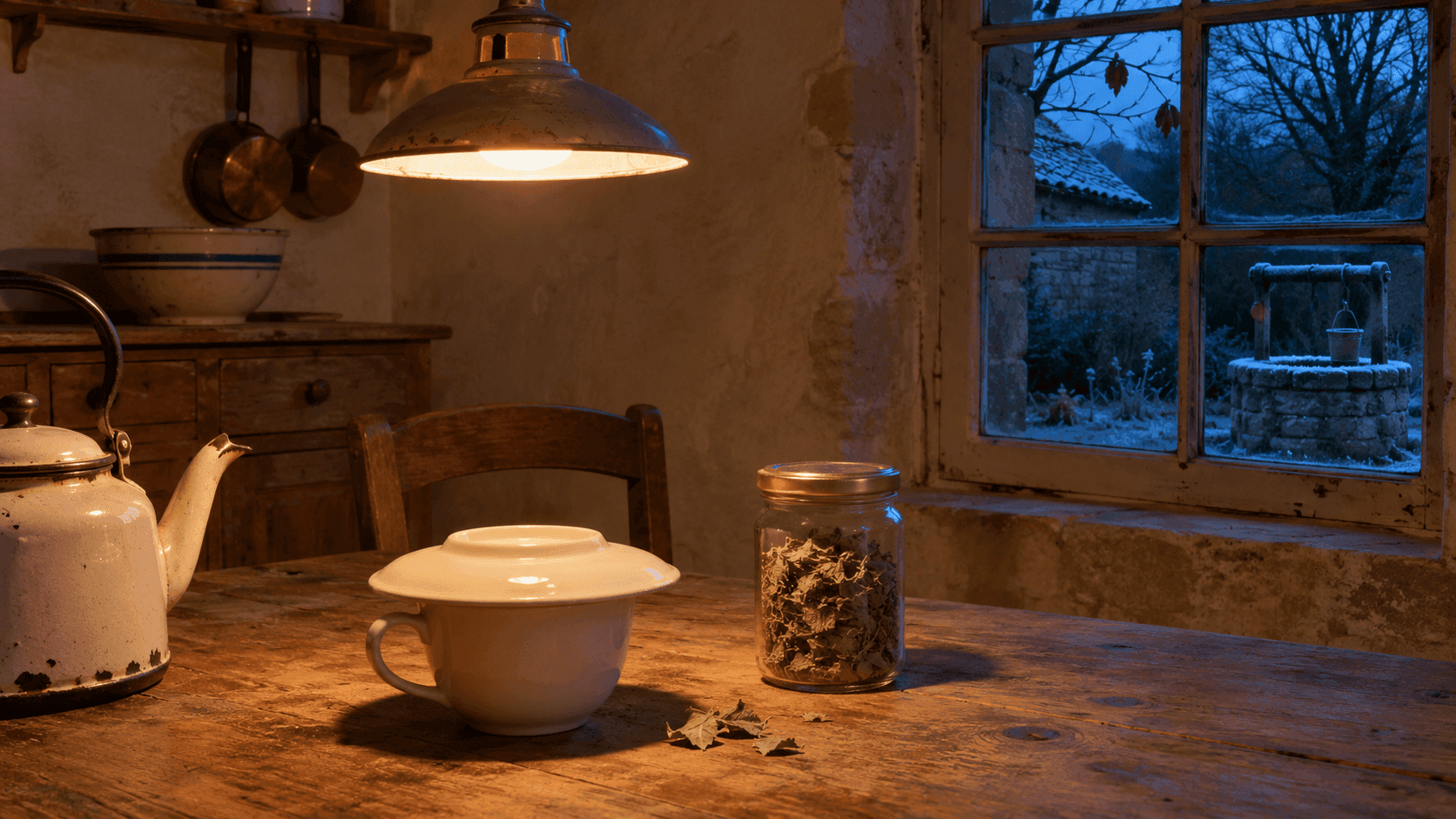
- I cover it with a saucer and let it steep for 10 minutes;
- I strain it, and drink it slowly, sitting down, after dinner.
One to three cups in the day, no more, and from age 12. If you like blends, I also have my evening tea with linden and chamomile.
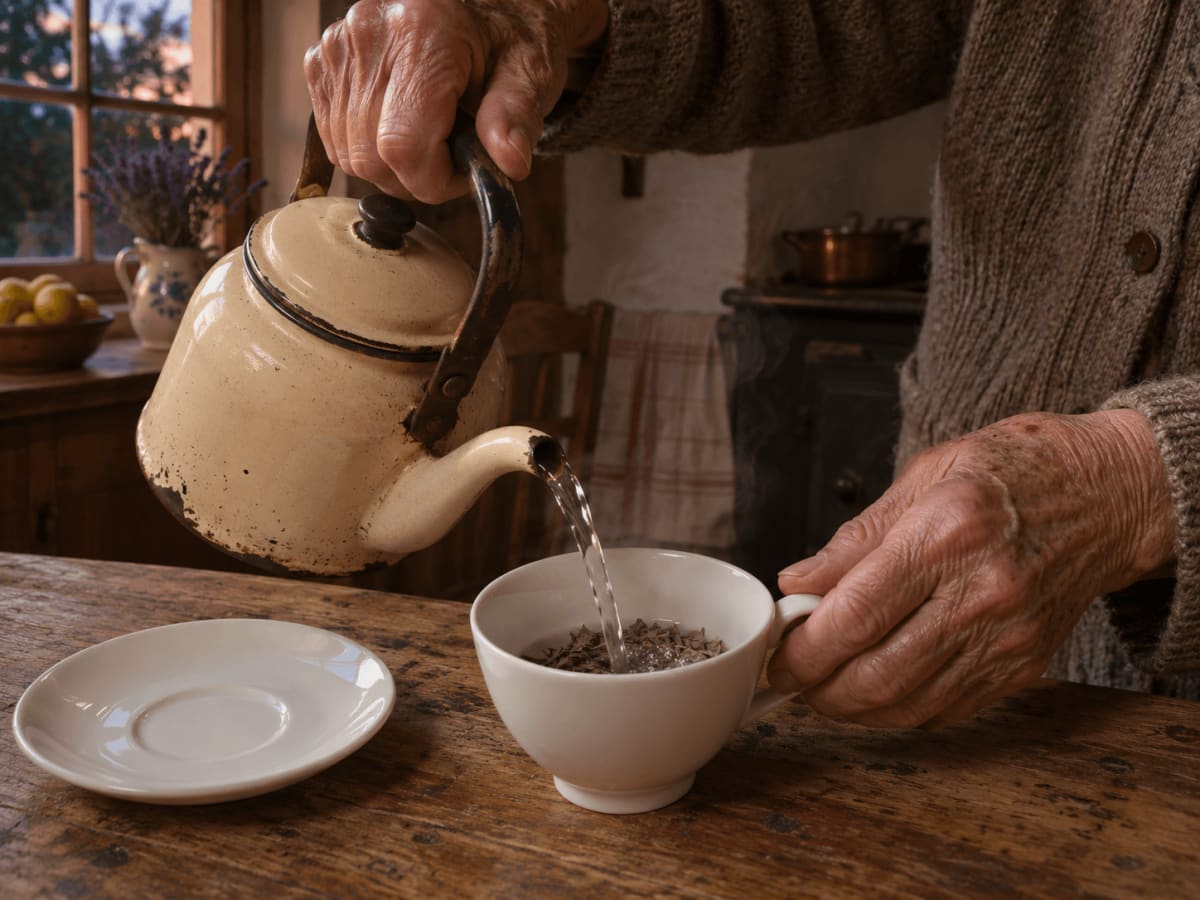
For the cup, I use the dried leaf: the measures in my books are given for it. The fresh one I keep for cooking, finely chopped over a strawberry and melon salad. In the garden, I cut the young shoots before flowering, then the young leaves through spring and summer: it's the tips that smell the most. Just after the flowers, I cut the clump back almost to the ground, otherwise it seeds itself everywhere. I dry my bunches somewhere dry and airy, and I keep the leaves in a jar that closes tight, a year at most. In November, the patch is asleep, so I dip into the jar, and when it's empty, I use my cut lemon balm leaves.
What to know before your cup of lemon balm
Lemon balm is a simple plant, but it has its rules. Not under 12: the books don't have enough data for younger children. Not during pregnancy or breastfeeding, because we don't know enough about whether it's safe. Not if you're allergic to it. The books don't report any known side effects, which doesn't mean zero risk: if something unusual happens after a cup, you stop and ask for advice.
It can make you drowsy: if that's the case for you, you don't drive and you don't use machines. The books also report that it could slow down a hormone that controls the thyroid: if you have a thyroid problem, ask your doctor before drinking it regularly. And if you already take something on a doctor's orders, especially to sleep or for your nerves, talk to your doctor or your pharmacist. Lemongrass and lemon verbena smell of lemon too, but they're other plants: don't put them in your cup thinking it's the same thing.
If sleep hasn't come back after two weeks of cups, or if it's getting worse, go and see your doctor. The same if you've been sleeping badly more than three nights a week for more than three months, if someone hears you snoring very loudly and stopping breathing at night, or if you fall asleep during the day without meaning to: in that case, don't drive. And if you're having dark thoughts, call 3114 (the French suicide crisis line): it's free, day and night.
Tonight, the lemon balm clump is no more than a little cut-back ball at the foot of the well, and there's a light frost on the stones. In the kitchen, the saucer is sitting on my cup, and I'm waiting out my ten minutes. Sleep well, and until the next letter.