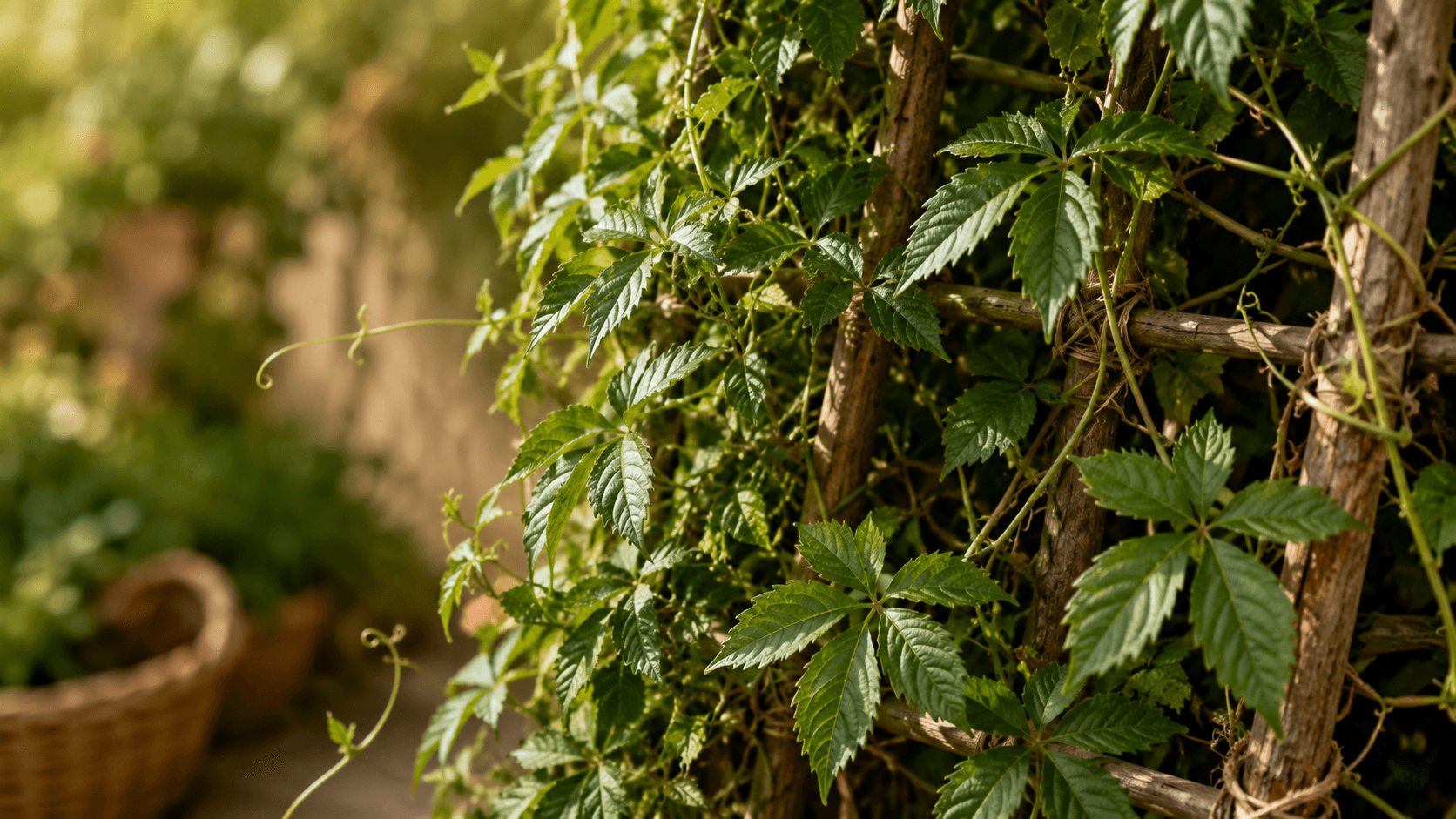
A small climbing vine from southern China that has been dried and infused for generations in mountain villages. Mild and slightly sweet, this is the herbal tea they drink over there to keep going through the day and gently recover their strength.
Who she really is
The herb of immortality (Gynostemma pentaphyllum) is a small vine from southern China that has been dried and infused for a very long time in the mountain villages of Guizhou to help find strength and get through the day.
Her story
The herb of immortality (Gynostemma pentaphyllum) is a small climbing vine from southern China, which has long been dried and infused in mountain villages to give people heart for their work. Over there, they call it jiaogulan, and around my way, quite simply, the hundred-year herb.
Where it comes from, and why I keep it
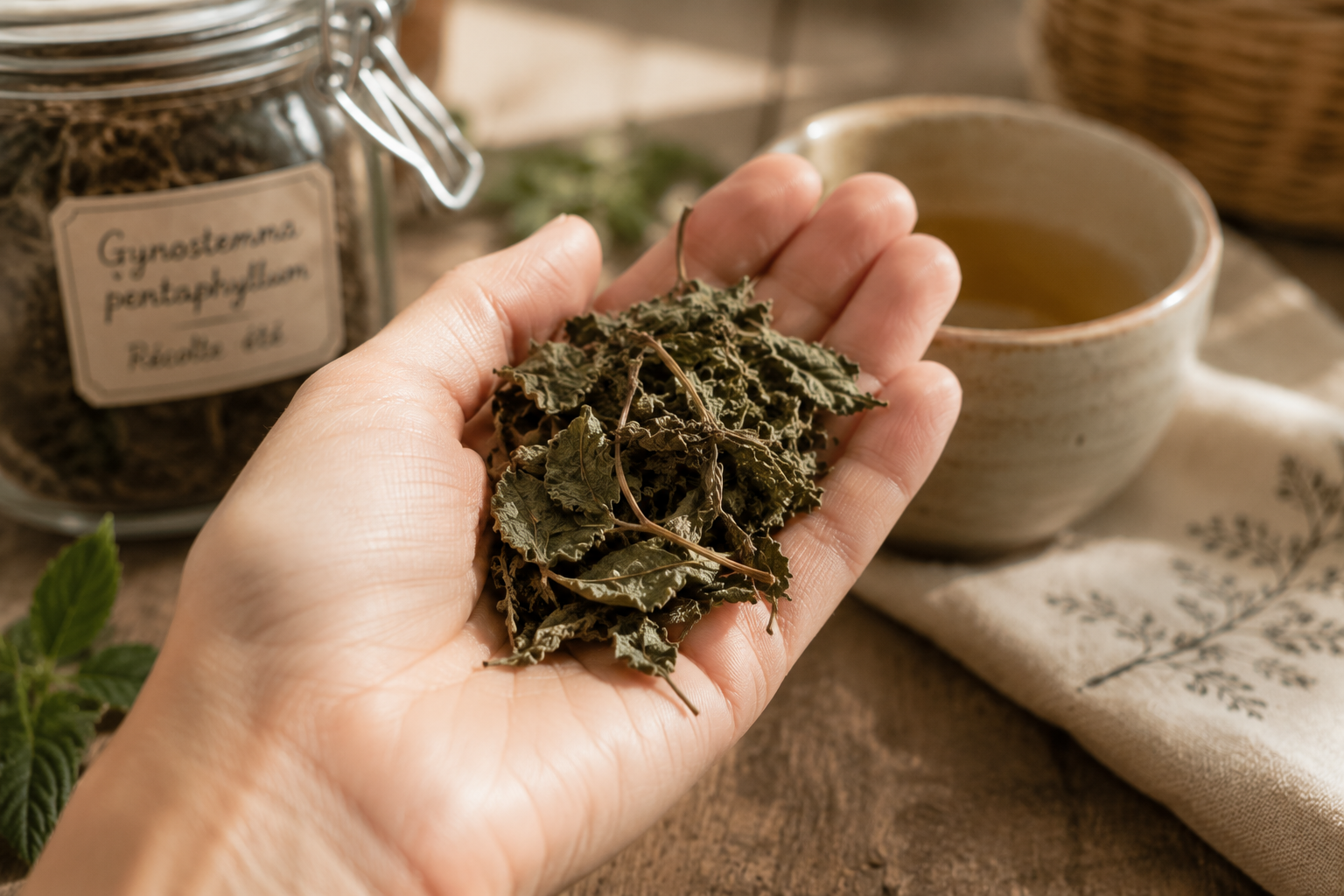
This one, I do not have in my garden. It grows far away, in the mountains of southern China, especially around Guizhou. It was my daughter, the one who lives in Shanghai, who first told me about it. She wrote to me one day that in those villages perched in the mist, there were many old people, very old, and that they drank this infusion every morning, just like we have our coffee. The elders called it the hundred-year herb. That spoke to me right away.
It is a cousin of the cucumber and the squash, you see, with its small leaves with five leaflets and its tendrils that cling everywhere. True herbalists, since the dawn of time, have always known how to look beyond borders. Tea, ginger, all of that came from elsewhere and settled into our cups. This little vine is just the same: it comes from far away, but it has its place in my home, right next to my jars.
What it does for you, ever so gently
I will tell you things as they are. This infusion is not a sudden whip crack, it is not three coffees in a row. It is something else. It is the kind of cup you drink on the morning of a busy day, or in the hollow of the afternoon when fatigue pulls a little, which helps you keep going without making you jittery. They drink it over there to regain strength and keep a steady foot, that is the traditional use, quite simply.
Books find it has a family resemblance to ginseng, only gentler and more affordable. I just tell you what people have been saying for a long time: it settles you, it supports you, it helps you get through the day. In the evening, if nervousness wants to rise, a warm cup often helps to let your shoulders drop. It is a patient plant, like me: it does not transform your life, it accompanies you.
How I prepare it
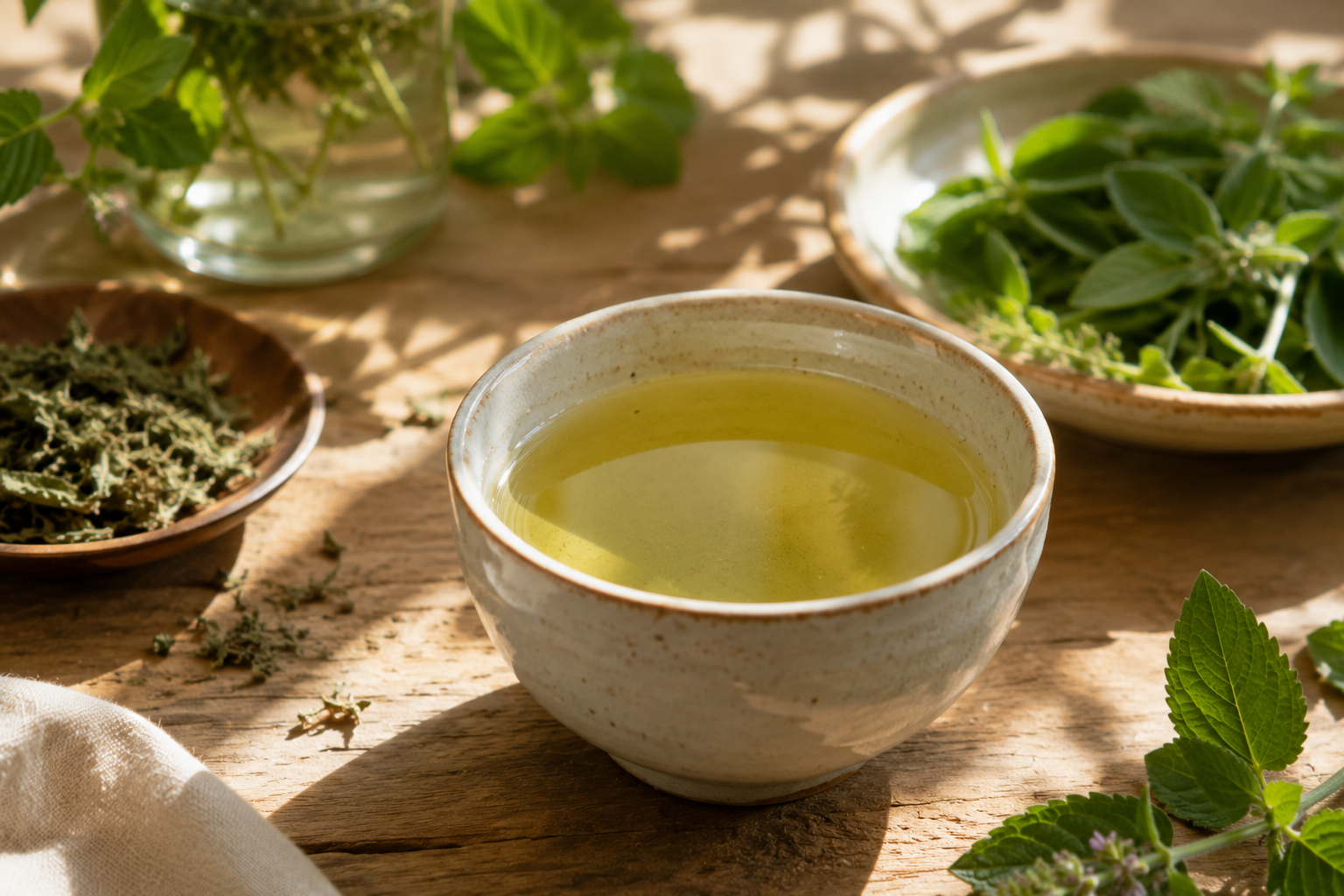
The simplest way is the infusion. One teaspoon of dried leaves, simmering but not boiling water (water that is too hot makes the bitterness harsher), and you cover the cup for about ten minutes. This gives a light green, sweet liquid, with a small hint of bitterness behind it, like a light green tea.
You can also find it in powder form, to mix into a bit of applesauce or into your soup, for those who do not like drinking herbal teas. And if you want to make it a little habit, take it as a gentle routine: one cup a day for two or three weeks, then a break. Regularity matters more than anything else, believe me.
Granny's little recipes
The big days infusion
One teaspoon of dried leaves, 25 cl of simmering water poured over them, the cup covered for eight to ten minutes. You strain it, add a dash of honey if you like, and drink it warm. Best taken in the morning or afternoon rather than the evening.
The steady-on-your-feet blend
In a jar, mix a good portion of herb of immortality leaves with a small portion of dried peppermint, for freshness. One teaspoon of the blend per cup, ten minutes of infusion, one cup a day for two or three weeks. This is my way of taming it gently.
Elsewhere, how others know it
My daughter sent me a photo, one day, of an old gentleman from Guizhou filling a large bottle with this infusion for his day in the fields. Over there, it is not a novelty or a trend: it is an everyday gesture, passed down just like we pass down linden herbal tea in the evening. It is sometimes nicknamed the southern ginseng, because people find it has a family resemblance to ginseng, only gentler and more affordable.
What I like about this plant is precisely that: it comes from a corner of the world that I may never see, and yet it tells the same story as my garden plants. Taking care of yourself every day, quietly, with what grows and what is passed down.
What you should know before taking it
A quick word of caution, as always with me. This plant is kept for grown-ups: if you are expecting a baby or if you are breastfeeding, we put it aside, we do not take unnecessary risks. And if you are already on a regular health plan, especially for thinning the blood or for blood pressure, ask your doctor or pharmacist for advice before drinking it every day.
My plants do not replace the advice of your doctor: they accompany it, that is all. If you feel truly tired, exhausted for no reason, or if it lasts, it is not an herbal tea you need, it is an appointment. Go see someone, agreed?
Granny answers your questions
Why is it called the herb of immortality?
Because in the mountain villages where they drink it every day, there were many very elderly people. The elders called it the hundred-year herb. It is a lovely story of longevity, not a promise: I am just telling you that it is a gentle infusion that many people find soothing.
What does it taste like?
A green and sweet taste, slightly sugary at first, with a little bitterness behind it, like a light green tea. If it is too subtle for you, add a mint leaf or a dash of honey.
How many cups do we drink a day?
One to two cups are enough, in the morning or afternoon rather than the evening. As with everything in my home, it is regularity that counts, not quantity.
Read also
- For days without energy: Temporary fatigue.
- When your mind starts racing: Soothing the mind and nervousness.
- Another treasure from Asia, also in my home: ginger.
- And to travel without leaving your kitchen: my mint's trip around the world.
What I use her for
- · 01It is a vine from southern China (especially Guizhou), from the same family as cucumbers and squashes.
- · 02It is enjoyed as a mild, slightly sweet infusion, in the morning or during the quiet of the afternoon.
- · 03Over there, people drink it every day, just like others drink their coffee.
- · 04A word of caution if you are expecting a baby, if you are breastfeeding, or if you are already taking something under medical supervision: ask your doctor for advice.
Granny’s little recipes
The busy day infusion
In the morning or during the mid-afternoon slump
What you’ll need
- 1 teaspoon of dried jiaogulan leaves (herb of immortality)
- 25 cl of hot water (simmering, not boiling)
- A dash of honey, if you like
How I go about it
- 01Pour the simmering water over the leaves.
- 02Cover your cup and let it steep for 8 to 10 minutes.
- 03Strain, add honey if you wish, and drink warm.
The pick-me-up blend
As a short routine, over two or three weeks
What you’ll need
- One part dried jiaogulan leaves (herb of immortality)
- A small part of dried peppermint, for freshness
- Simmering water
How I go about it
- 01Mix the two dried plants together in a jar.
- 02Use one teaspoon of the blend per cup.
- 03Let it steep for 10 minutes, strain, and drink one cup a day for two or three weeks.
What to know first
This information doesn’t replace advice from a healthcare professional. Health Disclaimer →
Her identity card
- Latin name
- Gynostemma pentaphyllum
If you remember just one thing
- 01It is a vine from southern China (especially Guizhou), from the same family as cucumbers and squashes.
- 02It is enjoyed as a mild, slightly sweet infusion, in the morning or during the quiet of the afternoon.
- 03Over there, people drink it every day, just like others drink their coffee.
- 04A word of caution if you are expecting a baby, if you are breastfeeding, or if you are already taking something under medical supervision: ask your doctor for advice.
Your questions
Because in the mountain villages of Guizhou, where people drink it every day, there used to be many very elderly people. The elders called it the hundred-year herb. It is a lovely story of longevity, not a promise: I am just telling you that it is a mild infusion that many people find soothing.
A green and mild taste, slightly sweet at first, with a little bitterness behind it, like a light green tea. If it seems too subtle to you, add a mint leaf or a drizzle of honey.
One to two cups are more than enough, preferably in the morning or afternoon rather than in the evening. As with everything in my kitchen, it is consistency that matters, not quantity.