Contents
The article
Here, pour yourself a cup and listen closely. The first secret of a good herbal tea is not hidden in the bag, but right in your tap. If you pour water that is too hard or has too much limescale over your sweet chamomile flowers or verbena leaves, you will ruin all their flavor.
First, look at your water
Limescale stops the good aromas from releasing properly and brings out that unpleasant bitterness that makes you wrinkle your nose. My mother always used to say that to make plants sing, they need soft, light water, like the spring water at the bottom of the garden. If your tap water is very hard, simply use a filter pitcher, you will see the difference right away.
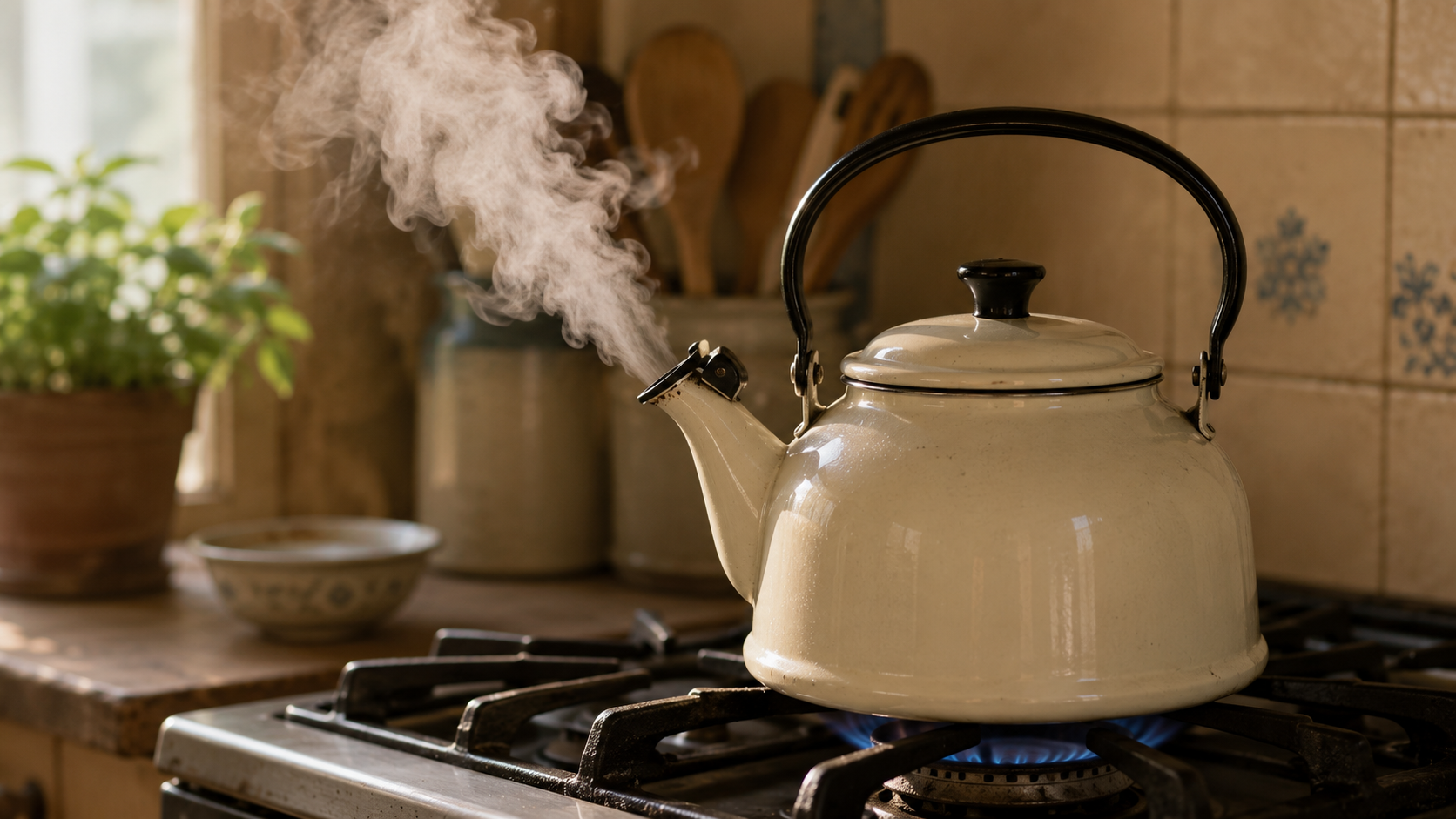
And then, there is that bad habit of boiling water like a brute. When water boils vigorously, it is far too hot for fragile leaves. This excessive heat literally burns the plants and suddenly releases all the harshest tannins. This is what gives that bitter, scratchy hay taste. For flowers and leaves, turn off the heat at the very first signs of simmering, when the tiny bubbles begin to rise. Let it rest for a minute before pouring, it is much gentler on them.
This is an old rule of common sense that we have always passed down at home. Respected water ensures you find the true taste of the plant, the one that comforts and is so soothing for the body after a long day. Take the time to watch your water heat up, it is already the beginning of the pleasure of herbal tea.
The clock, the lid, and the teaspoon
Put your cup down for two minutes and listen closely. The first secret is the lid. When you pour your hot water over your plants, the lovely smells escaping into the kitchen are actually the essential oils flying away. My own mother always told me to cover the pot or the cup with a small saucer. By doing this, you keep these precious vapors inside. They condense under the lid and fall gently back into your water. That is where the sweetest aromas are hidden, the ones that will balance the taste of your drink.
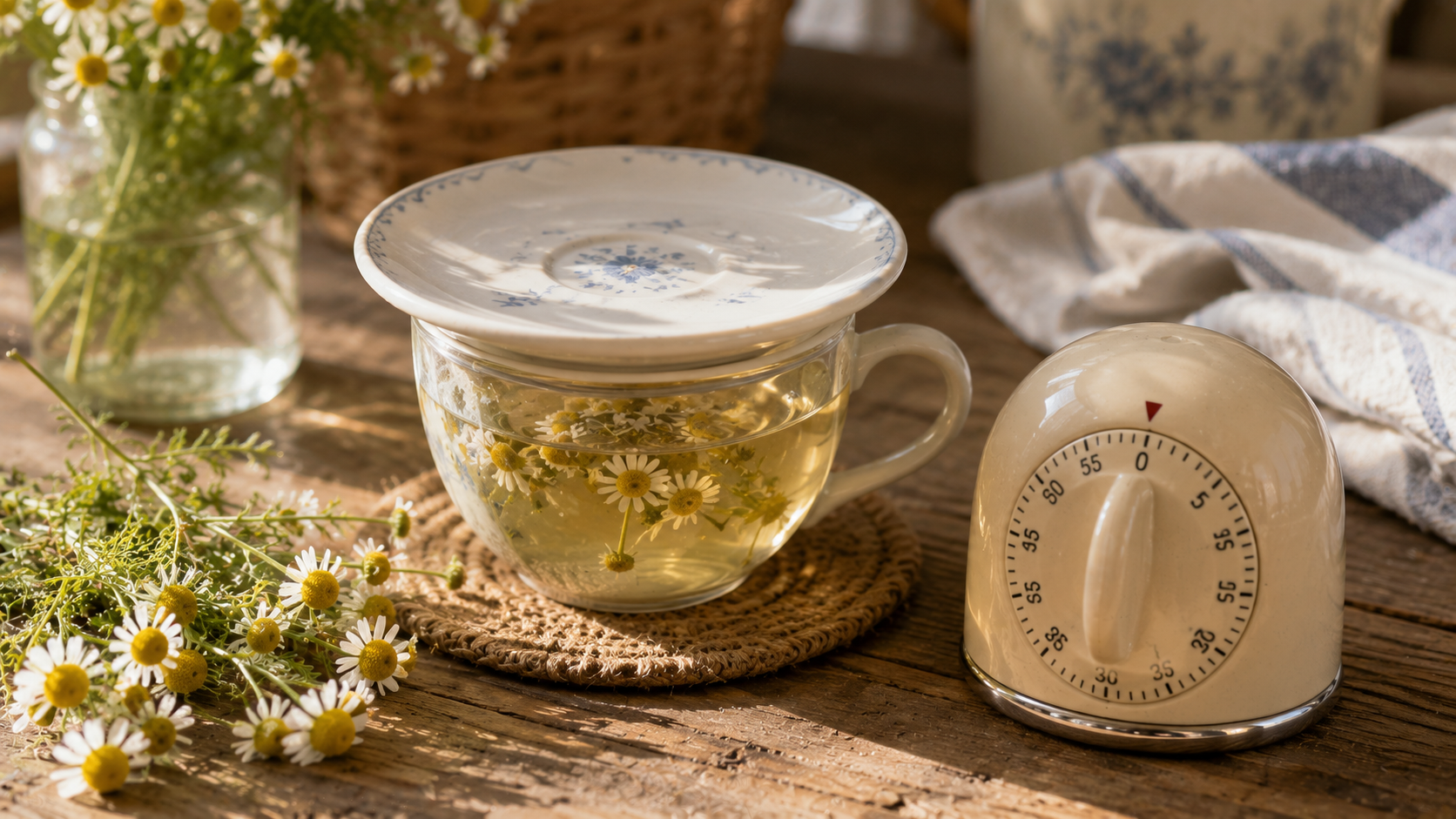
As for the clock, it is a matter of patience, but not too much. If you let your plants infuse for hours thinking it will taste better, you are mistaken. After five to ten minutes, the plant has already given its best, especially delicate leaves like verbena or mint that we drink in the evening to unwind. If you forget your cup on the corner of the table, the water will end up extracting the harshest, most bitter tannins. It is mathematical, the sweetness goes away and bitterness takes over.
Finally, take your teaspoon out of the drawer. Once the time is up, remove your plants and gently stir the bottom of your cup. Sometimes, the densest flavors settle at the bottom, making the first sip seem bland while the last one makes you grimace. A quick stir harmonizes everything. If despite this your sage or thyme herbal tea still seems a bit strong, do not hesitate to add a drop of honey from our beehives. It softens the throat and feels wonderfully soothing when the first cold days of autumn arrive.
The bitterness that has a purpose, and your next letter
Tell me, did you know that this bitterness that makes you wrinkle your nose is sometimes sought after? In the old days, our elders used to say that what is bitter in the mouth is sweet to the stomach. We did not care much for sugar at home, and my own mother would prepare a small dandelion root or chicory infusion for me before big family meals. This is an old grandmother's secret: this slightly harsh flavor awakens the taste buds and gently prepares the body to receive food. It was traditionally used to help support comfort after a heavy meal, as it helps you feel lighter.
A cup prepared with patience is worth all the complicated recipes in the world. It is the simple gesture that transmits the sweetness of the earth.
But rest assured, there is a big difference between a beneficial bitterness and a completely ruined herbal tea because the pot was forgotten on the stove. If you let your sage leaves or chamomile flowers infuse for half an hour, you release very harsh tannins that spoil all the pleasure. For your next cup, try to respect the steeping time, often three to five minutes are more than enough for the delicate aromas to unfold without the bitterness taking over. It is like everything in life, you have to know how to be patient, but not too much.
So, try the test tonight with your plants and write to me to tell me if your drink has finally become sweet and pleasant to drink. You will see that with a little gentleness in the preparation, your herbal tea will do you a world of good before you slip under the sheets. I look forward to your next letter in my mailbox, and until then, take good care of yourself.
FAQ
Ta tisane de camomille devient amère parce que tu laisses infuser tes fleurs trop longtemps ou dans une eau bouillante qui agresse la plante. Pour retrouver la douceur de la camomille, je te conseille de couper le feu juste avant l'ébullition et de ne pas dépasser cinq à dix minutes de trempage, crois-moi.
Pour adoucir une tisane amère sans ajouter de sucre, tu peux simplement ajouter une petite tranche de pomme ou un soupçon de cannelle dans ta tasse pendant l'infusion. C'est une astuce de grand-mère toute simple qui apporte une douceur naturelle et respecte le goût des plantes.
Oui, il faut toujours mettre un couvercle ou une petite soucoupe sur ta tasse quand tu prépares une infusion pour garder les bonnes huiles essentielles des plantes à l'intérieur. Si tu laisses la vapeur s'échapper, tu perds tous les bienfaits et les doux parfums de ta tisane, ce serait bien dommage.
Le temps d'infusion d'une bonne tisane dépend des plantes, mais en général, compte cinq minutes pour les fleurs fragiles et dix minutes pour les feuilles plus épaisses. Si tu laisses infuser plus longtemps, ta boisson risque de devenir très amère et désagréable en bouche.
Tu peux tout à fait boire une bonne tasse de camomille le soir pour te détendre, mais il ne faut jamais en abuser au quotidien. Si tu prends des médicaments ou si tu as le moindre doute sur ta santé, demande toujours conseil à ton médecin ou à ton pharmacien, c'est plus sûr.