My sage and lemon lemonade: here's my summer jug for you
When summer heats up the yard, out comes my jug: sage from the jar, a lemon, water. Here's my sage lemonade for you, with the right measurements, and who should go without it.
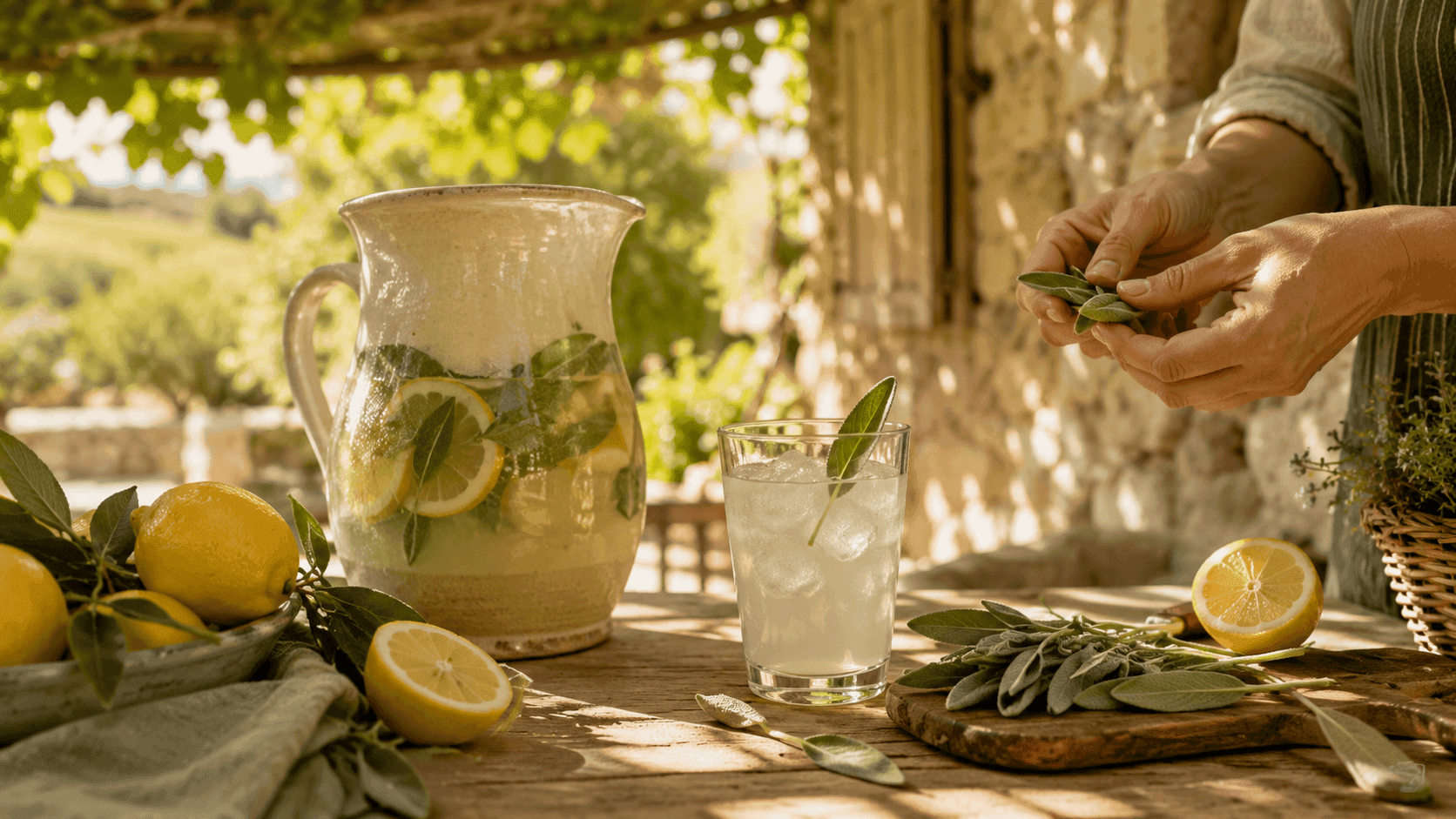
My sage and lemon lemonade, I make it in the morning while it's still cool, as soon as summer starts warming the stones of the yard. My mother already made her jug this way, and I've never found a reason to change.
Why my sage lemonade comes back every summer
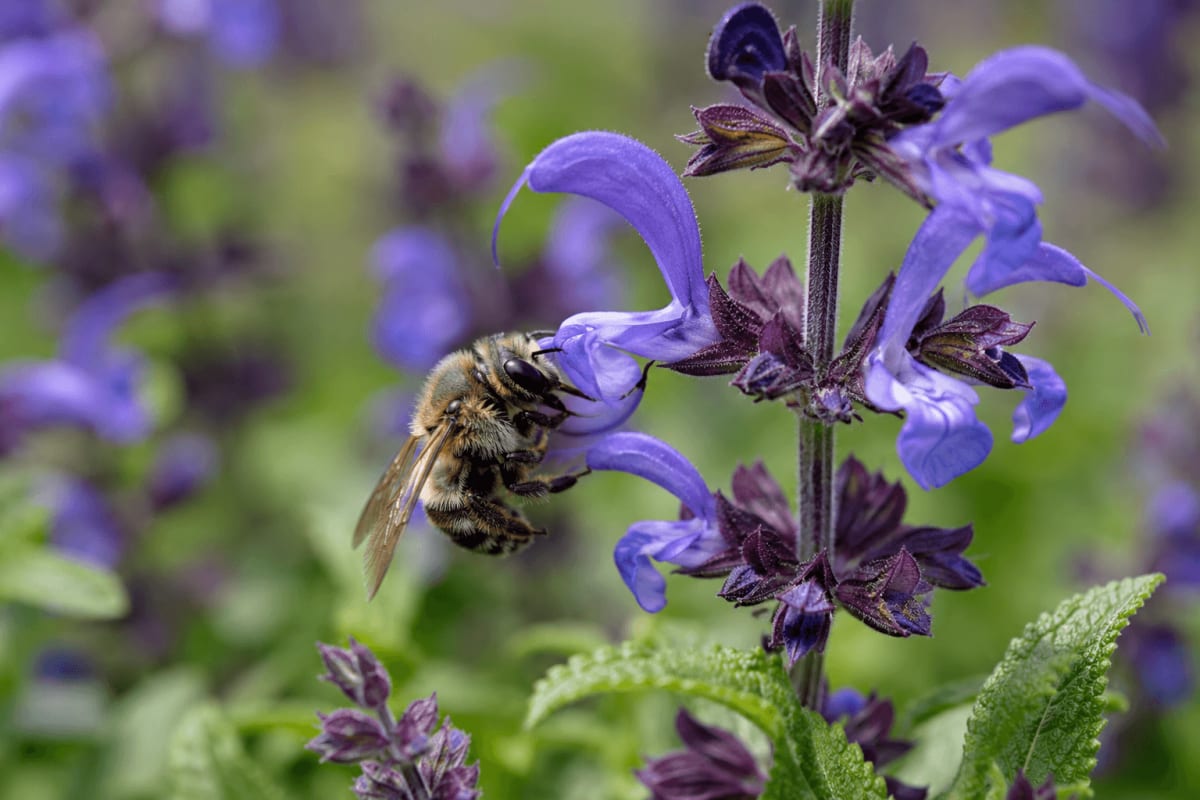
My sage grows by the kitchen door, in full sun, where the soil doesn't hold water. In July, the bees never leave it. I cut the branches in dry weather, I dry them upside down, and it's with those leaves, the ones from the jar, that I make my jug. Fresh sage I keep for the roast.
I do mean common sage, Salvia officinalis, the little bush with grey leaves as soft as felt. Clary sage, which is taller, doesn't go in my jug, and the white sage they sell in bundles for burning comes from California: nothing to do with it. Its name comes from the Latin salvare, "to save". My mother thought that was a lot to promise for a leaf, and she wasn't wrong.
What the books say about sage in a cup fits in a few words, and that's just fine. You drink it after a meal that was too heavy, when there's a little burning or bloating, and the old manuals also give it for when you sweat too much. For thirst, it's the water that does the work. The sage and the lemon bring the taste: a little bitter, a little like camphor, with that sour edge that wakes you up. Everything I know about my sage, I've told you over there, and for a tummy that pulls after eating, I have other cups.
My sage lemonade isn't magic water. It's three cool glasses through the day, a squeezed lemon, and the garden humming.
My sage and lemon lemonade, step by step
My jug is made for one day and one grown-up: three glasses, no more. It's the same amount as three cups of sage, so I don't double it just because it's hot.
- 3 to 6 g of dried common sage leaves (weigh them the first time, after that you'll know by eye)
- 450 ml of water
- The juice of a lemon
- A spoonful of honey, if you like it sweeter
- A few ice cubes, when you serve
- Bring the water to the boil.
- Put the leaves in a glass jug that can take the heat and pour the water over them.
- Cover and let it steep for 10 minutes, then strain.
- Add the lemon juice, and the honey while it's still lukewarm, so it melts.
- Let it cool, then put it in the fridge for at least an hour.
- Serve with the ice cubes, in three glasses spread through the day.
If you don't have sage in the garden, my cut sage leaves make the same jug.
For people who can't have sage, I do the same thing with lemon verbena, which smells of lemon all by itself. For that one, the books count 2 to 3 g of dried leaves for 200 ml of boiling water, up to three times a day, from age 12. For three glasses, that makes 6 to 9 g in 600 ml of water. It's also one of my cups for a bloated tummy, and here's my lemon verbena, let me introduce you. For little ones under 12, it's the jug with no plant: cool water, lemon, a little sugar. They can't tell the difference, or hardly.
What you need to know before you fill the glasses
Sage in a cup is for grown-ups. Not before age 18: the books don't have enough data for younger people. Not during pregnancy or breastfeeding, because we don't know enough about whether it's safe. If you're allergic to sage, you go without.
Don't push the amount: sage has a strong character, and the books ask you to stick to small quantities, for a short time. That's why I don't go over my three glasses. Sage essential oil is never swallowed, not even one drop in the jug for the scent. The books don't mention any interactions, but if you already take something on a doctor's orders long term, talk to your doctor or pharmacist before drinking it every day. And if your tummy isn't better after two weeks, or if it gets worse, go and see your doctor.
Lemon verbena, same thing: not during pregnancy or breastfeeding, not before age 12, and if you're allergic to verbena, you go without. As it can make you drowsy, if that happens to you, don't get behind the wheel.
Before I let you go
Last night, I drank my last glass on the bench, in the shade, while the bees made the rounds of the flowering sage. They're never in a hurry, those ones, I told you about them the other time. The lemon had warmed a little, the jug was empty, and the yard still smelled of the heat. I'll see you in the next letter, with whatever the garden has given me by then.