My sage, a honey plant, and its bees: come listen to summer with me
My sage is in flower and it hums from morning to night. Let me tell you about its bees, the cup and the gargle I make from it, and what I think of burning sage.
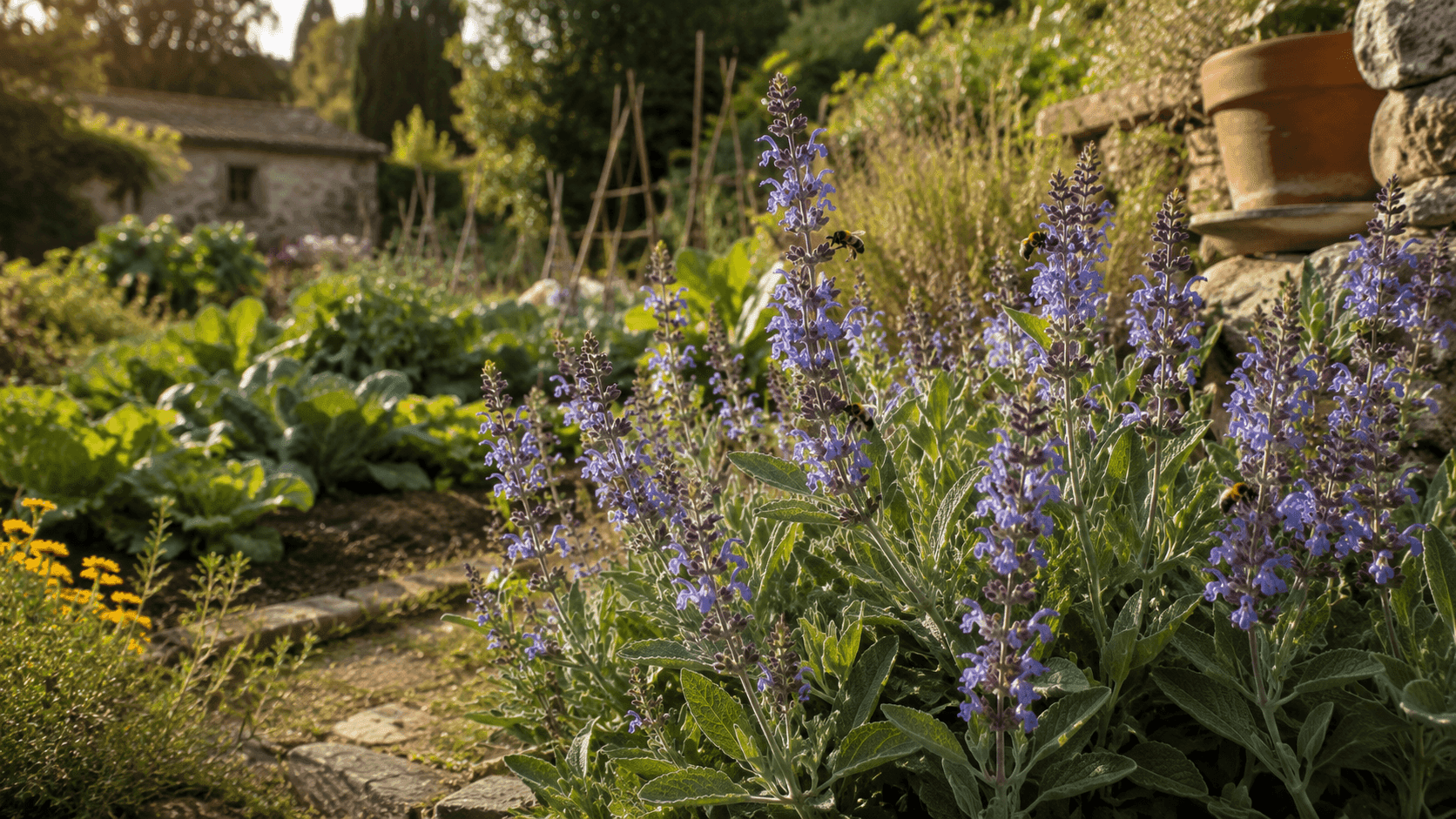
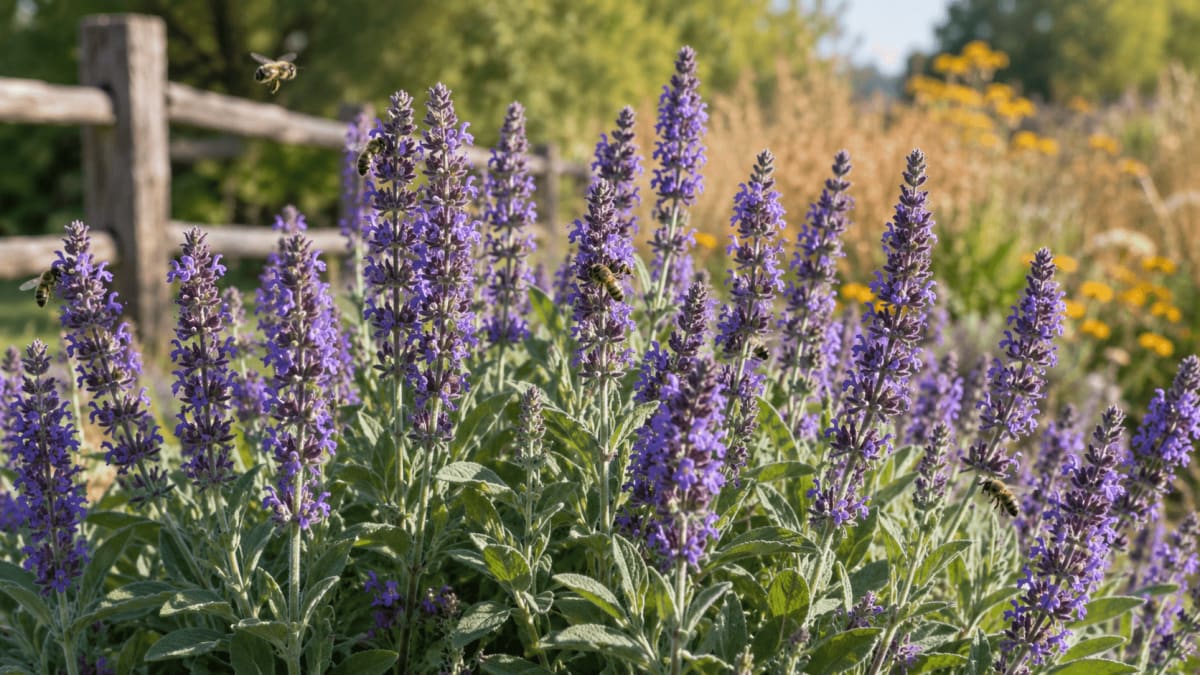
Listen a moment. At dusk, my sage plant is humming all over. My common sage started flowering in May, and it still has its last blue-violet flowers: as long as there are some, the bees and the big bumblebees won't leave it alone. It's a honey plant, like all sages. At my house, it shares.
My sage, a honey plant, for the bees first
Look at a flower up close. When a bee pushes its head in to drink the nectar, it presses on a sort of little lever, and the stamens tip down to put pollen on its back. When it leaves, everything goes back into place for the next one. The botany books say it's this little mechanism that makes a sage a sage. I never tire of it: the bumblebees come out with their backs all powdered, and off they go to the next flower.
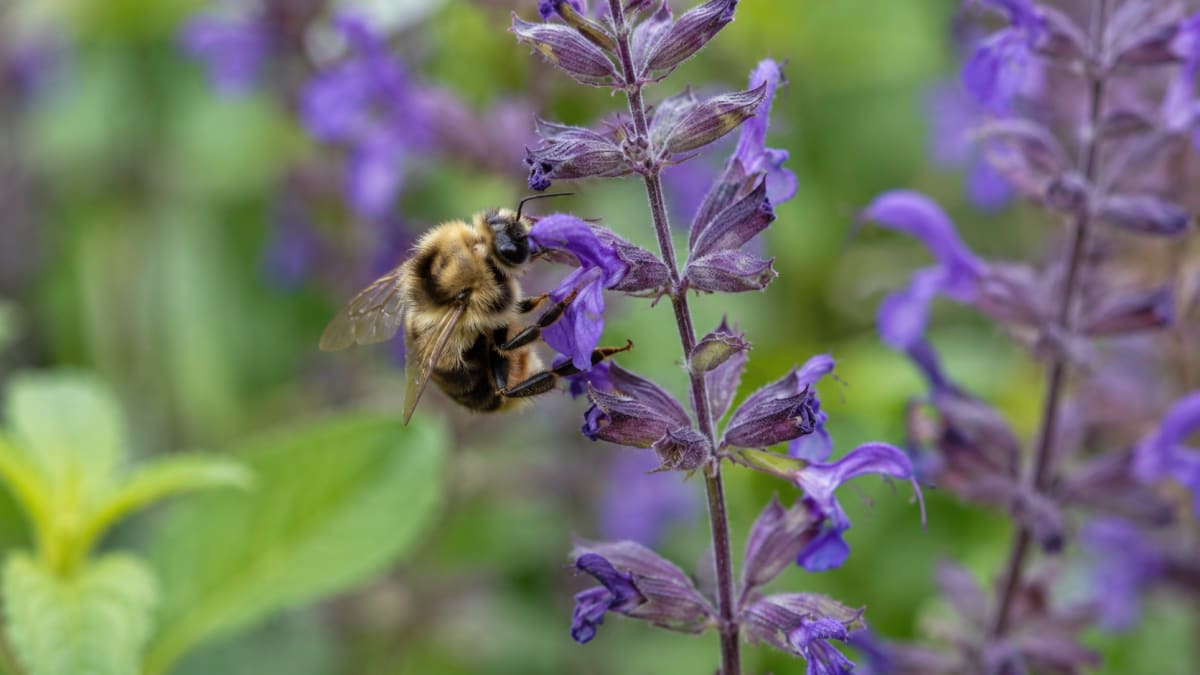
So at my house, we don't cut everything at once. I let several branches flower in peace for them, and I only take my leaves from the rest of the plant. A little for my jars, a lot for the creatures: it's an old bargain between us. And that humming around the house, when I'm weeding or picking the beans, keeps me company.
My sage has a wild cousin, meadow clary. You come across it in meadows, on chalky ground, with its blue flowers from June to August. It plays the same trick on insects: its stamens drop down when they pass and brush their backs. That one I leave in its meadow. For the cup, I only take the common sage from my garden.
I never cut all my sage at once: the flowers for the bees, a few leaves for my jars, and everyone's happy.
The cup of sage and the gargle, once the bees have gone home
My leaves, I pick them in dry weather. I tie them in small bunches and hang them upside down in a dry, dark corner of the kitchen, two or three weeks, until they crumble under my fingers. Then, into a tightly closed glass jar. I showed you how I do it in my July letter.
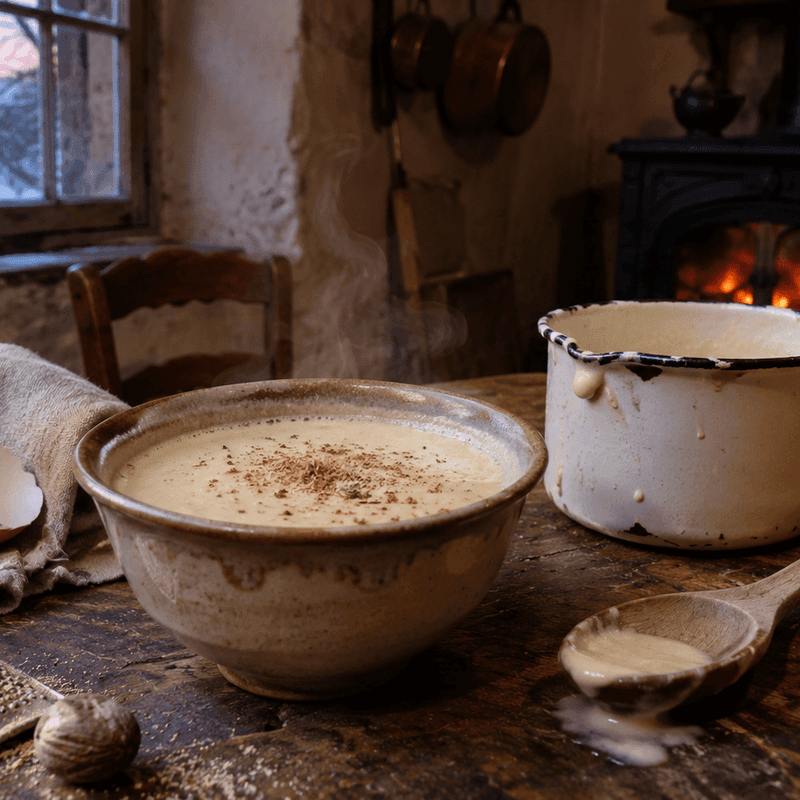
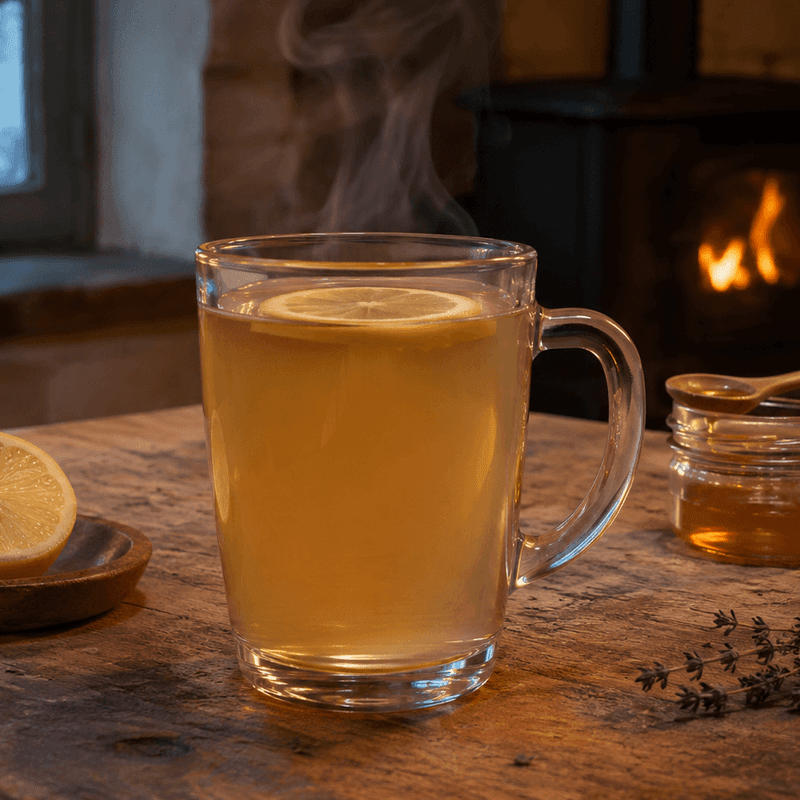
In the evening, when the garden has calmed down, I make my cup. 1 to 2 g of dried leaves in the bottom (weigh them the first time, after that you'll know by eye), 150 ml of water just off the boil, a saucer on top, and ten minutes. I strain it, and add a spoonful of honey if I feel like it. It was one of my mother's cups after a meal that was too heavy, when the stomach burns a little or bloats. Three cups in the day at most. I keep it with my tips for a tummy that pulls after eating.
And fresh sage tea, you'll ask? The books give their measurement for dried leaves, so for the cup, that's the one I use. Fresh leaves I keep for cooking: two or three in the casserole with the pork roast, and that's enough, it has a strong character.
On days when I've talked too much and my throat prickles, I make it stronger: 2.5 g of leaves for 100 ml of boiling water, ten minutes covered. I strain it, let it cool to lukewarm, gargle with it and spit it out. Morning, noon and evening, for a week at most: for a prickly throat, it's my gargling plant. The old manuals also give it for when you sweat too much: the same small cup as after meals, drunk cooled. I talk about that with the days when the heat rises.
Sage is a strong plant, you have to respect it. No cup or gargle during pregnancy or when breastfeeding, and not before age 18: the books don't know enough to say it's safe. If you're allergic to sage, you go without. Don't push the amount, and its essential oil is never swallowed. The books don't mention any troublesome combinations, but if you already take something on a doctor's orders, ask your doctor or pharmacist before drinking it regularly. If your tummy isn't better after two weeks, your throat after a week, the sweating after six weeks, or if it gets worse, go and see your doctor. And all of this only applies to common sage.
And burning sage, in the house?
People often ask me: what about the benefits of burning sage, to purify the house? I'll answer you straight. The sage they sell in bundles for burning isn't mine. It's white sage, Salvia apiana, which grows in California and northwestern Mexico. Over there, several Native American peoples use it in their purification rites. Only, with it being sold everywhere, too much is pulled up in the wild, and many of these peoples are asking those who aren't part of them to stop using it.
Does it purify a house? I have no idea, and I'm not going to spin you a story. What I do know is that my bunches of common sage drying upside down make the whole kitchen smell lovely, without burning anything. And that my bees prefer the flowers that stay on the plant. If you want to know all about my common sage, I tell you about it over here.
Before I let you go
This evening, I stayed in the garden longer than I meant to. The sun had gone behind the hedge, there were two or three bumblebees lingering on the last flowers, and me, sitting on the little bench with my scissors on my knees, I didn't feel like cutting anything any more. I brought in a handful of leaves for the jars and left the rest to the creatures. Take a moment like that this week too, even five minutes, to watch who visits your flowers. I'll write to you soon.