Comfort during hot flushes
When a hot flush rises, you cool down, dress light and keep the bedroom cool. Sage for when you sweat too much, and when to see your doctor.
Reviewed by Ruosi Wu, PhD in Pharmacy, MD in Traditional Chinese Medicine
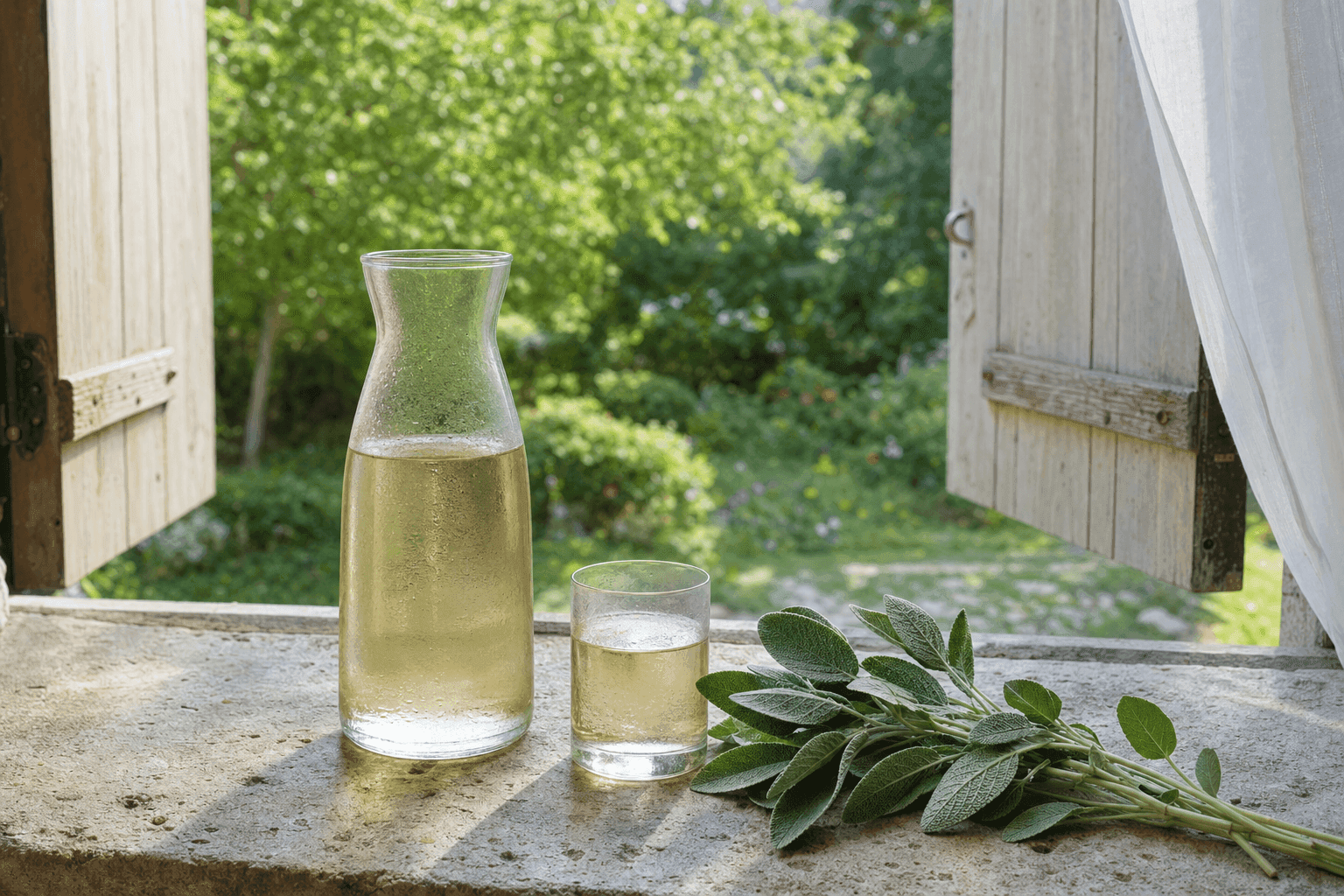
When a hot flush comes, cool yourself down: take off a layer, drink something cool, splash a little cool water on your neck, and keep your bedroom cool at night. Less spicy food, coffee, alcohol and hot drinks is worth a try. If the heat comes with chest pain, call 15 (the emergency number in France); with fever or bleeding after menopause, go and see your doctor.
Key takeaways
- A hot flush rises from the chest to the neck and face, with redness, and passes in a few minutes. At menopause, seven women in ten get them.
- To calm it: light clothes, a cool drink, a cool shower or a fan, and a cool bedroom at night.
- Spicy food, coffee, hot drinks, alcohol and tobacco often set it off: go easy on them.
- Men can get hot flushes too, for example when their male hormones drop, or with stress, alcohol or the thyroid.
- Chest pain, a face that droops, fever, weight loss for no reason or bleeding after menopause: that’s something to show a doctor.
Granny’s little steps
- Take off a layer and drink something cool
As soon as the heat rises, take off your cardigan, sit down and drink a glass of cool water. Light clothes, in several thin layers, are what come off the fastest.
- A cool shower or a fan
At home, a cool shower; out and about, a fan in your bag. And you wait for the wave to come back down: usually, it passes in a few minutes.
- A cool bedroom at night
A light sheet, a bedroom that isn’t too heated, and on the bedside table a glass of water and a spare pair of pajamas, in case you wake up soaked.
- Go easy on what sets it off
Spicy dishes, coffee, scalding drinks, alcohol, cigarettes: note when the flushes come, and cut out first what comes up most often.
- Move a little every day
A walk, a little cycling, whatever you enjoy. Regular activity helps you get through this time, and so does keeping a weight that suits you.
A recipe to try
Sage tea, drunk cool
In the afternoon or evening, when you sweat too much
What you’ll need
- 1 to 2 g of dried common sage leaves (weigh them the first time, after that you’ll know by eye)
- 150 ml of water
- A slice of lemon, if you like
How I go about it
- Bring 150 ml of water to the boil.
- Pour it over the leaves, at the bottom of your cup.
- Cover with a saucer and let it steep for 10 minutes.
- Strain, add the slice of lemon if you like, and let it cool, or put the cup in the fridge for an hour.
- Drink it in little sips. No more than three cups a day, not before 18, not when pregnant or while you’re breastfeeding.
A hot flush calms down first with coolness: take off a layer, drink something cool, splash a little cool water on your neck, and let the wave come back down. Usually, it passes in a few minutes. I’ll tell you what I do, and when you need to go and see your doctor.
Why hot flushes come on like that
A hot flush, you know it when it comes: a sudden, strong heat that rises from your chest up to your neck and face, and then you go all red. It rarely lasts more than a few minutes. Some women get one now and then, others several in the same hour.
At menopause, it’s very common: seven women in ten get them. It often starts even before periods stop, around 47. The body is changing its rhythm. It can last a few months, sometimes several years. And it’s mostly at night that they come, so sleep takes a hit.
At night, there are the sweats too. They come with the heat or on their own, and sometimes they’re so strong you wake up with the sheets wet. When people tell me about hot flushes and heavy tiredness, I think first of those nights broken into pieces.
There are times when they come more easily: when the room is hot, after a meal, with a glass of alcohol, during exertion, or in a moment of emotion. So if you’ve noticed that as soon as you eat, the heat rises to your face, you’re not imagining it: the meal is one of the things that sets it off. Spicy dishes and hot drinks too.
Hot flushes in men, or without menopause
A man can have hot flushes too. When male hormones drop suddenly, for example with certain things given on a doctor’s orders for the prostate, the rising heat is one of the known effects.
People sometimes talk about andropause, as a kind of male menopause. My books are more careful. With age, a man’s hormones go down very gently, about 1% a year from 30 or 40, and that alone rarely causes trouble. Tiredness, low spirits and bad nights can also come from elsewhere: stress, alcohol, tobacco, lack of sleep.
And then, in men as in women, the heat and the sweats can come from something other than hormones. Anxiety and stress, for example. One drink too many. Some things taken on a doctor’s orders, like antidepressants, cortisone or painkillers. A drop in blood sugar. And the thyroid, when it runs too fast: you can’t stand the heat, you sweat a lot, you lose weight fast even though you’re eating, your heart pounds. That one is for your doctor: the signs are further down.
My old-fashioned remedies for hot flushes
When the wave comes, I don’t overthink it. I take off my cardigan, sit down, breathe slowly and drink a glass of cool water. A fan in your bag, it sounds silly, but it comes in handy. At home, a cool shower.
For getting dressed, light clothes. Me, I wear several thin layers, like an onion, and cotton.
At night, the bedroom has to stay cool. I sleep with a light sheet, and I keep a glass of water on the bedside table. If you wake up soaked, keep a spare pair of pajamas within reach, it saves you shivering afterward. That’s how I calm night-time hot flushes: nothing clever, just not being too hot in bed.
Next, you look at what sets it off. Spicy dishes, coffee, drinks that are too hot, alcohol and cigarettes are among the usual suspects. No need to cut out everything at once: note when the flushes come, and you’ll soon see what doesn’t agree with you.
And move. A walk every day, a little cycling, whatever you enjoy. Regular physical activity helps you get through this time, and so does keeping a weight that suits you. Anything that brings stress down is worth taking. Doctors even say that hypnosis, and some therapies where you talk with someone, seem to help you have fewer of them.
People sometimes ask me about baking soda. I found nothing serious in my books that gives it for hot flushes, so I don’t recommend it. And the soy extracts sold for menopause, doctors don’t recommend them either.
A tea for hot flushes? Granny’s plants
I’ll tell you how things are: for the hot flush itself, I don’t have a tea that my books back. They only give sage, for when you sweat too much.
Common sage. It’s the one people mention to me most, and the old manuals do give it in a cup when you sweat too much. I put 1 to 2 g of dried leaves in 150 ml of boiling water, cover for ten minutes, strain, and let it cool before drinking: a scalding drink is exactly what sets the heat off again. No more than three cups a day. If after six weeks you’re still sweating just as much, stop and talk to your doctor. And sage in a cup is for grown-ups: not before 18, not when pregnant, not while breastfeeding. I tell you about my sage over here.
And if it’s the flushes that wake you up at night and you sleep badly? Then it’s sleep you need to look at: I tell you about it on the page for hard nights.
“Coolness first, the cup after. And when things aren’t right anymore, it’s the doctor, not one more plant.”
If these flushes spoil your days or nights, don’t wait until you’re at the end of your rope to talk to your doctor: they have solutions to offer, with or without hormones. And before you take a plant or a supplement every day, ask them, or ask your pharmacist. If it’s more your head going round in circles in the evening, I tell you what I do for nerves.
Which plants?
SageSalvia officinalis
Common sage is the little shrub with soft grey leaves that we keep near the kitchen: for the roast, for the cup after a meal, for a tickly throat.
What to know first
Sage: not during pregnancy or breastfeeding, neither in a cup nor as a gargle, because we don’t know enough about whether it’s safe. Not before 18 either. If you’re allergic to sage, go without.
How much sage: 1 to 2 g of leaves for 150 ml of boiling water, up to three cups a day. Don’t push the dose: sage contains thujone, which the books say is toxic to the nerves. If you’re still sweating just as much after six weeks, or if it gets worse, stop and go and see your doctor or your pharmacist.
Sage essential oil: never by mouth. It’s very high in thujone: taken in an amount equal to more than 15 g of leaves, it has caused a feeling of heat, a racing heart, dizziness and convulsions. And only put common sage in your cup: clary sage, white sage and ornamental sages are other plants.
The thyroid: a thyroid that runs too fast can itself make you hot. If the heat settles in, talk to your doctor about it.
Current treatments: for sage, the books don’t report any interaction. If you take something on prescription, ask your pharmacist anyway.
Hormones and soy: if you already take hormone treatment, or a treatment for the prostate, don’t stop it or change it without your doctor. The soy extracts sold for menopause aren’t recommended, and they’re advised against for women who have already had breast cancer. Before taking a plant, a supplement or a course of anything regularly, talk to your doctor, your midwife or your pharmacist.
When to see your doctor
- Chest pain that squeezes, lasts more than five minutes and doesn’t go away with rest, or that spreads to the jaw, arm, back or neck: call 15 or 112 (the emergency numbers in France), even if you think it’s a hot flush.
- Sweating with discomfort in the chest, and on top of that paleness, lips turning blue, nausea, dizziness or unusual weakness: call 15 or 112.
- A face that droops, an arm or a leg that goes numb or weak, trouble speaking or understanding, a sudden loss of balance or blurred vision, even if it passes: call 15 or 112 right away.
- Night sweats with a high fever, or if you feel hot then cold with chills, a cough or diarrhea: see your doctor.
- Night sweats and weight loss for no reason: see your doctor.
- Night sweats that come back often, that wake you with the sheets soaked or that worry you: make an appointment with your doctor.
- Heat you can’t stand, a lot of sweating, quick weight loss even though you eat normally, a racing heart or shaky hands: see your doctor, the thyroid needs checking.
- A high fever with a racing heart, agitation or confusion in someone whose thyroid runs too fast: call 15, it’s an emergency.
- Bleeding after menopause, even a little: make an appointment with your doctor without delay, within the week.
- Heavy bleeding, or bleeding with feeling faint, dizziness, sweating and cold skin: call 15 or 112.
- You’re a man and hot flushes keep coming back for no reason you know of: talk to your regular doctor about it.
- Hot flushes that start after a new treatment (hormones, prostate, antidepressant, cortisone, painkiller): don’t stop it on your own, talk to the doctor who gave it to you.
- Hot flushes that spoil your days or nights: talk to your regular doctor, your midwife or your gynecologist, there are treatments with or without hormones.
- Sage changes nothing after six weeks, or things get worse while you’re taking it: stop and go and see your doctor or your pharmacist.
Your questions
What are some grandma’s remedies for hot flushes?
Coolness first: light clothes you can take off easily, a cool drink, a cool shower or a fan, and a cool bedroom at night. Then, go easy on spicy food, coffee, hot drinks, alcohol and tobacco. And move a little every day, it helps you get through this time.
Can a man have hot flushes?
Yes. When male hormones drop, for example with certain things a doctor gives for the prostate, hot flushes are among the known effects. Stress, alcohol, some things taken on a doctor’s orders or a thyroid that runs too fast can also make you hot and sweaty. If it keeps coming back for no reason you know of, talk to your doctor about it.
Which tea should I drink for hot flushes?
For the flush itself, I don’t have a tea that my books back. Sage, they give for when you sweat too much: 1 to 2 g of leaves in 150 ml of boiling water, ten minutes covered, drunk cooled down, three cups a day at most. Not before 18, not when pregnant, not while breastfeeding.
How do I calm hot flushes at night?
Keep the bedroom cool, with a light sheet, a spare pair of pajamas and a glass of water on the bedside table. In the evening, leave alcohol, coffee and spicy food aside. If you often wake up with the sheets soaked, or if these sweats worry you, go and see your doctor.
A hot flush without menopause, where can it come from?
From everyday things, very often: a meal, an overheated room, a glass of alcohol, an emotion, stress. Some things taken on a doctor’s orders cause them too, and so does the thyroid when it runs too fast. If the heat keeps coming back for no reason, or with weight loss, fever or a pounding heart, go and see your doctor.
When should I worry about hot flushes?
A hot flush passes in a few minutes. What should alert you is what comes with it: chest pain, a face that droops, an arm that won’t respond or speech that gets muddled, and then it’s 15 or 112 (the emergency numbers in France) right away. A fever, weight loss for no reason or bleeding after menopause, that’s something to show your doctor.
Also worth reading
References
- European Union herbal monograph on Salvia officinalis L., folium (EMA/HMPC/277152/2015) · European Medicines Agency, HMPC, 2016
- Public statement on Salvia officinalis L., aetheroleum (EMA/HMPC/41843/2009) · European Medicines Agency, HMPC, 2016
- Menopause: things you can do · NHS (Royaume-Uni), 2026
- Night sweats · NHS (Royaume-Uni), 2023
- The 'male menopause' · NHS (Royaume-Uni), 2022
- Reconnaître une douleur thoracique qui nécessite des soins urgents · ameli.fr, 2026
- AVC : que faire ? · ameli.fr, 2026
Information. This information is provided for general knowledge and doesn’t replace medical advice. Check with a healthcare professional before any use.
Health Disclaimer