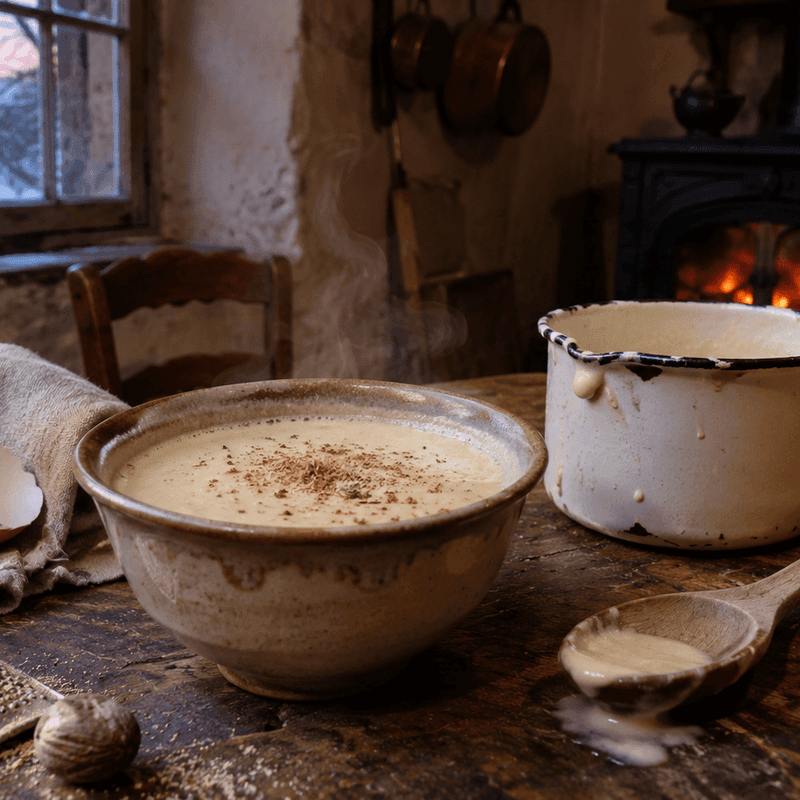
My autumn plants: what I put away in jars before winter
My autumn plants are habits: thyme drying, elderberry jelly, a few cups for the first days of a cold. No promises, just what I've always done.
People ask me about autumn plants as soon as the leaves fall: what do I take to get through winter? I'll tell you how things are. I don't know of any herbal tea that keeps colds away. What I have are autumn habits learned from my mother, and well-filled jars for the first days when you feel something coming on.
My autumn plants in the garden: what I harvest and what I put away
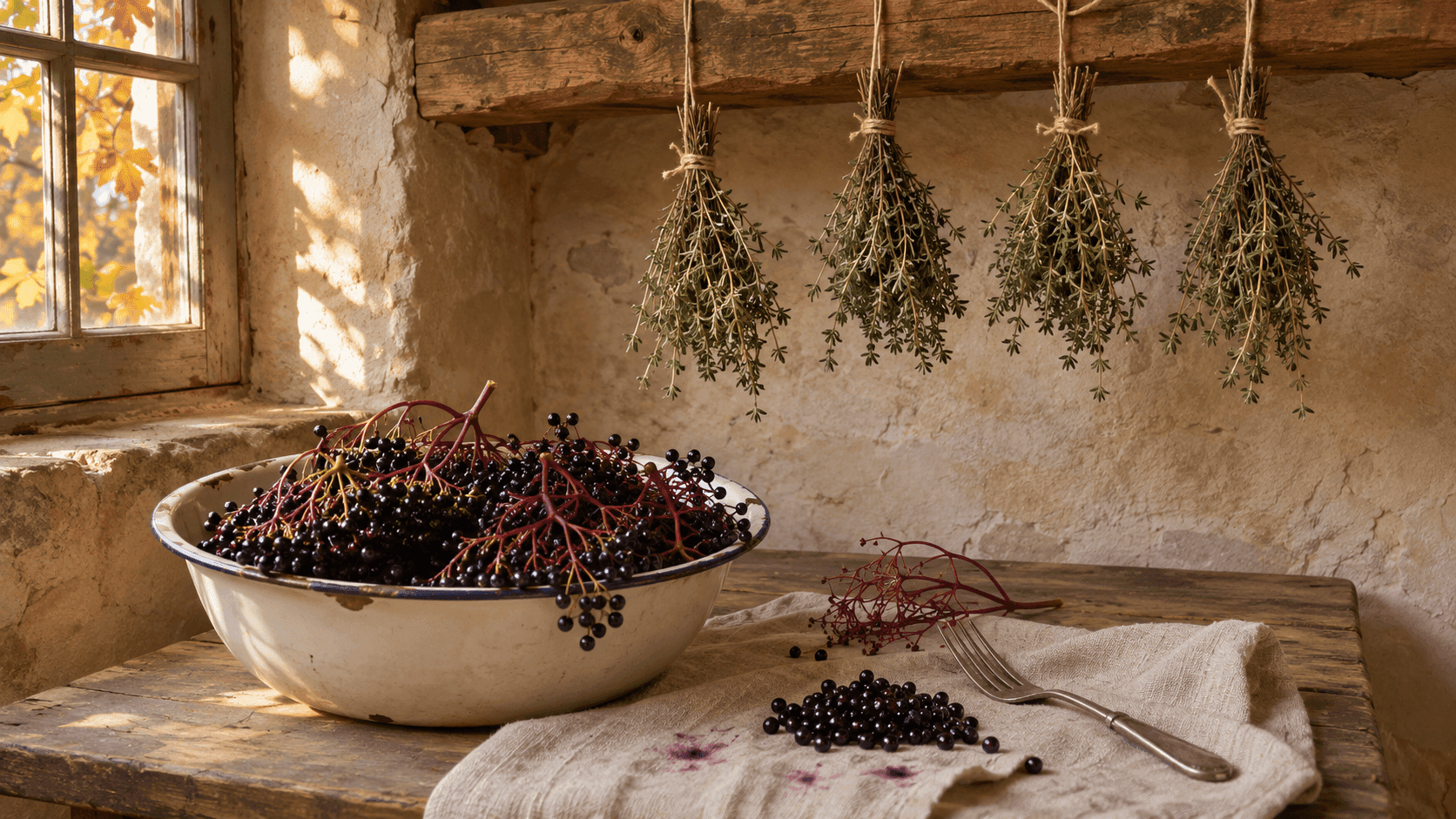
In September, I make the second cut of the thyme. I cut in the morning, once the dew has gone, never lower than a third of the clump, and I hang the little bunches upside down in a dry, airy, shady corner. A few weeks later, the leaves crumble under my fingers: I rub them over a tea towel and pour them into a jar that closes tight.
The black elder gave twice. In June, I dried a few flower heads in a dark room, and they're waiting in their jar. At the end of summer, the berries turned a shiny black, in hanging clusters. I strip them off with a fork, take out every green or red one, and cook them. Never raw: raw or green, like the leaves and stems, they can cause nausea, vomiting or bad diarrhoea.
My jelly is my mother's: 1 kg of stripped berries and 500 ml of water, 20 minutes of cooking, I strain it through a clean cloth, weigh the juice and count 700 g of sugar per litre. I cook it until a drop sets on a cold plate, and I pot it straight away. On cold evenings, she used to stir a spoonful into a glass of hot water, the way people once did with elderberry rob. For me, it's a little indulgence, not a remedy cup.
One more thing: don't mix it up with dwarf elder, a tall herb with no wood, whose clusters point up at the sky. Its berries are toxic, even cooked. At the slightest doubt, you don't pick. Everything I do with my black elder, I've told you about.
I don't know of any herbal tea that keeps you safe from winter. I know well-filled jars, hot soup and full nights.
When your nose starts to run: my cups for the first days
The day I feel something coming on, a scratchy throat and a runny nose, I bring out the elderflowers. I put 2 to 5 g of dried flowers (two good teaspoons make roughly 3 to 4 g) in 150 ml of boiling water, ten minutes with a lid on, and I drink it nice and hot, rather in the afternoon and evening. Up to three cups a day, from age 12.
If the cough settles in and it's a chesty cough, I move on to the thyme from my border: 1 to 2 g of dried thyme in 150 ml of boiling water, ten minutes under a saucer, and a teaspoon of honey once the cup has cooled a little. Three or four cups a day, a week at most.
In the garden, I have purple echinacea for its big flowers that the butterflies and bumblebees visit, and I leave its dry heads standing over winter for the birds. You read everywhere that you should take it for weeks, from September, to be safe. My books don't say that. They give it at the first signs of a cold, and for the cup, it's a cousin, narrow-leaved echinacea, whose cut root I buy: 1 g in 150 ml of boiling water, at least ten minutes with a lid on, drunk hot between meals, three times a day at most. If it hasn't gone after ten days, it's the doctor. Echinacea and its rules, I've written them all down for you.
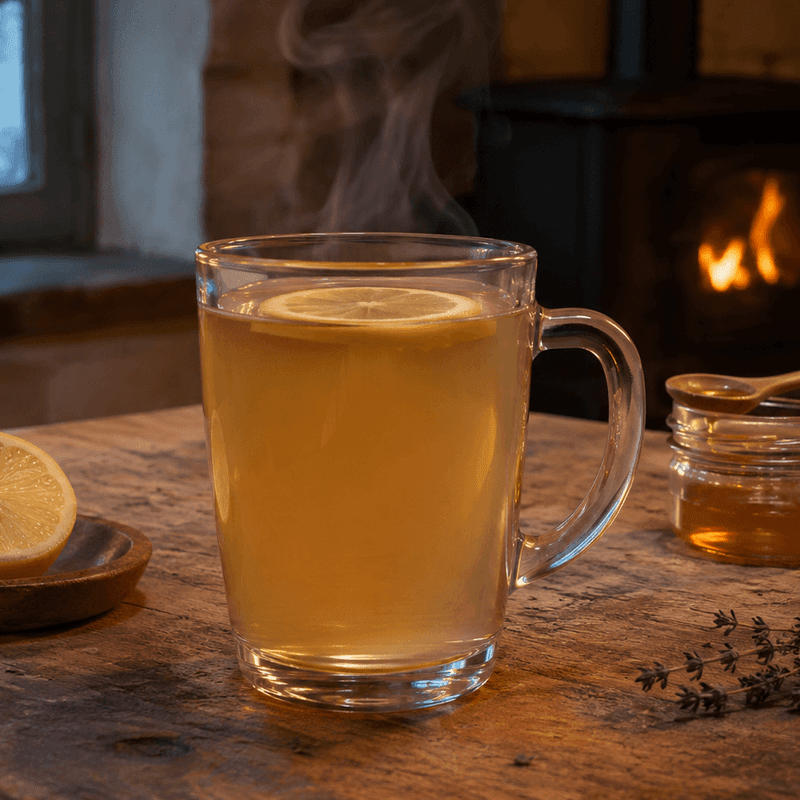
And on days of fine rain, when I come back from the market with wet feet, I make my cup of ginger: a tablespoon of grated fresh ginger in 300 to 400 ml of boiling water, with the juice of half a lemon, ten minutes with a lid on, and a little honey. It warms your hands round the cup, and that's already a lot.
What to know before your autumn cups
These cups of elder, thyme and echinacea are from age 12. Ginger taken as a remedy is for adults. During pregnancy and breastfeeding, no elder or thyme tea, no echinacea unless your doctor advised it, and ginger you avoid as a remedy, beyond what goes into your dishes. If you're allergic to one of these plants, you go without. For echinacea, that also goes for its family (daisy, dandelion, sunflower, chamomile, arnica), and if you get allergies easily, ask your doctor first.
Echinacea isn't for you either if your defences are involved: an autoimmune problem, weakened defences, or something on a doctor's orders that holds them back, after a transplant for example. If your face, lips or tongue swell, or if you're struggling to breathe, call 15 (the French emergency number) straight away. Elderberries taken as a remedy, as juice or syrup by the spoonful: not when pregnant, not when breastfeeding and not under 18; if you take something to hold back the body's defences, talk to your doctor. Ginger can upset the stomach, and if you take something to thin the blood, ask before drinking it often.
And the cold itself, listen to it. If the fever goes above 38.5 °C, if you have trouble breathing or swallowing, a very bad headache, vomiting or a strong earache, if you're coughing up yellow or green phlegm, or if the cold hasn't gone after ten days or suddenly gets worse, go and see your doctor. For a throat that stings, I've written it all down there.
Tonight, the jars are lined up on the pantry shelf: the thyme, the elderflowers, and the purple jelly that stained my apron, like every year. The leek soup is warming on the stove. Wrap up well, and I'll write again soon.