The root of a small shrub from dry countries, a cousin of the tomato, used in India for thousands of years. Not banned in France, but advised against for quite a lot of people.
Who she really is
Family: Nightshade family (Solanaceae), the same as tomatoes and potatoes.
Part used: mainly the root, dried. In India, the leaves and seeds are used too.
Ashwagandha (Withania somnifera) is a small shrub of dry lands, from the Mediterranean all the way to India, and its root has been used for thousands of years in India's traditional practice. It's also called Indian ginseng. It isn't banned in France, but it's advised against for quite a lot of people: read what to know first carefully before you touch it.
Her story
Ashwagandha is the root of a small shrub from dry countries, used in India for thousands of years. Its scientific name is Withania somnifera, and here it's also called Indian ginseng. Since the early 2020s, everyone's been talking about it, especially on social media.
I'll be honest with you. I don't have this one in my garden, and I've never put it in my jars. But I get asked about it so often that I got the books out again, and I read what the health authorities say. I'll tell you everything: the good, and the not so good.
Ashwagandha, a shrub of dry lands
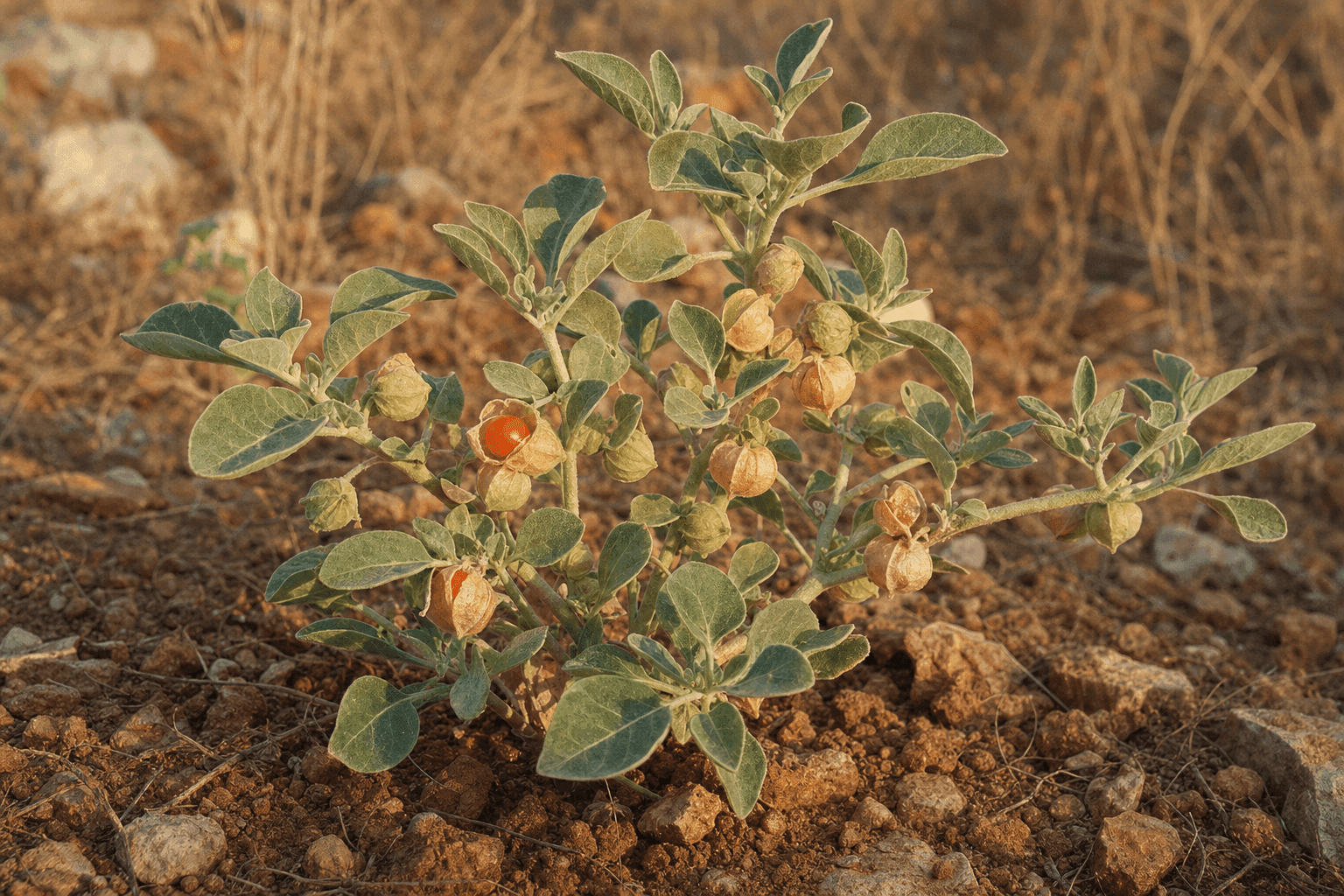
Picture a shrub that can grow up to two metres tall, covered in fine down, and that keeps its leaves all year round. Its flowers are tiny, bell-shaped, a yellowish green. Its fruits are round berries five or six millimetres across, orange-red, each one shut inside a green lantern as thin as paper. And underground, a long fleshy root: that's what people are after.
It grows in half-dry places, from the edge of the Mediterranean to India, and also in the Canary Islands and North Africa. It's mostly grown in India, especially in the dry lands of Madhya Pradesh. And hold on to your hat: it belongs to the Solanaceae, like my tomatoes, my potatoes and my aubergines. A cousin from the vegetable patch, come from far away.
Over there, it's sown in June or July, just before the monsoon, and it likes to spend its season in the dry. The roots are pulled up from January to March, five to six months after sowing, when the leaves dry out and the berries turn reddish yellow. They're washed, cut into pieces seven to ten centimetres long, and dried in the sun or in the shade. That's something I understand, since I hang my bunches of plants upside down to dry.
Withania somnifera: a name about horses and sleep
My grandson, who's at university, explained the name to me one Sunday, between the soup and the cheese. Ashwagandha is Sanskrit: ashva is the horse, and gandha is the smell. So, “the smell of a horse”. Some say it's because of the root's strong smell. Others say it's for the strength and stamina of the horse that people credited it with. Even the experts don't agree, so I'm not going to settle it for them.
The Latin name, somnifera, means “that brings sleep”. It was Linnaeus, the great Swedish botanist, who first described it, and he had filed it with the Physalis, the cousins of the Chinese lantern. Then a French botanist, Michel Félix Dunal, reclassified it in 1852 under the name it has today. In English it's sometimes called “winter cherry”.
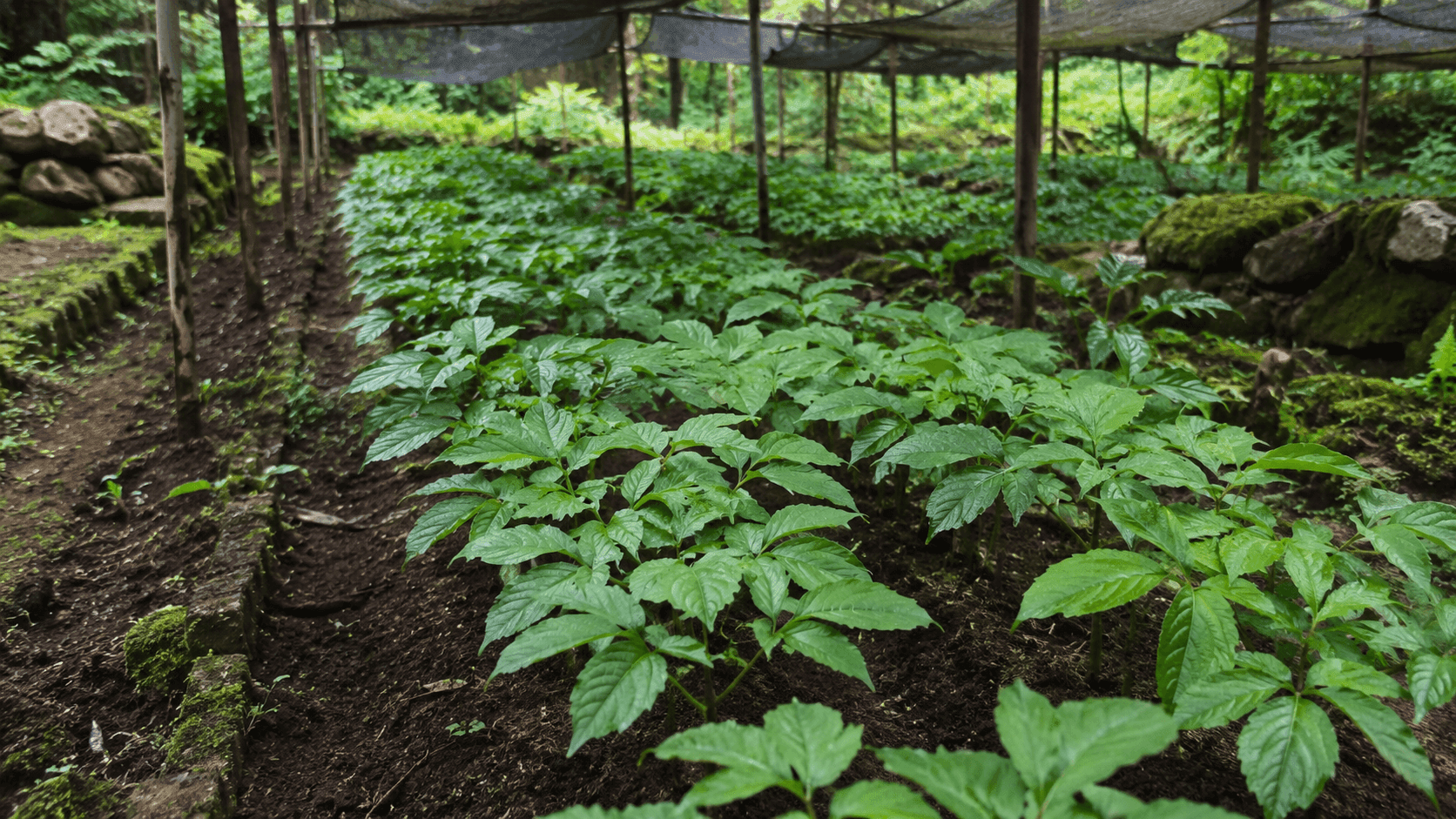
And that nickname, Indian ginseng? Don't be fooled: it's not the same plant. If it's ginseng you're curious about, I tell you about it over there, with its own story.
Ashwagandha in India's tradition
In India, Pakistan and Bangladesh, it's a traditional plant in many communities. Its dried root, and sometimes the whole plant, is used in the great old health traditions of that part of the world: ayurveda, but also siddha, unani and sowa-rigpa. The books say it has been used as a remedy plant for thousands of years.
In ayurveda, it's counted among the best rejuvenating plants. Over there, it's rarely taken on its own: you find it, mixed with other plants, in more than two hundred preparations. It's mostly the root that's used, but also the seeds and the leaves.
There's something else the books say, and that you hear less often: in the tradition, its root was known to bring on a miscarriage. That's why a pregnant woman doesn't touch it. And that, believe me, isn't up for discussion.
What do I take from all this? Over there, it has its place in a whole body of old knowledge, and it's combined with other plants. Here, it arrives on its own, mostly in food supplements, and that's not quite the same story anymore.
Ashwagandha banned in France: why people say so
You may have read that ashwagandha was banned in France. It isn't true. But it's not silly to have doubts, and I'll tell you why.
Here, it's allowed in food supplements, and it's been a big hit: between 2016 and 2021, more than two hundred and fifty products containing it were registered for sale in France. But in April 2024, the French health authorities gave their opinion. Their conclusion: with what we know today, nobody can say up to what amount it's free of risk. So they advise against it for several groups of people, and they added that the same questions should be asked about herbal teas. The full list is just below, in what to know first.
Elsewhere in Europe, they've gone further. In Denmark, they consider it shouldn't be part of what people eat, and products containing it have been banned there. In the Netherlands, everyone, and pregnant women above all, is advised to do without it, in supplements and in infusions alike. In Poland, limits and warnings have been set. That's where the rumour comes from.
And then there's the French pharmacopoeia, the big official book of plants used for health. It puts ashwagandha root on its list B: the plants whose possible unwanted effects outweigh the benefit expected from them. When I read that, I closed the book and stood looking out of the window for a while.
And me, what do I do with ashwagandha?
Nothing new, as you'd guess. I look at it with respect, like a plant from another world, with its long history. But I don't put it in my evening cups. A plant nobody can give a risk-free amount for, and that's advised against for so many people around me, isn't a plant for my kitchen.
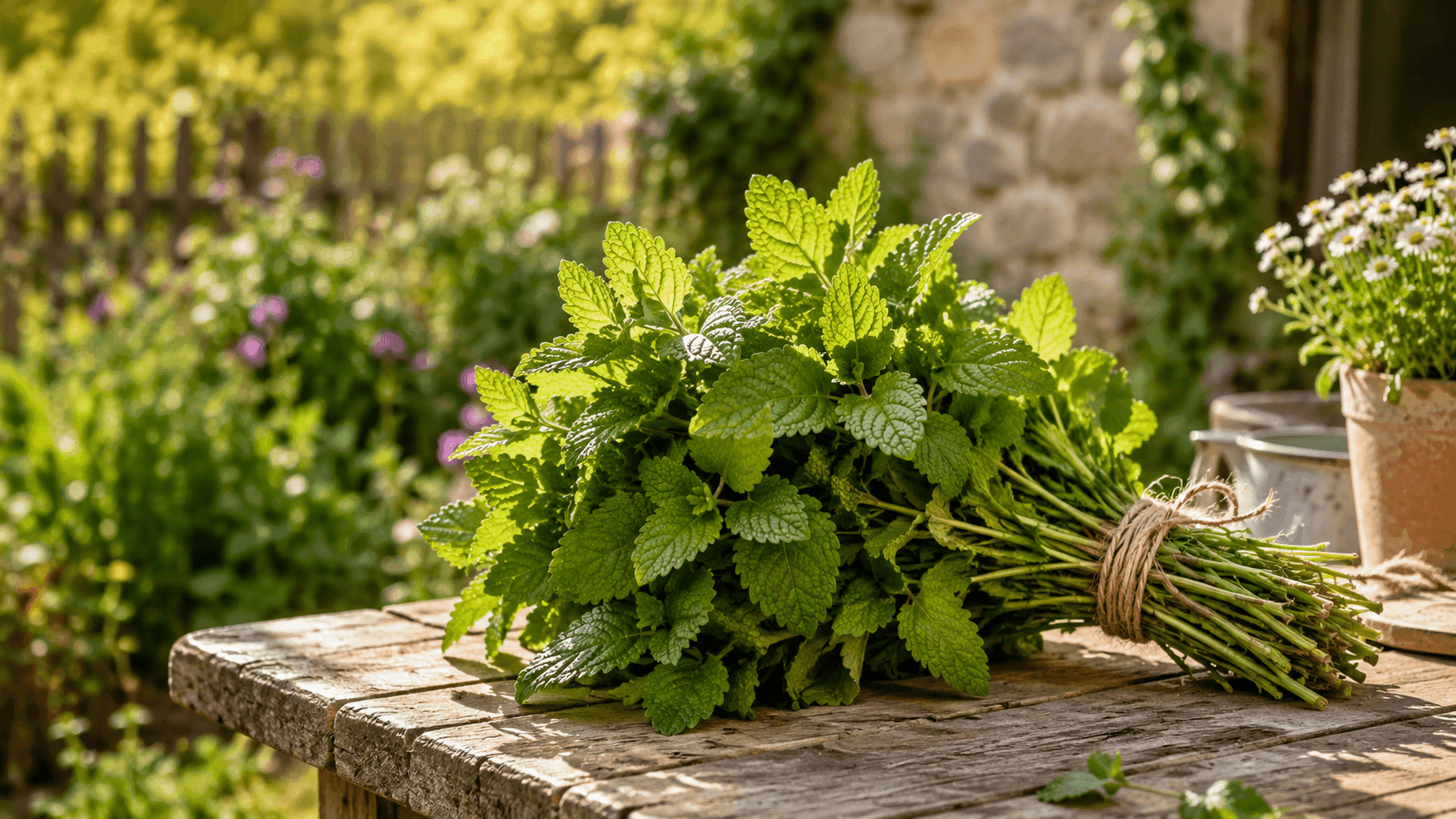
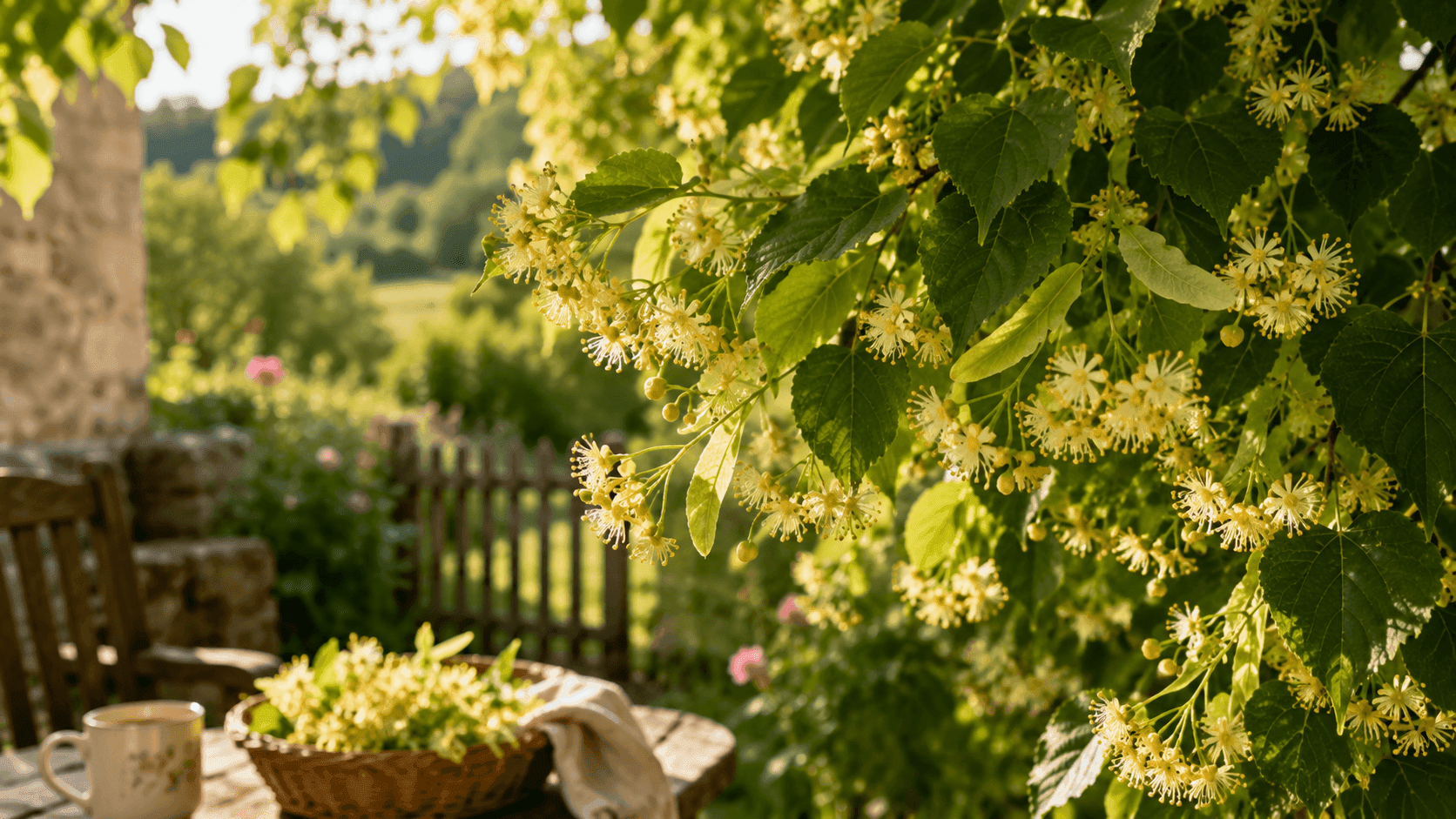
For the evenings when my head is spinning and sleep is slow to come, I stick to my old faithful plants: my linden, which I know by heart, and my lemon balm, which smells of lemon when you crush it between your fingers. I've put my two cups in the recipes. If it's your nights that are bothering you, I've written down what I do when sleep won't come. And for the days when your nerves are frayed, come and have a look here.
If you want to try ashwagandha anyway, I'm not going to scold you. But talk to your doctor first, especially if you already take something on a doctor's orders, and read the list of precautions carefully. What I love is a cup I know, sipped slowly, with the window half open onto the garden.
What people do with it, over there and here
- · 01In India, Pakistan and Bangladesh, it's a traditional plant: its dried root is used in ayurveda and in the siddha, unani and sowa-rigpa traditions.
- · 02In ayurveda, it's counted among the best rejuvenating plants.
- · 03Over there, it's rarely taken on its own: you find it, mixed with other plants, in more than two hundred preparations.
- · 04Here, you mostly find it in food supplements, and that's what the French health authorities warned several groups of people about.
- · 05Me, I don't use it: for my restless evenings, I stick to linden and lemon balm.
How they prepare it over there
My evening cups, in its place
For ashwagandha, I'm not giving you a recipe: nobody can say today what amount is free of risk. For the evenings when you were thinking of it, here are my two old faithful cups instead.
My linden cup for restless evenings
In the evening, after dinner
What you’ll need
- 1.5 g dried linden flowers
- 150 ml water
How I go about it
- 01Bring the water to the boil.
- 02Pour it over the linden flowers, in a cup.
- 03Cover and leave to steep for 10 minutes, then strain.
- 04Drink it slowly. Up to 4 cups a day, from age 12, and not during pregnancy or breastfeeding.
My lemon balm infusion for bedtime
In the evening, before you go to bed
What you’ll need
- 1.5 to 4.5 g dried lemon balm leaves
- 150 ml water
How I go about it
- 01Bring the water to the boil.
- 02Pour it over the lemon balm leaves, in a cup.
- 03Cover and leave to steep for 10 minutes, then strain.
- 04Up to 3 cups a day, from age 12, and not during pregnancy or breastfeeding. If you don't feel better after two weeks, go and see your doctor.
What to know first
This information doesn’t replace advice from a healthcare professional. Health Disclaimer →
Her identity card
- Latin name
- Withania somnifera (L.) Dunal
- Other names
- Ashwagandha, Indian ginseng, winter cherry
- Family
- Nightshade family (Solanaceae)
- Parts used
- Root (leaves and seeds too in India)
- Harvest
- Roots pulled up 150 to 180 days after sowing, from January to March in India
- Form
- Dried root, in pieces or powdered
- Origin
- Dry regions, from the Mediterranean to India; grown mainly in India
- Storage
- Well-dried root, in a metal tin, away from damp
- In France
- Allowed in food supplements, advised against for several groups of people
If you remember just one thing
- 01Ashwagandha is the root of a shrub from dry countries, a cousin of the tomato, used in India for thousands of years.
- 02Its name means “smell of a horse” in Sanskrit, and somnifera, in Latin, means “that brings sleep”.
- 03Ashwagandha isn't banned in France, but it's advised against for pregnant or breastfeeding women, under-18s, and anyone with a thyroid, liver or heart problem.
- 04Nobody can say today what amount of ashwagandha is free of risk: it's not a plant to take as a regular course without talking to your doctor.
- 05For my restless evenings, I stick to linden and lemon balm. Nothing new.
Your questions
It's the root of a small shrub from dry lands, Withania somnifera, from the same family as the tomato. In India it has been used for thousands of years in the traditional practice of ayurveda. Here it's also called Indian ginseng, and you mostly find it in food supplements.
Because it is in Denmark, and the Netherlands advise everyone to do without it. In France it isn't banned: it's still allowed in food supplements. But in 2024, the French health authorities advised against it for several groups of people, because nobody can say what amount is free of risk. And the French pharmacopoeia puts its root among the plants whose possible unwanted effects outweigh the expected benefit.
Liver damage has been reported after ashwagandha supplements: it's rare, but sometimes serious. That's why it's advised against for anyone who already has a liver problem. If you're taking it and your skin or eyes turn yellow, you're itchy or you have a stomach ache, stop and go and see your doctor.
I won't give you an amount, and it's not out of laziness: the French health authorities couldn't set a risk-free amount, for lack of enough data. Beyond three months, there isn't enough information. If you're thinking about it, talk to your doctor first, especially if you already take something on a doctor's orders.
Its Latin name, somnifera, means “that brings sleep”, and it can indeed make you drowsy. After taking it, no driving and no machinery, and never with sleeping pills or calming pills. For bedtime, I prefer a cup of lemon balm.
References
- Avis relatif aux risques liés à l'utilisation des préparations de Withania somnifera (L.) Dunal dans les compléments alimentaires (saisine 2021-SA-0077) · ANSES, 2024
- WHO monographs on selected medicinal plants, vol. 4 : Radix Withaniae · Organisation mondiale de la santé, 2009
- Ashwagandha · National Center for Complementary and Integrative Health (NIH), 2023
- Farm enterprises : Ashwagantha · Tamil Nadu Agricultural University, TNAU Agritech Portal
- Ashwagandha · Wikipédia, 2026
- Community herbal monograph on Tilia cordata Miller, Tilia platyphyllos Scop., Tilia x vulgaris Heyne or their mixtures, flos · European Medicines Agency (HMPC), 2012
- Community herbal monograph on Melissa officinalis L., folium · European Medicines Agency (HMPC), 2013