My homemade plant cosmetics: marigold, chamomile and caution
My homemade plant cosmetics don't amount to much: a marigold oil and a chamomile compress. I'll show you how I make them, and what I never put in my jars.
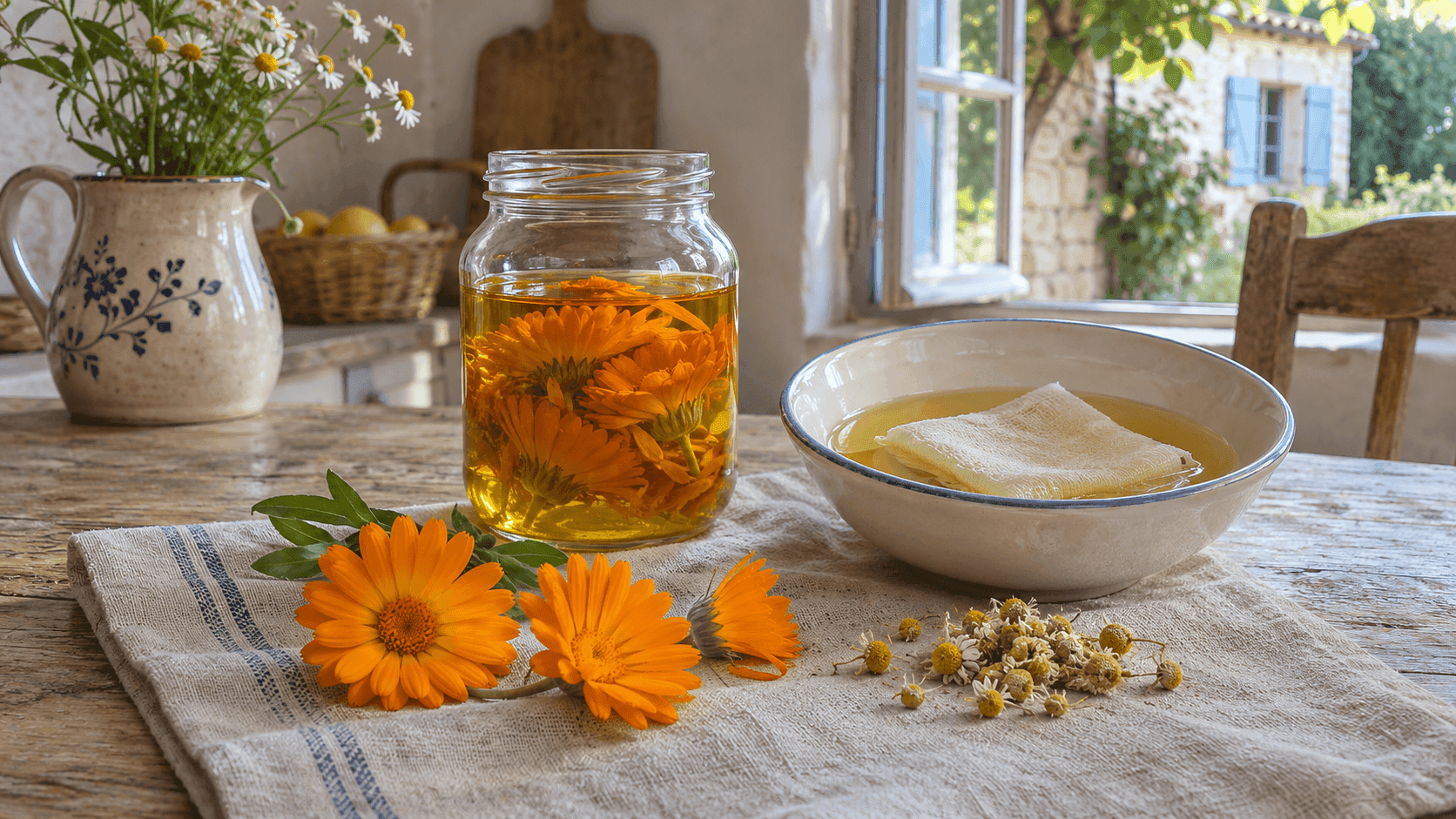
Homemade plant cosmetics, I've always made them, but my way: two or three simple things, in small amounts, and lots of cleanliness. It's raining this afternoon, so I've brought my jars and little bottles out onto the kitchen table. I'll show you what I make, and above all what I don't.
My homemade cosmetics, the way my mother made them
My mother didn't buy expensive creams. She had a little bottle of golden oil in the oak dresser, a jar of chamomile flowers, and a bottle of rosewater people gave her for the holidays. In the evening, after the garden, she'd rub a little oil on the backs of her hands, where the soil and the brambles had left their mark. That's all. And it's still more or less what I do.
These days you find homemade beauty recipes everywhere, with powders, waxes, essential oils, lye. I watch them from a distance. Recipes that say “a pinch” of this or “a spoonful” of that, without saying exactly what, I don't trust: that's how mistakes get made. I stick to what I know, with measurements.
My beauty jars are like my cooking: just a few things, good measurements, and everything nice and clean.
Marigold in oil, for hands that have worked
My first jar is marigold infused oil. Pot marigold, Calendula officinalis, is that orange flower that sows itself at the end of my vegetable patch. The books give it, by tradition, for minor skin irritations, and to help little grazes mend.
The golden rule is not a drop of water. I take 20 g of whole, well-dried flowers, put them in a clean, perfectly dry glass jar, and cover them with 200 g of olive oil, a little over 200 ml. No flower should stick out. I close it, and gently turn the jar over every two or three days, for four to six weeks. Then I strain it through a clean cloth, leave it to settle for four days in a tall bottle, and throw away the bottom. I told you all about it step by step in my letter about herbal oils.
I only make enough to last until the next summer. If it smells rancid or mouldy, or goes cloudy, it goes in the bin, no regrets.
“My beauty jars are like my cooking: just a few things, good measurements, and everything nice and clean.”
The chamomile compress, when your skin has got hot
My second habit doesn't keep: you make it the same evening. When skin has got hot in the sun, or on a little graze, I make a German chamomile compress. I pour 100 ml of boiling water over 3 to 10 g of dried flowers in a bowl, cover it and leave it to steep for ten minutes. I strain it well, let it cool completely, then dip a clean cloth in it, wring it out a little and lay it on the skin, away from the eyes. I can do it again several times a day. Not under 12.
Whatever is left in the bowl, I throw away: I don't fill a bottle with it for later. If you'd like chamomile in a cup too, I've put it all in my page about chamomile. And for skin that has had too much sun, I have other very simple habits.
What I don't put in my jars, and what to know first
No essential oils in my little jars. It's a very concentrated product, advised against for children and pregnant women, and it never goes undiluted on the eyes, nose or mouth. I told you about it in my letter about essential oils. No lye soap either: lye burns skin and eyes, and it's not something you handle with children around. And homemade sunscreens with zinc oxide, I won't touch: the recipes often go over the amount that's allowed.
For the rest, I have my rules. Clean, very dry glass jars, and never a water or fizzy drink bottle, which someone could mix up. A label with the name and the date. Everything stored up high, away from the little ones, and I don't make anything when they're running round the table. Before using anything, I do a small test in the crook of my elbow the day before.
Marigold and chamomile are in the same family as ragweed and chrysanthemums: if you're allergic to those flowers, you go without. Marigold: not under 6, and not during pregnancy or breastfeeding. If you're breastfeeding and put chamomile on your skin, wash your breast well before the feed. If it itches or goes red, you stop. No oil on fresh sunburn. And if a little graze turns red, hot and swollen, if it gets worse, or if it's no better after a week, go and see your doctor. If someone swallows one of your products by mistake, call a poison control centre straight away.
The rain has stopped. My bottles are lined up on the windowsill, with their handwritten labels, and the kitchen smells of dried flowers. I'll write again soon.