A little creeping herb with prickly fruits, the croix-de-Malte, mostly sold as supplements. Its story, its traditions, and why Grandma won't touch it.
Who she really is
Family: Zygophyllaceae. It's one of the few plants in this family that grow in Europe.
Part used: mostly the ripe fruit, dried. In India, the root and the whole plant are used too.
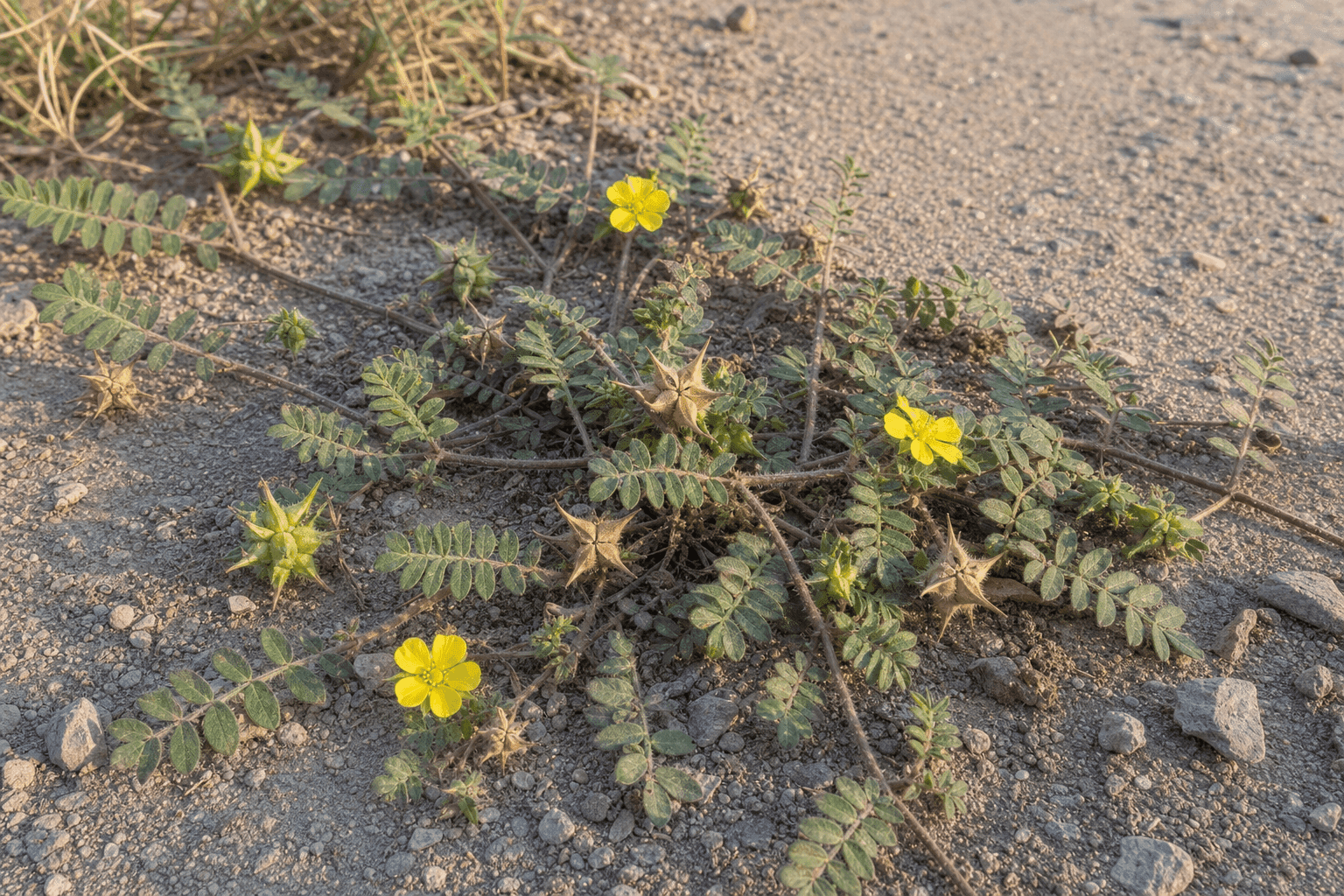
Tribulus (Tribulus terrestris) is a little creeping herb with yellow flowers that grows flat on the ground in hot, dry places, and whose fruit bristles with hard spines. Here in France we call it croix-de-Malte (Maltese cross), herse or tribule terrestre. In India and China, its dried fruit has its place in the old traditions. In France you mostly find it in food supplements, and that's where you need to keep your eyes open: read what to know first carefully.
Her story
Tribulus is a little herb that creeps along the ground, with yellow flowers and fruits full of spines. Its scientific name is Tribulus terrestris, and here in France we call it croix-de-Malte, the Maltese cross. For a few years now, you mostly see it in tubs, on the supplement shelf for sportspeople.
I'll be honest with you. I've never put tribulus in a cup. I mostly know it through my feet, if I may say so: through the spines you find stuck in your shoe soles at the end of summer. But I get asked so many questions about it that I opened the books and read what the health authorities say about it. I'll tell you everything, the good and the not so good.
Tribulus terrestris, the little Maltese cross that pricks
Picture stems lying on the ground, spreading out like a star, which can grow almost a metre long. The leaves are cut into little leaflets, covered with slightly silvery hairs. The flowers are small and bright yellow, with five petals. They open from April to September, and even into November when it's warm.
And then there's the fruit. A little five-pointed star, hard as wood, that breaks into five pieces. Each piece has two long spines and two shorter ones. Turn it over: seen from underneath, it looks like a Maltese cross. That's where the name comes from.
My grandson, the one who's at university, explained the rest to me one Sunday, between the soup and the cheese. Tribulus, in Latin, is the caltrop, a little trap with several spikes. It suits those fruits, which are so unkind to your feet. And terrestris is for plants that stay on the ground. The name says it all, don't you think?
Here in France it has been given all sorts of names: croix-de-Malte, herse (harrow), tribule terrestre, clou de vigne (vine nail), croix de chevalier (knight's cross), saligot terrestre. I have to say, its fruits know how to get themselves noticed.
Where tribulus grows, and why gardeners curse it
Tribulus was born around the Mediterranean, and France is part of its homeland. It's even one of the few plants in its family that grow in Europe. Today you find it almost everywhere in the world. It likes heat and dry or neglected ground: fields, pastures, orchards, vineyards, roadsides.
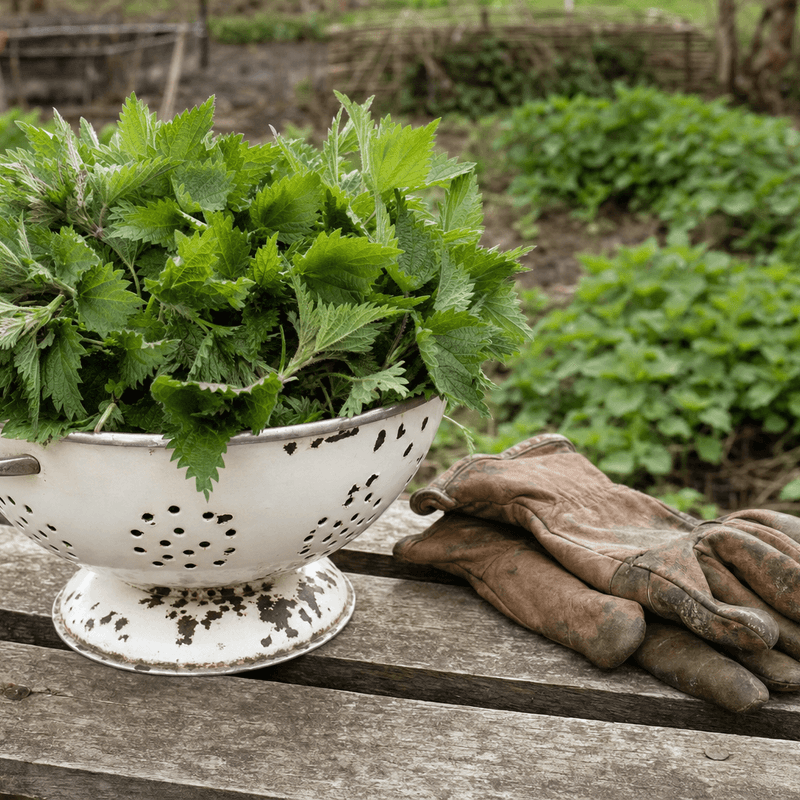
It travels very well, and not always with our blessing. Its fruits cling to animals, people, farm machinery and tyres. They're hard enough to puncture a bicycle tyre, and to make you hop if you walk barefoot. A single plant can produce more than five thousand of these little prickly pieces, and the seeds can wait up to five years in the soil before sprouting. When I see one, I pull it up before it has made its fruits, and with gloves on.
And animals don't fare any better than our feet. Grazed in quantity, it makes sheep sensitive to the sun: their heads swell, they get a fever and jaundice, and it can end in death. In South Africa this sickness even has a name, geeldikkop. Grazed for months, it can also damage their nerves, and in the animals that eat it, it can do serious harm to the liver. Not bad for a little roadside herb.
Tribulus in the old traditions of India and China
Where it really has a history is in India and China. In India it's called gokshura, and it has been part of Ayurveda, the traditional health system over there, for centuries. They use the fruit, the root, sometimes the whole plant. But at the market, it's mostly the dried fruit you'll find.
In China it's called jili. It's already in the oldest Chinese book of plants we know of, and it's still in today's Chinese pharmacopoeia. There, they cut the plant in autumn, when the fruits are ripe, dry it in the sun, then beat it to knock the fruits off. And those dried fruits are boiled into a decoction.
The old handbooks of those countries give it all sorts of uses: for the belly, for coughs, for headaches, and plenty more. I'm not going to copy them out for you. Those are their traditions, with their own doctors and their own ways of doing things, and it's not up to me to transplant them into your kitchen.
What struck me is that in Europe, when people wanted to write it an official fact sheet, like for lime blossom or lemon balm, they couldn't. They didn't find enough information about a safe traditional use, with a well-established amount and length of time. In my house, that means one thing: caution.
Tribulus: benefits, reviews… what the books really say
So why is everyone talking about it? It's a recent story. In the 1970s, in Eastern Europe, Bulgarian weightlifters made it fashionable. Since then it has been sold as a “natural” alternative to banned substances, and you mostly find it in food supplements for sportspeople, the ones that promise muscle.
The French health authorities took a close look at these supplements. They wrote that tribulus had been little studied, and that there's no evidence these plants turn into the banned substances in the body that they're supposed to replace. They advise against these muscle-building supplements for children, teenagers, women who are pregnant or breastfeeding, and anyone with heart, kidney or liver trouble, or neurological or psychiatric problems. You'll find all the details just below, in what to know first.
There's sport, too. A tub bought online can contain something other than what's written on it. A tribulus supplement has already been found to contain a substance banned in competition. For an athlete who gets tested, that can end in a positive test.
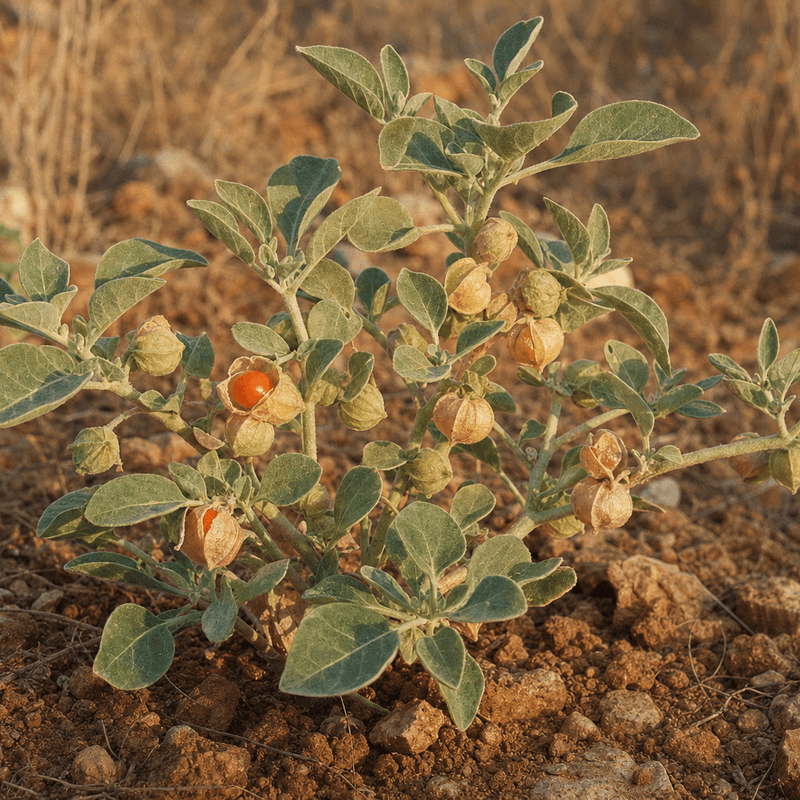
Elsewhere in Europe, not everyone sees it the same way. In Denmark, eating any part of the plant is considered a health concern. In Ireland, tribulus products are only sold on a doctor's orders. In Spain, they concluded there wasn't enough data to know whether it's safe in supplements. In France, it's one of the plants allowed in food supplements, for the leaf, the young shoot and the fruit. It's a bit like ashwagandha, which I've already told you about: allowed doesn't mean risk-free.
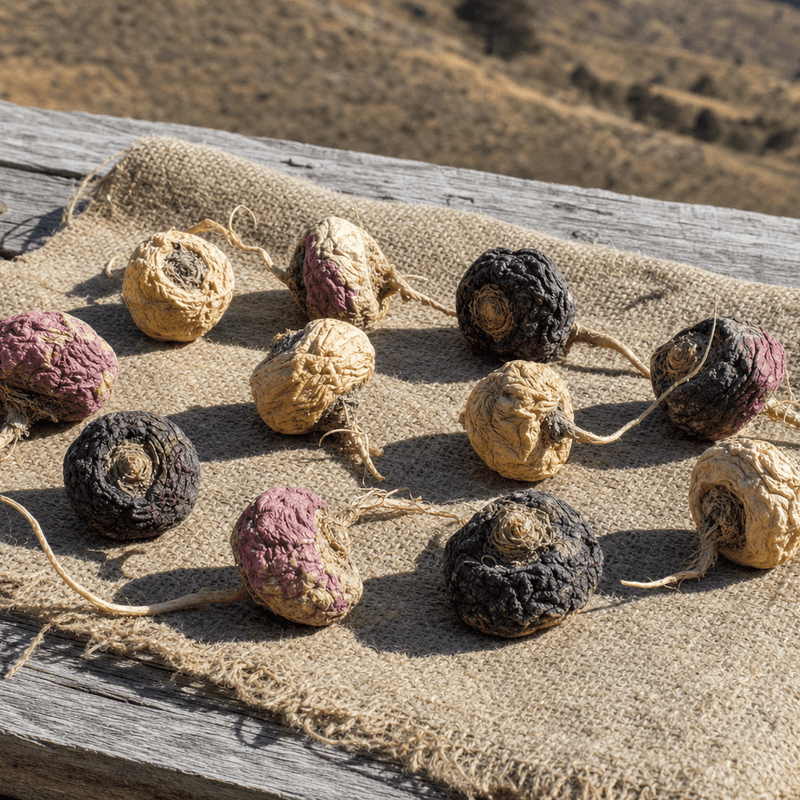
And if you're torn between it and maca, know that they're not the same plants at all. Maca is a root, a cousin of the radish, grown for a very long time in the high Andes of Peru. Tribulus is a creeping herb from our part of the world, with fruits that prick. If it's maca you're curious about, I tell you about it over there.
And me, what do I do with tribulus?
Nothing, and I'm not ashamed to say so. I see it as a roadside curiosity, with respect for the traditions of India and China. But a plant nobody could say was safe, that makes sheep ill and that's sold in tubs with big promises, isn't a plant for my kitchen.
If it's tiredness pushing you towards those tubs, come and look at my habits for a passing tired spell instead. And if it lasts, it's not a plant you need, it's an appointment with your doctor. If you already take it, talk to your doctor or pharmacist, especially if you take something on a doctor's orders.
And since we're talking about plants that prick, I've got something much better to suggest in spring: stinging nettle, which I cook into soup. I've put my two recipes just below. What I love is a plant I know, picked with my gloves on, that ends up in the evening soup.
What people do with it, over there and here
- · 01In India it's called gokshura: its dried fruit has had its place in Ayurveda for centuries, and the root is used too.
- · 02In China it's called jili. The plant is cut in autumn, when the fruits are ripe, dried in the sun and beaten to knock the fruits off.
- · 03Over there, those dried fruits are boiled into a decoction, following their traditions and with their own doctors.
- · 04Here, it's mostly sold in food supplements for sportspeople, and it's those products the health authorities have warned about.
- · 05Me, I don't use it: I pull it up from the path, and I save my gloves for nettles.
How they prepare it, over there
My two prickly-plant recipes, in its place
I'm not giving you a recipe for tribulus: nobody has been able to say at what amount, or for how long, it would be risk-free. But since we're talking about plants that prick, here's what I do with spring's stinging nettles. Once cooked, they don't sting at all.
Young nettle soup (serves 4)
In spring, for dinner
What you’ll need
- 200 g fresh young nettle shoots (or 20 g dried leaves)
- 350 g floury potatoes
- 1 yellow onion and 2 cloves of garlic
- 1 litre vegetable stock or water
- 1 tablespoon olive oil
- 3 tablespoons crème fraîche, a pinch of nutmeg, salt and pepper
How I go about it
- 01Pick the shoots with thick gloves and wash them. If your leaves are dried, leave them in a bowl of lukewarm water for 10 to 15 minutes.
- 02Soften the sliced onion in the oil for 5 minutes over a low heat, then add the garlic for 1 minute.
- 03Add the nettles for 2 to 3 minutes, then the diced potatoes, and stir for another 2 minutes.
- 04Pour in the stock and let it simmer for 20 minutes with a lid on.
- 05Blend, then off the heat add the cream, nutmeg, salt and pepper.
Nettles wilted like spinach
In spring, next to an egg or some potatoes
What you’ll need
- 200 g young nettle shoots
- A big pan of salted water and a bowl of iced water
- 1 knob of butter or 1 tablespoon olive oil
- Salt and pepper
How I go about it
- 01Plunge the nettles into the salted boiling water for 2 minutes, then straight into the iced water.
- 02Drain them and squeeze them hard between your hands to get the water out.
- 03Let them soften in the butter in a frying pan, about 5 minutes, stirring all the time.
- 04Season with salt and pepper and serve hot.
What to know first
This information doesn’t replace advice from a healthcare professional. Health Disclaimer →
Her identity card
- Latin name
- Tribulus terrestris L.
- Other names
- Croix-de-Malte (Maltese cross), herse, tribule terrestre, clou de vigne; gokshura in India, jili in China
- Family
- Zygophyllaceae
- Part used
- Fruit (also root and whole plant in India)
- Harvest
- In autumn, when the fruits are ripe
- Form
- Dried fruit, made into a decoction in the traditions of India and China
- Origin
- Mediterranean basin, France included; now found almost everywhere in the world
- Storage
- No advice: I don't keep any at home
- In France
- Allowed in food supplements (leaf, young shoot, fruit); no official European fact sheet
If you remember just one thing
- 01Tribulus is a little creeping herb with yellow flowers whose spiny fruit looks like a Maltese cross.
- 02It grows around the Mediterranean, in France too, on hot, dry ground, and its fruits are hard enough to puncture a bicycle tyre.
- 03In India it's called gokshura, in China jili: its dried fruit has its place in their old traditions. In Europe, nobody could write it an official fact sheet, for lack of sufficient data.
- 04Tribulus is not advised during pregnancy, breastfeeding or under 12, and the muscle-building supplements that contain it aren't for anyone with heart, liver or kidney trouble.
- 05Me, I don't put it in my cups: when it comes to plants that prick, I'd rather have nettle soup. Nothing new.
Your questions
It's a little creeping herb, Tribulus terrestris, with yellow flowers and spiny fruits, which in France we call croix-de-Malte, herse or tribule terrestre. It grows around the Mediterranean, in France too. In India and China, its dried fruit has its place in the old traditions; here, you mostly find it in food supplements.
In the wild, on hot, dry ground: waste land, roadsides, vineyards, orchards, fields and pastures. You'll recognise it by its stems lying on the ground and its little star-shaped fruits that cling to shoe soles and tyres. In the shops it's mostly in food supplements, and there, read the precautions carefully first.
I can only tell you what I've read. In Europe, no official use could be recognised for it, for lack of sufficient data on how well it works and how safe it is. The French health authorities wrote that it has been little studied, and that there's no evidence these plants sold to sportspeople replace the banned substances they're compared to. So I'm not promising you anything.
Mostly nausea and digestive trouble have been reported. There are also a few rare but serious cases of liver and kidney damage in people who were taking it, though it couldn't be proved that the plant alone was to blame. It can make your skin sensitive to the sun, and it's not advised during pregnancy, breastfeeding or under 12.
They're not the same plants at all. Maca is a root, a cousin of the radish, grown as food for a very long time in the high Andes of Peru. Tribulus is a creeping herb from around the Mediterranean, mostly used for its prickly fruit. For either one, talk to your doctor before taking it regularly for a while.
Be very careful. A supplement you buy, especially online, can contain banned substances that aren't written on the label, and a tribulus supplement has already been found that contained them. It can end in a positive doping test. Before taking any, ask your doctor or a sports dietitian for advice.
References
- WHO monographs on selected medicinal plants, vol. 4 : Fructus Tribuli · Organisation mondiale de la santé, 2009
- Tribuli terrestris herba : assessment report and public statement (EMA/HMPC/886105/2022, EMA/HMPC/308436/2023) · European Medicines Agency (HMPC), 2025
- Avis relatif aux risques liés à la consommation de compléments alimentaires destinés aux sportifs (saisine 2014-SA-0008) et rapport d'expertise · ANSES, 2016
- Compléments alimentaires et aliments enrichis pour sportifs : des consommations à risque · ANSES, 2024
- Arrêté du 24 juin 2014 établissant la liste des plantes, autres que les champignons, autorisées dans les compléments alimentaires · Journal officiel (version consolidée, via FAOLEX), 2014
- Risikovurdering af Tribulus terrestris i fire kosttilskud · DTU Fødevareinstituttet (Danemark), 2014
- Hong Kong Chinese Materia Medica Standards, vol. 6 : Tribuli Fructus · Department of Health, Hong Kong (CMRO)
- 蒺藜与沙苑子 (Tribuli Fructus et Astragali Complanati Semen) · Department of Health, Hong Kong (CMRO), 2021
- LiverTox : Tribulus · National Institute of Diabetes and Digestive and Kidney Diseases (NIH)
- Semence de mauvaise herbe : Tribulus terrestris (Croix-de-Malte) · Agence canadienne d'inspection des aliments
- Tribule terrestre · Wikipédia, 2026
- Maca · Wikipédia, 2026
- Soupe d'ortie, recette traditionnelle · Île aux épices, 2026
- Soupe d'ortie · Jardiner malin