A little boost of energy
When tiredness hits all at once, you slow down, drink some water, take a short nap, and in the morning have a ginseng decoction. And you know when to go and see your doctor.
Reviewed by Ruosi Wu, PhD in Pharmacy, MD in Traditional Chinese Medicine
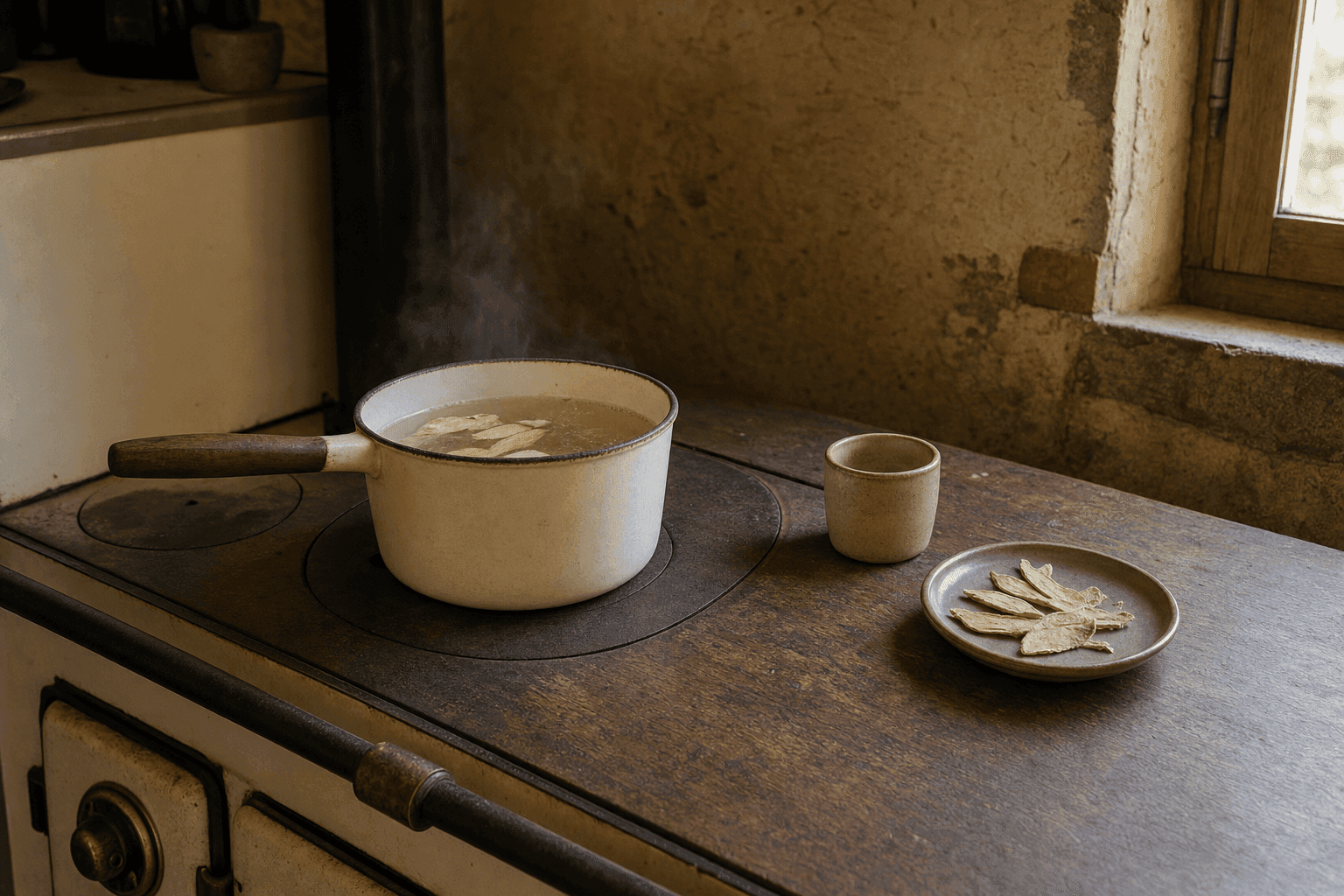
For a sudden bout of tiredness, start by stopping: a big glass of water, a proper meal at a set time and, if you can, a nap of 20 minutes at most. For the weeks when you feel flat, my books give a morning ginseng decoction, for adults. If the tiredness doesn’t pass within a few weeks, or it comes with other signs, go and see your doctor.
Key takeaways
- A normal bout of tiredness passes with rest: you stop, drink some water, eat at regular times and take a short nap.
- A good nap lasts 5 to 20 minutes, after lunch, between noon and three o’clock, with an alarm so it doesn’t drag on.
- Ginseng is drunk as a decoction in the morning, by adults, when you feel tired and weak: 1 to 2 g of root for 150 ml of water, and no more than three months in a row.
- No cup takes the place of a night’s sleep: the first step is going to bed, and above all getting up, at regular times.
- Tiredness that doesn’t pass within a few weeks, that keeps you from getting through your days, or that comes with fever, weight loss or breathlessness is something to show a doctor.
Granny’s little steps
- Really slow down
Ease your pace and take little breaks: get up, walk a bit, leave the screen for five minutes. It’s not time wasted.
- A short nap after lunch
In a quiet corner, between noon and three o’clock, 5 to 20 minutes, no more. Set an alarm, otherwise you’re off for an hour and it’s the night that pays for it.
- A big glass of water
Especially after exercise: when you’re short of water, you feel tired. Keep a jug on the table, it helps you remember.
- Eat at regular times
Simple, varied meals, at a set time, without skipping any and without nibbling all day.
- Get up at the same time, and a quiet evening
Get up at roughly the same time every day. At the end of the day, no alcohol, no big meals, no coffee, tea or cola, and the bed for sleeping.
A recipe to try
Morning ginseng decoction
In the morning, in the weeks when you feel flat
What you’ll need
- 1 to 2 g of dried ginseng root, in thin slices
- 150 ml of cold water
- A little honey, if you like
How I go about it
- Put the slices in the cold water, in a small saucepan.
- Bring to the boil, then turn the heat down and let it simmer gently for 15 minutes, covered.
- Strain, add the honey if you like, and drink it hot.
- Up to 2 or 3 cups a day, preferably in the morning and at noon. For adults only, and no more than 3 months in a row.
A sudden bout of tiredness is first something to take as a message: you stop, drink a big glass of water, eat a proper meal and, if you can, take a little nap. Normal tiredness passes with rest. I’ll tell you what I look at first, the plants I keep in my jars for those weeks, and the point where it stops being my department.
Why this sudden tiredness? What I look at first
Being tired after a big day, a long walk or an evening spent doing the accounts is normal. The books put it simply: as long as it goes away with rest, there’s nothing to worry about. The body has been working, it’s asking for a breather.
When tiredness hits all at once or settles in, I start with the silly things. Are you sleeping enough? Late nights, nights broken by a little one who wakes up, trips with jet lag, all of that has a price. Screens too, in the evening especially, because they nibble away at sleep. Me, I switch my television off after the news.
Next, the life you lead. Overwork, a stressful stretch, a family worry, a break-up, loneliness: all of that tires you as much as hauling sacks of potatoes. And the opposite too, the boredom of a job where you no longer feel like doing anything.
And then there’s the plate and the body. Skipping meals, nibbling at all hours, forgetting to drink (especially after exercise), sitting all day long: these are very simple causes of tiredness. A flu or a recent operation too: you stay tired until your convalescence is over.
You’re not alone, you know: at the doctor’s, somewhere between one person in ten and one in four complains of always being tired.
Granny’s plants for a sudden bout of tiredness
No cup takes the place of a night’s sleep. But for the weeks when you feel flat, my books have one or two plants, and I’ll give them to you with their measures, because a tea is something you measure.
Ginseng. It’s the root of Panax ginseng, a little plant from the undergrowth of Korea and northeast China. The books list it among the plants traditionally used by adults when they feel tired and weak, on the strength of long use, nothing more. A root isn’t steeped, it’s simmered: 1 to 2 g in thin slices in 150 ml of cold water, bring it to the boil and let it simmer gently for a quarter of an hour, covered. Two or three cups a day at most, in the morning and at noon, because it can keep you from sleeping. Not before 18, and no more than three months in a row. I’ve told you the whole story of the man-root over there.
Rhodiola. It’s a little succulent from cold mountains, and its cut root smells of roses. The books keep it for adults, for stressful times when you feel tired and at the end of your rope, but as an extract prepared with alcohol. For the root in a cup, they give no measure, so neither do I. And it’s been pulled up from the wild so much that I’d rather leave it to its mountains. I’ve written down what I know about rhodiola.
And jiaogulan, the herb of immortality? People ask me about it too. But my books don’t give it for tiredness, so I don’t recommend it.
And ashwagandha, maca? I don’t give you any. For ashwagandha, nobody can say today what amount is free of risk, and for maca powder, the health authorities couldn’t say that it was. I’d rather tell you that than spin you a story.
And thyme? People ask me about it for tiredness too. I adore it, but my books give it for a chesty cough when you have a cold, not for this. I keep it for the casserole and for winter.
“A cup doesn’t take the place of a night. It just makes you sit down for ten minutes, and that’s often what was missing.”
What to do about a sudden bout of tiredness, at home
The first step is to slow down. Keep some time to relax, to move and for what you love. At work, take little breaks: get up, walk a bit, leave the computer for five minutes.
Naps, I’ve always stood up for them. After lunch, in a quiet corner (my armchair does the job), between noon and three o’clock. But short: 5 to 20 minutes, otherwise it eats into the next night. Set an alarm, or you’re off for an hour. I speak from experience.
Eat at regular times, simple and varied meals, without skipping any or nibbling all afternoon. And drink water, especially after exercise: when you’re short of water, you feel tired, and you don’t always think to make the connection.
For the night, regularity is what counts: going to bed and above all getting up at roughly the same time. At the end of the day, leave aside alcohol, big meals and anything that winds you up: coffee, tea, cola, energy drinks, and tobacco. In the evening, quiet things: a book, a little soft music, a warm shower or bath. The bed is for sleeping, not for eating or watching television. I have other steps for the nights that won’t come, and for when your head won’t stop, too.
A tip from my doctor: if the tiredness keeps coming back, jot down every day in a little notebook what you did, what time you went to bed, how long you slept and how well. After a few weeks, you see more clearly, and you can show it to the doctor.
Always tired and sleepy: when it’s no longer a sudden bout of tiredness
A sudden bout of tiredness passes with rest. Tiredness that stays even when you’ve slept, that leaves you drained, washed out, unable to do what you used to do without thinking, isn’t the same thing. And when it lasts more than six months, doctors say it has become chronic.
What can heavy tiredness be hiding? Often, nothing serious: sleep you’re behind on, worries, a life that’s too full. But sometimes something else: a lack of iron, the thyroid, sleep that doesn’t rest you (in people who snore loudly and stop breathing at night, for example), low spirits, or something you take on a doctor’s orders. It’s not up to me to go looking, nor to a tea. That’s your doctor’s job, often with a blood test.
The list of signs that should send you to the doctor is just below, one per line. It’s not to scare you: it’s so you don’t drag it out for months telling yourself it’ll pass.
Which plants?
GuaranaPaullinia cupana
Guarana is the seed of an Amazon vine, full of caffeine. I grind it and stir one small 450 mg dose into water in the morning, counting it along with my coffee.
RhodiolaRhodiola rosea
A little succulent from cold mountains, with a root that smells of roses. What the books say, who it's not for, and why it has been pulled up too much.
GinsengPanax ginseng
The man-root from the shady woods of Korea and northeast China. I simmer it in the morning, for a few weeks at a time, when I'm feeling flat.
What to know first
The plants on this page are for grown-ups. Ginseng and rhodiola, not before 18. During pregnancy and breastfeeding, you go without both: nobody knows if they’re safe.
Ginseng: 1 to 2 g of root per cup, two or three cups a day at most, and no more than three months in a row. If after two weeks the tiredness is still there, or if it gets worse, go and see your doctor. It can keep you from sleeping (that’s why we keep it for morning and noon), upset your stomach, give you nausea, vomiting, diarrhea or constipation, itchy patches. More rarely, strong skin rashes, liver damage or big allergic reactions. If you’re allergic to ginseng, don’t touch it.
Treatments: some manuals say ginseng could interfere with blood clotting and lower blood sugar. If you take an anticoagulant or an antiplatelet drug, a treatment for diabetes or anything else on prescription, ask your doctor first.
Rhodiola I don’t give you in a cup: the books only recognize an extract prepared with alcohol, and for the root as a tea, they give neither a measure nor a length of time. With antidepressants, it could make the heart beat very fast, and reactions have been reported in people who were taking both: not without your doctor’s advice.
Ashwagandha and maca, I don’t give you those either. Nobody can say today what amount of ashwagandha is free of risk. It’s advised against if you have a thyroid, liver or heart problem, too many male hormones, if you’re pregnant or if you take sleeping pills or sedatives, and as a precaution also while breastfeeding and before 18. For maca powder, nobody could say it was free of risk: if you’re pregnant, breastfeeding, have a blood pressure problem, take an anticoagulant, or are being followed for anxiety or depression, don’t take it without talking to your doctor.
Vitamins, magnesium and products sold for tiredness are only worth it if you’re really lacking something, and it’s a blood test that tells you. Caffeine products to keep you going, the books judge them more risky than useful. And if you think a treatment is making you tired, read the leaflet, but don’t stop it without your doctor’s advice.
When to see your doctor
- Tiredness that doesn’t pass after several days or a few weeks, even when you sleep better, eat at regular times and slow down: make an appointment with your regular doctor.
- Tiredness so bad you can’t manage your everyday tasks anymore: make an appointment with your regular doctor.
- Tiredness with a fever: see your doctor.
- Tiredness with weight loss, or weight gain, that you weren’t trying for: see your doctor.
- Tiredness with pain, unusual thirst or very heavy periods: see your doctor.
- Tiredness with breathlessness as soon as you make an effort, paleness, dizziness or your head spinning: go and see your regular doctor, a blood test can look for a lack of iron.
- Loud snoring every night, pauses in your breathing that the people around you notice, and dozing off during the day, even in the car: talk to your regular doctor about it.
- You often doze off during the day even though you get your full sleep: make an appointment with your regular doctor.
- Anxiety, feeling low, or sadness and losing interest in everything for more than two weeks: talk to your doctor about it, willpower alone isn’t enough to get out of it.
- Dark thoughts, wanting to die, for you or for someone close to you: call 3114 (the national suicide crisis line in France), free, day and night, 7 days a week, they can send emergency help if needed.
- Tiredness that started with a new treatment: read the leaflet, don’t stop anything on your own and talk to your doctor about it.
- Tiredness that drags on for weeks after flu, Covid or an operation: see your doctor.
- Tiredness that has lasted more than six months, that neither rest nor sleep relieves, and that gets worse after the slightest effort: talk to your regular doctor about it, it can be chronic fatigue syndrome.
Your questions
What should I do about a sudden bout of tiredness?
Stop for a moment, drink a big glass of water and eat a proper meal, at a set time. If you can, take a nap after lunch, 5 to 20 minutes, no more. And tonight, leave coffee, tea, alcohol and big meals aside, so you get your full night’s sleep.
Why am I tired all the time and always sleepy?
Most often, it’s sleep you’re behind on: late nights, broken nights, screens in the evening, wake-up times that keep changing. Try a good week of sleeping as much as you need, at regular times, with no coffee or tea in the evening, in a dark, cool bedroom. If you still doze off during the day without being short of sleep, go and see your doctor.
Why am I tired even though I slept well?
A long night isn’t always a night that rests you. People who snore loudly every night and stop breathing in their sleep often wake up less rested than when they went to bed. Tiredness also comes from stress, skipped meals, not enough water or not enough moving. If it lasts in spite of all that, talk to your doctor about it.
What can heavy tiredness be hiding?
Most often, a life that’s too full, worries or sleep you’re behind on. Sometimes something else: a lack of iron, the thyroid, sleep that doesn’t rest you, low spirits, or something you take on a doctor’s orders. It’s not up to me or to a tea to go looking: if it doesn’t pass with rest, that’s an appointment with your doctor.
Which plant for a sudden bout of tiredness?
My books mostly give ginseng, for adults, when you feel tired and weak: 1 to 2 g of root simmered in 150 ml of water, two or three cups a day at most, in the morning and at noon, and no more than three months. Not before 18, not when pregnant, not while breastfeeding. Rhodiola I don’t give in a cup: the books have no measure for that.
How long does normal tiredness last?
Normal tiredness passes with rest, after a good night or a few calmer days. If it stays after several days or a few weeks, even when you sleep better and slow down, make an appointment with your doctor. And when it lasts more than six months, it’s said to have become chronic.
Also worth reading
- The LetterFeeling flat? What I really think about energising plantsPeople ask me about energising plants all autumn. When I'm run down, it's rest first, then a ginseng decoction in the morning. As for the others, I'll tell you why I hold off.
- The LetterRhodiola, stress and tiredness: what I'll tell you about golden rootPeople ask me about rhodiola for stress and tiredness as soon as the cold comes back. I'll tell you what my books really say, why I don't give a recipe for it, and the cups I drink instead.
What I’ve made with

References
- Asthénie (fatigue) : définition, symptômes et causes · ameli.fr, 2026
- Asthénie (fatigue) : que faire et quand consulter ? · ameli.fr, 2026
- Anémie par carence en fer : les symptômes · ameli.fr, 2026
- Apnée du sommeil : symptômes et évolution · ameli.fr, 2026
- Somnolence et endormissements dans la journée : que faire ? · ameli.fr, 2026
- Comprendre la dépression · ameli.fr, 2025
- Le numéro national 3114 · Santé.fr, 2023
- European Union herbal monograph on Panax ginseng C.A.Mey., radix, Final, Revision 1 (EMA/HMPC/27744/2023) · EMA, HMPC, 2024
- Assessment report on Panax ginseng C.A.Mey., radix, Revision 1 (EMA/HMPC/27745/2023) · EMA, HMPC, 2024
- Glossary on herbal teas (EMA/HMPC/5829/2010 Rev.1) · EMA, HMPC
- Asian Ginseng · National Center for Complementary and Integrative Health (NIH), 2025
- European Union herbal monograph on Rhodiola rosea L., rhizoma et radix, Final Revision 1 (EMA/HMPC/24177/2023) · EMA, HMPC, 2024
- Rhodiole · Manuel MSD, version grand public, 2025
- Avis relatif aux risques liés à l'utilisation des préparations de Withania somnifera (L.) Dunal dans les compléments alimentaires (saisine 2021-SA-0077) · ANSES, 2024
- Avis relatif à l'évaluation des compléments d'information concernant l'emploi de la poudre de racine de maca (saisine 2008-SA-0011) · Afssa (aujourd'hui ANSES), 2008
- Community herbal monograph on Thymus vulgaris L. and Thymus zygis L., herba (EMA/HMPC/342332/2013) · EMA, HMPC, 2013
Information. This information is provided for general knowledge and doesn’t replace medical advice. Check with a healthcare professional before any use.
Health Disclaimer