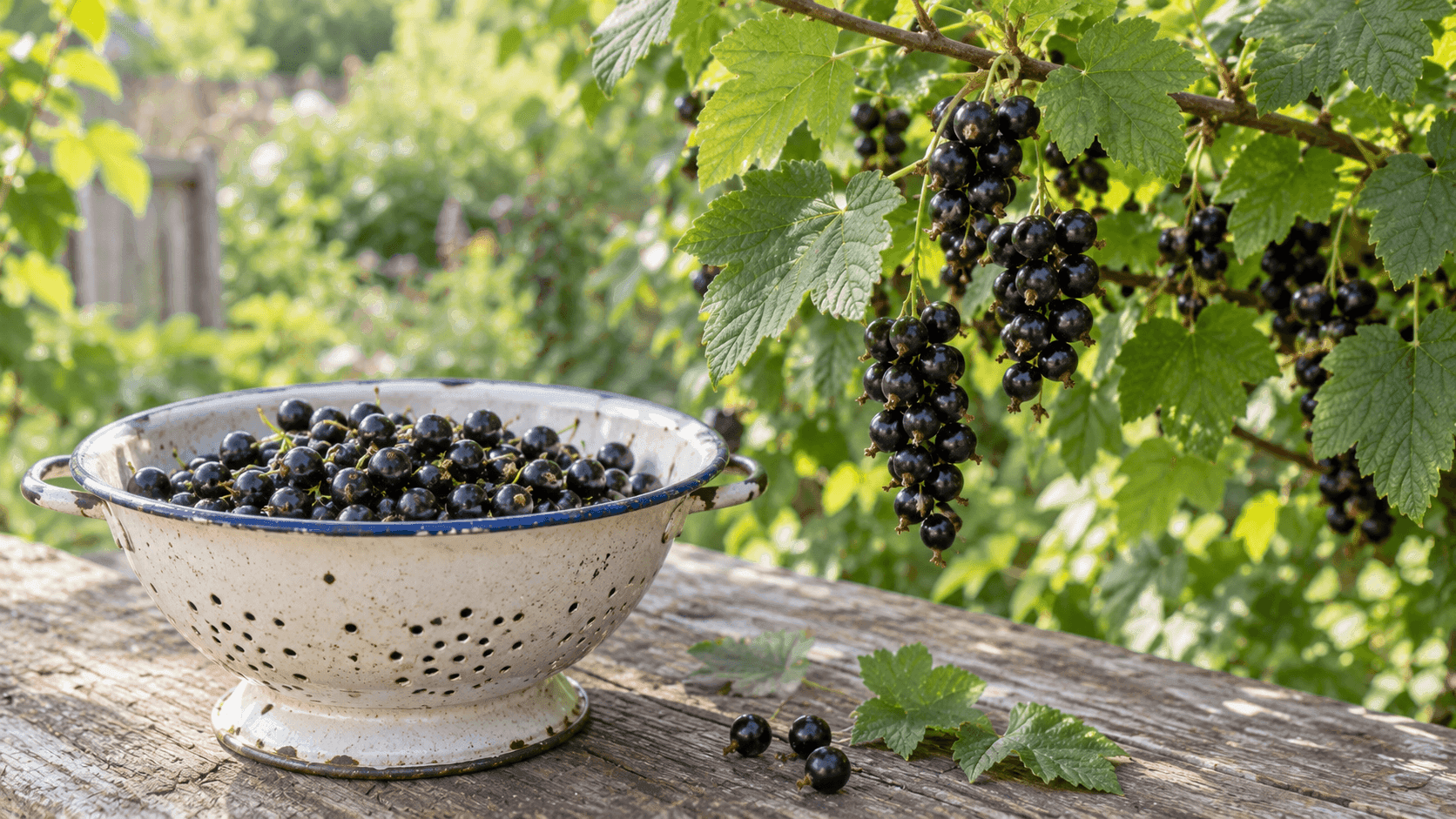
Blackcurrant is the small, black, tart berry of the blackcurrant bush: I pick it from late June to late July, make syrup and jelly with it, and its dried leaves are drunk in a cup.
Who he really is
Family: Grossulariaceae (the currant family). The blackcurrant bush grows wild from Europe to Central Asia and the Russian Far East, and in France people have been growing it since the 18th century.
Part used: the fruit, fresh or cooked, and the dried leaves.
Blackcurrant, cassis in French, is the fruit of the blackcurrant bush, a garden shrub that gives, from late June to late July, bunches of small black berries, shiny and tart. In France we count it among the red fruits, even though it's black. I make syrup and jelly with the berries, and I drink the dried leaves in a cup.
His story
Blackcurrant is the small, black, tart berry of the blackcurrant bush, a shrub you find in lots of gardens. I have two at the bottom of my vegetable patch. At the end of June I keep an eye on the bunches; in July I make the syrup and the jelly, and I put a few leaves to dry for the winter.
Blackcurrant: what kind of fruit is it?
Its proper name is Ribes nigrum. The blackcurrant bush belongs to the Grossulariaceae, like the redcurrant. It grows wild from Europe to Central Asia and the Russian Far East, mostly in cold places and in the mountains. In French, cassis means the fruit, and very often the bush too.
It's a shrub of about 1.5 m high, and just as wide. Its leaves have five lobes, like a little hand, with teeth all round. The whole plant has a strong smell. In spring it makes small flowers in bunches, ten to twenty on the same stem.
In summer the green bunches ripen into berries of a purple so dark they look black, with shiny skins, full of little seeds. The juice is purplish: mind your apron.
Is blackcurrant sour? Yes. Raw, it's tart, very strong and very fragrant, even when it's quite ripe. That's why it's usually cooked with sugar.
And is blackcurrant a red fruit or not? In France we count it among the small red fruits, with redcurrants and bilberries, even though it's black. That's just how it is.
Want to say it elsewhere? In English it's blackcurrant. In Spanish, grosella negra, and people also say casis. And in Burgundy, in the old days, people called it the « commun » in the local dialect.
Blackcurrant or bilberry: how not to get them wrong
People often ask me: blackcurrant and bilberry aren't the same plant, or even the same family.
The bilberry, Vaccinium myrtillus, belongs to the Ericaceae. It's a small bush of 20 to 60 cm that grows in conifer woods, on moors and in peat bogs, on acid soil. Its flowers come one or two at a time, and so do its berries: round, 6 to 10 mm, first green, then purple, then blue-black. It tastes mild and slightly sweet.
Blackcurrant hangs in bunches on a garden shrub a good metre and a half tall, and its leaves smell strong when you crush them. Its taste is sourer, more powerful.
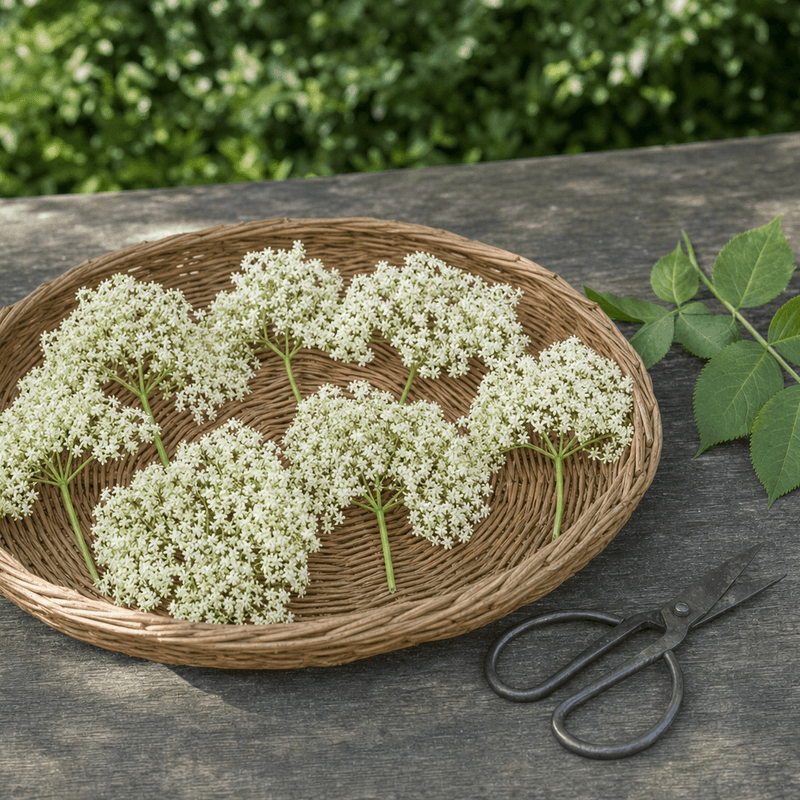
The redcurrant, on the other hand, is a true cousin, from the same genus, Ribes: without fruit you can mix them up, but the blackcurrant leaf smells strong when you crush it. And watch out for the black bunches of black elder: they're never eaten raw, that's a whole other story.
Blackcurrant, a seasonal fruit: picking it and looking after the bush
The blackcurrant season is short: in France it's harvested roughly from 25 June to 25 July.
Where can you find fresh blackcurrants? They're rarely sold fresh as a fruit for eating: most of them go into jellies, syrups and liqueurs. The surest way is to have a bush in the garden. Otherwise they freeze very well, raw or cooked, and that's how you have them all year round.
When it comes to picking, today's varieties all ripen at the same time on the bunch: when the berries are black, I cut off the whole bunch and strip the berries in the kitchen. Old varieties ripen any old how, so you pick them berry by berry. I pick when it's dry. A well-established bush gives around 4.5 kg of fruit.
The blackcurrant bush likes full sun, and it puts up with light shade. It needs soil that stays moist but doesn't get waterlogged, out of the way of late frosts, which damage the flowers. You plant it bare-root from late October to March, when the ground isn't frozen, 5 cm deeper than it was before, leaving 1.5 to 1.8 m between two bushes. A single bush gives fruit, but two varieties side by side give a little more.
How do you look after a blackcurrant bush? The secret is winter pruning. Blackcurrant fruits mostly on young wood. Once the bush is four years old or more, every winter, I cut out at the base up to a third of the oldest stems, the darkest and thickest ones. In spring I give it a good mulch of well-rotted manure.
And how long does a blackcurrant bush live? A well-established bush stays productive for up to about fifteen years. Just keep an eye on the birds: they love blackcurrants as much as we do, so I put up a net when the berries turn black.
What to do with blackcurrants: syrup, jelly and desserts
In France, blackcurrant isn't all that old. People started growing it in the 18th century. In 1724, an abbé, Pierre Bailly de Montaran, published a booklet on its « admirable properties », and he called it a « very excellent Elixir of life ». He credited it with everything, from fevers to wasp stings. Lots of French people planted a bush. Today's books are much more sensible than he was.
In the 19th century, Burgundy made it its pride. In 1841, in Dijon, a liqueur maker made the first crème de cassis. When phylloxera destroyed the vines in 1880, some winegrowers planted blackcurrants instead. And blanc-cassis, white wine with blackcurrant, took the name of Canon Kir, the post-war mayor of Dijon, who served it to his guests. Crème de cassis and kir are alcohol; at my house, blackcurrant is drunk as syrup.
Syrup is my first pan of July, and I'll give you the recipe below. Syrups made with wine and « grandmother's » liqueurs, I leave to others: my syrup has no alcohol, and the little ones drink it too.
Jelly is something blackcurrant pretty much gets right on its own. It's rich in pectin, and that's what makes it set. My mother made hers in the big pan, and her recipe is still sleeping in her notebook with the purple ink.
What to do with blackcurrants for dessert? Sorbets, charlottes, tarts, crumbles. Its taste is so strong that you soften it with other fruit: raspberries and strawberries in summer, apples in a crumble. Which fruit goes with blackcurrant? Anything sweet and mild. Fresh, I put a small handful in a red fruit salad, no more, or it takes over. And as a sauce, it goes very well with duck breast.
« Blackcurrant is the taste of July: a black bunch, purple fingers, and the pan simmering away. »
Blackcurrant leaf tea: what the old books say
From the blackcurrant bush, you keep the leaves too. Dried and cut, they're drunk in a cup, and the books give them two traditional uses, not one more.
The first is when your joints ache a little, those small everyday aches. Like nettle leaf, which the old manuals give for the same thing. A cup is 2 to 4 g of dried leaves in 200 ml of boiling water, three times a day, so 6 to 12 g over the day. I cover it, let it steep about ten minutes, and strain it. If your joints still ache after four weeks, or if it gets worse, it's not a matter for a cup of tea any more: go and see your doctor. And a joint that's swollen, red, or comes with a fever needs to be shown to a doctor.
The second is to help pass more water, when you have a little discomfort passing urine. For that, the books only give amounts for the leaf ground into powder or prepared some other way, not for the cup. So I won't give you one: ask your pharmacist. And in that case, you need to drink plenty alongside.
This leaf is for grown-ups only: not before 18, not during pregnancy or breastfeeding, and not at all if your doctor has told you to drink less, because of your heart or kidneys.
I dry the leaves in a dry, airy corner, then keep them away from the light. I showed you how I dry my herbs in my July letter.
What I use him for
- · 01In July, fresh: a small handful in a red fruit salad, with raspberries or strawberries.
- · 02As syrup and jelly, to keep the taste of summer until winter.
- · 03In desserts, as a sorbet, a tart or a crumble with apples; and as a sauce with duck breast.
- · 04The dried leaves in a cup, when the joints ache a little: 2 to 4 g for 200 ml of boiling water, three times a day, for adults only.
How I prepare him
Granny’s little recipes
July blackcurrant syrup
In July, on picking day (about 50 minutes)
What you’ll need
- 600 g of blackcurrants
- 500 g of sugar
- 500 ml of water
How I go about it
- 01Wash the blackcurrants, strip them from the stalks and let them drain.
- 02Bring the water to the boil with the sugar and let it boil for about ten minutes, until it turns syrupy.
- 03Add the blackcurrants and let them boil for 5 minutes over a very low heat.
- 04Cover and let it steep for about ten minutes off the heat.
- 05Strain, pressing the fruit well to get all the juice out.
- 06Bottle it while still hot, close tightly and let it cool. I drink it topped up with cool water, and once the bottle is open, I keep it in the fridge.
Teatime blackcurrant jelly
In July, when the basket is overflowing (about 30 minutes)
What you’ll need
- 1 kg of blackcurrants
- Water, just enough to cover the fruit
- Granulated sugar, the same weight as the juice you get (about 1 kg)
How I go about it
- 01Put the blackcurrants in the pan and cover them with water, just level with the fruit.
- 02Cook over a low heat for 5 minutes, stirring.
- 03Strain the juice without pressing the fruit.
- 04Weigh the juice and add the same weight of sugar.
- 05Boil for 15 minutes, check that it sets, then pour into jars.
A cup of blackcurrant leaves, when the joints ache
Three times a day, for adults only
What you’ll need
- 2 to 4 g of dried blackcurrant leaves
- 200 ml of water
How I go about it
- 01Boil the water.
- 02Pour it over the leaves in the bottom of your cup.
- 03Cover and let it steep for about ten minutes.
- 04Strain and drink it slowly. No more than three cups a day, and if your joints still ache after four weeks, go and see your doctor.
Elsewhere: how others know him
My childhood friend, the one who went to live in England, once wrote to tell me that over there, cassis is called blackcurrant, and that it's a childhood taste for everyone. During the last war, oranges hardly reached Britain any more. Blackcurrant grows very well in their climate, and it's rich in vitamin C, so the government encouraged people to plant it.
From 1942, blackcurrant syrup was given free to little ones under two. She thinks that's where the English fondness for the flavour comes from: over there, almost all the country's blackcurrants go into syrups and juices.
What I like is simpler: my July syrup in a glass of cool water, when it's hot and the little ones come in from the garden with purple fingers.
What to know first
This information doesn’t replace advice from a healthcare professional. Health Disclaimer →
His identity card
- Name
- Blackcurrant
- Other names
- Cassis, blackcurrant bush (the shrub), « commun » in the Burgundy dialect
- Latin name
- Ribes nigrum L.
- Family
- Grossulariaceae
- Part used
- The fruit and the leaves
- Harvest
- Fruit from late June to late July
- Form
- Fresh fruit, syrup, jelly, leaf infusion
- Origin
- From Europe to Central Asia and the Russian Far East
- Storage
- Fresh fruit a few days in the cold, frozen for the winter; dried leaves somewhere dry, away from the light
If you remember just one thing
- 01Blackcurrant is the fruit of the blackcurrant bush, a garden shrub: bunches of small, black, tart berries, picked from late June to late July.
- 02Blackcurrant and bilberry aren't the same: blackcurrant hangs in bunches on a shrub a metre and a half tall, the bilberry comes one by one on a small woodland bush.
- 03I eat the fruit as syrup, jelly and desserts; the dried leaf, I drink in a cup.
- 04A cup of blackcurrant leaves is 2 to 4 g of dried leaves in 200 ml of boiling water, three times a day, for adults only.
- 05No blackcurrant leaves before 18, during pregnancy or breastfeeding, or if your doctor has told you to drink less because of your heart or kidneys.
Your questions
I'm not promising you anything, I'm telling you what people do with it. The fruit is first and foremost a summer fruit, eaten as syrup, jelly and desserts. The herb books mostly talk about the leaf: a cup, for adults, when the joints ache a little, and to help pass more water when there's a little discomfort passing urine.
Blackcurrant hangs in bunches on a garden shrub about 1.5 m tall, and its leaves smell strong. The bilberry grows on a small woodland bush of 20 to 60 cm, and its blue-black berries come one or two at a time. Blackcurrant is sourer, bilberry milder, and they aren't even cousins.
Yes, raw it's tart, with a very strong, very fragrant taste, even when ripe. Its berries are a purple so dark they look black, with shiny skins, and its juice is purplish. In France it's still counted among the red fruits.
Sun or light shade, moist but not waterlogged soil, and a net against the birds when the berries turn black. From four years old, every winter, cut out at the base up to a third of the oldest stems. A well-established bush stays productive for up to about fifteen years.
In English it's blackcurrant. In Spanish, people say grosella negra, and also casis. For the liqueur from Dijon, English speakers often keep the French word: crème de cassis.
For adults only: 2 to 4 g of dried leaves in 200 ml of boiling water, three times a day. Not during pregnancy or breastfeeding, and not if your doctor has told you to drink less, because of your heart or kidneys. If your joints still ache after four weeks, go and see your doctor.
References
- European Union herbal monograph on Ribes nigrum L., folium (EMA/HMPC/745353/2016) · European Medicines Agency, HMPC, 2017
- Blackcurrant leaf: summary for the public (EMA/643910/2017) · European Medicines Agency, HMPC, 2018
- Draft European Union herbal monograph on Ribes nigrum L., folium, Revision 2 (EMA/HMPC/296855/2025) · European Medicines Agency, HMPC, 2026
- Ribis nigri folium: herbal medicinal product · European Medicines Agency, 2026
- Ribes nigrum L. · Plants of the World Online, Royal Botanic Gardens, Kew, 2026
- Cassis (fruit) · Wikipédia, 2026
- Blackcurrant · Wikipedia, 2026
- Myrtille (Vaccinium myrtillus) · Wikipédia, 2026
- How to grow blackcurrants · Royal Horticultural Society, 2026
- The ultimate guide to growing blackcurrants · Chris Bowers & Sons, 2026
- Cassis : comment manger et cuisiner les baies de ce fruit rouge ? · Journal des Femmes Cuisine, 2025
- Sirop de cassis · 750g, 2021
- Gelée de cassis · 750g, 2026
- blackcurrant (dictionnaire anglais-espagnol) · Larousse, 2026
- Consommer fruits, légumes et plantes en toute sécurité · République et canton de Genève, 2026
- Community herbal monograph on Urtica dioica L., Urtica urens L., folium · European Medicines Agency, HMPC, 2010