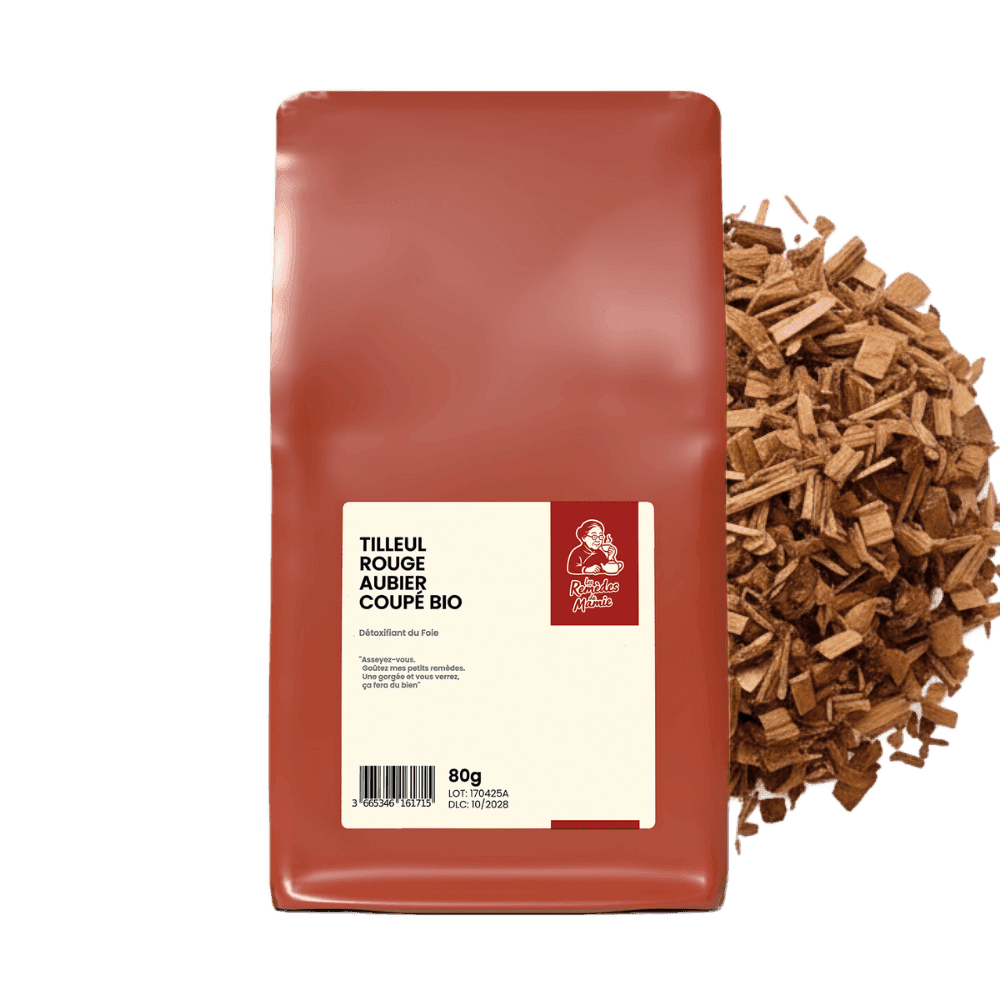
ORGANIC CUT RED LIME SAPWOOD
Linden sapwood is the soft bark from the year's new wood, cut up, to make as a decoction. It isn't the flower: here's what you need to know about it.
What to know
Linden sapwood is a part of the linden tree people often forget. It isn't the flower from the evening cup: it's the soft bark you peel off with the year's new wood, just under the crust of the trunk, where the sap runs. In this bag it's cut into little pieces, ready for the saucepan.
The pharmacopoeia describes it separately from the flower, under the name linden bark, and lists it among the traditional-use plants. It's an old herbalist's plant. But I'll tell you how things are: for the sapwood, my books give neither a clear use nor an amount, the way they do for the flower.
So you'll read lots of promises, for the liver, for the kidneys, for blood pressure. Me, I'm not making you any. If you're keeping an eye on your blood pressure, your doctor decides, not a cup. And if it's the flower you're after, for evenings when your nerves are frayed, I tell you all about it in my linden, the flower and the sapwood.
What's inside
Cut red linden sapwood (Tilia cordata) 80 g.
How I use it
Bark doesn't steep like a flower: it's made as a decoction. I put the sapwood in cold water, bring it to the boil, then let it simmer gently for a good quarter of an hour before straining.
For the amount and the number of cups, I haven't found a safe measure for sapwood in my books. I'm not going to make one up for you: ask your pharmacist or your doctor how much to take, and for how long.