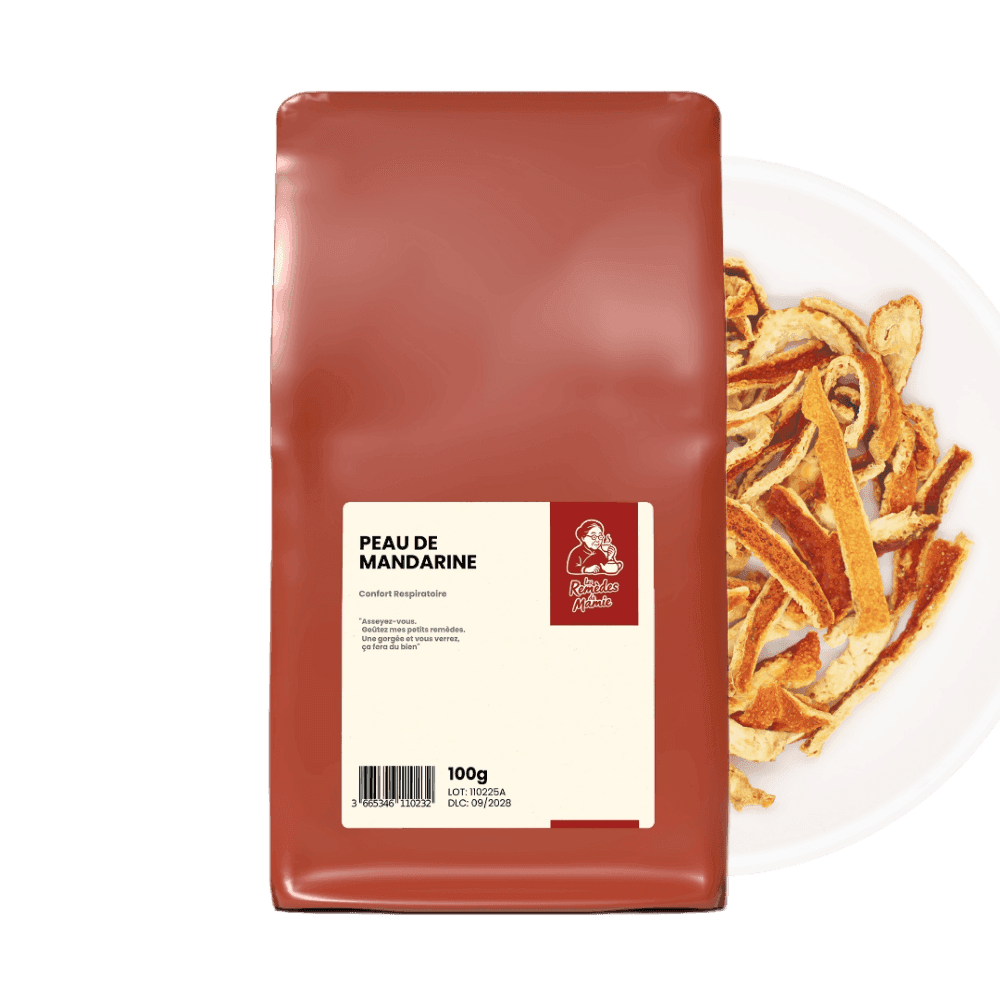
MANDARIN PEEL
Dried mandarin peel, the chen pi of Chinese kitchens: simmer it into a tea when a meal sits heavy, or slip it into a soup.
What to know
Mandarin peel, chen pi in Chinese, is the peel of the ripe mandarin fruit, Citrus reticulata, dried in the sun or at a low temperature. In this bag, that's all there is: dried peel, which smells lovely of citrus as soon as you open it.
In China, it's a kitchen seasoning. It goes into sweet red bean soup, and people make duck with chen pi. And the best kind is left to age for several years: the older it is, the more it costs. The one from Xinhui, in southern China, even has a protected designation of origin.
The Chinese pharmacopoeia lists it among its plants. In the old days, people took it when the tummy was bloated and tight after a meal, when they weren't hungry, or when they had a chesty cough. It tastes sharp and a little bitter, you should know. Me, I make a tea with it after a meal that's too big, and for tummies that bloat, I've written down my other little habits.
What's inside
Mandarin peel (Chen pi, Citrus reticulata) 100 g, of Chinese origin, pharmacopoeia quality.
How I use it
As a tea: 5 g of peel in 500 ml of cold water. I bring it to the boil, then let it simmer 10 minutes over low heat. I strain it and drink it over the day.
Between 3 and 10 g of peel a day, no more: that's what the Chinese pharmacopoeia gives, and I stick to it.
In cooking: a small piece in a sweet red bean soup or in a slow-cooked duck.