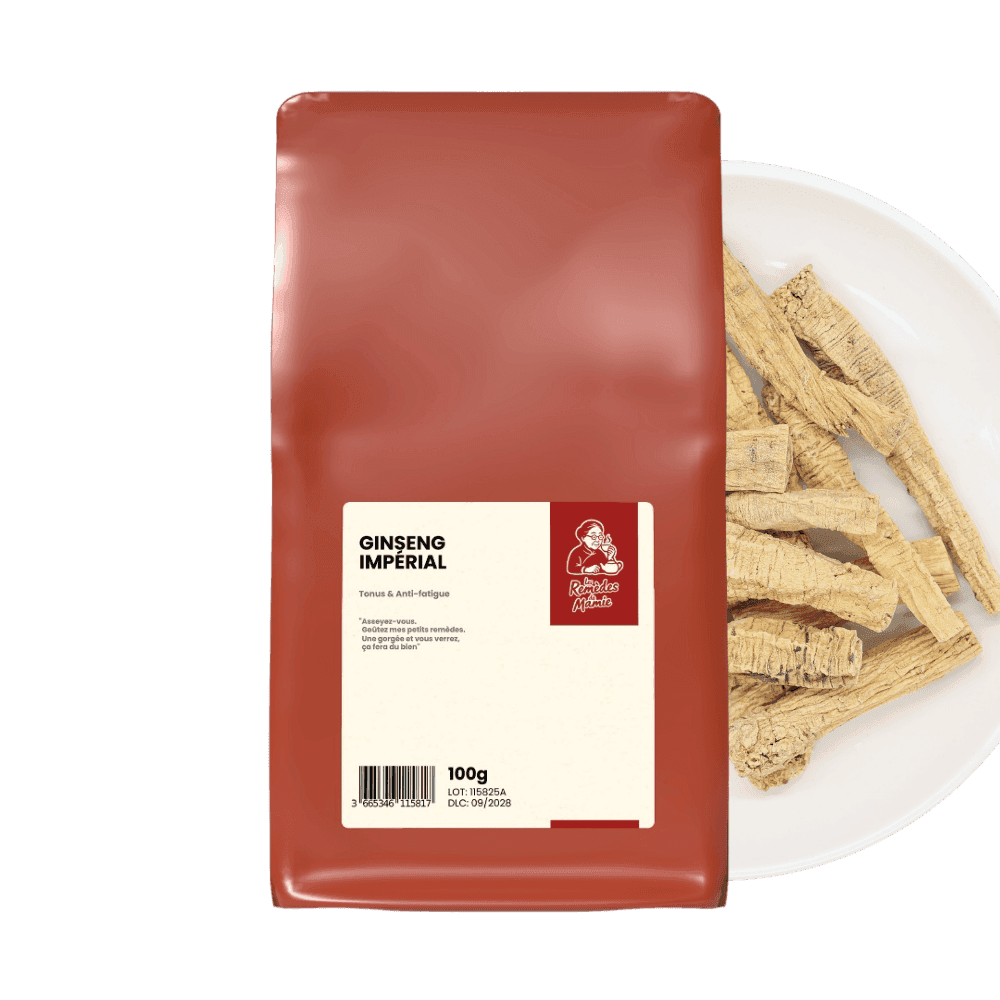
CODONOPSIS (IMPERIAL GINSENG)
Imperial ginseng isn't real ginseng: it's dang shen root, Codonopsis pilosula, which people in China simmer when they feel worn out.
Where to find it
- Herbal tea · 100 gTemu
Always read what’s printed on the packaging and the seller’s instructions: that’s where you’ll find how to use it and the precautions to take.
What to know
I'll tell you straight away, because the name is confusing: imperial ginseng isn't real ginseng. It's dang shen, the root of Codonopsis pilosula, a climbing plant from the bellflower family that grows in Asia, in forests, meadows and scrub. Real ginseng, red or white, is Panax ginseng, a different root that I've introduced you to on my plant pages.
Its stems twine and climb up to two meters, and its bell-shaped flowers are yellowish green, spotted with purple inside. What you keep is the root, as long as a small carrot, which is pulled up in autumn, washed and dried in the sun. It has a smell all its own and a slightly sweet taste.
In China, dang shen has its place in the pharmacopoeia, among the roots people simmer when they're eating little and feel worn out. The European books say nothing about it. So I'm giving you what the Chinese pharmacopoeia says, no more and no less.
What's inside
Imperial ginseng (Dang shen, Codonopsis pilosula) 100 g, of Chinese origin, pharmacopoeia quality.
How I use it
It's a root, so I simmer it. For the day, I count 9 g of root: that's the low end of what the Chinese pharmacopoeia gives, and I stick to it. I put it in 500 ml of cold water, let it soak for 10 minutes, bring it to the boil, then let it simmer 20 minutes with the lid on.
I strain it and drink it in two cups, one in the morning and one at midday. The books don't set a length of time: I take it in spells, not all year round, and if the tiredness is still there after two weeks, I go and see my doctor.