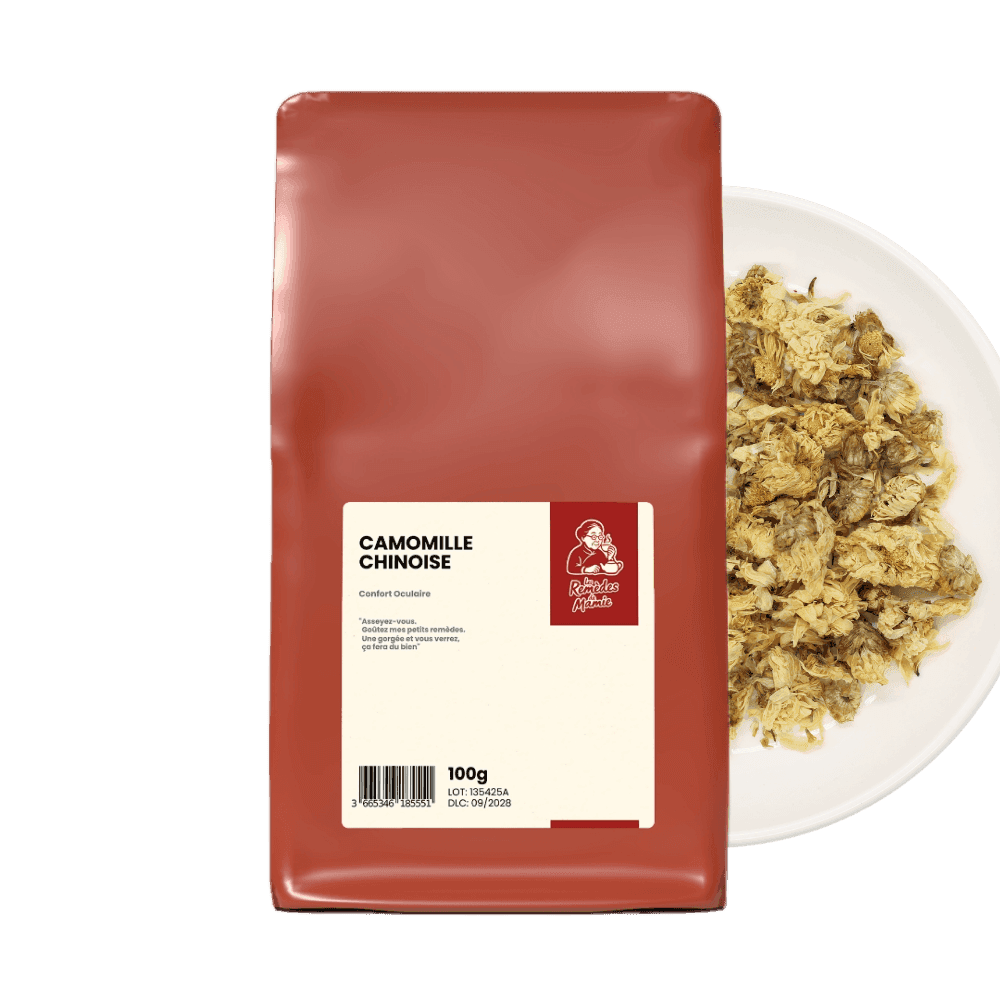
CHINESE CHAMOMILE
Despite the name, it isn't chamomile: these are Chinese chrysanthemum flowers, ju hua, which people over there drink by the cup when their eyes are tired.
What to know
I'll tell you right away: despite its name, Chinese chamomile isn't chamomile. It's ju hua (菊花), the flower of the florist's chrysanthemum, Chrysanthemum morifolium, the one also called autumn chrysanthemum. This bag holds its little dried flower heads, of the kind called hang ju. They don't carry the organic label: they come from China, in pharmacopoeia quality.
Chrysanthemum and chamomile belong to the same big family as the daisy, and that's about all they have in common. What I tell you about one doesn't apply to the other. The real chamomile in my cup, I'll introduce you to it over here.
In China, chrysanthemum was first valued for its virtues, before it became a garden flower, and people still celebrate its flowers on the ninth day of the ninth month. My daughter, in Shanghai, drinks it in a big glass of hot water with a lump of rock sugar, and she pours more water over the same flowers when the glass is empty.
The Chinese pharmacopoeia gives it, among other things, when the eyes are tired and your sight goes blurry. For me, it's my cup for evenings when I've read too much. But I'm not promising you anything for your eyes: if your eyesight drops, or if an eye is red and painful, it's the doctor.
What's inside
Chinese chamomile (Ju hua (hang), Chrysanthemum morifolium) 100 g, of Chinese origin, pharmacopoeia quality.
How I use it
For one cup: 5 g of dried flowers in a big cup. Pour over water that has boiled and then rested a minute, let it steep 5 minutes, and drink.
When the cup is empty, you can pour more hot water over the same flowers, once or twice. No more than 10 g of flowers over the day.
If your eyes stay tired all the same, go and see your doctor.
The bag, I close it up well and keep it somewhere cool and dry.