CHINESE YAM
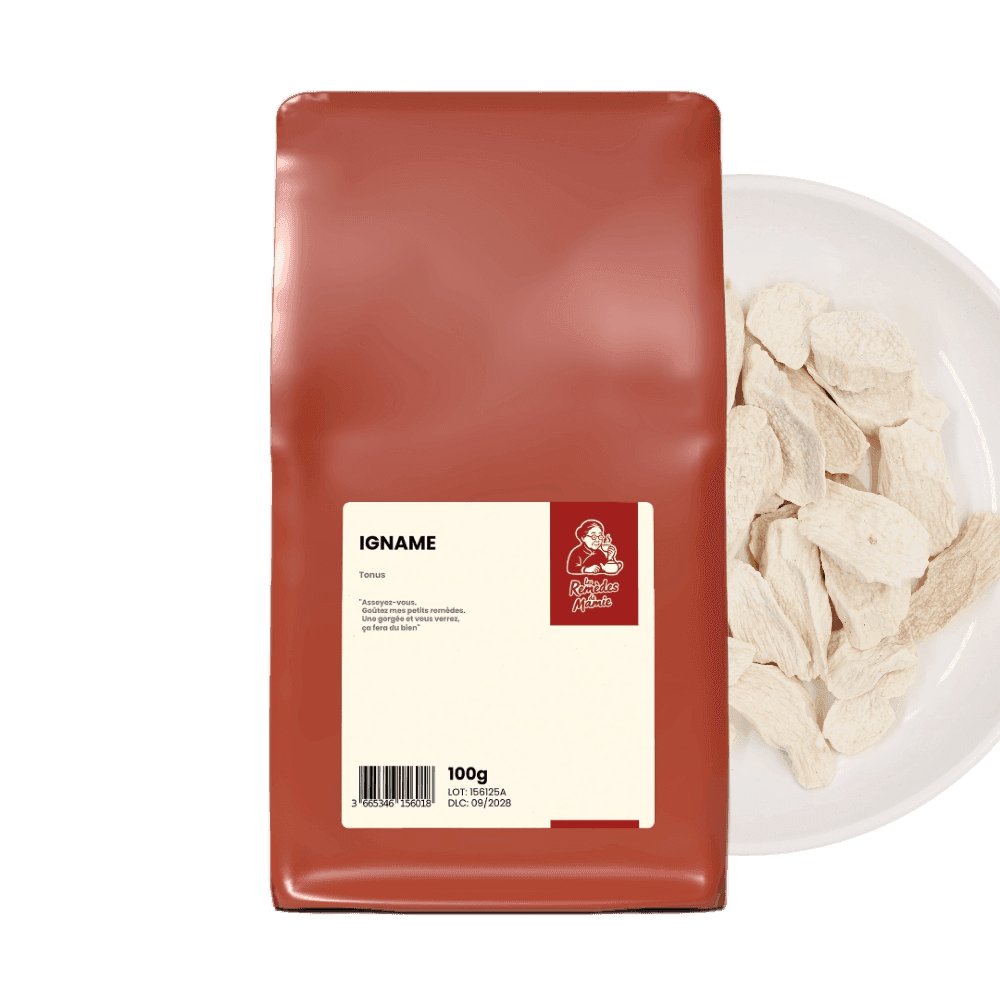
Chinese yam, shān yào, in dried slices. I let it simmer as a decoction or in a soup, always cooked, 15 to 30 g a day.
What to know
This bag holds Chinese yam, shān yào: the rhizome of a climbing vine, dug up in winter once the stems have dried, then peeled, cut into thick slices and dried. It isn't the yam you see at markets, those big tubers people cook like potatoes in the Caribbean or in Africa: it's a cousin, from China.
It has a lovely story here in France. In 1850, when blight was attacking the potatoes, Chinese yam was brought to France to replace them. It never caught on: it needs deep soil, and its long roots were too hard to harvest. Around 1890, there was even a competition to find a shorter variety.
In China, it's both a vegetable and a plant of the pharmacopoeia. The old books gave it when appetite was poor and the tummy was delicate. In Japan, people grate it over noodles. Me, I let it simmer, and it makes a mild, slightly thick broth that keeps you warm.
What's inside
Yam (Shan yao, Dioscorea oppositifolia) 100 g, of Chinese origin, pharmacopoeia quality.
How I use it
The Chinese pharmacopoeia gives 15 to 30 g a day.
As a decoction: I put the slices in 500 ml of cold water and let them soak for 10 minutes. I bring it to the boil, then let it simmer for 20 to 30 minutes over a low heat. I drink the broth hot, and I eat the slices once they're tender.
In a soup: I add the slices to a rice soup or a broth right at the start of cooking.
One of these ways a day, staying within 15 to 30 g. And always cooked.