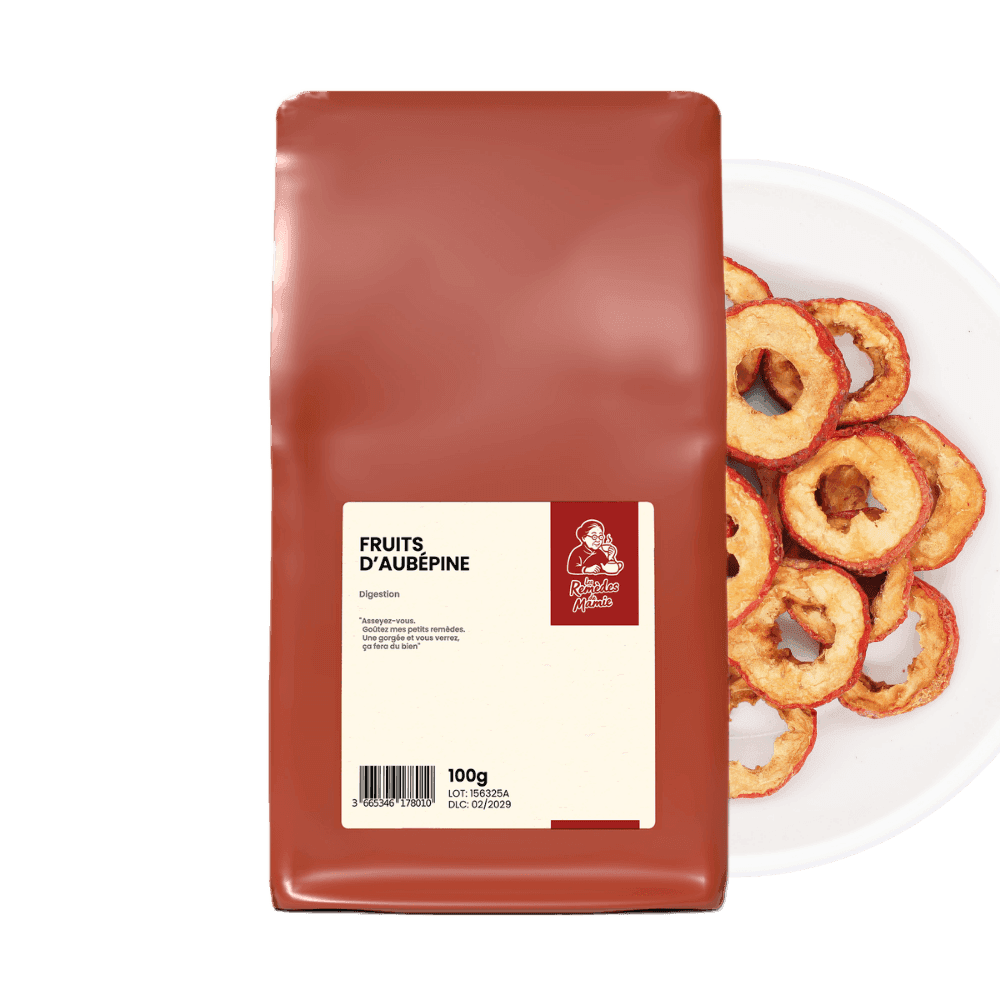
HAWTHORN BERRIES
Dried fruit of the Chinese hawthorn, shan zha: over there, people simmer it after meals that were too rich, when the stomach stays full.
What to know
Careful now, these hawthorn berries don't come from our hedges. This is shan zha (山楂), the Chinese hawthorn, Crataegus pinnatifida: a tree from the north and east of China, Korea and the Russian Far East, with bright red fruit. This bag holds its ripe fruit, dried. It isn't labelled organic: it comes from China, in pharmacopoeia quality, and I'd rather tell you so.
Don't mix them up with our own hawthorn, the whitethorn, whose flowers and leaves we drink on evenings when nerves set the heart pounding. What the books say about those flowers doesn't apply to these fruits. Our hedgerow hawthorn and its haws, I tell you all about them over here.
In China, people eat shan zha: as sugar-glazed fruit on little sticks, as fruit paste, as jam. And the Chinese pharmacopoeia keeps it for meals that were too rich, especially when you've eaten a lot of meat and your stomach stays full and tight.
I'm not promising you anything more: it's an old cup for after big meals, a bit tart, that you drink for a few days and then put away.
What's inside
Hawthorn fruits (Shan zha, Crataegus pinnatifida) 100 g, of Chinese origin, pharmacopoeia quality.
How I use it
For the day: 9 to 12 g of dried fruit in 500 ml of cold water. Bring to the boil, then let it simmer gently 10 minutes on a low heat, and strain.
I drink it in two or three cups, after meals, when a lunch that was too rich sits on my stomach. No more than 12 g of fruit in the day. The little pips I leave at the bottom of the pan.
A few days around a big meal, not all year. If the heaviness lasts more than two weeks, go and see your doctor.
I close the bag up well and keep it somewhere dry and airy.