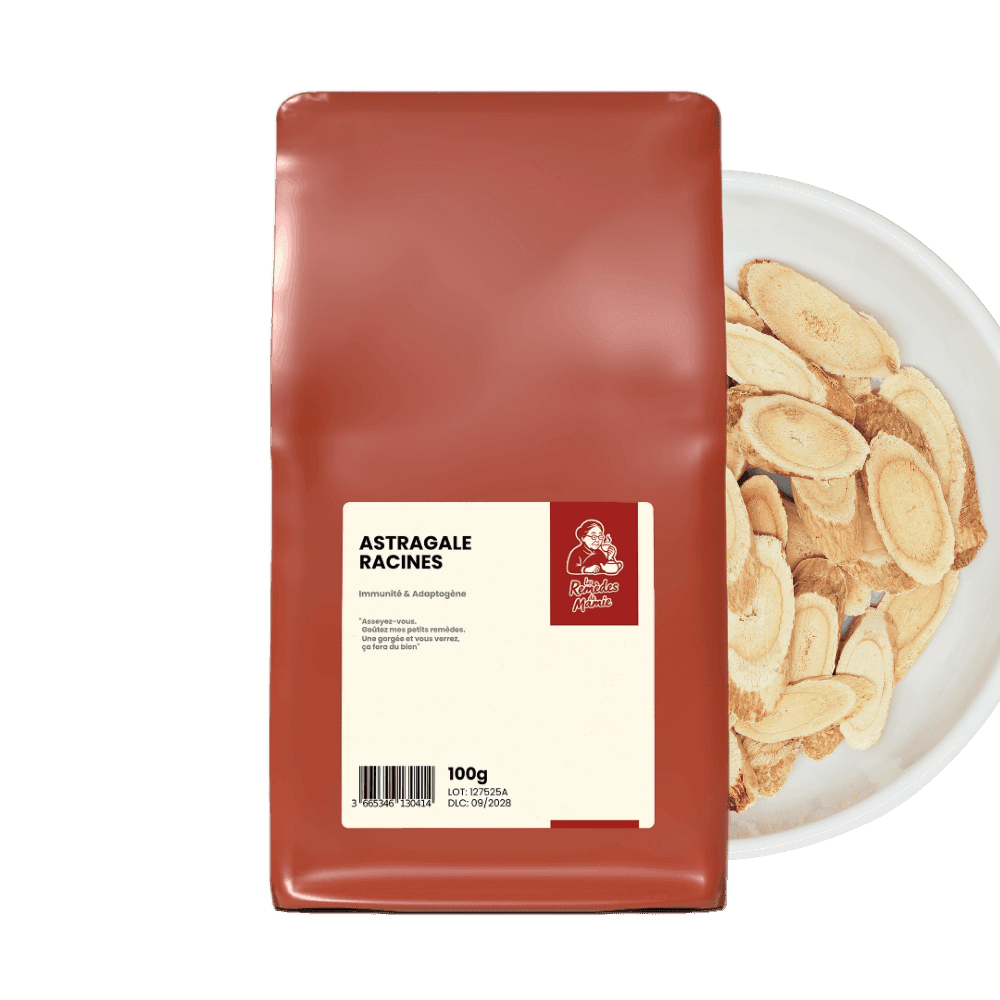
ASTRAGALUS ROOTS
Astragalus root is the Chinese huang qi: a long, pale yellow root that people over there simmer when they feel worn out and have little appetite.
What to know
Astragalus root is the huang qi of China: the dried root of a perennial from the pea and bean family, Astragalus mongholicus, which used to be called Astragalus membranaceus too. It grows all across temperate Asia, from Kazakhstan and Siberia to Mongolia and northern China.
It's dug up in spring or autumn, the little rootlets and the top of the root are cut off, and it's dried in the sun. It's a long, hard, fibrous root, pale yellow inside, a bit sweet, with a faint taste of beans when you chew it. In Mongolia, it's one of the fifty basic plants of their old remedies.
The Chinese pharmacopoeia lists it among the roots you simmer when you feel weary, with no strength, and eat little. The European books say nothing about it: I'm giving you what the Chinese pharmacopoeia says, no more, no less.
Don't mix it up. There are lots of astragalus species, and some are toxic to livestock; their poisons haven't been found in the pharmacopoeia one, but don't go picking one by the roadside. And the astragalus in your ankle is something else: a bone, now called the talus.
What's inside
Astragalus roots (Huang qi, Astragalus membranaceus) 100 g, of Chinese origin, top quality.
How I use it
For the day, I count 9 g of root: that's the low end of what the Chinese pharmacopoeia gives. I put it in 500 ml of cold water, bring it to the boil, then let it simmer 30 minutes with the lid on, because it's as hard as wood.
I strain it and drink it as two cups over the day. The books don't set a length of time: I take it in spells, not all year round, and if the tiredness is still there after two weeks, I go and see my doctor.