Sommaire
Pull up a chair, look at this beautiful yellowed notebook I found in the sideboard
Pull up a chair, look at this beautiful yellowed notebook I found in the sideboard
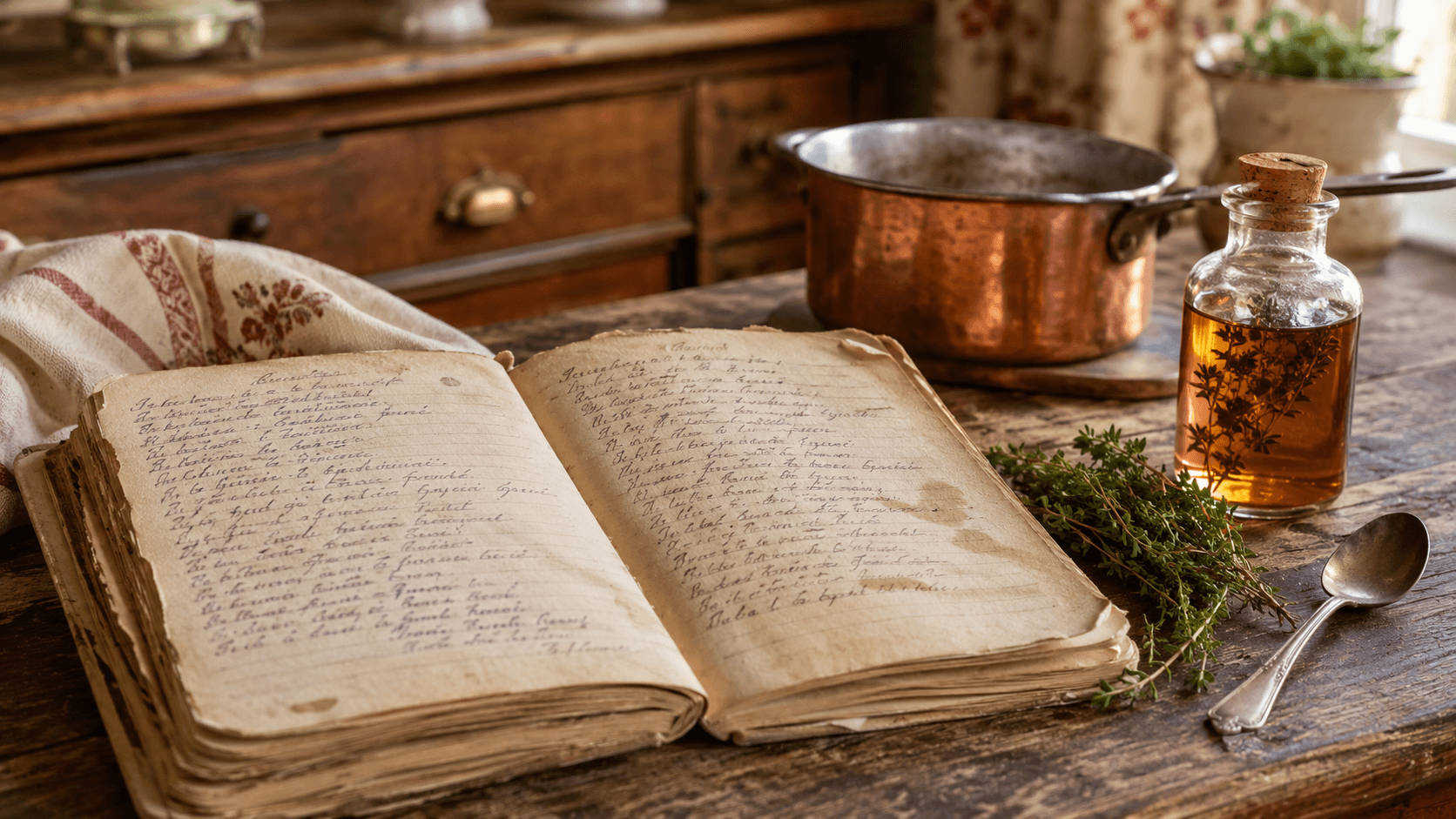
Come sit closer to the stove, my dear. I was tidying up the old oak sideboard this morning, the one that always smells of beeswax and dried lavender, when I found this. Look at it. It is my mother's recipe notebook, with its cardboard cover worn thin at the corners and pages yellowed by the years. It is written in her beautiful, slanting handwriting with purple ink, and you can still see the round stains where drops of herbal tea fell on the paper decades ago. Holding it in my hands makes me feel like she is right here in the kitchen with us, tying her apron and putting the kettle on the fire.
She wrote down everything in these pages, all the simple secrets of the soil that her own grandmother had taught her. There is a whole page dedicated to our garden thyme, which you can find more about in our herbier/thym. She used to make a thick, sweet syrup with it every autumn. Whenever our throats felt a bit scratchy or dry when the cold winds started to blow, she would give us a spoonful. It is not a miracle cure, of course, but it warms you right up and soothes the throat beautifully. We have always done it this way in our family, and it simply does you good.
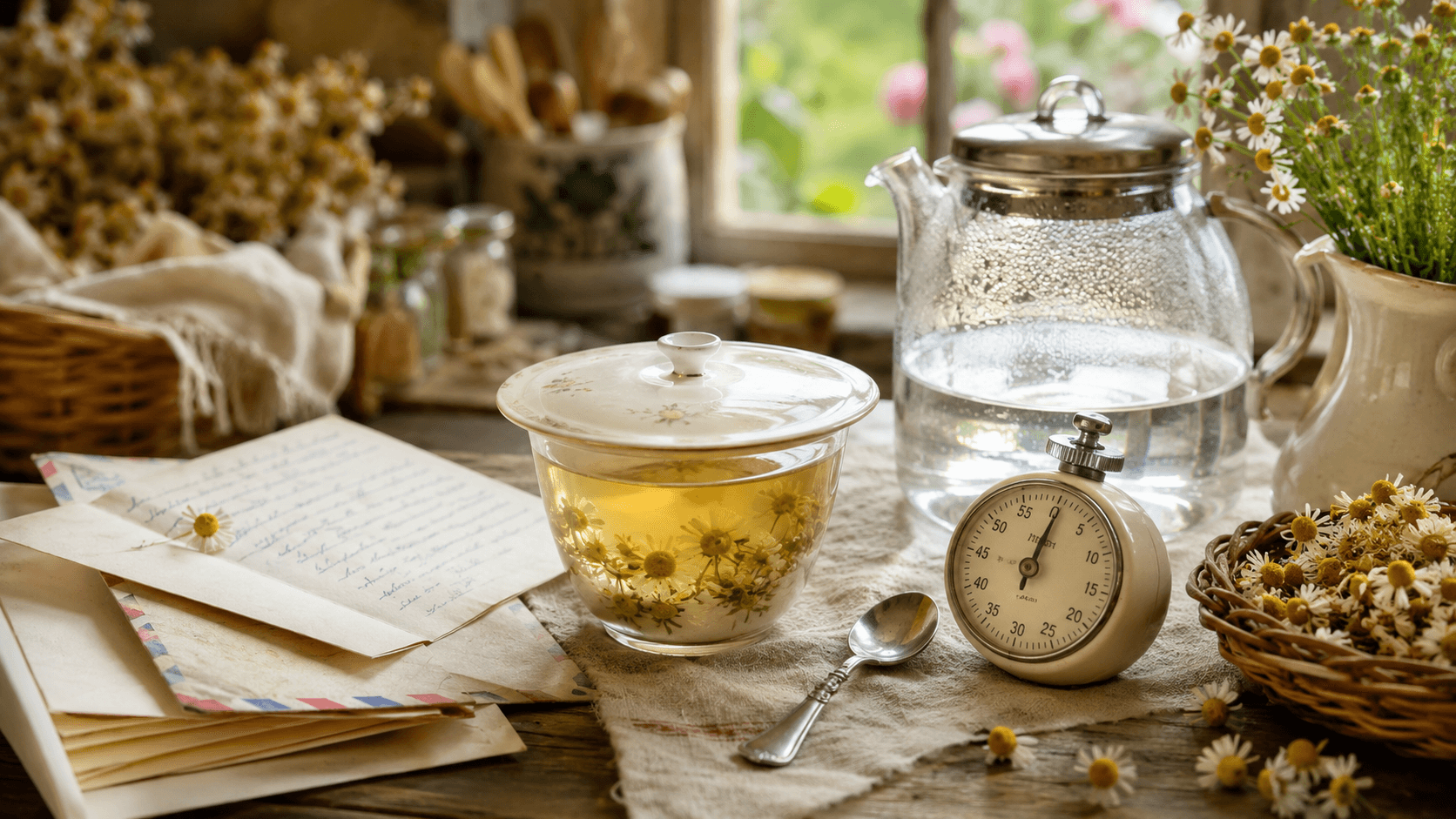
If you turn the page carefully, you will find her recipe for the evening brew, where she loved to mix a little sage, which we talk about in our herbier/sauge, with some wild chamomile. She always said that when the mind is racing and the stomach feels knotted after a long day, a warm cup of this blend helps you to unwind. You drink it slowly by the hearth, the warmth spreads through you, and sleep seems to find its way to you on its own. These are not fancy remedies, just honest, handed-down knowledge from a time when we lived by the rhythm of the seasons. If you ever feel truly poorly, you must go see the doctor, but for the daily comfort of the hearth, my mother's notebook is a true treasure.
Let me share my mother's secrets for a soothing thyme syrup and a quiet night
Pull up a chair, my dear, and let me show you what I found at the bottom of the old oak sideboard. It is my mother’s recipe book, with its yellowed pages, elegant ink handwriting, and those lovely, round grease spots that tell you a kitchen was full of life. Looking at her notes for our family [thyme](/herbier/thym) syrup brought back the smell of woodsmoke and simmering pots. She used to gather the wild sprigs on sunny afternoons, and whenever our throats felt a bit dry or scratchy in the autumn wind, she would warm up a spoonful of this thick, golden syrup. It is not a miracle cure, of course, but it has always been our way of bringing comfort when the cold weather sets in. It simply does you good, just like a warm hug from the past.
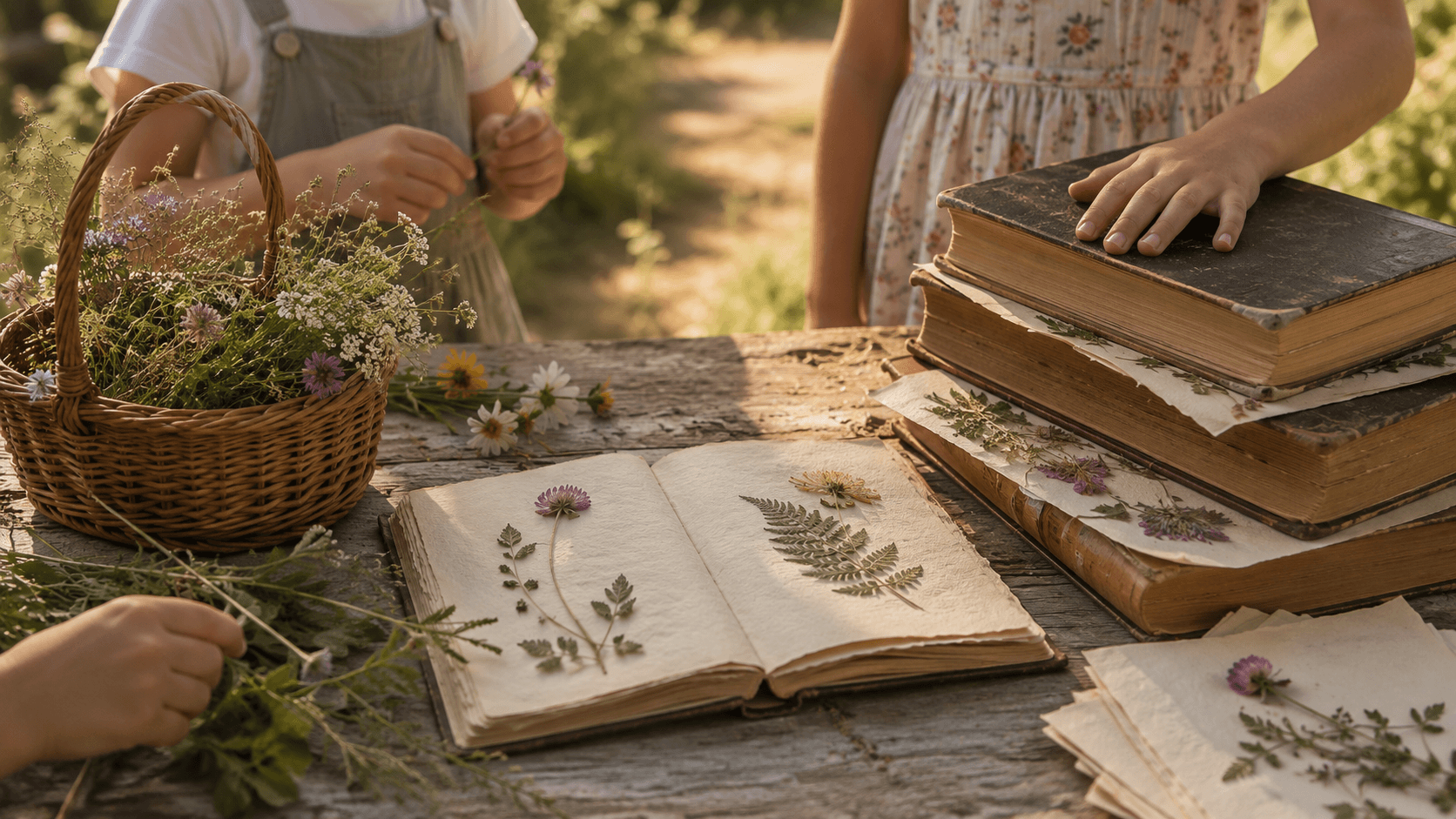
Further down the page, right next to a dried pressed leaf, she wrote down her recipe for the evening brew. She would mix a pinch of [sage](/herbier/sauge) with a bit of linden and chamomile, letting them steep until the kitchen smelled of quiet fields. My mother always said that a quiet night starts in the teapot. People in our village have used these simple plants for generations to help the mind unwind after a long day of hard work. You drink it slowly, while it is still hot, and you feel the tension leave your shoulders. If your stomach feels a bit knotted or your head is heavy, this old blend gently helps you drift off to sleep on your own.
It makes me soft-hearted to think these same simple gestures have travelled through time to reach your kitchen table today. We do not need fancy modern jars or complicated words to take care of ourselves; the old ways and a bit of patience are often all we need. If you ever feel truly under the weather, you must go see our village doctor or the pharmacist, as they know best. But for those quiet moments when you just need to feel stronger and comforted, these old recipes are always here for you, written in a mother's loving hand.
Take these old recipes home and let them do you some good today
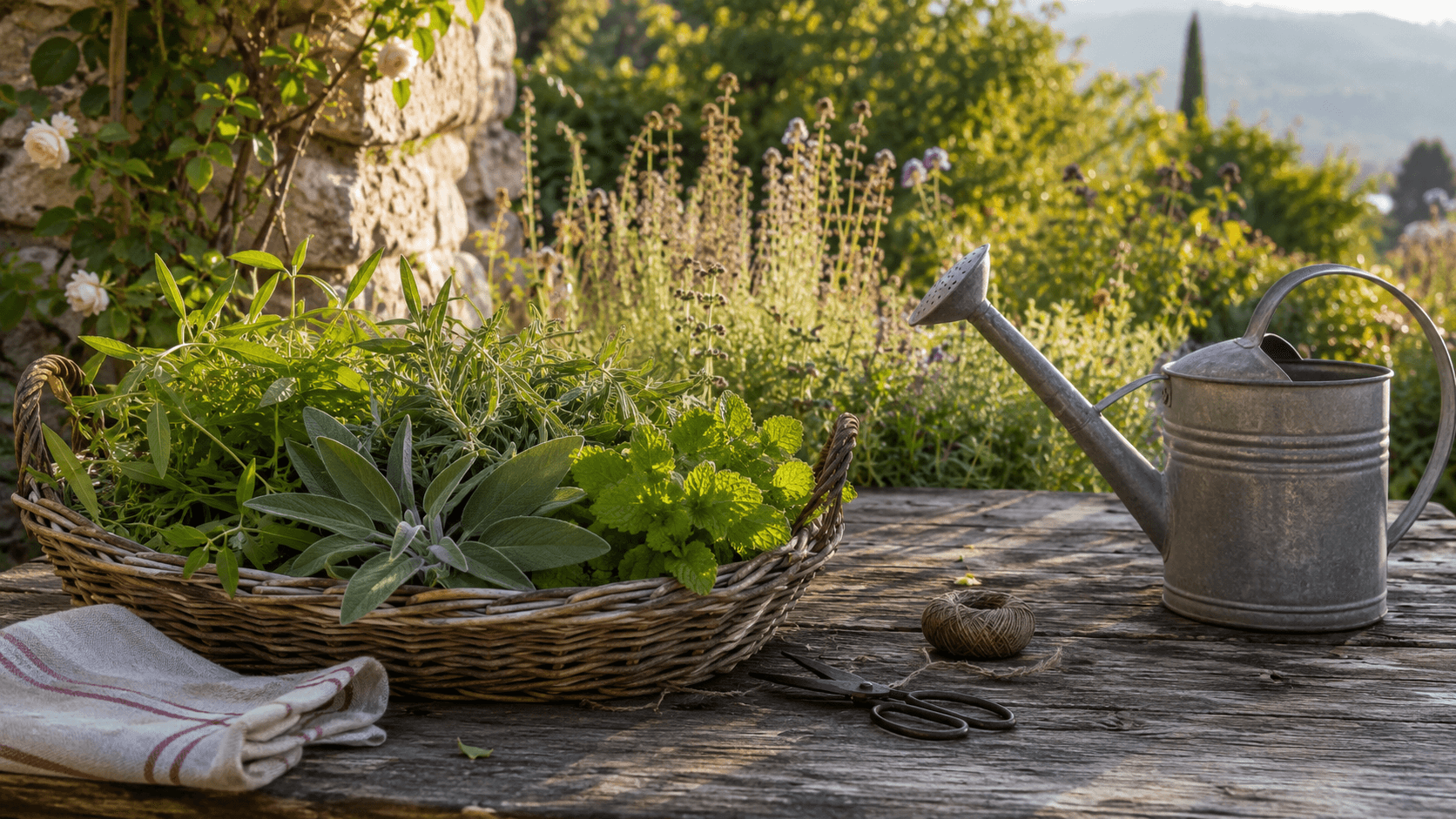
Come sit by the stove and let me share my mother's simple thyme syrup recipe. She always kept a jar of it in the pantry as soon as the first cold winds started to blow from the hills. To make it yourself, you just need to infuse a good handful of dried thyme in boiling water for about ten minutes, strain it carefully, and then gently melt in some local honey until it gets thick and golden. We have always used thyme this way in our family to soothe a tickly throat and bring a bit of warmth when the chest feels tight. It is a simple, honest kitchen remedy that does you so good when you need comforting, and you can find more about this wonderful herb on our dedicated page at /herbier/thym.
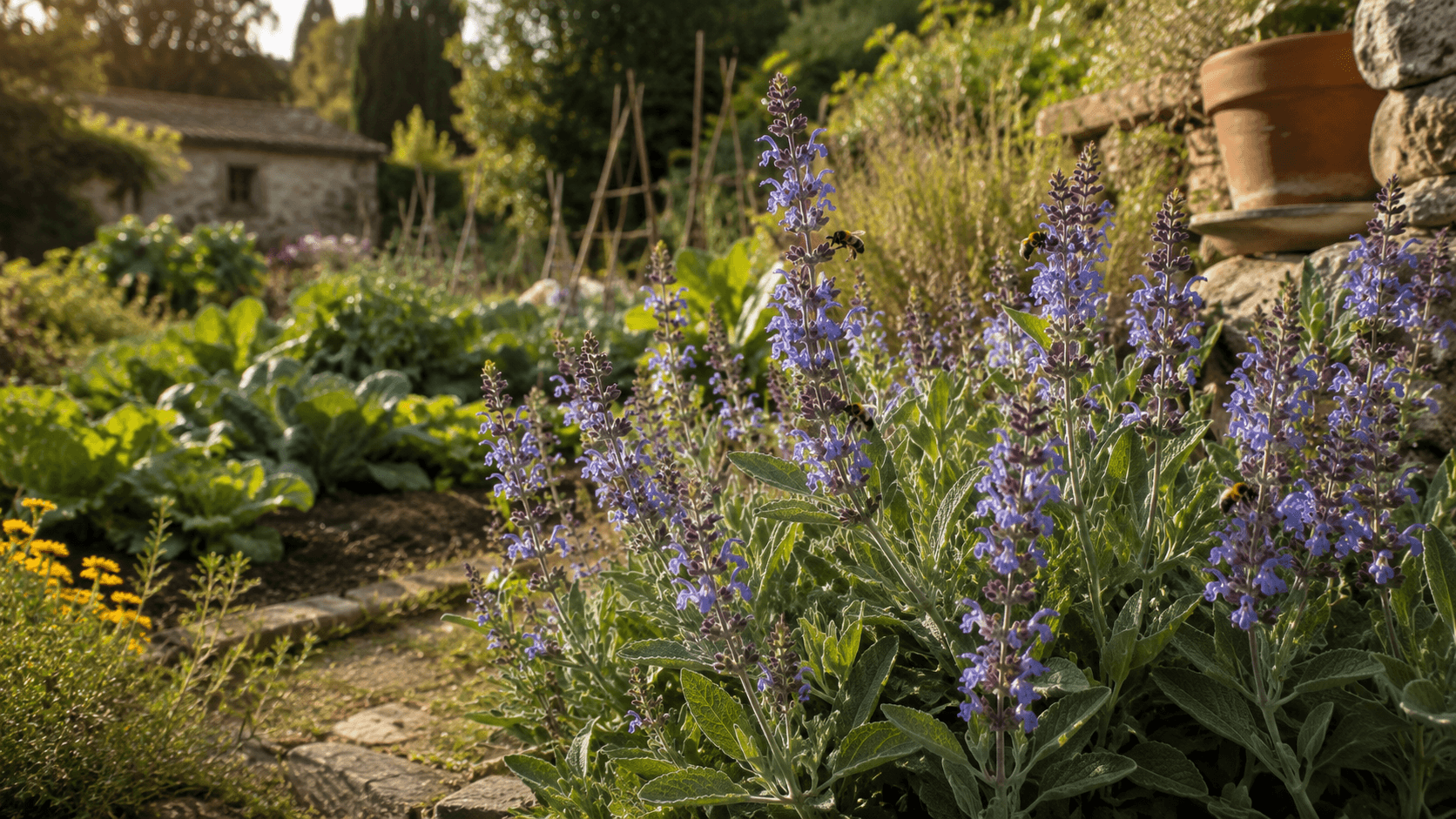
Then, there is her famous evening blend that she wrote down on a page stained with old tea rings. She would mix a few leaves of sage with some dried chamomile to help the family unwind after a long day of hard work in the fields. Sage is a plant we truly treasure in the countryside, and we talk about its long history at /herbier/sauge. My mother always said that a warm cup of this infusion before bed helps the mind quiet down so sleep can come on its own. These old recipes do not pretend to be fancy or modern, but they carry the love of the hands that wrote them down. Try them tonight, let the herbal steam rise to your face, and feel yourself connect to generations of grandmothers who looked after their households with nothing but simple plants and a lot of care.
FAQ
You can make my mother's traditional thyme syrup by simmering garden thyme with sugar or honey until it gets thick and golden. Whenever your throat feels dry or scratchy from the cold wind, taking a warm spoonful of this syrup will soothe your throat and warm you right up. It is not a miracle cure, but we have always done it this way in our family and it simply does you good, trust me.
To prepare my mother's evening brew, you just need to steep a little sage with some wild chamomile and linden in hot water until your kitchen smells of quiet fields. Drink this warm blend slowly by the hearth when your mind is racing after a long day of hard work. It is a simple, handed-down recipe that helps you unwind so sleep can find its way to you on its own.
Drinking a warm cup of sage tea mixed with chamomile is a wonderful traditional way to help your mind and stomach unwind in the evening. However, plants are powerful, so you should not overdo it and always listen to your body. If you are pregnant, taking medicine, or have any doubts at all, please ask your doctor or the village pharmacist before drinking it regularly.
No, our family's thyme syrup does not cure or prevent any sickness, and you must always see a doctor if you are truly feeling poorly. What this traditional syrup does is bring comfort, warming you up from the inside and soothing a dry throat when the cold weather sets in. It is just honest, handed-down knowledge to help you feel stronger and comforted at our kitchen table.